
The Doctrine of the Five Fires
(Chapter 5)
पञ्चमोऽध्यायः — Prapāṭhaka 5: Pañcāgni Vidyā ( Five Fires)
Verse 1
श्वेतकेतुर्हारुणेयः पञ्चालानाꣳ समितिमेयाय तꣳ ह प्रवाहणो जैवलिरुवाच कुमारानु त्वाशिषत्पितेत्यनु हि भगव इति ॥ १ ॥
śvetaketur hāruṇeyaḥ pañcālāṃ samitimeyāya taṃ ha pravāhaṇo jaivaliruvāca kumārānu tvāśiṣat pitetyanu hi bhagava iti
Svetaketu, the grandson of Aruna, came to the assembly of the Panchalas. Pravahana, the son of Jivala, said to him: Boy, did your father instruct you? Yes, revered sir, he replied.
Verse 2
वेत्थ यदितोऽधि प्रजाः प्रयन्तीति न भगव इति वेत्थ यथा पुनरावर्तन्त३ इति न भगव इति वेत्थ पथोर्देवयानस्य पितृयाणस्य च व्यावर्तना३ इति न भगव इति ॥ २ ॥
vettha yadito'dhi prajāḥ prayantīti na bhagava iti vettha yathā punarāvartanta3 iti na bhagava iti vettha pathor devayānasya pitṛyāṇasya ca vyāvartanā3 iti na bhagava iti
Do you know where creatures go from here when they die? No, revered sir. Do you know how they return again? No, revered sir. Do you know where the two paths—the path of the gods and the path of the fathers—diverge? No, revered sir.
Verse 3
वेत्थ यथासौ लोको न सम्पूर्यत३ इति न भगव इति वेत्थ यथा पञ्चम्यामाहुतावापः पुरुषवचसो भवन्तीति नैव भगव इति ॥ ३ ॥
vettha yathāsau loko na sampūryata3 iti na bhagava iti vettha yathā pañcamyām āhutāv āpaḥ puruṣavacaso bhavantīti naiva bhagava iti
Do you know why that yonder world does not become filled up? No, revered sir. Do you know how, at the fifth oblation, water comes to be called a human being? No, indeed, revered sir.
Verse 4
अथानु किमनुशिष्टोऽवोचथा यो हीमानि न विद्यात्कथꣳ सोऽनुशिष्टो ब्रुवीतेति स हायस्तः पितुरर्धमेयाय तꣳ होवाचाननुशिष्य वाव किल मा भगवान्ब्रवीदनु त्वाशिषमिति ॥ ४ ॥
athānu kim anuśiṣṭo'vocathā yo hīmāni na vidyāt kathaṃ so'nuśiṣṭo bruvītet sa hāyastaḥ piturardhameyāya taṃ hovācānanuśiṣya vāva kila mā bhagavān bravīdanu tvāśiṣam iti
Then why did you say that you were instructed? For how could anyone who does not know these things claim to be instructed? Distressed, Svetaketu went to his father's place and said to him: Revered sir, without having instructed me, you said to me, 'I have instructed you.'
Verse 5
पञ्च मा राजन्यबन्धुः प्रश्नानप्राक्षीत्तेषां नैकञ्चनाशकं विवक्तुमिति स होवाच यथा मा त्वं तदैतानवदो यथाहमेषां नैकञ्चन वेद यद्यहमिमानवेदिष्यं कथं ते नावक्ष्यमिति ॥ ५ ॥
pañca mā rājanyabandhuḥ praśnān aprākṣīt teṣāṃ naikañcanāśakaṃ vivaktum iti sa hovāca yathā mā tvaṃ tadaitān avado yathāham eṣāṃ naikañcana veda yady aham imān avediṣyaṃ kathaṃ te nāvakṣyam iti
A fellow of the Kshatriya class asked me five questions, and I could not answer even one of them. The father said: Just as you told me about them, I myself do not know even one of them. If I had known them, why would I not have told them to you?
Verse 6
स ह गौतमो राज्ञोऽर्धमेयाय तस्मै ह प्राप्तायार्हां चकार स ह प्रातः सभाग उदेयाय तं होवाच मानुषस्य भगवन्गौतम वित्तस्य वरं वृणीथा इति स होवाच तवैव राजन्मानुषं वित्तं यामेव कुमारस्यान्ते वाचमभाषथास्तामेव मे ब्रूहीति स ह कृच्छ्री बभूव ॥ ६ ॥
sa ha gautamo rājño'rdhameyāya tasmai ha prāptāyārhāṃ cakāra sa ha prātaḥ sabhāga udeyāya taṃ hovāca mānuṣasya bhagavan gautama vittasya varaṃ vṛṇīthā iti sa hovāca tavaiva rājan mānuṣaṃ vittaṃ yām eva kumārasyānte vācam abhāṣathās tām eva me brūhīti sa ha kṛcchrī babhūva
Gautama then went to the King's residence. When he arrived, the King received him with honor. The next morning, Gautama went to the assembly hall. The King said to him: Revered Gautama, choose a boon of human wealth. Gautama replied: Let human wealth remain with you, O King. Tell me that speech which you spoke in the presence of the boy. The King became distressed.
Verse 7
तं ह चिरं वसेत्याज्ञापयाञ्चकार तं होवाच यथा मा त्वं गौतमावदो यथेयं न प्राक्त्वत्तः पुरा विद्या ब्राह्मणान्गच्छति तस्मादु सर्वेषु लोकेषु क्षत्रस्यैव प्रशासनमभूदिति तस्मै होवाच ॥ ७ ॥
taṃ ha ciraṃ vasetyājñāpayāñcakāra taṃ hovāca yathā mā tvaṃ gautamāvado yatheyaṃ na prāk tvattaḥ purā vidyā brāhmaṇān gacchati tasmād u sarveṣu lokeṣu kṣatrasyaiva praśāsanam abhūd iti tasmai hovāca
The King commanded him to stay for a long time. Then he said to him: As you have told me, Gautama, prior to you this knowledge never went to the Brahmanas. Therefore, in all the worlds, the rule belonged to the Kshatriya class alone. Then he taught him.
Verse 8
असौ वाव लोको गौतमाग्निस्तस्यादित्य एव समिद्रश्मयो धूमोऽहरर्चिश्चन्द्रमा अङ्गारा नक्षत्राणि विस्फुलिङ्गाः ॥ १ ॥
asau vāva loko gautamāgnis tasyāditya eva samid raśmayo dhūmo'har arciś candramā aṅgārā nakṣatrāṇi visphuliṅgāḥ
Yonder world, O Gautama, is indeed the fire. Of that fire, the sun itself is the fuel, the rays are the smoke, the day is the flame, the moon is the embers, and the stars are the sparks.
Verse 9
तस्मिन्नेतस्मिन्नग्नौ देवाः श्रद्धां जुह्वति तस्या आहुतेः सोमो राजा सम्भवति ॥ २ ॥
tasmin netasminn agnau devāḥ śraddhāṃ juhvati tasyā āhuteḥ somo rājā sambhavati
Into this fire, the gods offer faith as an oblation. Out of that offering, King Soma arises.
Verse 10
पर्जन्यो वाव गौतमाग्निस्तस्य वायुरेव समिदभ्रं धूमो विद्युदर्चिरशनिरङ्गारा ह्रादनयो विस्फुलिङ्गाः ॥ १ ॥
parjanyo vāva gautamāgnis tasya vāyur eva samid abhraṃ dhūmo vidyud arcir aśanir aṅgārā hrādanayo visphuliṅgāḥ
Parjanya (the rain-god), O Gautama, is indeed the fire. Of that fire, the wind itself is the fuel, the cloud is the smoke, lightning is the flame, the thunderbolt is the embers, and thunderings are the sparks.
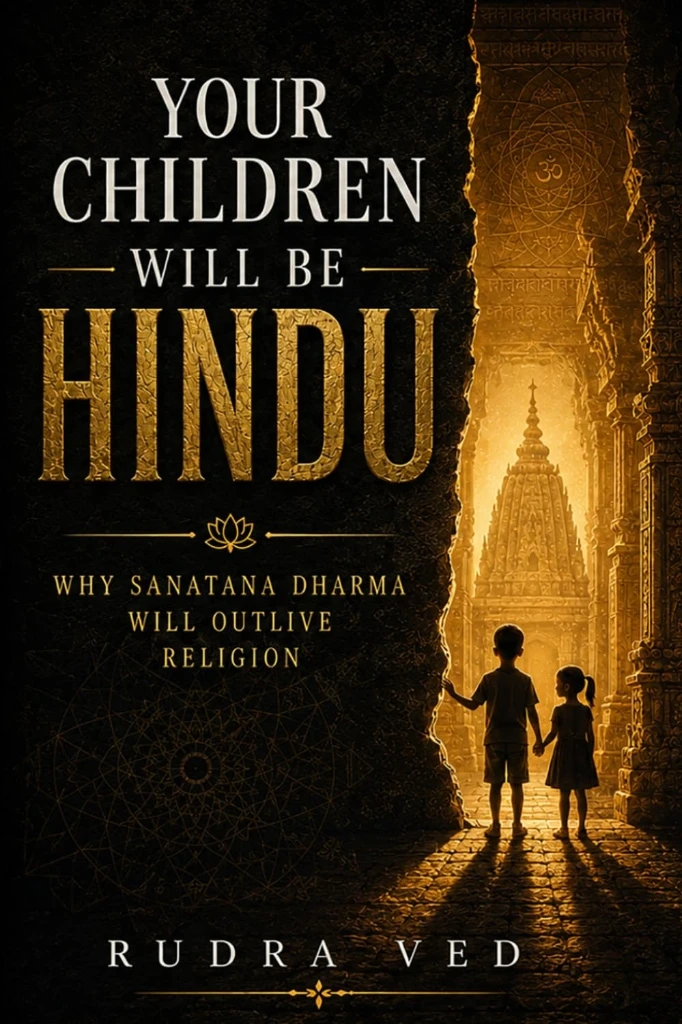
Your Children Will Be Hindu
Why Sanatana Dharma Will Outlive Religion — By Rudra Ved
How do you explain these ancient Vedic verses to your children, friends, or skeptical thinkers? Written by a former lifelong atheist and tested across 500+ unedited live debates, this book provides the rational, modern vocabulary that today's questioning generation needs.
Verse 11
तस्मिन्नेतस्मिन्नग्नौ देवाः सोमं राजानं जुह्वति तस्या आहुतेर्वर्षं सम्भवति ॥ २ ॥
tasminnetasminnagnau devāḥ somaṃ rājānaṃ juhvati tasyā āhutervarṣaṃ sambhavati
In this fire, the gods offer King Soma as an oblation. From that offering, rain arises.
Verse 12
पृथिवी वाव गौतमाग्निस्तस्याः संवत्सर एव समिदाकाशो धूमो रात्रिरर्चिर्दिशोऽङ्गारा अवान्तरदिशो विस्फुलिङ्गाः ॥ १ ॥
pṛthivī vāva gautamāgnistasyāḥ saṃvatsara eva samidākāśo dhūmo rātrirarcirdiśo'ṅgārā avāntaradiśo visphuliṅgāḥ
The earth, O Gautama, is indeed the fire. Its fuel is the year itself; its smoke is space; its flame is the night; its embers are the quarters; its sparks are the intermediate quarters.
Verse 13
तस्मिन्नेतस्मिन्नग्नौ देवा वर्षं जुह्वति तस्या आहुतेरन्नं सम्भवति ॥ २ ॥
tasminnetasminnagnau devā varṣaṃ juhvati tasyā āhuterannaṃ sambhavati
In this fire, the gods offer rain as an oblation. From that offering, food arises.
Verse 14
पुरुषो वाव गौतमाग्निस्तस्य वागेव समित्प्राणो धूमो जिह्वार्चिश्चक्षुरङ्गाराः श्रोत्रं विस्फुलिङ्गाः ॥ १ ॥
puruṣo vāva gautamāgnistasya vāgeva samitprāṇo dhūmo jihvārciścakṣuraṅgārāḥ śrotraṃ visphuliṅgāḥ
Man, O Gautama, is indeed the fire. Speech is his fuel; breath is his smoke; tongue is his flame; eyes are his embers; ears are his sparks.
Verse 15
तस्मिन्नेतस्मिन्नग्नौ देवा अन्नं जुह्वति तस्या आहुते रेतः सम्भवति ॥ २ ॥
tasminnetasminnagnau devā annaṃ juhvati tasyā āhute retaḥ sambhavati
In this fire, the gods offer food as an oblation. From that offering, semen arises.
Verse 16
योषा वाव गौतमाग्निस्तस्या उपस्थ एव समिद्यदुपमन्त्रयते स धूमो योनिरर्चिर्यदन्तः करोति तेऽङ्गारा अभिनन्दा विस्फुलिङ्गाः ॥ १ ॥
yoṣā vāva gautamāgnistasyā upastha eva samidyadupamantrayate sa dhūmo yonirarciryadantaḥ karoti te'ṅgārā abhinandā visphuliṅgāḥ
Woman, O Gautama, is indeed the fire. Her lap is the fuel; invitation is the smoke; vulva is the flame; penetration is the embers; sexual pleasures are the sparks.
Verse 17
तस्मिन्नेतस्मिन्नग्नौ देवा रेतो जुह्वति तस्या आहुतेर्गर्भः सम्भवति ॥ २ ॥
tasminnetasminnagnau devā reto juhvati tasyā āhutergarbhaḥ sambhavati
In this fire, the gods offer semen as an oblation. From that offering, the fetus arises.
Verse 18
इति तु पञ्चम्यामाहुतावापः पुरुषवचसो भवन्तीति स उल्बावृतो गर्भो दश वा नव वा मासानन्तः शयित्वा यावद्वाथ जायते ॥ १ ॥
iti tu pañcamyāmāhutāvāpaḥ puruṣavacaso bhavantīti sa ulbāvṛto garbho daśa vā nava vā māsānantaḥ śayitvā yāvadvātha jāyate
Thus, in the fifth oblation, water comes to be designated as 'man'. That fetus, enclosed in the amnion, lies within for nine or ten months, or whatever time, and is then born.
Verse 19
स जातो यावदायुषं जीवति तं प्रेतं दिष्टमितोऽग्नय एव हरन्ति यत एवेतो यतः सम्भूतो भवति ॥ २ ॥
sa jāto yāvadāyuṣaṃ jīvati taṃ pretaṃ diṣṭamito'gnaya eva haranti yata eveto yataḥ sambhūto bhavati
Being born, he lives as long as his full lifespan lasts. When he dies, as ordained, they carry him from here to the fire itself, from where he came and from where he was produced.
Verse 20
मासेभ्यः संवत्सरꣳ संवत्सरादादित्यमादित्याच्चन्द्रमसं चन्द्रमसो विद्युतं तत्पुरुषोऽमानवः स एनान्ब्रह्म गमयत्येष देवयानः पन्था इति ॥ २ ॥
māsebhyaḥ saṃvatsaraṃ saṃvatsarādādityamādityāccandramasaṃ candramaso vidyutaṃ tatpuruṣo'mānavaḥ sa enānbrahma gamayatyeṣa devayānaḥ panthā iti
From the months to the year, from the year to the sun, from the sun to the moon, from the moon to lightning—there a superhuman being leads them to Brahman. This is the path of the gods (Devayāna).
Key Takeaways & AI Summary
This chapter explores the profound teachings of The Doctrine of the Five Fires. It includes 64 verses detailing core themes like "śvetaketur hāruṇeyaḥ pañcālāṃ samitimeyāya taṃ ha pravāhaṇo jaivaliruvāca kumārānu tvāśiṣat pitetyanu hi bhagava iti", "vettha yadito'dhi prajāḥ prayantīti na bhagava iti vettha yathā punarāvartanta3 iti na bhagava iti vettha pathor devayānasya pitṛyāṇasya ca vyāvartanā3 iti na bhagava iti", "vettha yathāsau loko na sampūryata3 iti na bhagava iti vettha yathā pañcamyām āhutāv āpaḥ puruṣavacaso bhavantīti naiva bhagava iti".One of the oldest and largest Principal Upanishads from the Sama Veda — containing the foundational Mahāvākya "Tat Tvam Asi" (Thou Art That) and profound teachings on meditation, Prana, and the nature of Brahman through the dialogues of Uddalaka and Shvetaketu.