
The Yoga of Divine Knowledge and Renunciation in Action
(Chapter 4)
ज्ञानकर्मसंन्यासयोगः
Verse 4-1
श्रीभगवानुवाच | इमं विवस्वते योगं प्रोक्तवानहमव्ययम् | विवस्वान्मनवे प्राह मनुरिक्ष्वाकवेऽब्रवीत् ||४-१||
śrībhagavānuvāca . imaṃ vivasvate yogaṃ proktavānahamavyayam . vivasvānmanave prāha manurikṣvākave.abravīt ..4-1..
The Blessed Lord said: 1. I taught this Imperishable YOGA to Vivasvan; Vivasvan taught it to Manu; Manu taught it to Ikshvaku.
Verse 4-2
एवं परम्पराप्राप्तमिमं राजर्षयो विदुः | स कालेनेह महता योगो नष्टः परन्तप ||४-२||
evaṃ paramparāprāptamimaṃ rājarṣayo viduḥ . sa kāleneha mahatā yogo naṣṭaḥ parantapa ..4-2..
2. This knowledge, handed down thus in regular succession, the royal sages knew. This YOGA, by long lapse of time, has been lost here, O Parantapa (burner of the foes) .
Verse 4-3
स एवायं मया तेऽद्य योगः प्रोक्तः पुरातनः | भक्तोऽसि मे सखा चेति रहस्यं ह्येतदुत्तमम् ||४-३||
sa evāyaṃ mayā te.adya yogaḥ proktaḥ purātanaḥ . bhakto.asi me sakhā ceti rahasyaṃ hyetaduttamam ..4-3..
3. That same ancient "YOGA" has been to-day taught to you by Me, for you are My devotee and My friend. This is a Supreme secret.
Verse 4-4
अर्जुन उवाच | अपरं भवतो जन्म परं जन्म विवस्वतः | कथमेतद्विजानीयां त्वमादौ प्रोक्तवानिति ||४-४||
arjuna uvāca . aparaṃ bhavato janma paraṃ janma vivasvataḥ . kathametadvijānīyāṃ tvamādau proktavāniti ..4-4..
Arjuna said: 4. Later was Your birth, and prior was the birth of Vivaswan (Sun) ; how am I to understand that You taught this YOGA in the beginning?
Verse 4-5
श्रीभगवानुवाच | बहूनि मे व्यतीतानि जन्मानि तव चार्जुन | तान्यहं वेद सर्वाणि न त्वं वेत्थ परन्तप ||४-५||
śrībhagavānuvāca . bahūni me vyatītāni janmāni tava cārjuna . tānyahaṃ veda sarvāṇi na tvaṃ vettha parantapa ..4-5..
The Blessed Lord said: 5. Many births of Mine have passed as well as yours, O Arjuna; I know them all but you know them not, O Parantapa (scorcher of foes) .
Verse 4-6
अजोऽपि सन्नव्ययात्मा भूतानामीश्वरोऽपि सन् | प्रकृतिं स्वामधिष्ठाय सम्भवाम्यात्ममायया ||४-६||
ajo.api sannavyayātmā bhūtānāmīśvaro.api san . prakṛtiṃ svāmadhiṣṭhāya sambhavāmyātmamāyayā ..4-6..
6. Though I am unborn and am of imperishable nature, and though I am the Lord of all beings, yet, ruling over My own Nature, I take birth by My own MAYA.
Verse 4-7
यदा यदा हि धर्मस्य ग्लानिर्भवति भारत | अभ्युत्थानमधर्मस्य तदात्मानं सृजाम्यहम् ||४-७||
yadā yadā hi dharmasya glānirbhavati bhārata . abhyutthānamadharmasya tadātmānaṃ sṛjāmyaham ..4-7..
7. Whenever there is a decay of righteousness, O Bharata, and a rise of unrighteousness, then I manifest Myself.
Verse 4-8
परित्राणाय साधूनां विनाशाय च दुष्कृताम् | धर्मसंस्थापनार्थाय सम्भवामि युगे युगे ||४-८||
paritrāṇāya sādhūnāṃ vināśāya ca duṣkṛtām . dharmasaṃsthāpanārthāya sambhavāmi yuge yuge ..4-8..
8. For the protection of the good, for the destruction of the wicked and for the establishment of rightenousness, I am born in every age.
Verse 4-9
जन्म कर्म च मे दिव्यमेवं यो वेत्ति तत्त्वतः | त्यक्त्वा देहं पुनर्जन्म नैति मामेति सोऽर्जुन ||४-९||
janma karma ca me divyamevaṃ yo vetti tattvataḥ . tyaktvā dehaṃ punarjanma naiti māmeti so.arjuna ..4-9..
9. He who thus knows, in true light, My divine birth and action, having abandoned the body, he is not born again; he comes to Me, O Arjuna.
Verse 4-10
वीतरागभयक्रोधा मन्मया मामुपाश्रिताः | बहवो ज्ञानतपसा पूता मद्भावमागताः ||४-१०||
vītarāgabhayakrodhā manmayā māmupāśritāḥ . bahavo jñānatapasā pūtā madbhāvamāgatāḥ ..4-10..
10. Freed from attachment, fear and anger, absorbed in Me, taking refuge in Me, purified by the Fire-of-Knowledge, many have attained My Being.
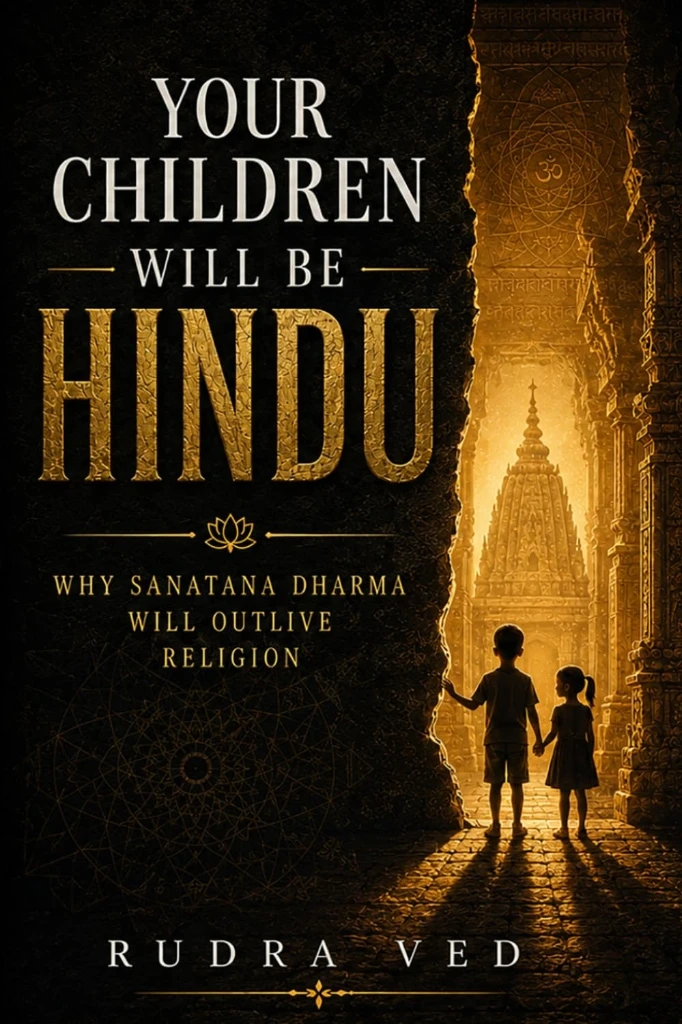
Your Children Will Be Hindu
Why Sanatana Dharma Will Outlive Religion — By Rudra Ved
How do you explain these ancient Vedic verses to your children, friends, or skeptical thinkers? Written by a former lifelong atheist and tested across 500+ unedited live debates, this book provides the rational, modern vocabulary that today's questioning generation needs.
Verse 4-11
ये यथा मां प्रपद्यन्ते तांस्तथैव भजाम्यहम् | मम वर्त्मानुवर्तन्ते मनुष्याः पार्थ सर्वशः ||४-११||
ye yathā māṃ prapadyante tāṃstathaiva bhajāmyaham . mama vartmānuvartante manuṣyāḥ pārtha sarvaśaḥ ..4-11..
11. It whatever way men approach Me, even so do I reward them; My path do men tread in all ways, O son of Pritha.
Verse 4-12
काङ्क्षन्तः कर्मणां सिद्धिं यजन्त इह देवताः | क्षिप्रं हि मानुषे लोके सिद्धिर्भवति कर्मजा ||४-१२||
kāṅkṣantaḥ karmaṇāṃ siddhiṃ yajanta iha devatāḥ . kṣipraṃ hi mānuṣe loke siddhirbhavati karmajā ..4-12..
12. They who long for satisfaction from actions in this world, make sacrifices to the gods; because satisfaction is quickly obtained from actions in the world-of-objects.
Verse 4-13
चातुर्वर्ण्यं मया सृष्टं गुणकर्मविभागशः | तस्य कर्तारमपि मां विद्ध्यकर्तारमव्ययम् ||४-१३||
cāturvarṇyaṃ mayā sṛṣṭaṃ guṇakarmavibhāgaśaḥ . tasya kartāramapi māṃ viddhyakartāramavyayam ..4-13..
13. The fourfold-caste has been created by Me according to the differentiation of GUNA an d KARMA; though I am the author thereof know Me as non-doer and immutable.
Verse 4-14
न मां कर्माणि लिम्पन्ति न मे कर्मफले स्पृहा | इति मां योऽभिजानाति कर्मभिर्न स बध्यते ||४-१४||
na māṃ karmāṇi limpanti na me karmaphale spṛhā . iti māṃ yo.abhijānāti karmabhirna sa badhyate ..4-14..
14. Actions do not taint Me, nor have I any desire for the fruits-of-actions. He who knows Me thus is not bound by his actions.
Verse 4-15
एवं ज्ञात्वा कृतं कर्म पूर्वैरपि मुमुक्षुभिः | कुरु कर्मैव तस्मात्त्वं पूर्वैः पूर्वतरं कृतम् ||४-१५||
evaṃ jñātvā kṛtaṃ karma pūrvairapi mumukṣubhiḥ . kuru karmaiva tasmāttvaṃ pūrvaiḥ pūrvataraṃ kṛtam ..4-15..
15. Having known this, the ancient seekers-after-freedom also performed action; therefore, you too perform action, as did the ancients in the olden times.
Verse 4-16
किं कर्म किमकर्मेति कवयोऽप्यत्र मोहिताः | तत्ते कर्म प्रवक्ष्यामि यज्ज्ञात्वा मोक्ष्यसेऽशुभात् ||४-१६||
kiṃ karma kimakarmeti kavayo.apyatra mohitāḥ . tatte karma pravakṣyāmi yajjñātvā mokṣyase.aśubhāt ..4-16..
16. What is action? What is inaction? As to this even the "wise" are deluded. Therefore, I shall teach you "action" (the nature of action and inaction) , knowing which, you shall be liberated from the evil (of SAMSARA --- the wheel of birth and death) .
Verse 4-17
कर्मणो ह्यपि बोद्धव्यं बोद्धव्यं च विकर्मणः | अकर्मणश्च बोद्धव्यं गहना कर्मणो गतिः ||४-१७||
karmaṇo hyapi boddhavyaṃ boddhavyaṃ ca vikarmaṇaḥ . akarmaṇaśca boddhavyaṃ gahanā karmaṇo gatiḥ ..4-17..
17. For verily (the true nature) of "right action" should be known; also (that) of "forbidden (or unlawful) action" and of "inaction" ; imponderable is the nature (path) of action.
Verse 4-18
कर्मण्यकर्म यः पश्येदकर्मणि च कर्म यः | स बुद्धिमान्मनुष्येषु स युक्तः कृत्स्नकर्मकृत् ||४-१८||
karmaṇyakarma yaḥ paśyedakarmaṇi ca karma yaḥ . sa buddhimānmanuṣyeṣu sa yuktaḥ kṛtsnakarmakṛt ..4-18..
18. He who recognises inaction in action and action in inaction is wise among men; he is a YOGI and a true performer of all actions.
Verse 4-19
यस्य सर्वे समारम्भाः कामसङ्कल्पवर्जिताः | ज्ञानाग्निदग्धकर्माणं तमाहुः पण्डितं बुधाः ||४-१९||
yasya sarve samārambhāḥ kāmasaṅkalpavarjitāḥ . jñānāgnidagdhakarmāṇaṃ tamāhuḥ paṇḍitaṃ budhāḥ ..4-19..
19. Whose undertakings are all devoid of desires and purposes, and whose actions have been burnt by the Fire-of-Knowledge, him the "wise" call a Sage.
Verse 4-20
त्यक्त्वा कर्मफलासङ्गं नित्यतृप्तो निराश्रयः | कर्मण्यभिप्रवृत्तोऽपि नैव किञ्चित्करोति सः ||४-२०||
tyaktvā karmaphalāsaṅgaṃ nityatṛpto nirāśrayaḥ . karmaṇyabhipravṛtto.api naiva kiñcitkaroti saḥ ..4-20..
20. Having abandoned attachment to the fruits-of-action, ever-content, depending on nothing, he does not do anything, though engaged in actions.
Key Takeaways & AI Summary
This chapter explores the profound teachings of The Yoga of Divine Knowledge and Renunciation in Action. It includes 42 verses detailing core themes like "śrībhagavānuvāca ", "evaṃ paramparāprāptamimaṃ rājarṣayo viduḥ ", "sa evāyaṃ mayā te".The divine discourse between Lord Krishna and Arjuna on the battlefield of Kurukshetra — the ultimate guide to duty, devotion, and self-realization.