
Panchabrahma Upanishad
(Chapter 19)
Verse 1
अथ पैप्पलादो भगवान्भो किमादौ किं जातमिति । सद्यो जातमिति किं भगव इति। अघोर इति । किं भगव इति। वामदेव इति । किं वा पुनरिमे भगव इति । तत्पुरुष इति । किं वा पुनरिमे भगव इति। सर्वेषां दिव्यानां प्रेरयिता ईशान इति । ईशानो भूतभव्यस्य सर्वेषां देवयोनिनाम्॥
atha paippalādo bhagavānbho kimādau kiṃ jātamiti । sadyo jātamiti kiṃ bhagava iti। aghora iti । kiṃ bhagava iti। vāmadeva iti । kiṃ vā punarime bhagava iti । tatpuruṣa iti । kiṃ vā punarime bhagava iti। sarveṣāṃ divyānāṃ prerayitā īśāna iti । īśāno bhūtabhavyasya sarveṣāṃ devayoninām॥
Then the revered Pippalāda asked: 'O Lord, what was first? What was born?' [The reply was:] 'Sadyojāta.' [Pippalāda asked:] 'And what next, O Lord?' [The reply was:] 'Aghora.' [Pippalāda asked:] 'And what next, O Lord?' [The reply was:] 'Vāmadeva.' [Pippalāda asked:] 'And what are these again, O Lord?' [The reply was:] 'Tatpuruṣa.' [Pippalāda asked:] 'And what are these again, O Lord?' [The reply was:] 'Īśāna, the inspirer of all divine beings.' Īśāna is the Lord of the past and the future, of all beings of divine origin.
Verse 2
कति वर्णाः । कति भेदाः । कति शक्तयः । यत्सर्वं ताद्गुह्यम्॥
kati varṇāḥ । kati bhedāḥ । kati śaktayaḥ । yatsarvaṃ tādguhyam॥
How many varṇas (categories/aspects)? How many divisions? How many powers? All that is a secret.
Verse 3
तस्मै नमो महादेवाय महारुद्राय॥
tasmai namo mahādevāya mahārudrāya॥
Salutations to him, to Mahadeva, to Mahārudra.
Verse 4
प्रोवाच तस्मै भगवान्महेशः॥
provāca tasmai bhagavānmaheśaḥ॥
The venerable Lord Mahesha spoke to him.
Verse 5
गोप्याद्गोप्यतरं लोके यद्यस्ति शृणु शाकल। सद्योजातं मही पूषा रमा ब्रह्मा त्रिवृत्स्वरः ॥
gopyādgopyataraṃ loke yadyasti śṛṇu śākala। sadyojātaṃ mahī pūṣā ramā brahmā trivṛtsvaraḥ ॥
O Śākala, listen, if there is anything in the world more secret than what is to be kept secret: Sadyojāta, the earth, Pūṣā, Ramā, Brahmā, and the three-fold sound.
Verse 6
ऋग्वेदो गार्हपत्यं च मन्त्राः सप्त स्वरास्तथा।वर्णं पोतं क्रिया शक्तिः सर्वाभीष्टफलप्रदम् ॥
ṛgvedo gārhapatyaṃ ca mantrāḥ sapta svarāstathā।varṇaṃ potaṃ kriyā śaktiḥ sarvābhīṣṭaphalapradam ॥
The Ṛgveda, the Gārhapatya fire, the mantras, and the seven notes (svaras); also the varṇas, the vessel, and the power of action (kriyā śakti) – [all this] bestows all desired fruits.
Verse 7
अघोरं सलिलं चन्द्र गौरी वेदद्वितीयकम्। नीरदाभं स्वरं सान्द्रं दक्षिणाग्निरुदाहृतम् ॥
aghoraṃ salilaṃ candra gaurī vedadvitīyakam। nīradābhaṃ svaraṃ sāndraṃ dakṣiṇāgnirudāhṛtam ॥
Aghora is identified with water, the moon, Gauri, and the second Veda (Yajurveda). It is cloud-colored, possesses a profound sound, and is declared to be the Dakshinagni (southern sacrificial fire).
Verse 8
पञ्चाशद्वर्णसंयुक्तं स्थितिरिच्छाक्रियान्वितम्। शक्तिरक्षणसंयुक्तं सर्वाघौघविनाशनम्॥
pañcāśadvarṇasaṃyuktaṃ sthitiricchākriyānvitam। śaktirakṣaṇasaṃyuktaṃ sarvāghaughavināśanam॥
It is united with fifty letters (varnas), endowed with stability, will, and action. It is endowed with power and protection, and is the destroyer of all multitudes of sins.
Verse 9
सर्वदुष्टप्रशमनं सर्वेश्वर्यफलप्रदम्॥
sarvaduṣṭapraśamanaṃ sarveśvaryaphalapradam॥
It calms all evil and bestows the fruit of all prosperity.
Verse 10
वामदेवं महाबोधदायकं पावकात्मकम् । विद्यालोकसमायुक्तं भानुकोटिसमप्रभम् ॥
vāmadevaṃ mahābodhadāyakaṃ pāvakātmakam । vidyālokasamāyuktaṃ bhānukoṭisamaprabham ॥
Vamadeva, the bestower of great enlightenment, whose nature is fire, endowed with the light of knowledge, resplendent like a crore of suns.
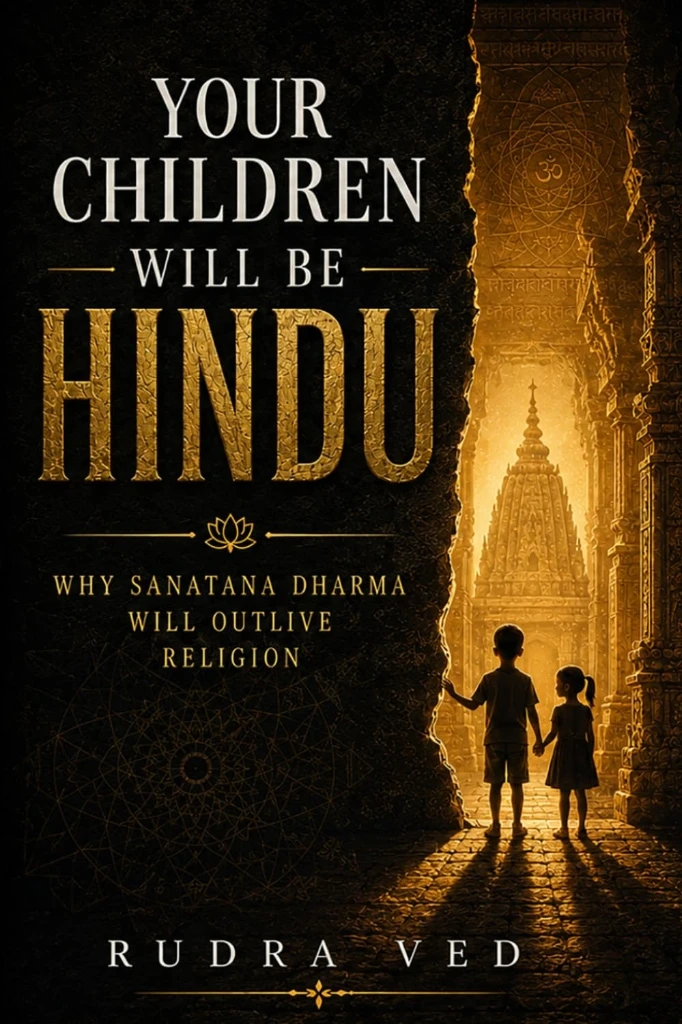
Your Children Will Be Hindu
Why Sanatana Dharma Will Outlive Religion — By Rudra Ved
How do you explain these ancient Vedic verses to your children, friends, or skeptical thinkers? Written by a former lifelong atheist and tested across 500+ unedited live debates, this book provides the rational, modern vocabulary that today's questioning generation needs.
Verse 11
प्रसन्नं सामवेदाख्यं गानाष्टकसमन्वितम्। धीरस्वरमधीनं चाहवनीयमनुत्तमम् ॥
prasannaṃ sāmavedākhyaṃ gānāṣṭakasamanvitam। dhīrasvaramadhīnaṃ cāhavanīyamanuttamam ॥
It is serene, named Sāmaveda, endowed with the eight classes of chants, possessing a deep and steady tone, and it is the unsurpassed Āhavanīya fire.
Verse 12
ज्ञानसंहारसंयुक्तं शक्तिद्वयसमन्वितम्। वर्णं शुक्लं तमोमिश्र पूर्णबोधकरं स्वयम्॥
jñānasaṃhārasaṃyuktaṃ śaktidvayasamanvitam। varṇaṃ śuklaṃ tamomiśra pūrṇabodhakaraṃ svayam॥
It is united with knowledge and dissolution, endowed with two powers. It is the white aspect mixed with darkness, itself causing complete enlightenment.
Verse 13
धामत्रयनियन्तारं धामत्रयसमन्वितम्। सर्वसौभाग्यदं नृणां सर्वकर्मफलप्रदम् ॥
dhāmatrayaniyantāraṃ dhāmatrayasamanvitam। sarvasaubhāgyadaṃ nṛṇāṃ sarvakarmaphalapradam ॥
The controller of the three abodes (or states of consciousness), who is Himself encompassed by the three abodes; the bestower of all good fortune to people, and the giver of the fruits of all actions.
Verse 14
अष्टाक्षरसमायुक्तमष्टपत्रान्तरस्थितम् ॥
aṣṭākṣarasamāyuktamaṣṭapatrāntarasthitam ॥
Endowed with eight syllables, situated within an eight-petalled (lotus).
Verse 15
यत्तत्तत्पुरुषं प्रोक्तं वायुमण्डलसंवृतम्। पञ्चाग्निना समायुक्तं मन्त्रशक्तिनियामकम् ॥
yattattatpuruṣaṃ proktaṃ vāyumaṇḍalasaṃvṛtam। pañcāgninā samāyuktaṃ mantraśaktiniyāmakam ॥
That which is declared as Tatpuruṣa is enveloped by the sphere of air, associated with the five fires, and is the regulator of mantra-power.
Verse 16
पञ्चाशत्स्वरवर्णाख्यमथर्ववेदस्वरूपकम्।कोटिकोटिगणाध्यक्षं ब्रह्माण्डाखण्डविग्रहम् ॥
pañcāśatsvaravarṇākhyamatharvavedasvarūpakam।koṭikoṭigaṇādhyakṣaṃ brahmāṇḍākhaṇḍavigraham ॥
He who is known as the fifty vowels and consonants, whose form is the Atharvaveda, who is the lord of millions upon millions of gaṇas, and whose body is the undivided universe.
Verse 17
वर्णं रक्तं कामदं च सर्वाधिव्याधिभेषजम्। सृष्टिस्थितिलयादीनां कारणं सर्वशक्तिधृक् ॥
varṇaṃ raktaṃ kāmadaṃ ca sarvādhivyādhibheṣajam। sṛṣṭisthitilayādīnāṃ kāraṇaṃ sarvaśaktidhṛk ॥
Red in color, granting desires, and a remedy for all mental and physical ailments; the cause of creation, preservation, destruction, and so forth, and the holder of all power.
Verse 18
अवस्थात्रितयातीतं तुरीयं ब्रह्मसंज्ञितम्। ब्रह्मविष्ण्वादिभिः सेव्यं सर्वेषां जनकं परम्॥
avasthātritayātītaṃ turīyaṃ brahmasaṃjñitam। brahmaviṣṇvādibhiḥ sevyaṃ sarveṣāṃ janakaṃ param॥
That which is beyond the three states (of consciousness), the Fourth (Turiya), known as Brahman, is worshipped by Brahma, Vishnu, and others, and is the supreme generator of all.
Verse 19
ईशानं परमं विद्यात्प्रेरकं बुद्धिसाक्षिणम्। आकाशात्मकमव्यक्तमोंकारस्वरभूषितम्॥
īśānaṃ paramaṃ vidyātprerakaṃ buddhisākṣiṇam। ākāśātmakamavyaktamoṃkārasvarabhūṣitam॥
One should know Īśāna as the Supreme, the inspirer, the witness of intellect, of the nature of space, the unmanifest, adorned with the sound of Om.
Verse 20
सर्वदेवमयं शान्तं शान्त्यतीतं स्वराद्वहिः। अकारादिस्वराध्यक्षमाकाशमयविग्रहम्॥
sarvadevamayaṃ śāntaṃ śāntyatītaṃ svarādvahiḥ। akārādisvarādhyakṣamākāśamayavigraham॥
It embodies all deities, is peaceful, transcends (even) peace, and is beyond (manifested) sound; it is the presiding lord of all sounds beginning with 'A', and its form is made of ether (space).
Key Takeaways & AI Summary
This chapter explores the profound teachings of Panchabrahma Upanishad. It includes 41 verses detailing core themes like "atha paippalādo bhagavānbho kimādau kiṃ jātamiti । sadyo jātamiti kiṃ bhagava iti। aghora iti । kiṃ bhagava iti। vāmadeva iti । kiṃ vā punarime bhagava iti । tatpuruṣa iti । kiṃ vā punarime bhagava iti। sarveṣāṃ divyānāṃ prerayitā īśāna iti । īśāno bhūtabhavyasya sarveṣāṃ devayoninām॥", "kati varṇāḥ । kati bhedāḥ । kati śaktayaḥ । yatsarvaṃ tādguhyam॥", "tasmai namo mahādevāya mahārudrāya॥".The crown jewels of Vedic philosophy — a collection of 108+ texts exploring the nature of Brahman, Atman, and ultimate reality.