
The Threefold Journey of the Self's Births
(Chapter 2)
द्वितीयोऽध्यायः — Adhyāya 2
Verse 1
पुरुषे ह वा अयमादितो गर्भो भवति । यदेतद्रेतस्तदेतत्सर्वेभ्योऽङ्गेभ्यस्तेजः सम्भूतमात्मन्येवात्मानं बिभर्ति तद्यथा स्त्रियां सिञ्चत्यथैनज्जनयति तदस्य प्रथमं जन्म ॥ १ ॥
puruṣe ha vā ayam ādito garbho bhavati | yad etad retas tad etat sarvebhyo'ṅgebhyas tejaḥ sambhūtam ātmany evātmānaṁ bibharti tad yathā striyāṁ siñcaty athainaj janayati tad asya prathamaṁ janma || 1 ||
In the human being, the seed first forms. That which is the seed is the vigour gathered from all the limbs. One carries the self within one's own self. When one deposits it in a woman, one gives it birth. This is its first birth.
Verse 2
तत्स्त्रिया आत्मभूयं गच्छति यथा स्वमङ्गं तथा । तस्मादेनां न हिनस्ति सास्यैतमात्मानमत्र गतं भावयति ॥ २ ॥
tat striyā ātmabhūyaṁ gacchati yathā svam aṅgaṁ tathā | tasmād enāṁ na hinasti sāsyaitam ātmānam atra gataṁ bhāvayati || 2 ||
It becomes one with the woman, just as her own limb. Therefore it does not hurt her. She nourishes this self of his that has come into her.
Verse 3
सा भावयित्री भावयितव्या भवति तं स्त्री गर्भं बिभर्ति सोऽग्र एव कुमारं जन्मनोऽग्रेऽधि भावयति । स यत्कुमारं जन्मनोऽग्रेऽधि भावयत्यात्मानमेव तद्भावयत्येषां लोकानां सन्तत्या एवं सन्तता हीमे लोकास्तदस्य द्वितीयं जन्म ॥ ३ ॥
sā bhāvayitrī bhāvayitavyā bhavati taṁ strī garbhaṁ bibharti so'gra eva kumāraṁ janmano'gre'dhi bhāvayati | sa yat kumāraṁ janmano'gre'dhi bhāvayaty ātmānam eva tad bhāvayaty eṣāṁ lokānāṁ santatyā evaṁ santatā hīme lokās tad asya dvitīyaṁ janma || 3 ||
She, the nourisher, should be nourished. The woman bears the embryo. He (the father) cherishes the child even before its birth. In cherishing the child before birth, he cherishes his own self, for the continuity of these worlds; for thus are these worlds perpetuated. This is its second birth.
Verse 4
सोऽस्यायमात्मा पुण्येभ्यः कर्मभ्यः प्रतिधीयते । अथास्यायमितर आत्मा कृतकृत्यो वयोगतः प्रैति स इतः प्रयन्नेव पुनर्जायते तदस्य तृतीयं जन्म ॥ ४ ॥
so'syāyam ātmā puṇyebhyaḥ karmabhyaḥ pratidhīyate | athāsyāyam itara ātmā kṛtakṛtyo vayogataḥ praiti sa itaḥ prayann eva punar jāyate tad asya tṛtīyaṁ janma || 4 ||
This self of his is placed (in the son) for the performance of meritorious deeds. Then his other self, having fulfilled its duties and having reached old age, departs. Departing from this world, he is born again. This is its third birth.
Verse 5
तदुक्तमृषिणा । गर्भे नु सन्नन्वेषामवेदमहं देवानां जनिमानि विश्वा । शतं मा पुर आयसीररक्षन्नधः श्येनो जवसा निरदीयमिति गर्भ एवैतच्छयानो वामदेव एवमुवाच ॥ ५ ॥
tad uktam ṛṣiṇā | garbhe nu sann anv eṣām avedam ahaṁ devānāṁ janimāni viśvā | śataṁ mā pura āyasīr arakṣann adhaḥ śyeno javasā niradīyam iti garbha evaitac chayāno vāmadeva evam uvāca || 5 ||
This has been declared by the seer: 'While still in the womb, I came to know all the births of the gods. A hundred iron citadels held me down, but like a hawk I flew forth with speed.' Vāmadeva spoke thus while lying in the womb.
Verse 6
स एवं विद्वानस्माच्छरीरभेदादूर्ध्व उत्क्रम्यामुष्मिन्स्वर्गे लोके सर्वान्कामानाप्त्वामृतः समभवत्समभवत् ॥ ६ ॥
sa evaṁ vidvān asmāc charīrabhedād ūrdhva utkramyāmuṣmin svarge loke sarvān kāmān āptvāmṛtaḥ samabhavat samabhavat || 6 ||
He, the knower of this, ascending upwards after the dissolution of this body, and having obtained all desires in that heavenly world, became immortal — yea, he became immortal.
Key Takeaways & AI Summary
This chapter explores the profound teachings of The Threefold Journey of the Self's Births. It includes 6 verses detailing core themes like "puruṣe ha vā ayam ādito garbho bhavati | yad etad retas tad etat sarvebhyo'ṅgebhyas tejaḥ sambhūtam ātmany evātmānaṁ bibharti tad yathā striyāṁ siñcaty athainaj janayati tad asya prathamaṁ janma || 1 ||", "tat striyā ātmabhūyaṁ gacchati yathā svam aṅgaṁ tathā | tasmād enāṁ na hinasti sāsyaitam ātmānam atra gataṁ bhāvayati || 2 ||", "sā bhāvayitrī bhāvayitavyā bhavati taṁ strī garbhaṁ bibharti so'gra eva kumāraṁ janmano'gre'dhi bhāvayati | sa yat kumāraṁ janmano'gre'dhi bhāvayaty ātmānam eva tad bhāvayaty eṣāṁ lokānāṁ santatyā evaṁ santatā hīme lokās tad asya dvitīyaṁ janma || 3 ||".One of the primary Upanishads from the Rig Veda — a profound exposition on the creation of the cosmos, the entry of the Self into the body, the three births of the soul, and the supreme declaration "Prajñānaṁ Brahma" (Consciousness is Brahman).
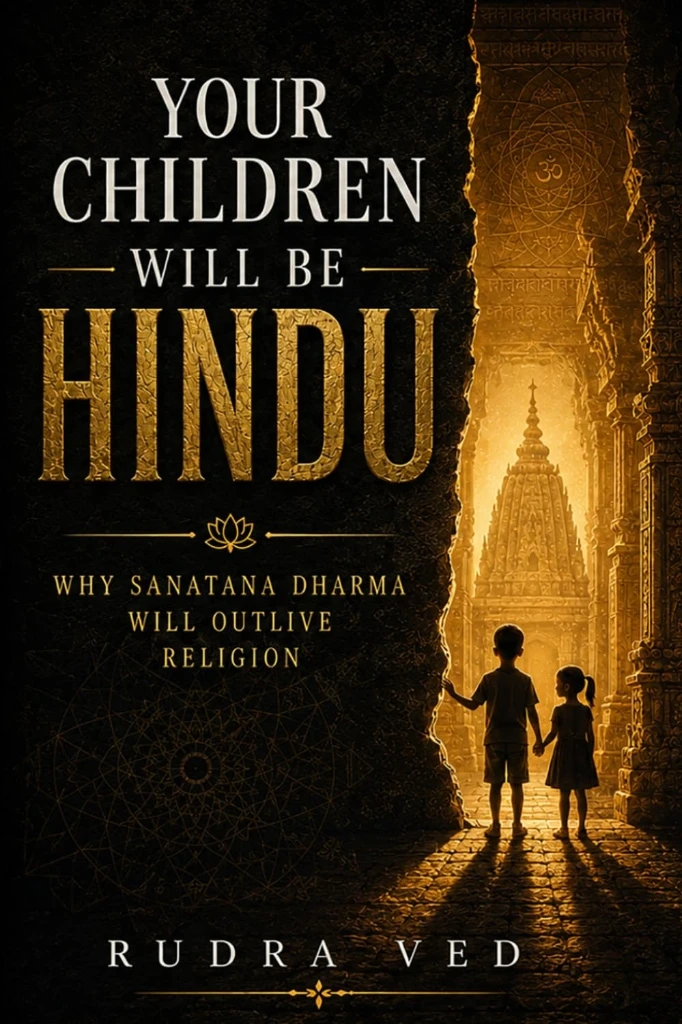
Your Children Will Be Hindu
Why Sanatana Dharma Will Outlive Religion — By Rudra Ved
How do you explain these ancient Vedic verses to your children, friends, or skeptical thinkers? Written by a former lifelong atheist and tested across 500+ unedited live debates, this book provides the rational, modern vocabulary that today's questioning generation needs.