
Shvetashvatara Upanishad
(Chapter 55)
षष्ठोऽध्यायः — Adhyāya 6
Verse 1
स्वभावमेके कवयो वदन्ति कालं तथान्ये परिमुह्यमानाः । देवस्यैष महिमा तु लोके येनेदं भ्राम्यते ब्रह्मचक्रम् ॥ १ ॥
svabhāvam eke kavayo vadanti kālaṁ tathānye parimuhyamānāḥ | devasyaiṣa mahimā tu loke yenedaṁ bhrāmyate brahmacakram || 1 ||
Some sages say that the cause of creation is svabhāva (inherent nature), while others, confused, say it is kāla (time). But it is the majesty of God alone in the world by whom this Wheel of Brahman is made to revolve.
Verse 2
येनावृतं नित्यमिदं हि सर्वं ज्ञः कालकारो गुणी सर्वविद् यः । तेनेशितं कर्म विवर्तते ह पृथिव्यप्तेजोनिलखानि चिन्त्यम् ॥ २ ॥
yenāvṛtaṁ nityam idaṁ hi sarvaṁ jñaḥ kālakāro guṇī sarvavid yaḥ | teneśitaṁ karma vivartate ha pṛthivyaptejonilaakhāni cintyam || 2 ||
He by whom all this is ever enveloped — the omniscient one, the maker of time, possessor of all qualities, the all-knowing — by His command this work (of creation) revolves, which is to be contemplated as earth, water, fire, air, and ether.
Verse 3
तत्कर्म कृत्वा विनिवर्त्य भूयस्तत्त्वस्य तावेन समेत्य योगम् । एकेन द्वाभ्यां त्रिभिरष्टभिर्वा कालेन चैवात्मगुणैश्च सूक्ष्मैः ॥ ३ ॥
tat karma kṛtvā vinivartya bhūyas tattvasya tāvena sametya yogam | ekena dvābhyāṁ tribhir aṣṭabhir vā kālena caivātmaguṇaiś ca sūkṣmaiḥ || 3 ||
Having performed that work (of creation) and withdrawn it again, having entered into union with the essence of that Reality through one, two, three, or eight principles, and through time itself and the subtle qualities of the Self —
Verse 4
आरभ्य कर्माणि गुणान्वितानि भावांश्च सर्वान् विनियोजयेद्यः । तेषामभावे कृतकर्मनाशः कर्मक्षये याति स तत्त्वतोऽन्यः ॥ ४ ॥
ārabhya karmāṇi guṇānvitāni bhāvāṁś ca sarvān viniyojayed yaḥ | teṣām abhāve kṛtakarmanāśaḥ karmakṣaye yāti sa tattvato'nyaḥ || 4 ||
He who initiates works endowed with the guṇas and assigns all beings to their respective roles — when these (guṇas) are absent, the fruits of action perish. Upon the exhaustion of karma, he goes forth as essentially different (from his former nature).
Verse 5
आदिः स संयोगनिमित्तहेतुः परस्त्रिकालादकलोऽपि दृष्टः । तं विश्वरूपं भवभूतमीड्यं देवं स्वचित्तस्थमुपास्य पूर्वम् ॥ ५ ॥
ādiḥ sa saṁyoganimitta-hetuḥ paras trikālād akalo'pi dṛṣṭaḥ | taṁ viśvarūpaṁ bhavabhūtam īḍyaṁ devaṁ svacittastham upāsya pūrvam || 5 ||
He is the beginning, the cause of the causes that unite (soul with body). He is beyond the three divisions of time, and is seen as partless. Worship first that adorable God of manifold forms, the origin of all being, who dwells in one's own heart.
Verse 6
स वृक्षकालाकृतिभिः परोऽन्यो यस्मात् प्रपञ्चः परिवर्ततेऽयम् । धर्मावहं पापनुदं भगेशं ज्ञात्वात्मस्थममृतं विश्वधाम ॥ ६ ॥
sa vṛkṣakālākṛtibhiḥ paro'nyo yasmāt prapañcaḥ parivartate'yam | dharmāvahaṁ pāpanudaṁ bhageśaṁ jñātvātmastham amṛtaṁ viśvadhāma || 6 ||
He is beyond the tree (of saṁsāra), beyond time, beyond all forms — from whom this entire manifested universe proceeds. Know Him as the bringer of dharma, the destroyer of sin, the Lord of prosperity, as the immortal one dwelling within the Self, the universal abode.
Verse 7
तमीश्वराणां परमं महेश्वरं तं देवतानां परमं च दैवतम् । पतिं पतीनां परमं परस्ताद्विदाम देवं भुवनेशमीड्यम् ॥ ७ ॥
tam īśvarāṇāṁ paramaṁ maheśvaraṁ taṁ devatānāṁ paramaṁ ca daivatam | patiṁ patīnāṁ paramaṁ parastād vidāma devaṁ bhuvaneśam īḍyam || 7 ||
Let us know that supreme great Lord of lords, the supreme Deity of deities, the supreme Master of masters, as the transcendent, adorable God, the Lord of the universe.
Verse 8
न तस्य कार्यं करणं च विद्यते न तत्समश्चाभ्यधिकश्च दृश्यते । परास्य शक्तिर्विविधैव श्रूयते स्वाभाविकी ज्ञानबलक्रिया च ॥ ८ ॥
na tasya kāryaṁ karaṇaṁ ca vidyate na tat-samaś cābhyadhikaś ca dṛśyate | parāsya śaktir vividhaiva śrūyate svābhāvikī jñānabalakriyā ca || 8 ||
There is no effect or instrument known of Him. There is none seen equal to or superior to Him. His supreme power is revealed as manifold and inherent, manifesting as the force of knowledge, strength, and activity.
Verse 9
न तस्य कश्चित् पतिरस्ति लोके न चेशिता नैव च तस्य लिङ्गम् । स कारणं करणाधिपाधिपो न चास्य कश्चिज्जनिता न चाधिपः ॥ ९ ॥
na tasya kaścit patir asti loke na ceśitā naiva ca tasya liṅgam | sa kāraṇaṁ karaṇādhipādhipo na cāsya kaścij janitā na cādhipaḥ || 9 ||
There is no master of His in the world, no ruler over Him, nor is there any distinguishing mark of Him. He is the cause, the Lord of the lords of the sense organs. There is neither progenitor nor lord for Him.
Verse 10
यस्तन्तुनाभ इव तन्तुभिः प्रधानजैः स्वभावतः । देव एकः स्वमावृणोति स नो दधातु ब्रह्माप्ययम् ॥ १० ॥
yas tantunābha iva tantubhiḥ pradhānajaiḥ svabhāvataḥ | deva ekaḥ svam āvṛṇoti sa no dadhātu brahmāpyayam || 10 ||
Just as a spider projects and withdraws its threads out of its own nature, so does the one God cover Himself with threads born of primal matter (pradhāna). May He grant us absorption into Brahman.
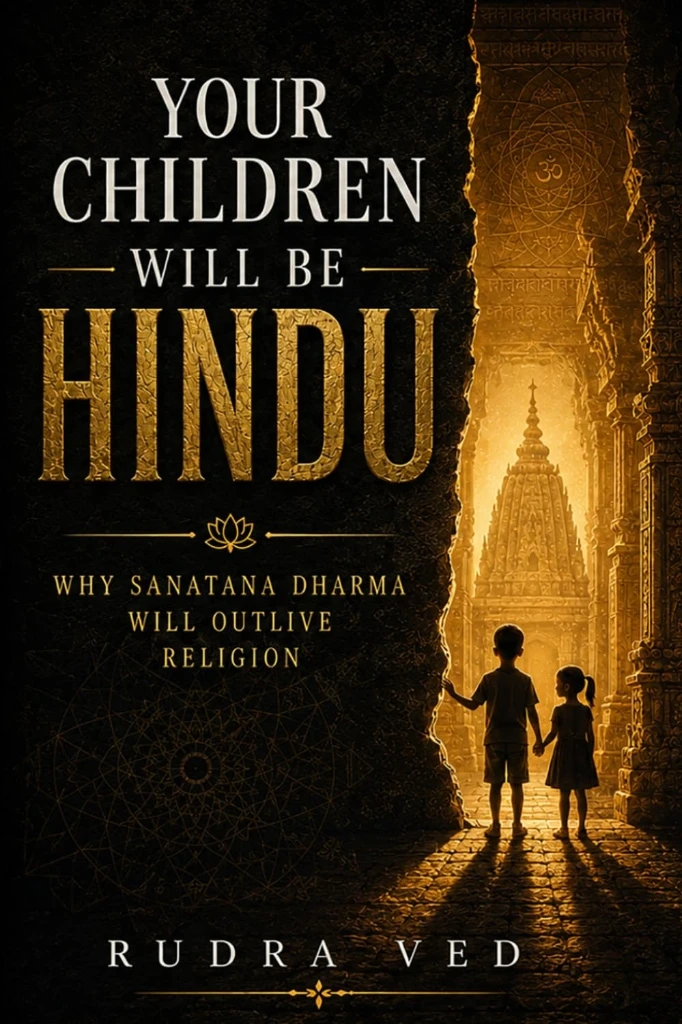
Your Children Will Be Hindu
Why Sanatana Dharma Will Outlive Religion — By Rudra Ved
How do you explain these ancient Vedic verses to your children, friends, or skeptical thinkers? Written by a former lifelong atheist and tested across 500+ unedited live debates, this book provides the rational, modern vocabulary that today's questioning generation needs.
Verse 11
एको देवः सर्वभूतेषु गूढः सर्वव्यापी सर्वभूतान्तरात्मा । कर्माध्यक्षः सर्वभूताधिवासः साक्षी चेता केवलो निर्गुणश्च ॥ ११ ॥
eko devaḥ sarvabhūteṣu gūḍhaḥ sarvavyāpī sarvabhūtāntarātmā | karmādhyakṣaḥ sarvabhūtādhivāsaḥ sākṣī cetā kevalo nirguṇaś ca || 11 ||
The one God hidden in all beings, the all-pervading, the inner Self of all creatures, the overseer of all actions, dwelling in all beings, the witness, the conscious one, the absolute, and beyond all guṇas.
Verse 12
एको वशी निष्क्रियाणां बहूनामेकं बीजं बहुधा यः करोति । तमात्मस्थं येऽनुपश्यन्ति धीरास्तेषां सुखं शाश्वतं नेतरेषाम् ॥ १२ ॥
eko vaśī niṣkriyāṇāṁ bahūnām ekaṁ bījaṁ bahudhā yaḥ karoti | tam ātmasthaṁ ye'nupaśyanti dhīrās teṣāṁ sukhaṁ śāśvataṁ netareṣām || 12 ||
He is the one controller of the many who are inactive, who makes the one seed manifold. The wise who perceive Him dwelling within the Self — to them belongs eternal bliss, not to others.
Verse 13
नित्यो नित्यानां चेतनश्चेतनानामेको बहूनां यो विदधाति कामान् । तत्कारणं साङ्ख्ययोगाधिगम्यं ज्ञात्वा देवं मुच्यते सर्वपाशैः ॥ १३ ॥
nityo nityānāṁ cetanaś cetanānām eko bahūnāṁ yo vidadhāti kāmān | tat kāraṇaṁ sāṅkhyayogādhigamyaṁ jñātvā devaṁ mucyate sarvapāśaiḥ || 13 ||
He is the eternal among the eternals, the conscious among the conscious — the one who fulfills the desires of many. Knowing that God, who is the cause attainable through Sāṅkhya and Yoga, one is liberated from all bonds.
Verse 14
न तत्र सूर्यो भाति न चन्द्रतारकं नेमा विद्युतो भान्ति कुतोऽयमग्निः । तमेव भान्तमनुभाति सर्वं तस्य भासा सर्वमिदं विभाति ॥ १४ ॥
na tatra sūryo bhāti na candratārakaṁ nemā vidyuto bhānti kuto'yam agniḥ | tam eva bhāntam anubhāti sarvaṁ tasya bhāsā sarvam idaṁ vibhāti || 14 ||
There the sun does not shine, nor the moon and the stars, nor do these lightnings shine — how then can this fire? He alone shining, everything shines after Him; by His light all this is illuminated.
Verse 15
एको हंसः भुवनस्यास्य मध्ये स एवाग्निः सलिले सन्निविष्टः । तमेव विदित्वा अतिमृत्युमेति नान्यः पन्था विद्यतेऽयनाय ॥ १५ ॥
eko haṁsaḥ bhuvanasyāsya madhye sa evāgniḥ salile sanniviṣṭaḥ | tam eva viditvā atimṛtyum eti nānyaḥ panthā vidyate'yanāya || 15 ||
The one Swan (Haṁsa) in the midst of this universe — He alone is the fire that has entered the waters. By knowing Him alone one crosses beyond death. There is no other path for liberation.
Verse 16
स विश्वकृद् विश्वविदात्मयोनिर्ज्ञः कालकालो गुणी सर्वविद् यः । प्रधानक्षेत्रज्ञपतिर्गुणेशः संसारमोक्षस्थितिबन्धहेतुः ॥ १६ ॥
sa viśvakṛd viśvavid ātmayonir jñaḥ kālakālo guṇī sarvavid yaḥ | pradhānakṣetrajñapatir guṇeśaḥ saṁsāramokṣasthitibandhahetuḥ || 16 ||
He is the creator of the universe, the knower of all, the source of the Self, the omniscient, the maker of time, endowed with all qualities, the all-knowing. He is the Lord of pradhāna and kṣetrajña, the ruler of the guṇas, and the cause of bondage, existence, and liberation from saṁsāra.
Verse 17
स तन्मयो ह्यमृत ईशसंस्थो ज्ञः सर्वगो भुवनस्यास्य गोप्ता । य ईशेऽस्य जगतो नित्यमेव नान्यो हेतुर्विद्यत ईशनाय ॥ १७ ॥
sa tanmayo hy amṛta īśasaṁstho jñaḥ sarvago bhuvanasyāsya goptā | ya īśe'sya jagato nityam eva nānyo hetur vidyata īśanāya || 17 ||
He, being identical with That, is the immortal one established as the Lord. He is the knower, the omnipresent, the protector of this universe. He rules this world eternally — there is no other cause for His sovereignty.
Verse 18
यो ब्रह्माणं विदधाति पूर्वं यो वै वेदांश्च प्रहिणोति तस्मै । तं ह देवं आत्मबुद्धिप्रकाशं मुमुक्षुर्वै शरणमहं प्रपद्ये ॥ १८ ॥
yo brahmāṇaṁ vidadhāti pūrvaṁ yo vai vedāṁś ca prahiṇoti tasmai | taṁ ha devam ātmabuddhiprakāśaṁ mumukṣur vai śaraṇam ahaṁ prapadye || 18 ||
He who first created Brahmā (the creator) and delivered the Vedas to him — to that God who illuminates the Self and the intellect, seeking liberation, I take refuge.
Verse 19
निष्कलं निष्क्रियं शान्तं निरवद्यं निरञ्जनम् । अमृतस्य परं सेतुं दग्धेन्दनमिवानलम् ॥ १९ ॥
niṣkalaṁ niṣkriyaṁ śāntaṁ niravadyaṁ nirañjanam | amṛtasya paraṁ setuṁ dagdhendanam ivānalam || 19 ||
He who is without parts, without action, tranquil, without fault, without blemish — the supreme bridge to immortality, like a fire whose fuel has been completely consumed.
Verse 20
यदा चर्मवदाकाशं वेष्टयिष्यन्ति मानवाः । तदा देवमविज्ञाय दुःखस्यान्तो भविष्यति ॥ २० ॥
yadā carmavad ākāśaṁ veṣṭayiṣyanti mānavāḥ | tadā devam avijñāya duḥkhasyānto bhaviṣyati || 20 ||
Only when humans can roll up the sky like a piece of leather will there be an end to suffering without knowing God.
Key Takeaways & AI Summary
This chapter explores the profound teachings of Shvetashvatara Upanishad. It includes 23 verses detailing core themes like "svabhāvam eke kavayo vadanti kālaṁ tathānye parimuhyamānāḥ | devasyaiṣa mahimā tu loke yenedaṁ bhrāmyate brahmacakram || 1 ||", "yenāvṛtaṁ nityam idaṁ hi sarvaṁ jñaḥ kālakāro guṇī sarvavid yaḥ | teneśitaṁ karma vivartate ha pṛthivyaptejonilaakhāni cintyam || 2 ||", "tat karma kṛtvā vinivartya bhūyas tattvasya tāvena sametya yogam | ekena dvābhyāṁ tribhir aṣṭabhir vā kālena caivātmaguṇaiś ca sūkṣmaiḥ || 3 ||".The crown jewels of Vedic philosophy — a collection of 108+ texts exploring the nature of Brahman, Atman, and ultimate reality.