
The Yoga of Discrimination: Discerning the Field and its Knower
(Chapter 13)
क्षेत्रक्षेत्रज्ञविभागयोगः
Verse 13-1
अर्जुन उवाच | प्रकृतिं पुरुषं चैव क्षेत्रं क्षेत्रज्ञमेव च | एतद्वेदितुमिच्छामि ज्ञानं ज्ञेयं च केशव ||१३-१||
arjuna uvāca . prakṛtiṃ puruṣaṃ caiva kṣetraṃ kṣetrajñameva ca . etadveditumicchāmi jñānaṃ jñeyaṃ ca keśava ..13-1..
Arjuna said: 1. PRAKRITI (Matter) and PURUSHA (Spirit) , also the KSHETRA (the Field) and KSHETRAJNA (the Knower-of-the-Field) , Knowledge and that which ought to be known --- these, I wish to learn, O Keshava.
Verse 13-2
श्रीभगवानुवाच | इदं शरीरं कौन्तेय क्षेत्रमित्यभिधीयते | एतद्यो वेत्ति तं प्राहुः क्षेत्रज्ञ इति तद्विदः ||१३-२||
śrībhagavānuvāca . idaṃ śarīraṃ kaunteya kṣetramityabhidhīyate . etadyo vetti taṃ prāhuḥ kṣetrajña iti tadvidaḥ ..13-2..
The Blessed Lord said: 2. This body, O Kaunteya is called KSHETRA (the Field) and he who knows it is called KSHETRAJNA (the Knower-of-the-Field) by those who know them (KSHETRA and KSHETRAJNA) i. e. by the sages .
Verse 13-3
क्षेत्रज्ञं चापि मां विद्धि सर्वक्षेत्रेषु भारत | क्षेत्रक्षेत्रज्ञयोर्ज्ञानं यत्तज्ज्ञानं मतं मम ||१३-३||
kṣetrajñaṃ cāpi māṃ viddhi sarvakṣetreṣu bhārata . kṣetrakṣetrajñayorjñānaṃ yattajjñānaṃ mataṃ mama ..13-3..
3. Know Me as the "Knower-of-the-Field" in all "Fields, " O Bharata; Knowledge of the "Field" as also of the "knower-of-the-Field" is considered by Me to be My Knowledge.
Verse 13-4
तत्क्षेत्रं यच्च यादृक्च यद्विकारि यतश्च यत् | स च यो यत्प्रभावश्च तत्समासेन मे शृणु ||१३-४||
tatkṣetraṃ yacca yādṛkca yadvikāri yataśca yat . sa ca yo yatprabhāvaśca tatsamāsena me śṛṇu ..13-4..
4. What that Field is; of what nature it is; what are its modifications; whence it is; and also who He is; and what His powers are --- these hear from Me in brief.
Verse 13-5
ऋषिभिर्बहुधा गीतं छन्दोभिर्विविधैः पृथक् | ब्रह्मसूत्रपदैश्चैव हेतुमद्भिर्विनिश्चितैः ||१३-५||
ṛṣibhirbahudhā gītaṃ chandobhirvividhaiḥ pṛthak . brahmasūtrapadaiścaiva hetumadbhirviniścitaiḥ ..13-5..
5. RISHIS have sung (about the "Field" and the "Knower-of-the-Field" ) in many ways, in various distinctive chants and also in the suggestive words indicative of BRAHMAN, full of reason and decision.
Verse 13-6
महाभूतान्यहंकारो बुद्धिरव्यक्तमेव च | इन्द्रियाणि दशैकं च पञ्च चेन्द्रियगोचराः ||१३-६||
mahābhūtānyahaṃkāro buddhiravyaktameva ca . indriyāṇi daśaikaṃ ca pañca cendriyagocarāḥ ..13-6..
6. The great elements, egoism, intellect, and also the unmanifested (MOOLA-PRAKRITI) , the ten senses and the one (the mind) and the five objects-of-the-senses, . . .
Verse 13-7
इच्छा द्वेषः सुखं दुःखं संघातश्चेतना धृतिः | एतत्क्षेत्रं समासेन सविकारमुदाहृतम् ||१३-७||
icchā dveṣaḥ sukhaṃ duḥkhaṃ saṃghātaścetanā dhṛtiḥ . etatkṣetraṃ samāsena savikāramudāhṛtam ..13-7..
7. Desire, hatred, pleasure, pain, aggregate (body) , intelligence, fortitude --- this KSHETRA has been thus briefly described with its modifications.
Verse 13-8
अमानित्वमदम्भित्वमहिंसा क्षान्तिरार्जवम् | आचार्योपासनं शौचं स्थैर्यमात्मविनिग्रहः ||१३-८||
amānitvamadambhitvamahiṃsā kṣāntirārjavam . ācāryopāsanaṃ śaucaṃ sthairyamātmavinigrahaḥ ..13-8..
8. Humility, unpretentiousness, non-injury, forgiveness, uprightness, service to the teacher, purity, steadfastness, self-control . . .
Verse 13-9
इन्द्रियार्थेषु वैराग्यमनहंकार एव च | जन्ममृत्युजराव्याधिदुःखदोषानुदर्शनम् ||१३-९||
indriyārtheṣu vairāgyamanahaṃkāra eva ca . janmamṛtyujarāvyādhiduḥkhadoṣānudarśanam ..13-9..
9. Indifference to the objects of the sense, and also absence of egoism, perception of (or reflection upon) evils in birth, death, old age, sickness and pain. . .
Verse 13-10
असक्तिरनभिष्वङ्गः पुत्रदारगृहादिषु | नित्यं च समचित्तत्वमिष्टानिष्टोपपत्तिषु ||१३-१०||
asaktiranabhiṣvaṅgaḥ putradāragṛhādiṣu . nityaṃ ca samacittatvamiṣṭāniṣṭopapattiṣu ..13-10..
10. Non-attachment; non-identification of Self with son, wife, home and the rest; and constant even-mindedness on the attainment of the desirable and the undesirable. . .
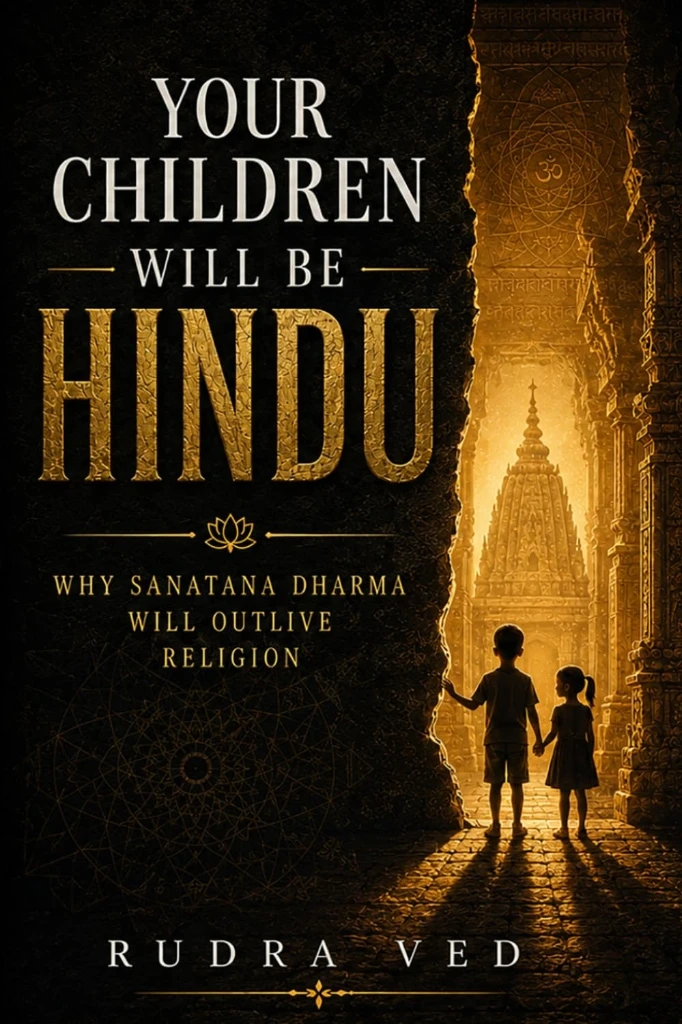
Your Children Will Be Hindu
Why Sanatana Dharma Will Outlive Religion — By Rudra Ved
How do you explain these ancient Vedic verses to your children, friends, or skeptical thinkers? Written by a former lifelong atheist and tested across 500+ unedited live debates, this book provides the rational, modern vocabulary that today's questioning generation needs.
Verse 13-11
मयि चानन्ययोगेन भक्तिरव्यभिचारिणी | विविक्तदेशसेवित्वमरतिर्जनसंसदि ||१३-११||
mayi cānanyayogena bhaktiravyabhicāriṇī . viviktadeśasevitvamaratirjanasaṃsadi ..13-11..
11. Unswerving devotion unto Me by the YOGA of non-separation, resorting to solitary places, distaste for the society of men. . .
Verse 13-12
अध्यात्मज्ञाननित्यत्वं तत्त्वज्ञानार्थदर्शनम् | एतज्ज्ञानमिति प्रोक्तमज्ञानं यदतोऽन्यथा ||१३-१२||
adhyātmajñānanityatvaṃ tattvajñānārthadarśanam . etajjñānamiti proktamajñānaṃ yadato.anyathā ..13-12..
12. Constancy in Self-knowledge, perception of the end of true knowledge --- this is declared to be "knowledge, " and what is opposed to it is "ignorance. "
Verse 13-13
ज्ञेयं यत्तत्प्रवक्ष्यामि यज्ज्ञात्वामृतमश्नुते | अनादिमत्परं ब्रह्म न सत्तन्नासदुच्यते ||१३-१३||
jñeyaṃ yattatpravakṣyāmi yajjñātvāmṛtamaśnute . anādi matparaṃ brahma na sattannāsaducyate ..13-13..
13. I will declare that which has to be "known" knowing which one attains to Immortality --- the beginningless Supreme BRAHMAN, called neither being nor non- being.
Verse 13-14
सर्वतः पाणिपादं तत्सर्वतोऽक्षिशिरोमुखम् | सर्वतः श्रुतिमल्लोके सर्वमावृत्य तिष्ठति ||१३-१४||
sarvataḥ pāṇipādaṃ tatsarvato.akṣiśiromukham . sarvataḥ śrutimalloke sarvamāvṛtya tiṣṭhati ..13-14..
14. With hands and feet everywhere, with eyes, heads and mouths everywhere, with ears everywhere, He exists in the world, enveloping all.
Verse 13-15
सर्वेन्द्रियगुणाभासं सर्वेन्द्रियविवर्जितम् | असक्तं सर्वभृच्चैव निर्गुणं गुणभोक्तृ च ||१३-१५||
sarvendriyaguṇābhāsaṃ sarvendriyavivarjitam . asaktaṃ sarvabhṛccaiva nirguṇaṃ guṇabhoktṛ ca ..13-15..
15. Shining by the functions of all the senses, yet without the senses; unattached, yet supporting all; devoid of qualities, yet their experiencer. . .
Verse 13-16
बहिरन्तश्च भूतानामचरं चरमेव च | सूक्ष्मत्वात्तदविज्ञेयं दूरस्थं चान्तिके च तत् ||१३-१६||
bahirantaśca bhūtānāmacaraṃ carameva ca . sūkṣmatvāttadavijñeyaṃ dūrasthaṃ cāntike ca tat ..13-16..
16. Without and within (all) beings, the 'unmoving' and also the 'moving' ; because of its subtlety unknowable; and near and far away --- is That.
Verse 13-17
अविभक्तं च भूतेषु विभक्तमिव च स्थितम् | भूतभर्तृ च तज्ज्ञेयं ग्रसिष्णु प्रभविष्णु च ||१३-१७||
avibhaktaṃ ca bhūteṣu vibhaktamiva ca sthitam . bhūtabhartṛ ca tajjñeyaṃ grasiṣṇu prabhaviṣṇu ca ..13-17..
17. And undivided, yet He exists as if divided in beings; That is to be known as the Supporter of Beings; He devours and He generates.
Verse 13-18
ज्योतिषामपि तज्ज्योतिस्तमसः परमुच्यते | ज्ञानं ज्ञेयं ज्ञानगम्यं हृदि सर्वस्य विष्ठितम् ||१३-१८||
jyotiṣāmapi tajjyotistamasaḥ paramucyate . jñānaṃ jñeyaṃ jñānagamyaṃ hṛdi sarvasya viṣṭhitam ..13-18..
18. That (BRAHMAN) , the Light-of-all lights, is said to be beyond darkness; (It is) Knowledge, the Object-of-Knowledge, seated in the hearts of all, to be reached by Knowledge.
Verse 13-19
इति क्षेत्रं तथा ज्ञानं ज्ञेयं चोक्तं समासतः | मद्भक्त एतद्विज्ञाय मद्भावायोपपद्यते ||१३-१९||
iti kṣetraṃ tathā jñānaṃ jñeyaṃ coktaṃ samāsataḥ . madbhakta etadvijñāya madbhāvāyopapadyate ..13-19..
19. Thus the Field, as well as the knowledge and the knowable have been briefly stated. Knowing this, My devotee enters into My Being.
Verse 13-20
प्रकृतिं पुरुषं चैव विद्ध्यनादी उभावपि | विकारांश्च गुणांश्चैव विद्धि प्रकृतिसम्भवान् ||१३-२०||
prakṛtiṃ puruṣaṃ caiva viddhyanādi ubhāvapi . vikārāṃśca guṇāṃścaiva viddhi prakṛtisambhavān ..13-20..
20. Know you that Matter (PRAKRITI) and Spirit (PURUSHA) are both beginningless; and know you also that all modifications and qualities are born of PRAKRITI.
Key Takeaways & AI Summary
This chapter explores the profound teachings of The Yoga of Discrimination: Discerning the Field and its Knower. It includes 35 verses detailing core themes like "arjuna uvāca ", "śrībhagavānuvāca ", "kṣetrajñaṃ cāpi māṃ viddhi sarvakṣetreṣu bhārata ".The divine discourse between Lord Krishna and Arjuna on the battlefield of Kurukshetra — the ultimate guide to duty, devotion, and self-realization.