
The Necessity of Unwavering Self- Inquiry and Steadfast Practice
(Chapter 11)
Chapter 11: Explanation of the Essence of the World
Verse 1
श्रुत्वैवं हेमचूडस्य कथामत्यद्भुतां तदा । भार्गवः सन्दिग्धमनाः प्रष्टुं समुपचक्रमे ॥ १ ॥
śrutvaivaṁ hemacūḍasya kathāmatyadbhutāṁ tadā । bhārgavaḥ sandigdhamanāḥ praṣṭuṁ samupacakrame ॥ 1 ॥
After hearing the remarkable story of Hemachuda, Bhargava, with a questioning mind, began to inquire.
Verse 2
भगवन् श्रीगुरो यत्ते प्रोक्तं ज्ञानं महाद्भुतम् । भाति मे विषमं ह्येतदसाध्यं चापि सर्वतः ॥ २ ॥
bhagavan śrīguro yatte proktaṁ jñānaṁ mahādbhutam । bhāti me viṣamaṁ hyetad asādhyaṁ cāpi sarvataḥ ॥ 2 ॥
O revered teacher, the knowledge you have shared is indeed marvelous, but it seems to me difficult and unattainable in every respect.
Verse 3
कथमेतज्जगद् दृश्यं चितिमात्रस्वरूपकम् । अदृष्टं केवलं ह्येतच्छ्रद्धोपेयं न चान्यथा ॥ ३ ॥
katham etaj jagad dṛśyaṁ citimātra-svarūpakam । adṛṣṭaṁ kevalaṁ hyetac chraddhopeyaṁ na ca anyathā ॥ 3 ॥
How can this visible world be of the nature of pure consciousness? It is not apparent, and indeed, this can only be accepted through faith, not otherwise.
Verse 4
चितिश्चेत्यविनिर्मुक्ता नानुभाव्या कथञ्चन । नोपपन्न सर्वथैतत् कथं चित्तं समारुहेत् ॥ ४ ॥
citiḥ cetyavinir muktā nānubhāvyā kathaṁcana । nopapanna sarvathā etat kathaṁ cittaṁ samāruhet ॥ 4 ॥
Consciousness, being free from objects, cannot be perceived in any way. This seems unfeasible. How can the mind even reach this understanding?
Verse 5
कृपया बोधनीयोऽहमत्र सर्वात्मना खलु । इत्यापृष्टो दत्तगुरुरवदद् भार्गवं प्रति ॥ ५ ॥
kṛpayā bodhanīyo'ham atra sarvātmanā khalu । itya-pṛṣṭo dattagurur avadad bhārgavaṁ prati ॥ 5 ॥
With kindness, I wish to be fully enlightened on this matter. Thus asked, Guru Dattatreya responded to Bhargava.
Verse 6
शृणु राम प्रवक्ष्यामि दुश्यतत्त्वं यथास्थितम् । एतद् दुश्यमशेषं तु दृशिमात्रं न चेतरत् ॥ ६ ॥
śṛṇu rāma pravakṣyāmi duśya-tattvaṁ yathāsthitam । etat duśyam aśeṣaṁ tu dṛśimātraṁ na cetarat ॥ 6 ॥
Listen, O Rama, I will explain the nature of the visible world as it truly is. The visible world is entirely pure consciousness and nothing else.
Verse 7
अत्रोपपत्तिं वक्ष्यामि शृणु सम्यक् समाहितः । एतद् दृश्यं कार्यभूतमुत्पत्तेरुपलम्भतः ॥ ७ ॥
atra upapattiṁ vakṣyāmi śṛṇu samyak samāhitaḥ । etat dṛśyaṁ kārya-bhūtam utpatteḥ upalambhataḥ ॥ 7 ॥
Here, I will explain the reasoning. Listen attentively and with focus. This visible world is the effect, perceptible from its cause.
Verse 8
उत्पत्तिर्नूतनाभासः प्रतिक्षणमिदं जगत् । नूतनत्वेनैव भाति तत्क्षणोत्पत्तिमज्जगत् ॥ ८ ॥
utpattiḥ nūtanābhāsaḥ pratikṣaṇam idaṁ jagat । nūtanatvenaiva bhāti tat-kṣaṇa-utpatti-majjagat ॥ 8 ॥
Creation appears anew each moment. The world continuously shines with freshness, emerging afresh every instant.
Verse 9
केचित् प्राहुर्जगदिदमखण्डैकक्षणोद्भवम् । अन्ये पदार्थसंघातमयं स्थिरचरात्मकम् ॥ ९ ॥
kecit prāhuḥ jagad idam akhaṇḍa-ekakṣaṇa-udbhavam । anye padārtha-saṅghātam ayaṁ sthira-cara-ātmakam ॥ 9 ॥
Some say this world arises in a single moment, while others view it as an aggregate of elements, consisting of both moving and unmoving components.
Verse 10
सर्वथा तु समुत्पत्तिमदित्येव विनिश्चितम् । तत्र स्वभाववादस्तु नोचितोऽतिप्रसङ्गतः ॥ १० ॥
sarvathā tu samutpattimad ityeva viniścitam । tatra svabhāvavādaḥ tu na ucitaḥ ati-prasaṅgataḥ ॥ 10 ॥
It is established that the world arises in every possible way. Therefore, the theory of nature is deemed inappropriate due to its excessive implications.
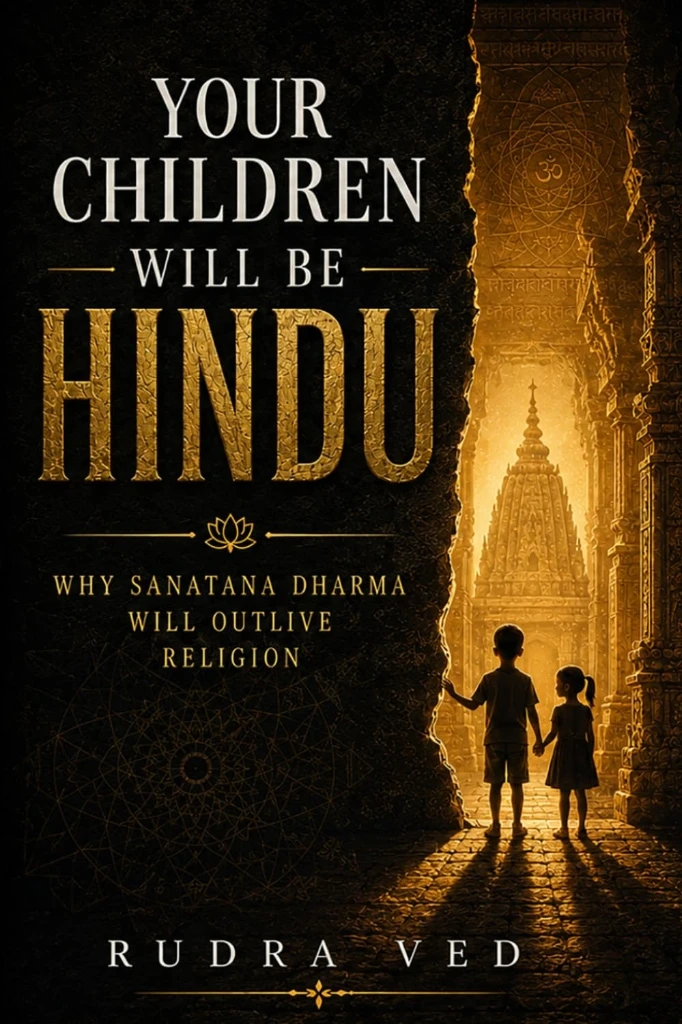
Your Children Will Be Hindu
Why Sanatana Dharma Will Outlive Religion — By Rudra Ved
How do you explain these ancient Vedic verses to your children, friends, or skeptical thinkers? Written by a former lifelong atheist and tested across 500+ unedited live debates, this book provides the rational, modern vocabulary that today's questioning generation needs.
Verse 11
अन्वयव्यतिरेकाभ्यां कार्यकारणनिश्चयात् । संवादतः प्रवृत्तीनां कथमाकस्मिकं भवेत् ॥ ११ ॥
anvaya-vyatirekābhyāṁ kārya-kāraṇa-niścayāt । saṁvādataḥ pravṛttīnām katham ākasmikaṁ bhavet ॥ 11 ॥
Given the consistency and contradiction in determining cause and effect, and the coherence of activities, how can it be considered accidental?
Verse 12
क्वचित्तु कारणेऽदृष्टेऽप्यदृष्टं कल्प्यमेव तत् । बहूनामनुरोधो हि न्याय्यः सर्वैरुदाहृतः ॥ १२ ॥
kvacit tu kāraṇe adṛṣṭe api adṛṣṭaṁ kalpyam eva tat । bahūnām anurodhaḥ hi nyāyyaḥ sarvaiḥ udāhṛtaḥ ॥ 12 ॥
Sometimes, even if the cause is not visible, an unseen cause should be assumed. This is justifiable, as universally acknowledged.
Verse 13
भूयो दृष्ट सपूर्व हि कार्यं क्वचिददर्शने । दृष्टवत् परिकल्प्यं स्यादन्यथा सार्वलौकिकी ॥ १३ ॥
bhūyo dṛṣṭa-sapūrvaḥ hi kāryaṁ kvacit adarśane । dṛṣṭavat parikalpyaṁ syāt anyathā sārlaukikī ॥ 13 ॥
Repeatedly, when an effect is observed with a cause, it should be assumed to have a cause even if it is not seen; otherwise, it would contradict universal experience.
Verse 14
सम्प्रवृत्तिर्विरुध्येत तस्मात् सर्व सकारणम् । अत एव कार्यहेतोः किञ्चित्कारणतत्परः ॥ १४ ॥
sampravṛttir virudhyeta tasmāt sarva sakāraṇam । ata eva kārya-hetoḥ kiñcit kāraṇa-tat-paraḥ ॥ 14 ॥
Activity would be contradicted; therefore, everything must have a cause. Thus, every effect must have a cause.
Verse 15
सर्वत्र दृश्यते लोकस्तस्मादेतन्न किञ्चन । केचिदाहुरसत्कल्पैरणुभिः कार्यमुद्यतम् ॥ १५ ॥
sarvatra dṛśyate lokaḥ tasmāt etat na kiñcana । kecid āhuḥ asat-kalpaiḥ aṇubhiḥ kāryam udyatam ॥ 15 ॥
Since the world is seen everywhere, nothing exists without a cause. Some argue that effects are produced by unreal atoms.
Verse 16
तेभ्योऽत्यन्तं विभिन्नं चाप्यसदत्यन्ततो भवेत् । असत्सतोरेकता हि विरुद्धा न कुतो भवेत् ॥ १६ ॥
tebhyaḥ atyantam vibhinnam ca api asat atyantataḥ bhavet । asat-sataḥ ekatā hi viruddhā na kuto bhavet ॥ 16 ॥
For such people, the world would seem extremely different, even completely non-existent. The unity of non-existence and existence is inherently contradictory and cannot be.
Verse 17
नहि पीतमपीतं च प्रकाश चाप्रकाशकम् । एकं भवेद् विरुद्धत्वात् साङ्कर्यादिप्रसक्तितः ॥ १७ ॥
nahi pītam apītam ca prakāśa ca aprakāśakam । ekaṁ bhavet viruddhatvāt sāṅkarya-ādi-prasaktitaḥ ॥ 17 ॥
Indeed, being both drunk and not drunk, or light and darkness simultaneously, cannot be reconciled due to inherent contradictions and resulting confusion.
Verse 18
ईश्वरेच्छादितो वापि कथमादिक्रियोद्भवः । गुणसाम्यप्रकृतिकं जगदित्यप्यसंभवि ॥ १८ ॥
īśvarecchāditaḥ vā api katham ādikriyā-udbhavaḥ । guṇa-sāmya-prakṛtikam jagat iti api asaṁbhavi ॥ 18 ॥
Even with the will of the Lord, how could the origin of the first action arise? That is impossible for the world, which is characterized by a balance of qualities, to come into being.
Verse 19
वैषम्यहेतोर्मग्यत्वात् साम्यहेतोश्च हीनतः । चेतनेनानघिष्ठानाद् दृष्टान्तानुपलम्भतः ॥ १९ ॥
vaiṣamya-hetoḥ magyatvāt sāma-hetoḥ ca hīnataḥ । cetaneṇa anaghiṣṭhānāt dṛṣṭāntānu-palambhataḥ ॥ 19 ॥
This world appears because it arises from inequality and deficiency in the cause of equality, driven by baseless intelligence and a lack of evidence.
Verse 20
तस्माज्जागतकार्यस्य कारणं नोपलभ्यते । अदृष्टे तु श्रुतिर्मूलं नान्यमानस्य सङ्गमः ॥ २० ॥
tasmāj jāgata-kāryasya kāraṇaṁ na upalabhyate । adṛṣṭe tu śrutiḥ mūlaṁ na anya-mānasya saṅgamaḥ ॥ 20 ॥
Therefore, the cause of the world's activity is not perceived. The unseen is supported by scripture, not by other considerations.
Key Takeaways & AI Summary
This chapter explores the profound teachings of The Necessity of Unwavering Self- Inquiry and Steadfast Practice. It includes 85 verses detailing core themes like "śrutvaivaṁ hemacūḍasya kathāmatyadbhutāṁ tadā । bhārgavaḥ sandigdhamanāḥ praṣṭuṁ samupacakrame ॥ 1 ॥", "bhagavan śrīguro yatte proktaṁ jñānaṁ mahādbhutam । bhāti me viṣamaṁ hyetad asādhyaṁ cāpi sarvataḥ ॥ 2 ॥", "katham etaj jagad dṛśyaṁ citimātra-svarūpakam । adṛṣṭaṁ kevalaṁ hyetac chraddhopeyaṁ na ca anyathā ॥ 3 ॥".A sacred Shakta text revealing the supreme mystery of Tripura (the Divine Mother) — a dialogue between Dattatreya and Parashurama on consciousness, creation, and liberation.