
The Ultimate Realization Through Guru's Divine Grace
(Chapter 10)
Chapter 10
Verse 1
गुरु दासोऽहमीत्येव यः करोति ध्रुवं मनः । तस्य सर्वं प्रसिध्येत् गुरोः कृपावशानुगम् ॥१६१॥
guru dāso’ham ity eva yaḥ karoti dhruvaṃ manaḥ; tasya sarvaṃ prasidhyet guroḥ kṛpā‑vaśānugam ..161..
“He who fixes his mind firmly—‘I am the Guru’s servant’—for him everything prospers, by following the stream of the Guru’s grace.”
Verse 2
गुरोराराधनादेव प्रसीदति परेश्वरः । गुरोरभक्तिर्यस्यास्ति तस्य मोक्षो हि सिध्यति ॥१६२॥
guror ārādhanād eva prasīdati pareśvaraḥ; guror bhaktir yasyāsti tasya mokṣo hi sidhyati ..162..
“By Guru‑adoration alone the Supreme Lord is pleased; he who has devotion to the Guru indeed attains liberation.”
Verse 3
गुरोर्यत्पादयोस्पर्शो महापातकनाशनः । तस्मात् स्पृशेयुरङ्घ्रिं ते ये मुक्तिं वाञ्छितुं क्षमाः ॥१६३॥
guror yat pādayosparśo mahā‑pātaka‑nāśanaḥ; tasmāt spṛśeyur aṅghriṃ te ye muktiṃ vāñchituṃ kṣamāḥ ..163..
“The touch of the Guru’s feet destroys great sins; therefore let those touch his foot who are worthy to desire liberation.”
Verse 4
गुरुगीता समासाद्य नृणां दुःखक्षयो भवेत् । सुखं स्याद्ब्रह्मभावश्च गुरुपादाम्बुसेवया ॥१६४॥
guru‑gītā samāsādya nṛṇāṃ duḥkha‑kṣayo bhavet; sukhaṃ syād brahma‑bhāvaś ca guru‑pādāmbu‑sevayā ..164..
“On resorting to the Guru Gītā, people’s sorrows end; happiness and the Brahman‑state come by serving the Guru’s lotus‑feet.”
Verse 5
गुरोः शिरोधरं कृत्वा यो वर्तेत सदा नरः । तस्य वाञ्छितसिद्धिः स्याद् ईडितं सर्वमेव च ॥१६५॥
guroḥ śiro‑dharaṃ kṛtvā yo varteta sadā naraḥ; tasya vāñchita‑siddhiḥ syād īḍitaṃ sarvam eva ca ..165..
“He who ever carries the Guru upon his head (in reverence)—his desired aims and all praise‑worthy goals are accomplished.”
Verse 6
गुरवे परमात्मने नमः सर्वात्मभाविने । यो ददाति परं तत्त्वं तस्मै श्रीगुरवे नमः ॥१६६॥
gurave paramātmane namaḥ sarvātma‑bhāvine; yo dadāti paraṃ tattvaṃ tasmai śrī‑gurave namaḥ ..166..
“Obeisance to the Guru, the Supreme Self, who is the Self of all; to that Śrī Guru who gives the supreme Reality, salutations.”
Verse 7
गुरोः पाठप्रभावेण विज्ञानं दीप्तमुद्यते । ततप्रकाशितमार्गेण याति ब्रह्म परं जनः ॥१६७॥
guroḥ pāṭha‑prabhāveṇa vijñānaṃ dīptam udyate; tat‑prakāśita‑mārgeṇa yāti brahma paraṃ janaḥ ..167..
“By the power of the Guru’s teaching, blazing knowledge arises; by the path he illumines, a person reaches the Supreme Brahman.”
Verse 8
गुरोः कथामृतं पेयम् गुरोः पदाम्बुजं स्पृशेत् । गुरोराज्ञां परं मन्ये शिरसा धारयाम्यहम् ॥१६८॥
guroḥ kathāmṛtaṃ peyam guroḥ padāmbujaṃ spṛśet; guror ājñāṃ paraṃ manye śirasā dhārayāmy aham ..168..
“One should drink the nectar of the Guru’s discourse and touch the lotus of his feet; I deem the Guru’s command supreme and bear it on my head.”
Verse 9
गुरोः प्रसादसिन्धोः स्यात् ये निमग्नाः शुभेच्छवः । तेषां भवाम्बुधिर्न स्ति यान्ति ते परमं पदम् ॥१६९॥
guroḥ prasāda‑sindhoḥ syāt ye nimagnāḥ śubhecchavaḥ; teṣāṃ bhavāmbudhīr nasti yānti te paramaṃ padam ..169..
“Those of pure intent who plunge into the ocean of the Guru’s grace—there is no ocean of becoming for them; they go to the supreme state.”
Verse 10
गुरुगीता सदाऽखण्डा ज्ञानदात्री परा स्मृता । तस्या जपेन देवेशि देहभेदो निवर्तते ॥१७०॥
guru‑gītā sadā’khaṇḍā jñāna‑dātrī parā smṛtā; tasyā japena deveśi deha‑bhedo nivartate ..170..
“The Guru Gītā is ever unbroken and remembered as the supreme giver of knowledge; by her japa, O Goddess, body‑division falls away.”
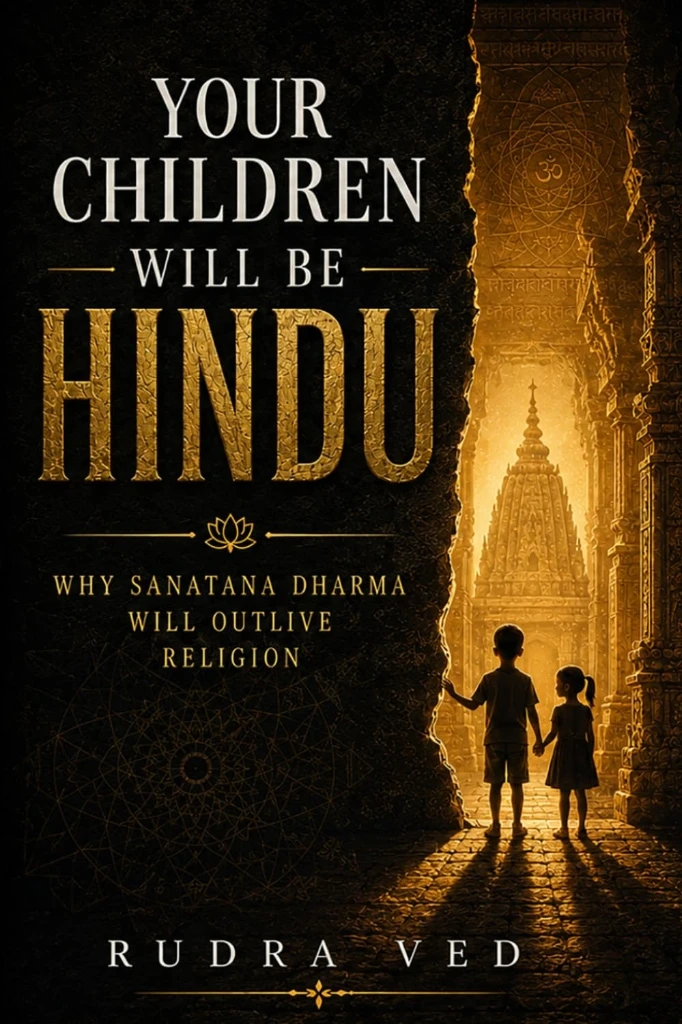
Your Children Will Be Hindu
Why Sanatana Dharma Will Outlive Religion — By Rudra Ved
How do you explain these ancient Vedic verses to your children, friends, or skeptical thinkers? Written by a former lifelong atheist and tested across 500+ unedited live debates, this book provides the rational, modern vocabulary that today's questioning generation needs.
Verse 11
गुरोः प्रसादलब्धेन ज्ञानदीपेन चेतसः । अज्ञानान्धिरतो नाशं याति पुमानसन्दतः ॥१७१॥
guroḥ prasāda‑labdhena jñāna‑dīpena cetasaḥ; ajñānāndhir ato nāśaṃ yāti pumān asan‑dataḥ ..171..
“By the knowledge‑lamp obtained through the Guru’s grace, the darkness of ignorance is destroyed and a person becomes truly existent (fulfilled).”
Verse 12
गुरोराज्ञां सदा कृत्वा हृदि धृत्वा सदा नरः । अपरोक्षं परं ब्रह्म विलभेत किलाधिकम् ॥१७२॥
guror ājñāṃ sadā kṛtvā hṛdi dhṛtvā sadā naraḥ; aparokṣaṃ paraṃ brahma vilabheta kilādhikam ..172..
“He who ever holds the Guru’s command in his heart attains direct realization of the Supreme Brahman in full measure.”
Verse 13
गुरुर्वेदान्तवाक्यानां सारं हृदि निवेशयेन् । ततो निःशेषतां याति विषयेभ्यो मनोजवः ॥१७३॥
gurur vedānta‑vākyānāṃ sāraṃ hṛdi niveśayen; tato niḥśeṣatāṃ yāti viṣayebhyo mano‑javaḥ ..173..
“The Guru implants the essence of Vedānta sayings in the heart; thereafter the mind, swift though it be, becomes free of all objects.”
Verse 14
गुरोः परतरो नास्ति तत्त्वं नास्ति पदं परम् । एवं निश्चित्य बुद्ध्या तु सेवेत गुरुमादरात् ॥१७४॥
guroḥ parataro nāsti tattvaṃ nāsti padaṃ param; evaṃ niścitya buddhyā tu seveta gurum ādarāt ..174..
“There is no principle higher than the Guru, no state higher; knowing thus with firm understanding, serve the Guru with reverence.”
Verse 15
गुरुगीता सुपुण्या स्यान्नित्यं मां पालयेत् बुधः । तां पठन् शृण्वन् विचरण् मोक्षमर्गं निगच्छति ॥१७५॥
guru‑gītā supuṇyā syān nityaṃ māṃ pālayet budhaḥ; tāṃ paṭhan śṛṇvan vicaraṇ mokṣa‑margaṃ nigacchati ..175..
“The Guru Gītā is highly meritorious; the wise should daily preserve her; by reading, hearing, reflecting, one goes to the path of liberation.”
Verse 16
गुरोः स्मरणमात्रेण विष्णुमन्त्रमिवोच्चरन् । यः पुमान् लभते सिद्धिं स मुक्तो भवति ध्रुवम् ॥१७६॥
guroḥ smaraṇa‑mātreṇa viṣṇu‑mantram ivoccaran; yaḥ pumān labhate siddhiṃ sa mukto bhavati dhruvam ..176..
“By mere remembrance of the Guru, as if uttering the mantra of Viṣṇu, a man attains accomplishment and surely becomes liberated.”
Verse 17
गुरोरुपदेशतः श्रीमान् भवति ज्ञानपारगः । स संसारं तरत्येव गुरोः कृपावशानुगः ॥१७७॥
guror upadeśataḥ śrīmān bhavati jñāna‑pāragaḥ; sa saṃsāraṃ taraty eva guroḥ kṛpā‑vaśānugaḥ ..177..
“By the Guru’s instruction one becomes blessed and crosses to the far shore of knowledge; following the current of the Guru’s grace, he crosses saṃsāra.”
Verse 18
गुरोः कृपार्णवे मग्नो न शोचति कदाचन । सर्वदा तुष्यते धीरः परानन्दरसाश्रयः ॥१७८॥
guroḥ kṛpārṇave magno na śocati kadācana; sarvadā tuṣyate dhīraḥ parānanda‑rasāśrayaḥ ..178..
“Immersed in the ocean of the Guru’s grace, one never grieves; steady, he is ever content, resting in the essence of supreme bliss.”
Verse 19
गुरुगीता हृदि स्थाप्य लोके कार्याणि कारयेत् । न तस्य कर्मबन्धोऽस्ति न दुःखं न च विद्यते ॥१७९॥
guru‑gītā hṛdi sthāpya loke kāryāṇi kārayet; na tasya karma‑bandho’sti na duḥkhaṃ na ca vidyate ..179..
“Instating the Guru Gītā in the heart, one may act in the world; such a one has no bondage of action and no sorrow.”
Verse 20
अन्ते देहे विमुक्तः स्यान् गुरोः प्रसादसञ्चयात् । तदा परं पदं याति नैव याति पुनर्भवम् ॥१८०॥
ante dehe vimuktaḥ syān guroḥ prasāda‑sañcayāt; tadā paraṃ padaṃ yāti naiva yāti punar‑bhavam ..180..
“At life’s end one is liberated by the accumulation of the Guru’s grace; then one attains the supreme state and does not return to birth.”
Key Takeaways & AI Summary
This chapter explores the profound teachings of The Ultimate Realization Through Guru's Divine Grace. It includes 22 verses detailing core themes like "guru dāso’ham ity eva yaḥ karoti dhruvaṃ manaḥ", "guror ārādhanād eva prasīdati pareśvaraḥ", "guror yat pādayosparśo mahā‑pātaka‑nāśanaḥ".A sacred hymn from the Skanda Purana — a dialogue between Lord Shiva and Goddess Parvati revealing the supreme importance of the Guru.