
The Guru as Brahman: The Ultimate Reality
(Chapter 4)
Chapter 4
Verse 1
गुरुमेव परं ब्रह्म गुरुमेव परं तपः । गुरुमेव परं ज्ञानं गुरुमेव परं ध्येयम् ॥४१॥
gurum eva paraṃ brahma gurum eva paraṃ tapaḥ; gurum eva paraṃ jñānaṃ gurum eva paraṃ dhyeyam ..41..
“The Guru alone is the supreme Brahman; the Guru alone is the highest austerity; the Guru alone is the supreme knowledge; the Guru alone is the highest object of meditation.”
Verse 2
गुरुमेव परं तीर्थं गुरुमेव परं यजुः । गुरुमेव परं मन्त्रं गुरुमेव परं शिवः ॥४२॥
gurum eva paraṃ tīrthaṃ gurum eva paraṃ yajuḥ; gurum eva paraṃ mantraṃ gurum eva paraṃ śivaḥ ..42..
“The Guru alone is the supreme pilgrimage, the supreme sacred text, the supreme mantra; the Guru alone is the Supreme Śiva.”
Verse 3
यस्य स्मरणमात्रेण ज्ञानं स्यात् सहजान्तरम् । स गुरुः पूजितो नित्यं स एव परमेश्वरः ॥४३॥
yasya smaraṇa‑mātreṇa jñānaṃ syāt sahajāntaram; sa guruḥ pūjito nityaṃ sa eva parameśvaraḥ ..43..
“By whose mere remembrance innate inner knowledge arises—he is the Guru to be worshipped always; he indeed is the Supreme Lord.”
Verse 4
गुरोरभ्यर्चनं कृत्वा गुरोः स्मरणमेव च । गुरोः पादोदकम् पीत्वा ब्रह्मभावं लभेत नरः ॥४४॥
guror abhyarcanaṃ kṛtvā guroḥ smaraṇam eva ca; guroḥ pādodakam pītvā brahma‑bhāvaṃ labheta naraḥ ..44..
“Having worshipped the Guru and remembered him, by sipping the Guru’s foot‑water a person attains identification with Brahman.”
Verse 5
गुरोः कथासु रतिर्यस्य गुरौ च स्थिरनिष्ठिता । तस्य ज्ञानं भवेत् देवि नान्यथा शास्त्रकोटिभिः ॥४५॥
guroḥ kathāsu ratir yasya gurau ca sthira‑niṣṭhitā; tasya jñānaṃ bhavet devi nānyathā śāstra‑koṭibhiḥ ..45..
“One who delights in the Guru’s teachings and is firmly devoted to the Guru attains knowledge, O Devi—not otherwise, even by tens of millions of scriptures.”
Verse 6
गुरुर्नारायणः स्वतः गुरुनारायणो हरिः । गुरुर्नारायणो ब्रह्म गुरौ नारायणः सदा ॥४६॥
gurur nārāyaṇaḥ svataḥ guru‑nārāyaṇo hariḥ; gurur nārāyaṇo brahma gurau nārāyaṇaḥ sadā ..46..
“The Guru is Nārāyaṇa himself; as Guru, Nārāyaṇa is Hari; the Guru is Nārāyaṇa as Brahman; in the Guru is ever Nārāyaṇa.”
Verse 7
गुरुं विना न पश्यामि तत्त्वं तत्त्वविदां वरा । तस्मात् सर्वात्मना देव्यः सेवनीयो गुरुः सदा ॥४७॥
guruṃ vinā na paśyāmi tattvaṃ tattva‑vidāṃ varā; tasmāt sarvātmanā devyaḥ sevanīyo guruḥ sadā ..47..
“Without the Guru I do not see Reality, O best of knowers of Truth; therefore, with one’s whole being, the Guru is ever to be served.”
Verse 8
गुरोः कृपाप्रसादेन हृद्याकाशे प्रकाशते । परं तत्त्वं निराकारं निष्कलं निष्क्रियं परम् ॥४८॥
guroḥ kṛpā‑prasādena hṛdy‑ākāśe prakāśate; paraṃ tattvaṃ nirākāraṃ niṣkalaṃ niṣkriyaṃ param ..48..
“By the Guru’s gracious favor the supreme Reality shines in the heart‑sky—formless, partless, actionless, supreme.”
Verse 9
यत् तत्त्वं तद् गुरोः साक्षात् गुरौ यत् तत्त्वमेव तत् । तस्माद् गुरुतरं नास्ति त्रैलोक्ये सचराचरे ॥४९॥
yat tattvaṃ tad guroḥ sākṣāt gurau yat tattvam eva tat; tasmād guru‑taraṃ nāsti trailokye sacarācare ..49..
“That Reality is directly the Guru; and whatever is the Guru is precisely that Reality; hence nothing is greater than the Guru in all the three worlds.”
Verse 10
अविद्याया महाद्वीपे संसारार्णवनाविकः । गुरुरेव हि विज्ञेयो ह्यन्यथा पतनं ध्रुवम् ॥५०॥
avidyāyā mahā‑dvīpe saṃsārārṇava‑nāvikaḥ; gurur eva hi vijñeyo hy anyathā patanaṃ dhruvam ..50..
“On the great island of ignorance, over the ocean of saṃsāra, the Guru is the pilot to be known; otherwise, a fall is certain.”
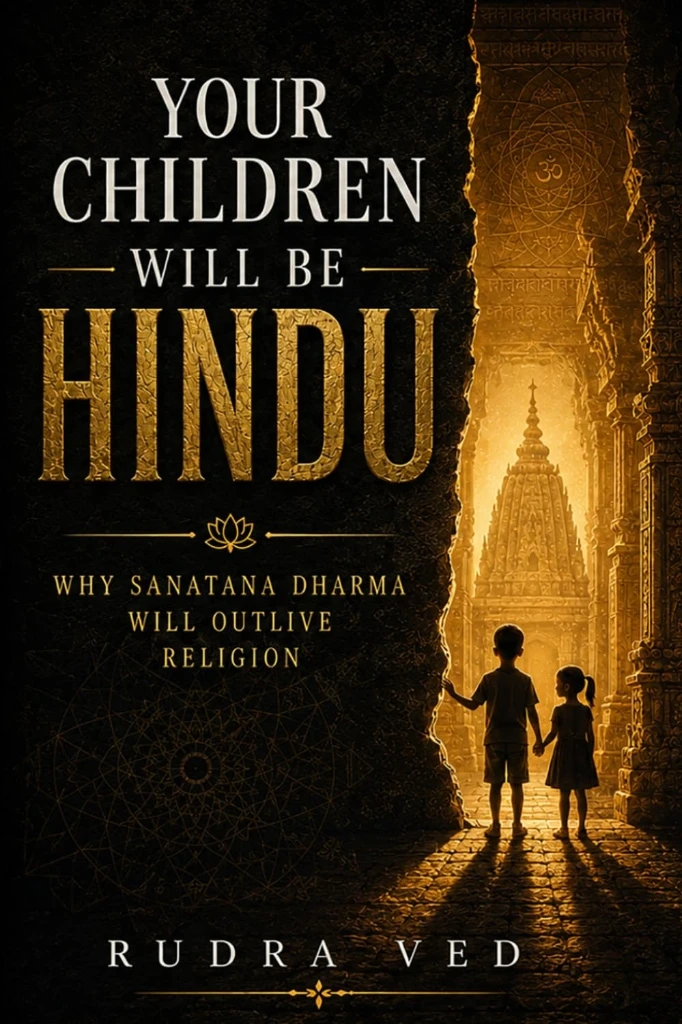
Your Children Will Be Hindu
Why Sanatana Dharma Will Outlive Religion — By Rudra Ved
How do you explain these ancient Vedic verses to your children, friends, or skeptical thinkers? Written by a former lifelong atheist and tested across 500+ unedited live debates, this book provides the rational, modern vocabulary that today's questioning generation needs.
Verse 11
गुरुपादाम्बुजं नित्यं यो भजेच्छ्रद्धयान्वितः । तस्य सिद्धिर्भवेत् क्षिप्रं नात्र कार्या विचारणा ॥५१॥
guru‑pādāmbujaṃ nityaṃ yo bhajec chraddhayānvitaḥ; tasya siddhir bhavet kṣipraṃ nātra kāryā vicāraṇā ..51..
“Whoever worships daily the lotus‑feet of the Guru with faith—his accomplishment comes quickly; there is no need to question this.”
Verse 12
गुरोः प्रसादतो देवि सर्वविद्या प्रकाशते । गुरोः प्रसादतो नित्यं सर्वं च सुलभं भवेत् ॥५२॥
guroḥ prasādato devi sarva‑vidyā prakāśate; guroḥ prasādato nityaṃ sarvaṃ ca sulabhaṃ bhavet ..52..
“By the Guru’s grace, O Devi, all knowledge shines forth; by the Guru’s grace, all things become easily attainable.”
Verse 13
गुरुं विहाय मूर्खोऽयं क्रियावादी विभाव्यते । न तस्य सिद्धिरित्युक्तं शास्त्रेभ्यः परिभाषितम् ॥५३॥
guruṃ vihāya mūrkho’yaṃ kriyā‑vādī vibhāvyate; na tasya siddhir ity uktaṃ śāstrebhyaḥ paribhāṣitam ..53..
“Abandoning the Guru, the fool prides himself on rituals; it is stated in the śāstras that he gains no perfection.”
Verse 14
गुरुशुश्रूषया नित्यं गुरोः सेवा परा स्मृता । तस्माद् गुरुप्रसादेन प्राप्यते परमं पदम् ॥५४॥
guru‑śuśrūṣayā nityaṃ guroḥ sevā parā smṛtā; tasmād guru‑prasādena prāpyate paramaṃ padam ..54..
“Constant ministering to the Guru is regarded as supreme service; through the Guru’s grace the highest state is attained.”
Verse 15
गुरुर्दाता गुरुर्धर्मो गुरुध्यानं परं स्मृतम् । गुरुः पिताऽम्बिका माता गुरुर्देवो न संशयः ॥५५॥
gurur dātā gurur dharmo guru‑dhyānaṃ paraṃ smṛtam; guruḥ pitā’mbikā mātā gurur devo na saṃśayaḥ ..55..
“The Guru is the giver, the Guru is righteousness; meditation on the Guru is held supreme. The Guru is father, Mother Ambikā; the Guru is God—no doubt.”
Key Takeaways & AI Summary
This chapter explores the profound teachings of The Guru as Brahman: The Ultimate Reality. It includes 15 verses detailing core themes like "gurum eva paraṃ brahma gurum eva paraṃ tapaḥ", "gurum eva paraṃ tīrthaṃ gurum eva paraṃ yajuḥ", "yasya smaraṇa‑mātreṇa jñānaṃ syāt sahajāntaram".A sacred hymn from the Skanda Purana — a dialogue between Lord Shiva and Goddess Parvati revealing the supreme importance of the Guru.