
The Yoga of Meditation on the Udgitha
(Chapter 1)
प्रथमोऽध्यायः — Prapāṭhaka 1: Meditation on Om and Udgītha
Verse 1
ओमित्येतदक्षरमुद्गीथमुपासीतोमिति ह्युद्गायति तस्योपव्याख्यानम् ॥ १ ॥
omityetadakṣaramudgīthamupāsītomiti hyudgāyati tasyopavyākhyānam
One should meditate on the syllable 'Om', the Udgitha; for one sings the Udgitha beginning with Om. Of this, the detailed explanation follows.
Verse 2
देवा वै मृत्योर्बिभ्यतस्त्रयीं विद्यां प्राविशꣳ स्ते छन्दोभिरच्छादयन्यदेभिरच्छादयꣳ स्तच्छन्दसां छन्दस्त्वम् ॥ २ ॥
devā vai mṛtyorbibhyatastrayīṃ vidyāṃ prāviśaṃste chandobhiracchādayanyadebhiracchādayaṃstacchandasāṃ chandastvam
Verily, the gods, fearing death, entered upon the threefold knowledge of the Vedas. They covered themselves with the Vedic meters. Because they covered themselves with them, the meters are called chandas.
Verse 3
तानु तत्र मृत्युर्यथा मत्स्यमुदके परिपश्येदेवं पर्यपश्यदृचि साम्नि यजुषि । ते नु विदित्वोर्ध्वा ऋचः साम्नो यजुषः स्वरमेव प्राविशन् ॥ ३ ॥
tānu tatra mṛtyuryathā matsyamudake paripaśyedevaṃ paryapaśyadṛci sāmni yajuṣi | te nu viditvūrdhvā ṛcaḥ sāmno yajuṣaḥ svarameva prāviśan
Death saw them there in the Rig, the Saman, and the Yajus, just as one might see a fish in water. Having known this, they arose above the Rig, the Saman, and the Yajus, and entered Svara (the sacred sound Om) itself.
Verse 4
यदा वा ऋचमाप्नोत्योमित्येवातिस्वरत्येवꣳ सामैवं यजुरेष उ स्वरो यदेतदक्षरमेतदमृतमभयं तत्प्रविश्य देवा अमृता अभया अभवन् ॥ ४ ॥
yadā vā ṛcamāpnotyomityevātisvaratyevaṃ sāmaivaṃ yajureṣa u svaro yadetadakṣarametadamṛtamabhayaṃ tatpraviśya devā amṛtā abhayā abhavan
When one reaches the end of an Rk verse, one intones 'Om'; so too with a Saman and a Yajus. For this Svara is this imperishable Syllable, immortal and fearless. Having entered it, the gods became immortal and fearless.
Verse 5
स य एतदेवं विद्वानक्षरं प्रणौत्येतदेवाक्षरꣳ स्वरममृतमभयं प्रविशति तत्प्रविश्य यदमृता देवास्तदमृतो भवति ॥ ५ ॥
sa ya etadevaṃ vidvānakṣaraṃ praṇautyetadevākṣaraṃ svaramamṛtamabhayaṃ praviśati tatpraviśya yadamṛtā devāstadamṛto bhavati
He who, knowing this thus, praises this imperishable Syllable, enters this very Syllable—the Svara, immortal and fearless. Entering it, he becomes immortal just as the gods became immortal.
Verse 6
अथ खलु य उद्गीथः स प्रणवो यः प्रणवः स उद्गीथ इत्यसौ वा आदित्य उद्गीथ एष प्रणव ओमिति ह्येष स्वरन्नेति ॥ १ ॥
atha khalu ya udgīthaḥ sa praṇavo yaḥ praṇavaḥ sa udgītha ityasau vā ādityo udgītha eṣa praṇava omiti hyeṣa svaranneti
Now, that which is the Udgitha is the Pranava, and that which is the Pranava is the Udgitha. Yonder sun is indeed the Udgitha, and he is the Pranava, for he moves along uttering 'Om'.
Verse 7
एतमु एवाहमभ्यगासिषं तस्मान्मम त्वमेकोऽसीति ह कौषीतकिः पुत्रमुवाच रश्मीꣳ स्त्वं पर्यावर्तयाद्बहवो वै ते भविष्यन्तीत्यधिदैवतम् ॥ २ ॥
etamu evāhamabhyagāsiṣaṃ tasmānmama tvameko'sīti ha kauṣītakiḥ putramuvāca raśmīṃstvaṃ paryāvartayādbahavo vai te bhaviṣyantītyadhidaivatam
Kaushitaki said to his son: 'I sang in praise of the sun as one with all its rays; therefore you are my only son. Meditate upon the rays individually, and you will have many sons.' This is with respect to the divine sphere.
Verse 8
अथाध्यात्मं य एवायं मुख्यः प्राणस्तमुद्गीथमुपासीतोमिति ह्येष स्वरन्नेति ॥ ३ ॥
athādhyātmaṃ ya evāyaṃ mukhyaḥ prāṇastamudgīthamupāsītomiti hyeṣa svaranneti
Now with respect to the body: One should meditate on the principal vital breath as the Udgitha, for it moves along uttering 'Om'.
Verse 9
एतमु एवाहमभ्यगासिषं तस्मान्मम त्वमेकोऽसीति ह कौषीतकिः पुत्रमुवाच प्राणाꣳ स्त्वं भूमानमभिगायताद्बहवो वै मे भविष्यन्तीति ॥ ४ ॥
etamu evāhamabhyagāsiṣaṃ tasmānmama tvameko'sīti ha kauṣītakiḥ putramuvāca prāṇāṃstvaṃ bhūmānamabhigāyatādbahavo vai me bhaviṣyantīti
Kaushitaki said to his son: 'I sang in praise of the principal breath as one; therefore you are my only son. Sing in praise of the vital breaths in their multiplicity, and you will have many sons.'
Verse 10
अथ खलु य उद्गीथः स प्रणवो यः प्रणवः स उद्गीथ इति होतृषदनाद्धैवापि दुरुद्गीतमनुसमाहरतीत्यनुसमाहरतीति ॥ ५ ॥
atha khalu ya udgīthaḥ sa praṇavo yaḥ praṇavaḥ sa udgītha iti hotṛṣadanāddhaivāpi durudgītamanusamāharatītyanusamāharatīti
Now, that which is the Udgitha is the Pranava, and that which is the Pranava is the Udgitha. Even from the seat of the Hotr priest, any error in the chanting of the Udgitha is corrected; yes, it is corrected.
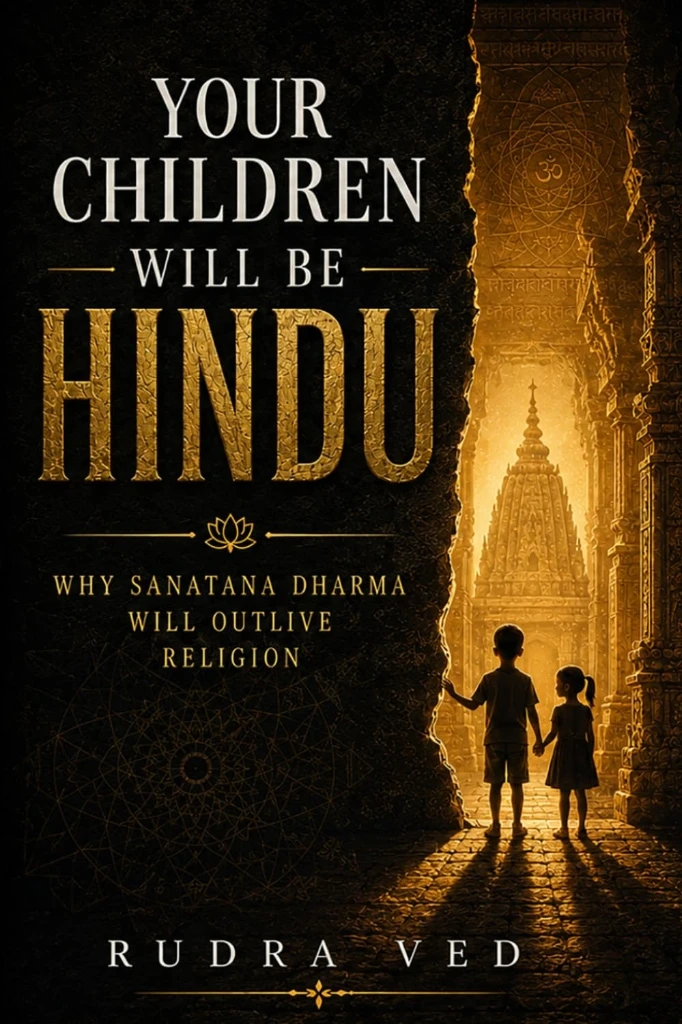
Your Children Will Be Hindu
Why Sanatana Dharma Will Outlive Religion — By Rudra Ved
How do you explain these ancient Vedic verses to your children, friends, or skeptical thinkers? Written by a former lifelong atheist and tested across 500+ unedited live debates, this book provides the rational, modern vocabulary that today's questioning generation needs.
Verse 11
अन्तरिक्षमेवर्ग्वायुः साम तदेतदेतस्यामृच्यध्यूढꣳ साम तस्मादृच्यध्यूढꣳ साम गीयतेऽन्तरिक्षमेव सा वायुरमस्तत्साम ॥ २ ॥
antarikṣamevargvāyuḥ sāma tadetadetasyāmṛcyadhyūḍhaṃ sāma tasmādṛcyadhyūḍhaṃ sāma gīyate'ntarikṣameva sā vāyuramastatsāma
The intermediate space is Rik, air is Saman. This Saman rests upon that Rik. Therefore, the Saman is sung as resting upon the Rik. Intermediate space is "sā", air is "ama"; that makes Saman.
Verse 12
द्यौरेवर्गादित्यः साम तदेतदेतस्यामृच्यध्यूढꣳ साम तस्मादृच्यध्यूढꣳ साम गीयते द्यौरेव सादित्योऽमस्तत्साम ॥ ३ ॥
dyaurevargādityaḥ sāma tadetadetasyāmṛcyadhyūḍhaṃ sāma tasmādṛcyadhyūḍhaṃ sāma gīyate dyaureva sādityo'mastatsāma
Heaven is Rik, the sun is Saman. This Saman rests upon that Rik. Therefore, the Saman is sung as resting upon the Rik. Heaven is "sā", the sun is "ama"; that makes Saman.
Verse 13
नक्षत्राण्येवर्क्चन्द्रमाः साम तदेतदेतस्यामृच्यध्यूढꣳ साम तस्मादृच्यध्यूढꣳ साम गीयते नक्षत्राण्येव सा चन्द्रमा अमस्तत्साम ॥ ४ ॥
nakṣatrāṇyevarkcandramāḥ sāma tadetadetasyāmṛcyadhyūḍhaṃ sāma tasmādṛcyadhyūḍhaṃ sāma gīyate nakṣatrāṇyeva sā candramā amastatsāma
The stars are Rik, the moon is Saman. This Saman rests upon that Rik. Therefore, the Saman is sung as resting upon the Rik. The stars are "sā", the moon is "ama"; that makes Saman.
Verse 14
अथ यदेतदादित्यस्य शुक्लं भाः सैवर्गथ यन्नीलं परः कृष्णं तत्साम तदेतदेतस्यामृच्यध्यूढꣳ साम तस्मादृच्यध्यूढꣳ साम गीयते ॥ ५ ॥
atha yadetadādityasya śuklaṃ bhāḥ saivargatha yannīlaṃ paraḥ kṛṣṇaṃ tatsāma tadetadetasyāmṛcyadhyūḍhaṃ sāma tasmādṛcyadhyūḍhaṃ sāma gīyate
Now, the white light of the sun is Rik, and the dark, deep blue light is Saman. This Saman rests upon that Rik. Therefore, the Saman is sung as resting upon the Rik.
Verse 15
अथ यदेवैतदादित्यस्य शुक्लं भाः सैव साथ यन्नीलं परः कृष्णं तदमस्तत्सामाथ य एषोऽन्तरादित्ये हिरण्मयः पुरुषो दृश्यते हिरण्यश्मश्रुर्हिरण्यकेश आप्रणखात्सर्व एव सुवर्णः ॥ ६ ॥
atha yadevaitadādityasya śuklaṃ bhāḥ saiva sātha yannīlaṃ paraḥ kṛṣṇaṃ tadamastatsāmātha ya eṣo'ntarāditye hiraṇmayaḥ puruṣo dṛśyate hiraṇyaśmaśrurhiraṇyakeśa āpraṇakhātsarva eva suvarṇaḥ
Now, the white light of the sun is "sā", and the dark, deep blue light is "ama"; that makes Saman. Now, this golden Person who is seen within the sun, with a golden beard and golden hair, is golden all over, right to the tips of his nails.
Verse 16
तस्य यथा कप्यासं पुण्डरीकमेवमक्षिणी तस्योदिति नाम स एष सर्वेभ्यः पाप्मभ्य उदित उदेति ह वै सर्वेभ्यः पाप्मभ्यो य एवं वेद ॥ ७ ॥
tasya yathā kapyāsaṃ puṇḍarīkamevamakṣiṇī tasyoditi nāma sa eṣa sarvebhyaḥ pāpmabhya udita udeti ha vai sarvebhyaḥ pāpmabhyo ya evaṃ veda
His eyes are like a lotus blossom opened by the sun. His name is "Ut", for he has risen above all sins. He who knows this rises above all sins.
Verse 17
तस्यर्क्च साम च गेष्णौ तस्मादुद्गीथस्तस्मात्त्वेवोद्गातैतस्य हि गाता स एष ये चामुष्मात्पराञ्चो लोकास्तेषां चेष्टे देवकामानां चेत्यधिदैवतम् ॥ ८ ॥
tasyarkca sāma ca geṣṇau tasmādudgīthastasmāttvevodgātaitasya hi gātā sa eṣa ye cāmuṣmātparāñco lokāsteṣāṃ ceṣṭe devakāmānāṃ cetyadhidaivatam
Rik and Saman are his joints; therefore he is Udgitha. For this reason, the Udgatri priest sings of him, for he is the singer of this. He rules over the worlds beyond the sun and over the desires of the gods. This is regarding the divine realm.
Verse 18
चक्षुरेवर्गात्मा साम तदेतदेतस्यामृच्यध्यूढꣳ साम तस्मादृच्यध्यूढꣳ साम गीयते । चक्षुरेव सात्मामस्तत्साम ॥ २ ॥
cakṣurevargātmā sāma tadetadetasyāmṛcyadhyūḍhaṃ sāma tasmādṛcyadhyūḍhaṃ sāma gīyate | cakṣureva sātmāmastatsāma
Now regarding the self: The eye is Rik, the self is Saman. This Saman rests upon that Rik. Therefore, the Saman is sung as resting upon the Rik. The eye is "sā", the self is "ama"; that makes Saman.
Verse 19
श्रोत्रमेवर्ङ्मनः साम तदेतदेतस्यामृच्यध्यूढꣳ साम तस्मादृच्यध्यूढꣳ साम गीयते । श्रोत्रमेव सा मनोऽमस्तत्साम ॥ ३ ॥
śrotramevarṅmanaḥ sāma tadetadetasyāmṛcyadhyūḍhaṃ sāma tasmādṛcyadhyūḍhaṃ sāma gīyate | śrotrameva sā mano'mastatsāma
The ear is Rik, the mind is Saman. This Saman rests upon that Rik. Therefore, the Saman is sung as resting upon the Rik. The ear is "sā", the mind is "ama"; that makes Saman.
Verse 20
अथ यदेतदक्ष्णः शुक्लं भाः सैवर्गथ यम्नीलं परः कृष्णं तत्साम तदेतदेतस्यामृच्यध्यूढꣳ साम तस्मादृच्यध्यूढꣳ साम गीयते । अथ यदेवैतदक्ष्णः शुक्लं भाः सैव साथ यन्नीलं परः कृष्णं तदमस्तत्साम ॥ ४ ॥
atha yadetadakṣṇaḥ śuklaṃ bhāḥ saivargatha yamnīlaṃ paraḥ kṛṣṇaṃ tatsāma tadetadetasyāmṛcyadhyūḍhaṃ sāma tasmādṛcyadhyūḍhaṃ sāma gīyate | atha yadevaitadakṣṇaḥ śuklaṃ bhāḥ saiva sātha yannīlaṃ paraḥ kṛṣṇaṃ tadamastatsāma
Now, the white light of the eye is Rik, and the dark, deep blue light is Saman. This Saman rests upon that Rik. Therefore, the Saman is sung as resting upon the Rik. The white light of the eye is "sā", and the dark, deep blue light is "ama"; that makes Saman.
Key Takeaways & AI Summary
This chapter explores the profound teachings of The Yoga of Meditation on the Udgitha. It includes 62 verses detailing core themes like "omityetadakṣaramudgīthamupāsītomiti hyudgāyati tasyopavyākhyānam", "devā vai mṛtyorbibhyatastrayīṃ vidyāṃ prāviśaṃste chandobhiracchādayanyadebhiracchādayaṃstacchandasāṃ chandastvam", "tānu tatra mṛtyuryathā matsyamudake paripaśyedevaṃ paryapaśyadṛci sāmni yajuṣi | te nu viditvūrdhvā ṛcaḥ sāmno yajuṣaḥ svarameva prāviśan".One of the oldest and largest Principal Upanishads from the Sama Veda — containing the foundational Mahāvākya "Tat Tvam Asi" (Thou Art That) and profound teachings on meditation, Prana, and the nature of Brahman through the dialogues of Uddalaka and Shvetaketu.