
The Definitive Exposition of Pure Knowledge
(Chapter 19)
Chapter 19: On the Ascertainment of Knowledge
Verse 1
विशो->ध्याय: अन्न ते वत्तयिष्यामि पुरा बृत्त शृणुष्व तत। पुरा बह्मससभामध्ये सत्यलोके5्तिपावने ॥ १ ॥
Thus, having heard from the mouth of Dattatreya, the son of Bhrigu again asked about the conduct and works of the liberated, gradually.
Verse 2
ज्ञानप्रसज्र: समभूत् ख्ष्मात् सक्ष्मविमशन्म्। सनकाद्या वसिष्ठश्न॒पुलस्त्यः पुलहः क्रतु। ॥ २॥
O Lord, please explain to me in detail how the varied ripeness of knowledge arises due to differences in intellect.
Verse 3
भृगरत्रिरड्धिराश् प्रचेता नारदस्तथा । च्यवनो वामदेवश्व विश्वामित्रोड्थ गोतमः ॥ ३ ॥
Knowledge is indeed of one kind, consisting of the awareness of one's self alone. Isn't that the goal that which consists of its manifestation known as liberation?
Verse 4
शुक्र! पराशरों वयासः कण्वः काश्यप एवं च। दक्ष: सुमन्तुः शह्थ लिखितो देवलोडपि च ॥ ४॥
How, then, can there be dependence on differences in ripeness by the difference in intellect? Do practices differ or not? Explain that.
Verse 5
एवरन्ये ऋषिगणा राजपिंप्रवरा अपि। सर्वे समुदितास्तत्र. ब्रह्मसत्रे महत्तरे ॥ ५॥
Thus asked again by him, Dattatreya, the ocean of compassion, began to explain that matter in detail.
Verse 6
मीमांसां चक्ररत्युच्चेंः सक्ष्मात् सक््मनिरुपणः ब्रह्माणं) तत्र पग्रच्छकपयः सब एवं ते ॥ ६॥
Listen, O Rama, I will explain this supreme secret. There is no difference in practice, and knowledge is not achieved through various practices.
Verse 7
The attainment of fruit varies by the gradation of practices. When the practice is complete, knowledge is effortlessly attained.
Verse 8
भगवन् ज्ञानिनो लोके वर्य ज्ञातपरावराः । विशो5ध्यायः ॥। २० ॥ श्री क्रिपुरादेवीका आविर्भाव और उपदेश [ श्रीदत्तात्रेयजी बोले- ] अब में तुम्हें एक प्राचीन वृत्तान्त सुनाता हूँ, सुनो | पूषेकालकी बात हे परम पवित्र सत्यलोकमें अह्याजीकी सभामें ज्ञानचचों चली। उसमें सूक्ष्मसे भी सूत्म्म विचार हुआ ॥ १-रे पू? ॥ उस महती ज्ञानगोप्ठीमें सनकादि, वसिष्ठ, पुत्रस्त्य, पुलह, कतु, भ्रुगु, अतन्रि, अंगिरा, प्रचेता, नारद, च्यवन, वामदेव, विश्वामित्र, गोतम, शुक्राचाय, पराशर, व्यास, कण्व, कश्यप, दक्ष, सुमन्तु, शंख, लिखित, देवल तथा और भी अनेकों महर्षि एवं राजर्षिंगण एकत्रित हुए। और सूच्म निरूपण करते हुए वह बड़ी गहरी मीमांसा करने लगे | तब उन सभी ऋषियोंने त्रह्माजीसे पूछा--) २ उ०-६॥ “भगवन् ! लोकमें हम लोग ज्ञानी माने जाते हैं और काये ३०८ त्रिपुरा रहस्ये ज्ञानखण्डे तेषां नो विविधा भाति स्थिति! प्रकरृतिभदत) ॥ ७ |॥ केचित् सदा समाधिस्थाः केचिन्मीमांसने रताः । कक आल रे अपरे भक्तिनिमेग्नाशान्ये कमंसमाश्रया: ॥ ८ ॥
By the incompleteness of gradation, effort may be required. Essentially, no practice is utilized in knowledge.
Verse 9
व्यवहारपरास्त्वेके. बहिसुखनरा. इच । तेषु श्रेयान् हि कतम एतन्नो वक्तुमहेँतप्ति ॥९ ॥
Knowledge is not achievable anywhere, as it is accomplished by nature. Consciousness itself is knowledge, always self-luminous.
Verse 10
स्वस्वपक्ष॑ वय॑ विज्यः श्रेयांसमिति वे विधे । इति पृष्टोब्वदद् ब्रह्मा मत्वाउ्नाश्वस्तमानसान् ॥ १० ॥
What need is there for practice for the eternally luminous nature? Consciousness is placed in the very pure casket of the mind.
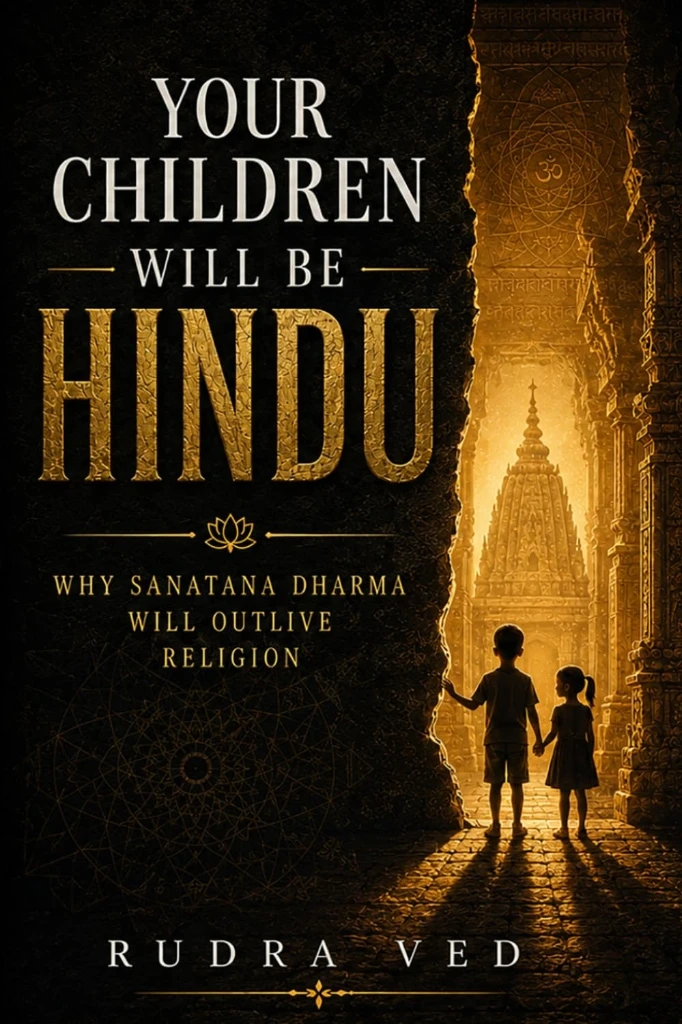
Your Children Will Be Hindu
Why Sanatana Dharma Will Outlive Religion — By Rudra Ved
How do you explain these ancient Vedic verses to your children, friends, or skeptical thinkers? Written by a former lifelong atheist and tested across 500+ unedited live debates, this book provides the rational, modern vocabulary that today's questioning generation needs.
Verse 11
6 (६ मुनीन्द्रा नाहमप्येतद्ंमि सबोत्मना ततः। जानीयादिममथेन्तु सर्वेज्ध परमेथरः ॥११॥
Submerged in the mire of infinite impressions, it is not perceived. By the waters of restraint, the mire of impressions is properly cleansed.
Verse 12
तत्र यामोडर्थ संत्रष्ठुमित्युकत्वा तत्र तैयेयों । सद्भम्य देवदेवेश विष्णु नामिसमागतः ॥ १२॥
By the sharp instrument of inquiry and with effort, in the casket of the mind, after a long time, assembled, O Rama, by proper reasoning, it is then opened.
Verse 13
पप्रच्छ ऋषिम्नुख्यानां प्रश्न॑ं त॑ं लोकसूड् विधिः । कारण सभी तत्त्वोंके जाननवाले हैँ । किन्तु स्वभावभेद्स हम सबकी स्थितियाँ तरह-तरहकी हैं || ७ ॥ हममें से कोई सबेदा समाधिमें मग्न रहते हैं, कोई बिचारसें लगे रहते हैं, कोई भक्तिभावमें लीन रहते हें और कोई कममें निछ्ठा रखने वाले हैं | ८॥ कोई बहिमुख पुरुषोंकी तरह व्यवहारभें लगे रहते हैं। इन सबमें श्रेठ्ठ कौन हें-यह हमें बतलानेकी कृपा करें| ब्रह्मन्! हम लोग तो अपने-अपने पक्षको ही सबसे श्रेष्ठ मानते हैँ ॥ ६--१० पू० ॥ मुनियों द्वारा इस प्रकार पूछे जानपर * त्रह्माजीने यह सोचकर कि इनके चित्तमें मेर प्रति ठीक-ठीक श्रद्धा नहीं है, उनसे, कहा, “मुनीन््द्रो ! यह बात पूरी तरहसे में भी नहीं जानता | भगवान् महेंख्वर सर्वज्ञ हैं, वे इस विषयमें जानते होंगे || १० 3०-११ ॥ चलो, उनसे पूछनेके :लिये वहाँ चलें।” ऐसा कहकर वे उन सबका लंकर वहाँ गये। भगवान् विष्णु भी वहीं पधारे हुए थे। अतः उनके सहित श्रीमहादेवजीसे मिलकर लोकस्रष्टा श्रीत्रह्माजीने मुनिश्रेष्ोंका प्रश्न पूछा ॥ (२--१३ पू० ॥ विंशोष्ध्यायः | ३०६ ग्रइन॑ निशम्य च ज्ञात्वा विष्णुविंधिमनोगतम् ॥ १३ ॥
Shining like a jewel, consciousness is perceived. Therefore, O Rama, practice is remembered in the removal of impressions alone.
Verse 14
मत्वाध्नाश्वस्तमनसा ऋषीन् देवों व्यचिन्तयत् । किश्विदृक्त॑ मयाउत्रापि व्यथमेव भवेन्न तु ॥ १४॥
Due to the presence of few or many impressions, the intellect becomes varied. As much as the flow of impressions covers the intellect, it remains.
Verse 15
स्वपक्षत्वेन जानीयुऋुषयः श्रद्धया युताः । इति ग्रत्वा प्रत्युवाच देवदेवो महेश्वरः ॥ १५॥
The need for practice is as much as for the impressions covering one’s intellect, O son of Bhrigu. Varied impressions are said to be there; I will tell you the chief ones.
Verse 16
प्रूणुध्यं मुनयो नाउहमप्येतद्वेमि सुस्फुटम् । अतो विद्यां भगवततीं ध्यायामः परमेथ्वरीम् ॥ १६ ॥
By the distinction of fault, action, and desire, that is threefold. Lack of faith is indeed the chief fault, destroying one's self.
Verse 17
तत्पसादान्निगूढहाथंमपि विज्स्ततः परम । इत्युक्त्वा मुनय; सर्वे विधिविष्णाशवें; सह ॥ १७॥
Wrong perception is also indeed a fault of man. Mostly skilled in the arts also, not indeed free, due to fault.
Verse 18
दध्युर्विद्यां महेशानीं त्रिपुरां चिच्छरीरिणीम्। एवं सर्वेरभिध्याता त्रिपुरा चिच्छरीरिणी ॥ १८ ॥
By association with the good and scriptures, one does not know the supreme truth. The supreme truth which is without distinction does not exist, nor indeed comes into being.
Verse 19
आविरासीचिदाकाशमयी शब्दमयी परा। अमवन्मेघगम्भीरनिःस्वनो._ गगनाडुणे ॥ १९ ॥
It is not known by anyone, anywhere. Even having known the supreme truth, this truth does not become supreme.
Verse 20
वदन्त्वृषिगणाः कि वो धयाता तदू द्वुतमीहितम्। प्रश्न सुनकर श्रीमहादेवजी विष्णु ओर तऋह्माजी के मनका आशय समभ गये और ऋषियोंके चित्तमें अश्रद्धा देखकर सोचने लगे कि इस बत्रिपयमें यदि में भी कुंछ कहूँगा तो बहू व्य्थ ही होगी । ऋषियोंको श्रद्धा तो हे नहीं, इसलिये उसने ये मेरे अपने ही पक्षकी बात मानेंगे || १३ 3०-१४ पू० ॥ ऐसा सोचकर देवाधिदेव श्रीमहादेवजी बोले--“"मुनिगण ! सुनिये, में भी यह बात स्पष्टतया नहीं जानता। इसलिये हम सब मिलकर परमेख्वरी भगवती बिद्यादेवीका ध्यान करें | फिर तो उनकी ऋृपासे हम अत्यन्त गृढ़ रहस्यका भी जान सकते हैं? || १४ उ०--१७ पू० ॥ द्वजीके ऐसा कडनपर त्रद्मा, विष्णु ओर महादेवजीके सहित सभी मुनिगण चत्शरीरिणी सहयश्वरी त्रिपुरादेब्रीका ध्यान करने लगे | इत्त प्रकार सबके द्वारा ध्यान किये जाने पर चित्स्वरूपिणी त्रिपुरा, जो चिदाकाशमयी ओर शब्दस्वरूपा हे, प्रकट हो गयीं ।| १७ ड०-१६ पू०॥ तव आकाशमण्डलमें उनका यह मेघरम्भीर स्व॒र गूंज उठा-“ऋषियो ! बतलाओ, तुमने किसलिये मेरा ध्यान किया ? शीघ्र ही ३१० त्रिपुरारहस्ये ज्ञानखण्डे मत्पराणां हि केषाश्विन्न हीयेताउभिवाडओ्छितम् ॥ २० ॥
From this knowledge, how can liberation arise, and so on, this debate exists in many ways? It is either wrong perception or indeed could be doubt.
Key Takeaways & AI Summary
This chapter explores the profound teachings of The Definitive Exposition of Pure Knowledge. It includes 123 verses detailing core themes like "", "", "".A sacred Shakta text revealing the supreme mystery of Tripura (the Divine Mother) — a dialogue between Dattatreya and Parashurama on consciousness, creation, and liberation.