
Pranagnihotra Upanishad
(Chapter 52)
Verse 1
अथातः सर्वोपनिषत्सारं संसारज्ञानातीतमन्नसूक्तं शारीरयज्ञं व्याख्यास्यामः । यस्मिन्नेव पुरुषः शरीरे विनाप्यग्निहोत्रेण विनापि सांख्ययोगेन संसारविमुक्तिर्भवति ॥
athātaḥ sarvopaniṣatsāraṃ saṃsārajñānātītamannasūktaṃ śārīrayajñaṃ vyākhyāsyāmaḥ । yasminneva puruṣaḥ śarīre vināpyagnihotreṇa vināpi sāṃkhyayogena saṃsāravimuktirbhavati ॥
Now, therefore, we shall explain the bodily sacrifice (śārīra-yajña), which is the essence of all Upaniṣads and the Annasūkta (hymn of food) that transcends worldly knowledge. Through this very sacrifice, a person, while in the body, attains liberation from transmigration even without the Agnihotra (fire sacrifice) and even without Sāṃkhya and Yoga.
Verse 2
स्वेन विधिनान्नं भूमौ निक्षिप्य या ओषधीः सोमराज्ञीरिति तिसृभिरत्नपत इति द्वाभ्यामनुमन्त्रयते।।
svena vidhinānnaṃ bhūmau nikṣipya yā oṣadhīḥ somarājñīriti tisṛbhiratnapata iti dvābhyāmanumantrayate।।
Having placed food on the ground according to one's own method, one consecrates it with three (verses beginning) 'Yā Oṣadhīḥ Somarājñīḥ' and with two (verses beginning) 'Atnapata'.
Verse 3
या ओषधयः सोमराज्ञीर्बह्वीः शतविचक्षणाः। बृहस्पतिप्रसूतास्ता नो मुञ्चन्त्वंहसः ।।
yā oṣadhayaḥ somarājñīrbahvīḥ śatavicakṣaṇāḥ। bṛhaspatiprasūtāstā no muñcantvaṃhasaḥ ।।
May those many herbs, whose king is Soma, endowed with a hundred varieties, and produced by Brihaspati, release us from distress.
Verse 4
याः फलिनीय अफला अपुष्पा याश्च पुष्पिणीः। बृहस्पतिप्रसूतास्ता नो मुञ्चन्त्वंहसः ।।
yāḥ phalinīya aphalā apuṣpā yāśca puṣpiṇīḥ। bṛhaspatiprasūtāstā no muñcantvaṃhasaḥ ।।
May those plants which are fruit-bearing, those which are fruitless, those which are flowerless, and those which are flowering – may they, sprung from Bṛhaspati, release us from sin.
Verse 5
जीवला नघारिषां मा ते बध्नाम्योषधिम् । यातयायुरुपाहरादप रक्षांसि चातयात् ।।
jīvalā naghāriṣāṃ mā te badhnāmyoṣadhim । yātayāyurupāharādapa rakṣāṃsi cātayāt ।।
O giver of life, I tie this herb to you; may it cause no harm. Remove that which wastes life, and may it drive away the demons.
Verse 6
अन्नपतेऽन्नस्य नो धेह्यनमीवस्य शुष्मिणः। प्रप्रदातारं तारिष ऊर्जं नो धेहि द्विपदे चतुष्पदे ॥
annapate'nnasya no dhehyanamīvasya śuṣmiṇaḥ। prapradātāraṃ tāriṣa ūrjaṃ no dhehi dvipade catuṣpade ॥
O Lord of Food, bestow upon us food that is wholesome and invigorating. May you prosper the giver (of food). Bestow nourishment upon our two-footed and four-footed beings.
Verse 7
यदन्नमग्निर्बहुधा विराद्धि रुद्वैः प्रजग्धं यदि वा पिशाचैः। सर्वं तदीशानो अभयं कृणोतु शिवमीशानाय स्वाहा।।
yadannamagnirbahudhā virāddhi rudvaiḥ prajagdhaṃ yadi vā piśācaiḥ। sarvaṃ tadīśāno abhayaṃ kṛṇotu śivamīśānāya svāhā।।
Whatever food, by Agni (the digestive fire), in various ways, may be corrupted, or consumed by Rudras, or even by Pisacas; may Ishana make all of it harmless. An auspicious offering to Ishana, Svaha.
Verse 8
अन्तश्चरसि भूतेषु गुहायां विश्वतोमुखः । त्वं यज्ञस्त्वं ब्रह्मा त्वं रुद्रस्त्वं विष्णुस्त्वं वषट्कार आपो ज्योती रसोऽमृतं ब्रह्म भूर्भुवः सुवरों नमः ॥
antaścarasi bhūteṣu guhāyāṃ viśvatomukhaḥ । tvaṃ yajñastvaṃ brahmā tvaṃ rudrastvaṃ viṣṇustvaṃ vaṣaṭkāra āpo jyotī raso'mṛtaṃ brahma bhūrbhuvaḥ suvaroṃ namaḥ ॥
You move within all beings, in the cave (of the heart), omnipresent. You are the sacrifice, You are Brahma, You are Rudra, You are Vishnu, You are the Vaṣaṭkāra (the ritual exclamation). You are the Waters, the Light, the Essence, Immortality, Brahman. You are Bhūḥ (earth), Bhuvaḥ (mid-region), Suvaḥ (heavenly region), Oṁ. Salutations.
Verse 9
आपः पुनन्तु पृथिवीं पृथिवी पूता पुनातु माम्। पुनन्तु ब्रह्मणस्पतिर्ब्रह्मपूता पुनातु माम्। यदृच्छिष्टमभोज्यं यद्वा दुश्चरितं मम। सर्वं पुनन्तु मामापोऽसतां च प्रतिग्रहं स्वाहा।।
āpaḥ punantu pṛthivīṃ pṛthivī pūtā punātu mām। punantu brahmaṇaspatirbrahmapūtā punātu mām। yadṛcchiṣṭamabhojyaṃ yadvā duścaritaṃ mama। sarvaṃ punantu māmāpo'satāṃ ca pratigrahaṃ svāhā।।
May the waters purify the earth; may the purified earth purify me. May there be purification! May Brahmanaspati, purified by Brahman, purify me. Whatever is my impure remnant (food) unfit to eat, or whatever misdeed of mine, may the Waters purify me of all that, and of accepting gifts from the wicked. Svāhā.
Verse 10
अमृतमस्यमृतोपस्तरणमस्यमृतं प्राणे जुहोम्यमाशिष्यान्तोऽसि । ॐ प्राणाय स्वाहा । ॐ अपानाय स्वाहा । ॐ व्यानाय स्वाहा । ॐ उदानाय स्वाहा । ॐ समानाय स्वाहा । ॐ ब्रहाणे स्वाहा। ॐ ब्रह्मणि म आत्माऽमृतत्वायेति ॥
amṛtamasyamṛtopastaraṇamasyamṛtaṃ prāṇe juhomyamāśiṣyānto'si । oṃ prāṇāya svāhā । oṃ apānāya svāhā । oṃ vyānāya svāhā । oṃ udānāya svāhā । oṃ samānāya svāhā । oṃ brahāṇe svāhā। oṃ brahmaṇi ma ātmā'mṛtatvāyeti ॥
You are the immortal; you are the immortal covering. I offer the immortal into Prana. You are the unconsumed end. Om, oblation to Prana. Om, oblation to Apana. Om, oblation to Vyana. Om, oblation to Udana. Om, oblation to Samana. Om, oblation to Brahana. Om, in Brahman may my self attain immortality.
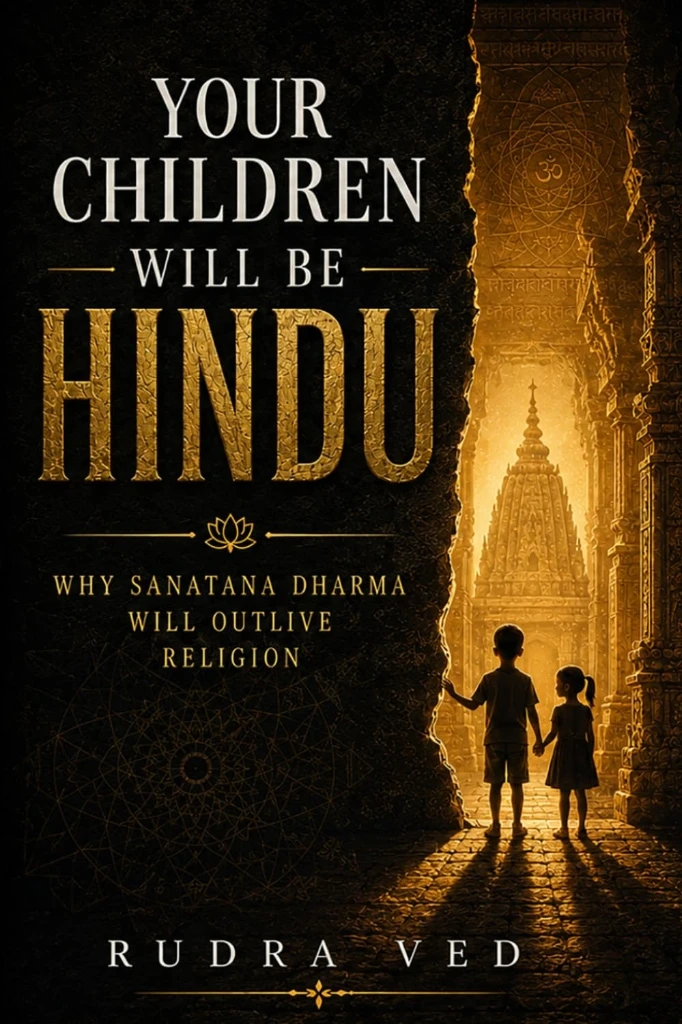
Your Children Will Be Hindu
Why Sanatana Dharma Will Outlive Religion — By Rudra Ved
How do you explain these ancient Vedic verses to your children, friends, or skeptical thinkers? Written by a former lifelong atheist and tested across 500+ unedited live debates, this book provides the rational, modern vocabulary that today's questioning generation needs.
Verse 11
कनिष्ठिकाङ्गल्याङ्गष्ठेन च प्राणे जुहोति अनामिकयापाने मध्यमया व्याने सर्वाभिरुदाने प्रदेशिन्या समाने ॥
kaniṣṭhikāṅgalyāṅgaṣṭhena ca prāṇe juhoti anāmikayāpāne madhyamayā vyāne sarvābhirudāne pradeśinyā samāne ॥
One offers into Prāṇa with the little finger and the thumb; into Apāna with the ring finger; into Vyāna with the middle finger; into Udāna with all (fingers); and into Samāna with the forefinger.
Verse 12
तूष्णीमेकामेकऋचा जुहोति द्वे आहवनीये एकां दक्षिणाग्नौ एकां गार्हपत्ये एकां सर्वप्रायश्चित्तीये॥
tūṣṇīmekāmekaṛcā juhoti dve āhavanīye ekāṃ dakṣiṇāgnau ekāṃ gārhapatye ekāṃ sarvaprāyaścittīye॥
He offers one (oblation) silently with one Rik (verse); two in the Ahavaniya (fire), one in the Dakṣiṇāgni (fire), one in the Gārhapatya (fire), and one for universal expiation.
Verse 13
अथापिधानमस्यमृतत्वायोपस्पृश्य पुनरादाय पुनरुपस्पृशेत्॥
athāpidhānamasyamṛtatvāyopaspṛśya punarādāya punarupaspṛśet॥
Then, the covering (or conclusion) of this (ritual), for the sake of immortality, is performed by sipping water. Having taken (it) again, one should again sip water.
Verse 14
सव्ये प्राणावाऽऽपो गृहीत्वा हृदयमन्वालभ्य जपेत् । प्राणोऽग्निः परमात्मा पञ्चवायुभिरा-वृतः। अभयं सर्वभूतेभ्यो न मे भीतिः कदाचन ॥
savye prāṇāvā''po gṛhītvā hṛdayamanvālabhya japet । prāṇo'gniḥ paramātmā pañcavāyubhirā-vṛtaḥ। abhayaṃ sarvabhūtebhyo na me bhītiḥ kadācana ॥
Having taken the vital breaths or waters in the left (hand) and having touched the heart, one should recite: 'Prāṇa is Agni, the Supreme Self, encompassed by the five vital airs. Fearlessness (comes to me) from all beings; never is there any fear for me.'
Verse 15
विश्वोऽसि वैश्वानरो विश्वरूपं त्वया धार्यते जायमानम्। विश्वं त्वाहुतयः सर्वा यत्र ब्रह्माऽमृतोऽसि ॥
viśvo'si vaiśvānaro viśvarūpaṃ tvayā dhāryate jāyamānam। viśvaṃ tvāhutayaḥ sarvā yatra brahmā'mṛto'si ॥
You are the universe, Vaiśvānara; the universal form, as it comes into being, is sustained by you. All offerings are for you, the universe, where you are Brahman, the immortal.
Verse 16
महानवोऽयं पुरुषो योऽङ्गुष्ठाग्ने प्रतिष्ठितः । तमद्भिः परिषिञ्चामि सोऽस्यान्ते अमृताय च।।
mahānavo'yaṃ puruṣo yo'ṅguṣṭhāgne pratiṣṭhitaḥ । tamadbhiḥ pariṣiñcāmi so'syānte amṛtāya ca।।
This great new Purusha, who is established in the thumb-sized fire. I sprinkle him with water. And may he, at its end, be for immortality.
Verse 17
अनावित्येष बाहात्मा ध्यायेताग्निहोत्रं जुहोमीति । सर्वेषामेव सूनुर्भवति । अस्य यज्ञपरिवृता आहुतीर्होमयति ॥
anāvityeṣa bāhātmā dhyāyetāgnihotraṃ juhomīti । sarveṣāmeva sūnurbhavati । asya yajñaparivṛtā āhutīrhomayati ॥
This external self, being situated in the breath (or life-force), should meditate, 'I am offering the Agnihotra.' He verily becomes the son of all. For him, he offers the oblations that are encompassed by the sacrifice.
Verse 18
स्वशरीर यज्ञं परिवर्तयामीति । चत्वारोऽग्नयस्ते किं नारमर्धयाः ॥
svaśarīra yajñaṃ parivartayāmīti । catvāro'gnayaste kiṃ nāramardhayāḥ ॥
“I transform my own body into a sacrifice.” The four fires, why do they torment man?
Verse 19
तत्र सूर्योऽग्निर्नाम सूर्यमण्डलाकृतिः सहस्त्ररश्मिपरिवृत एकऋषिर्भूत्वा मूर्धनि तिष्ठति । चस्मादुत्त्को दर्शनाग्निर्नाम चतुराकृतिराहवनीयो भूत्वा मुखे तिष्ठति । शारीरोऽग्निर्नाम जराप्रणुदा हविरवस्कन्दति । अर्धचन्द्राकृतिर्दक्षिणाग्निर्भूत्वा हृदये तिष्ठति । तत्र कोष्ठाग्निरिति-कोष्ठाग्निर्नामा-शितपीतलीढस्वादितं सम्यग् व्यष्टयं विषयित्वा गार्हपत्यो भूत्वा नाभ्यां तिष्ठति ॥
tatra sūryo'gnirnāma sūryamaṇḍalākṛtiḥ sahastraraśmiparivṛta ekaṛṣirbhūtvā mūrdhani tiṣṭhati । casmāduttko darśanāgnirnāma caturākṛtirāhavanīyo bhūtvā mukhe tiṣṭhati । śārīro'gnirnāma jarāpraṇudā haviravaskandati । ardhacandrākṛtirdakṣiṇāgnirbhūtvā hṛdaye tiṣṭhati । tatra koṣṭhāgniriti-koṣṭhāgnirnāmā-śitapītalīḍhasvāditaṃ samyag vyaṣṭayaṃ viṣayitvā gārhapatyo bhūtvā nābhyāṃ tiṣṭhati ॥
There, the fire named Sūrya-Agni, having the form of the solar disc, surrounded by a thousand rays, having become the single seer (Ekarṣi), resides in the head. And from this, the fire named Darśana-Agni, which is called `uttka`, having a four-fold form, becoming the Āhavanīya fire, resides in the mouth. The fire named Śārīra-Agni, by means of its quality as the dispeller of old age, consumes the oblation. The fire named Dakṣiṇa-Agni, having the shape of a half-moon, resides in the heart. There, the Koṣṭha-Agni – this Koṣṭha-Agni by name – properly processing the individualized (portions of) what is eaten, drunk, licked, and tasted, becoming the Gārhapatya (Householder's) fire, resides in the navel.
Verse 20
प्रायश्चित्तयस्त्वधस्तात्तिर्यक् तिस्त्रो हिमांशुप्रभाभिः प्रजननकर्मा ॥
prāyaścittayastvadhastāttiryak tistro himāṃśuprabhābhiḥ prajananakarmā ॥
Indeed, the three [channels or forces] that are below and sideways, [operating] by means of the moon's rays for the act of procreation, are [themselves] expiations.
Key Takeaways & AI Summary
This chapter explores the profound teachings of Pranagnihotra Upanishad. It includes 23 verses detailing core themes like "athātaḥ sarvopaniṣatsāraṃ saṃsārajñānātītamannasūktaṃ śārīrayajñaṃ vyākhyāsyāmaḥ । yasminneva puruṣaḥ śarīre vināpyagnihotreṇa vināpi sāṃkhyayogena saṃsāravimuktirbhavati ॥", "svena vidhinānnaṃ bhūmau nikṣipya yā oṣadhīḥ somarājñīriti tisṛbhiratnapata iti dvābhyāmanumantrayate।।", "yā oṣadhayaḥ somarājñīrbahvīḥ śatavicakṣaṇāḥ। bṛhaspatiprasūtāstā no muñcantvaṃhasaḥ ।।".The crown jewels of Vedic philosophy — a collection of 108+ texts exploring the nature of Brahman, Atman, and ultimate reality.