
The Yoga of Final Liberation Through Renunciation and Surrender
(Chapter 18)
मोक्षसंन्यासयोगः
Verse 18-1
अर्जुन उवाच | संन्यासस्य महाबाहो तत्त्वमिच्छामि वेदितुम् | त्यागस्य च हृषीकेश पृथक्केशिनिषूदन ||१८-१||
arjuna uvāca . saṃnyāsasya mahābāho tattvamicchāmi veditum . tyāgasya ca hṛṣīkeśa pṛthakkeśiniṣūdana ..18-1..
Arjuna said: 1. I desire to know severally, O mighty-armed, the essence or truth of "Renunciation, " O Hrishikesa, as also of 'Abandonment, ' O slayer of Keshi (Krishna) .
Verse 18-2
श्रीभगवानुवाच | काम्यानां कर्मणां न्यासं संन्यासं कवयो विदुः | सर्वकर्मफलत्यागं प्राहुस्त्यागं विचक्षणाः ||१८-२||
śrībhagavānuvāca . kāmyānāṃ karmaṇāṃ nyāsaṃ saṃnyāsaṃ kavayo viduḥ . sarvakarmaphalatyāgaṃ prāhustyāgaṃ vicakṣaṇāḥ ..18-2..
The Blessed Lord said: 2. The Sages understand SAMNYASA to be "the renunciation of works with desire" ; the wise declare "the abandonment of the fruits of all actions" as TYAAGA.
Verse 18-3
त्याज्यं दोषवदित्येके कर्म प्राहुर्मनीषिणः | यज्ञदानतपःकर्म न त्याज्यमिति चापरे ||१८-३||
tyājyaṃ doṣavadityeke karma prāhurmanīṣiṇaḥ . yajñadānatapaḥkarma na tyājyamiti cāpare ..18-3..
3. That all actions should be abandoned as evil, declare some philosophers; while others (declare) that acts of sacrifice, gift and austerity should not be relinquished.
Verse 18-4
निश्चयं शृणु मे तत्र त्यागे भरतसत्तम | त्यागो हि पुरुषव्याघ्र त्रिविधः सम्प्रकीर्तितः ||१८-४||
niścayaṃ śṛṇu me tatra tyāge bharatasattama . tyāgo hi puruṣavyāghra trividhaḥ samprakīrtitaḥ ..18-4..
4. Hear from Me the conclusion or the final truth, about this "abandonment, " O best of the Bharatas; "abandonment, " verily, O best of men, has been declared to be of three kinds.
Verse 18-5
यज्ञदानतपःकर्म न त्याज्यं कार्यमेव तत् | यज्ञो दानं तपश्चैव पावनानि मनीषिणाम् ||१८-५||
yajñadānatapaḥkarma na tyājyaṃ kāryameva tat . yajño dānaṃ tapaścaiva pāvanāni manīṣiṇām ..18-5..
5. Acts of sacrifice, charity and austerity should not be abandoned, but should be performed; worship, charity, and also austerity, are the purifiers of even the 'wise. '
Verse 18-6
एतान्यपि तु कर्माणि सङ्गं त्यक्त्वा फलानि च | कर्तव्यानीति मे पार्थ निश्चितं मतमुत्तमम् ||१८-६||
etānyapi tu karmāṇi saṅgaṃ tyaktvā phalāni ca . kartavyānīti me pārtha niścitaṃ matamuttamam ..18-6..
6. But even these actions should be performed leaving aside attachment and the fruits, O Partha; this is my certain and best belief.
Verse 18-7
नियतस्य तु संन्यासः कर्मणो नोपपद्यते | मोहात्तस्य परित्यागस्तामसः परिकीर्तितः ||१८-७||
niyatasya tu saṃnyāsaḥ karmaṇo nopapadyate . mohāttasya parityāgastāmasaḥ parikīrtitaḥ ..18-7..
7. Verily, the renunciation of "obligatory actions" is not proper; the abandonment of the same from delusion is declared to be TAMASIC (dull) .
Verse 18-8
दुःखमित्येव यत्कर्म कायक्लेशभयात्त्यजेत् | स कृत्वा राजसं त्यागं नैव त्यागफलं लभेत् ||१८-८||
duḥkhamityeva yatkarma kāyakleśabhayāttyajet . sa kṛtvā rājasaṃ tyāgaṃ naiva tyāgaphalaṃ labhet ..18-8..
8. He who, from fear of bodily trouble, abandons action because it is painful, thus performing a RAJASIC (passionate) abandonment, obtains not the fruit of "abandonment. "
Verse 18-9
कार्यमित्येव यत्कर्म नियतं क्रियतेऽर्जुन | सङ्गं त्यक्त्वा फलं चैव स त्यागः सात्त्विको मतः ||१८-९||
kāryamityeva yatkarma niyataṃ kriyate.arjuna . saṅgaṃ tyaktvā phalaṃ caiva sa tyāgaḥ sāttviko mataḥ ..18-9..
9. Whatever "obligatory action" is done, O Arjuna, merely because it ought to be done, abandoning "attachment and also fruit, " that abandonment is regarded as SATTWIC (pure) .
Verse 18-10
न द्वेष्ट्यकुशलं कर्म कुशले नानुषज्जते | त्यागी सत्त्वसमाविष्टो मेधावी छिन्नसंशयः ||१८-१०||
na dveṣṭyakuśalaṃ karma kuśale nānuṣajjate . tyāgī sattvasamāviṣṭo medhāvī chinnasaṃśayaḥ ..18-10..
10. The abandoner, soaked in purity, being intelligent, with all his doubts cut asunder, hates not disagreeable action, nor is he attached to an agreeable action.
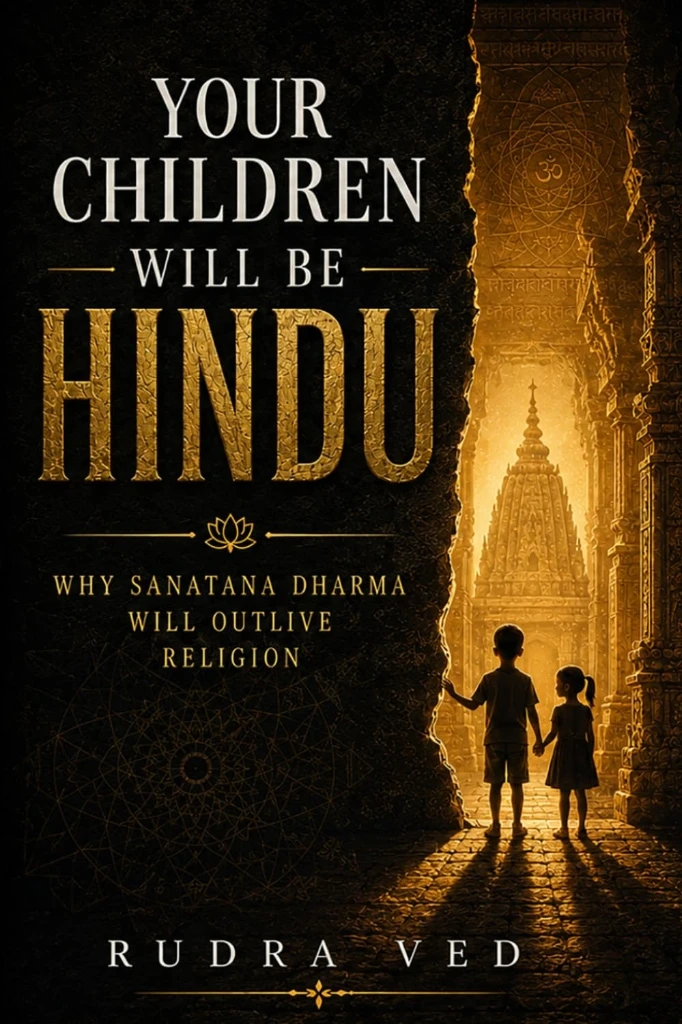
Your Children Will Be Hindu
Why Sanatana Dharma Will Outlive Religion — By Rudra Ved
How do you explain these ancient Vedic verses to your children, friends, or skeptical thinkers? Written by a former lifelong atheist and tested across 500+ unedited live debates, this book provides the rational, modern vocabulary that today's questioning generation needs.
Verse 18-11
न हि देहभृता शक्यं त्यक्तुं कर्माण्यशेषतः | यस्तु कर्मफलत्यागी स त्यागीत्यभिधीयते ||१८-११||
na hi dehabhṛtā śakyaṃ tyaktuṃ karmāṇyaśeṣataḥ . yastu karmaphalatyāgī sa tyāgītyabhidhīyate ..18-11..
11. Verily, it is not possible for an embodied being to abandon actions entirely, but he who relinquishes "the fruits of actions" is verily called a 'relinquisher' (TYAAGI) .
Verse 18-12
अनिष्टमिष्टं मिश्रं च त्रिविधं कर्मणः फलम् | भवत्यत्यागिनां प्रेत्य न तु संन्यासिनां क्वचित् ||१८-१२||
aniṣṭamiṣṭaṃ miśraṃ ca trividhaṃ karmaṇaḥ phalam . bhavatyatyāgināṃ pretya na tu saṃnyāsināṃ kvacit ..18-12..
12. The threefold fruit of action, evil, good and mixed-accrues, after death, only to those who have no spirit of 'abandonment' ; never to total relinquishers.
Verse 18-13
पञ्चैतानि महाबाहो कारणानि निबोध मे | साङ्ख्ये कृतान्ते प्रोक्तानि सिद्धये सर्वकर्मणाम् ||१८-१३||
pañcaitāni mahābāho kāraṇāni nibodha me . sāṅkhye kṛtānte proktāni siddhaye sarvakarmaṇām ..18-13..
13. Learn from Me, O mighty-armed, these five causes for the accomplishment of all actions, as declared in the SANKHYA (UPANISHAD) system, which is the end of all actions.
Verse 18-14
अधिष्ठानं तथा कर्ता करणं च पृथग्विधम् | विविधाश्च पृथक्चेष्टा दैवं चैवात्र पञ्चमम् ||१८-१४||
adhiṣṭhānaṃ tathā kartā karaṇaṃ ca pṛthagvidham . vividhāśca pṛthakceṣṭā daivaṃ caivātra pañcamam ..18-14..
14. The "seat" (body) , the doer (ego) , the various organs-of-perception, the different functions of various organs-of-action, and also the presiding deity, the fifth.
Verse 18-15
शरीरवाङ्मनोभिर्यत्कर्म प्रारभते नरः | न्याय्यं वा विपरीतं वा पञ्चैते तस्य हेतवः ||१८-१५||
śarīravāṅmanobhiryatkarma prārabhate naraḥ . nyāyyaṃ vā viparītaṃ vā pañcaite tasya hetavaḥ ..18-15..
15. Whatever action a man performs by his body, speech and mind --- whether right, or the reverse --- these five are its causes.
Verse 18-16
तत्रैवं सति कर्तारमात्मानं केवलं तु यः | पश्यत्यकृतबुद्धित्वान्न स पश्यति दुर्मतिः ||१८-१६||
tatraivaṃ sati kartāramātmānaṃ kevalaṃ tu yaḥ . paśyatyakṛtabuddhitvānna sa paśyati durmatiḥ ..18-16..
16. Now, such being the case, verily he who --- owing to his untrained understanding --- looks upon his Self, which is "alone" (never conditioned by the "engine" ) , as the doer, he, of perverted intelligence, sees not.
Verse 18-17
यस्य नाहंकृतो भावो बुद्धिर्यस्य न लिप्यते | हत्वाऽपि स इमाँल्लोकान्न हन्ति न निबध्यते ||१८-१७||
yasya nāhaṃkṛto bhāvo buddhiryasya na lipyate . hatvā.api sa imā.Nllokānna hanti na nibadhyate ..18-17..
17. He who is free from the egoistic notion, whose intelligence is not tainted (by good or evil) , though he slays these people, he slays not, nor is he bound (by the action) .
Verse 18-18
ज्ञानं ज्ञेयं परिज्ञाता त्रिविधा कर्मचोदना | करणं कर्म कर्तेति त्रिविधः कर्मसंग्रहः ||१८-१८||
jñānaṃ jñeyaṃ parijñātā trividhā karmacodanā . karaṇaṃ karma karteti trividhaḥ karmasaṃgrahaḥ ..18-18..
18. Knowledge, the known and knower form the three-fold "impulse to action" ; the organs, the action, the agent, form the three-fold "basis of action. "
Verse 18-19
ज्ञानं कर्म च कर्ताच त्रिधैव गुणभेदतः | प्रोच्यते गुणसङ्ख्याने यथावच्छृणु तान्यपि ||१८-१९||
jñānaṃ karma ca kartāca tridhaiva guṇabhedataḥ . procyate guṇasaṅkhyāne yathāvacchṛṇu tānyapi ..18-19..
19. 'Knowledge, ' 'action, ' and 'actor' are declared in the Science of Temperaments (gunas) to be of three kinds only, according to the distinctions of temperaments; hear them also duly.
Verse 18-20
सर्वभूतेषु येनैकं भावमव्ययमीक्षते | अविभक्तं विभक्तेषु तज्ज्ञानं विद्धि सात्त्विकम् ||१८-२०||
sarvabhūteṣu yenaikaṃ bhāvamavyayamīkṣate . avibhaktaṃ vibhakteṣu tajjñānaṃ viddhi sāttvikam ..18-20..
20. That by which one sees the one indestructible reality in all beings, undivided in the divided, know that "knowledge" as SATTWIC (Pure) .
Key Takeaways & AI Summary
This chapter explores the profound teachings of The Yoga of Final Liberation Through Renunciation and Surrender. It includes 78 verses detailing core themes like "arjuna uvāca ", "śrībhagavānuvāca ", "tyājyaṃ doṣavadityeke karma prāhurmanīṣiṇaḥ ".The divine discourse between Lord Krishna and Arjuna on the battlefield of Kurukshetra — the ultimate guide to duty, devotion, and self-realization.