
The Discrimination Between the Seer and the Seen
(Chapter 9)
Chapter 9: Hemachuda's Rest
Verse 1
श्रुत्वेत्थं प्रियया प्रोक्तं हेमचूडोऽतिविस्मितः । हर्षगद्गदया वाचा पुनर्वक्तुं प्रचक्रमे ॥ १ ॥
śrutv-etthaṁ priyayā proktaṁ hemacūḍo'tivismitaḥ । harṣa-gadgadayā vācā punar-vaktuṁ pracakrame ॥ 1 ॥
Having heard his beloved’s words, Hemachuda was astonished. With a voice choked with joy, he began to speak again.
Verse 2
धन्या प्रियेऽसि निपुणा अहो ते ज्ञानवैभवम् । किं वर्णयामि यत् प्रोक्तमाख्यारूपतयाऽखिलम् ॥ २ ॥
dhanyā priye'si nipuṇā aho te jñāna-vaibhavam । kiṁ varṇayāmi yat proktam ākhyā-rūpatayā'khilam ॥ 2 ॥
Oh dear, you are blessed and skillful. How can I describe the splendor of your knowledge, who has spoken about that as a complete story?
Verse 3
एवंविधं स्ववृत्तं मे नाभवद्विदितं क्वचित् । त्वदुक्त्याऽहं सम्प्रति तत् करामलकवत् स्फुटम् ॥ ३ ॥
evaṁvidhaṁ sva-vṛttaṁ me nābhavad viditaṁ kvacit । tvad-uktyā'haṁ samprati tat karāmala-kavat sphuṭam ॥ 3 ॥
I was unaware of such a story about my nature. Your words have made it as clear to me as a fruit in my hand.
Verse 4
स्मराम्यनुभवाम्यन्तरहो लोकक्रियाऽद्भुता । का सा परा चितिर्माता कथं तस्यास्तु नो जनिः ॥ ४ ॥
smarāmy anubhavāmy antar aho loka-kriyā'dbhutā । kā sā parā citir mātā kathaṁ tasyāstu no janiḥ ॥ 4 ॥
I recall and experience it within the wonderful actions of the world. Who is that supreme consciousness, the mother, and how are we born from her?
Verse 5
के वा वयं स्वरूपं किमस्माकं तद् ब्रवीहि मे । इति पृष्टा हेमलेखा रामोवाच प्रियं प्रति ॥ ५ ॥
ke vā vayaṁ svarūpaṁ kim asmākaṁ tad bravīhi me । iti pṛṣṭā hemalekhā rāmovāca priyaṁ prati ॥ 5 ॥
"Who are we, and what is our nature? Tell me that," he asked Hemalekha. She then spoke to his beloved.
Verse 6
नाथ शृणु प्रवक्ष्यामि गूढार्थमिदमादरात् । विचारयात्मनो रूपं बुद्धयाऽत्यन्तविशुद्धया ॥ ६ ॥
nātha śṛṇu pravakṣyāmi gūḍhārtham idam ādarāt । vicārayātmano rūpaṁ buddhayā'tyanta-viśuddhayā ॥ 6 ॥
Listen, my lord, I will respectfully explain this hidden meaning. Contemplate the form of the self with an extremely pure intellect.
Verse 7
न दृश्यं नापि तद्वाच्यमतो वक्ष्यामि तत् कथम् । ज्ञाते स्वात्मस्वरूपे वै ततो ज्ञास्यसि मातरम् ॥ ७ ॥
na dṛśyaṁ nāpi tad vācyam ato vakṣyāmi tat katham । jñāte svātma-svarūpe vai tato jñāsyasi mātaram ॥ 7 ॥
It is neither visible nor speakable, so how will I explain? By knowing your own true form, you will indeed come to know the mother.
Verse 8
नह्यादेशः स्वरूपेऽस्ति तत आदेष्टृवर्जितम् । स्वं रूपं स्वात्मना पश्य शुद्धबुद्धिसमाश्रयम् ॥ ८ ॥
nahy ādeśaḥ svarūpe'sti tata ādeṣṭṛ-varjitam । svaṁ rūpaṁ svātmanā paśya śuddha-buddhi-samāśrayam॥ 8 ॥
Indeed, there is no command in one’s true form, hence it is without a commander. Perceive your own form with your self and pure intellect.
Verse 9
देवादितिर्यगन्तानां भान्तं भानैरभासितम् । भान्तं सर्वत्र सर्वस्य सर्वदा मानवर्जितम् ॥ ९ ॥
devād-tiryag-antānāṁ bhāntaṁ bhānaiḥ abhāsitam । bhāntaṁ sarvatra sarvasya sarvadā mānavarjitam ॥ 9 ॥
Shining from gods to lower beings, illuminated by rays, it shines everywhere, encompassing everything, always without a mind.
Verse 10
कथं कुत्र कदा केन निरूप्येतापि लेशतः । मन्नेत्रं दर्शयेत्येवमुक्तमेतत् प्रियाधुना ॥ १० ॥
kathaṁ kutra kadā kena nirūpyeta api leśataḥ । man-netraṁ darśayety evam uktam etat priyādhunā ॥ 10 ॥
How, where, when, and by whom can it be described even partially? Now, It is similar to you asking, “Show me my eyes, beloved”.
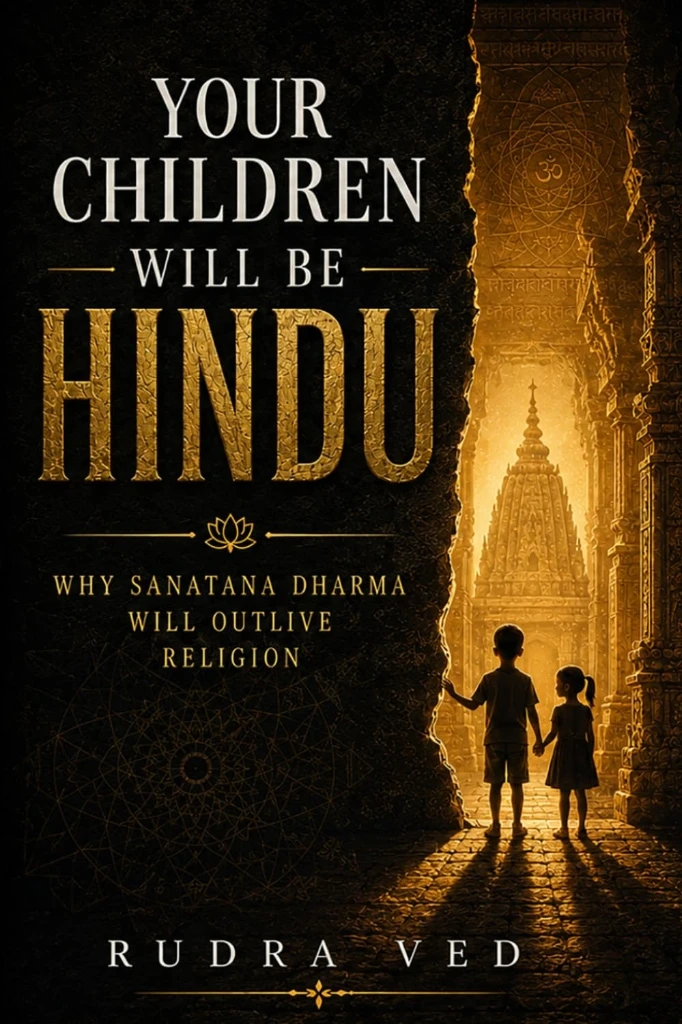
Your Children Will Be Hindu
Why Sanatana Dharma Will Outlive Religion — By Rudra Ved
How do you explain these ancient Vedic verses to your children, friends, or skeptical thinkers? Written by a former lifelong atheist and tested across 500+ unedited live debates, this book provides the rational, modern vocabulary that today's questioning generation needs.
Verse 11
नात्राचार्यस्योपयोगो यथा नयनदर्शने । निपुणोऽपि महाचार्यः कथं नेत्रं प्रदर्शयेत् ॥ ११ ॥
nātrācāryasy-opayogo yathā nayana-darśane । nipuṇo'pi mahācāryaḥ kathaṁ netraṁ pradarśayet ॥ 11 ॥
Here, a teacher is of no use as in seeing one’s own eyes. Even a skilled great teacher, how can he show you your eyes?
Verse 12
अतो गुरुरुपायोऽत्र तदुपायप्रदर्शनात् । तत्ते वक्ष्याम्युपायं तच्छृणु संयतमानसः ॥ १२ ॥
ato gurur upāyo'tra tad-upāya-pradarśanāt । tat-te vakṣyāmy upāyaṁ tac-chṛṇu saṁyata-mānasaḥ ॥ 12 ॥
Therefore, the teacher is merely a means to reveal it. I will tell you that method; listen with a restrained mind.
Verse 13
यावत् त्वमात्मनि ममेत्येवं तु प्रतिपश्यसि । ततः परं निजं रूपं यन्ममेति न भाति ते ॥ १३ ॥
yāvat tvam ātmani mamety evaṁ tu pratipaśyasi । tataḥ paraṁ nijaṁ rūpaṁ yan mameti na bhāti te ॥ 13 ॥
As long as you see "mine" in the self, your true form, which is beyond "mine," will not shine for you.
Verse 14
गत्वैकान्ते विविच्यैतद्यद्यद् भाति ममत्वतः । तत्तत् परित्यज्य परं स्वात्मानमभिलक्षय ॥ १४ ॥
gatv-aikānte vivicyaitad yadyad bhāti mamatvataḥ । tat-tat parityajya paraṁ svātmānam abhilaḳṣaya ॥ 14 ॥
Seek solitude and discern this: whatever shines as "mine," abandon it. Beyond that, observe the self.
Verse 15
यथाहं ते ममत्वेन भासनान्नात्मता मयि । सम्बन्धमात्रादात्मीया न स्वरूपगता ह्यहम् ॥ १५ ॥
yathāhaṁ te mamatvena bhāsanān nātmatā mayi । sambandhamātrād ātmīyā na svarūpagatā hy aham ॥ 15 ॥
As I appear to you as "mine," it is not because I possess self-ness. It is merely due to our relationship and your own thinking, not because of my true essence.
Verse 16
ममार्थमखिलं त्यक्त्वा यत्त्यक्तुं नैव शक्यते । तमात्मानं समालक्ष्य परं श्रेयः समाप्नुहि ॥ १६ ॥
mamārtham akhilaṁ tyaktvā yat tyaktuṁ naiva śakyate । tam ātmānaṁ samālakṣya paraṁ śreyaḥ samāpnuhu ॥ 16 ॥
Abandon everything for my sake, even that which cannot truly be abandoned. Realize the self and attain supreme welfare.
Verse 17
इत्युक्तः प्रियया हेमचूड उत्थाय वै द्रुतम् । ययावश्वं समारुह्य तत्क्षणे नगराद् बहिः ॥ १७ ॥
ity uktaḥ priyayā hemacūḍa utthāya vai drutam । yayāv aśvaṁ samāruhya tatkṣaṇe nagarād bahiḥ ॥ 17 ॥
Thus spoken by his beloved, Hemachuda quickly stood, mounted a horse, and left the city at that moment.
Verse 18
उद्यानं नन्दनसमं प्रविश्य क्षणमात्रतः । वनान्तः सौधमुन्नम्रं स्फाटिकं प्रविवेश ह ॥ १८ ॥
udyānaṁ nandan-samaṁ praviśya kṣaṇa-mātrataḥ । vanāntaḥ saudham unnamraṁ sphāṭikaṁ praviveśa ha ॥ 18 ॥
Entering the garden resembling Nandan in a moment, he entered a tall crystal mansion at the forest's edge.
Verse 19
विसृज्यानुचरान् सर्वान् द्वारपालानशासयत् । न कोऽप्यत्र प्रविशतु मय्येकान्तविचारणे ॥ १९ ॥
visṛjyānucarān sarvān dvārapālān aśāsayat । na ko'py atra praviśatu mayy ekānta-vicāraṇe ॥ 19 ॥
Dismissing all attendants and instructing the gatekeepers, he ordered that no one should enter during his solitary contemplation.
Verse 20
राजामात्याश्च गुरवो राजा वाऽप्यत्र सङ्गतः । अप्रवेश्या एव यावदहमाज्ञां दिशामि वः ॥ २० ॥
rājāmātyāś ca guravo rājā vā'py atra saṅgataḥ । appraveśyā eva yāvad aham ājñāṁ diśāmi vaḥ ॥ 20 ॥
The king's ministers, teachers, or the king himself, even if assembled here, are not allowed to enter until I give you the order.
Key Takeaways & AI Summary
This chapter explores the profound teachings of The Discrimination Between the Seer and the Seen. It includes 100 verses detailing core themes like "śrutv-etthaṁ priyayā proktaṁ hemacūḍo'tivismitaḥ । harṣa-gadgadayā vācā punar-vaktuṁ pracakrame ॥ 1 ॥", "dhanyā priye'si nipuṇā aho te jñāna-vaibhavam । kiṁ varṇayāmi yat proktam ākhyā-rūpatayā'khilam ॥ 2 ॥", "evaṁvidhaṁ sva-vṛttaṁ me nābhavad viditaṁ kvacit । tvad-uktyā'haṁ samprati tat karāmala-kavat sphuṭam ॥ 3 ॥".A sacred Shakta text revealing the supreme mystery of Tripura (the Divine Mother) — a dialogue between Dattatreya and Parashurama on consciousness, creation, and liberation.