
Niralamba Upanishad
(Chapter 29)
Verse 1
ॐ नमः शिवाय गुरवे सच्चिदानन्दमूर्तये। निष्प्रपञ्चाय शान्ताय निरालम्बाय तेजसे। निरालम्बं समाश्रित्य सालम्बं विजहाति यः। स संन्यासी च योगी च कैवल्यं पदमश्नुते।।
oṃ namaḥ śivāya gurave saccidānandamūrtaye। niṣprapañcāya śāntāya nirālambāya tejase। nirālambaṃ samāśritya sālambaṃ vijahāti yaḥ। sa saṃnyāsī ca yogī ca kaivalyaṃ padamaśnute।।
Om, salutations to Śiva, the Guru, who is the embodiment of Existence-Consciousness-Bliss, who is beyond the phenomenal world, peaceful, unsupported, and radiant. He who, by taking refuge in the Unsupported (the Absolute), abandons that which is supported (the relative world), is truly a Saṃnyāsī and a Yogī, and attains the state of Kaivalya (absolute liberation).
Verse 2
एषामज्ञानजन्तूनां समस्तारिष्टशान्तये। यद्यद्बोद्धव्यमखिलं तदाशङ्कय ब्रवीम्यहम्॥
eṣāmajñānajantūnāṃ samastāriṣṭaśāntaye। yadyadboddhavyamakhilaṃ tadāśaṅkaya bravīmyaham॥
For the pacification of all misfortunes of these ignorant creatures, I declare all that which should be known, having duly considered it.
Verse 3
किं ब्रह्म। क ईश्वर । को जीवः। का प्रकृतिः। कः परमात्मा को ब्रह्मा। को विष्णुः । को रुद्रः । क इन्द्रः । कः शमनः । कः सूर्यः। कश्चन्द्रः। के सुराः । के असुराः । के पिशाचाः । के मनुष्याः। काः स्त्रियः। के पश्वादयः। किं स्थावरम्। के ब्राह्मणादयः । का जातिः । किं कर्म। किमकर्म। किं ज्ञानम्। किमज्ञानम्। किं सुखम्। किं दुःखम्। कः स्वर्गः । को नरकः । को बन्धः। को मोक्षः । क उपास्यः। कः शिष्यः। को विद्वान्। को मूढः। किमासुरम्। किं तपः । किं परमं पदम्। किं ग्राह्यम्। किमग्राह्यम्। कः संन्यासीत्याशङ्कयाह ब्रह्मेति॥
kiṃ brahma। ka īśvara । ko jīvaḥ। kā prakṛtiḥ। kaḥ paramātmā ko brahmā। ko viṣṇuḥ । ko rudraḥ । ka indraḥ । kaḥ śamanaḥ । kaḥ sūryaḥ। kaścandraḥ। ke surāḥ । ke asurāḥ । ke piśācāḥ । ke manuṣyāḥ। kāḥ striyaḥ। ke paśvādayaḥ। kiṃ sthāvaram। ke brāhmaṇādayaḥ । kā jātiḥ । kiṃ karma। kimakarma। kiṃ jñānam। kimajñānam। kiṃ sukham। kiṃ duḥkham। kaḥ svargaḥ । ko narakaḥ । ko bandhaḥ। ko mokṣaḥ । ka upāsyaḥ। kaḥ śiṣyaḥ। ko vidvān। ko mūḍhaḥ। kimāsuram। kiṃ tapaḥ । kiṃ paramaṃ padam। kiṃ grāhyam। kimagrāhyam। kaḥ saṃnyāsītyāśaṅkayāha brahmeti॥
What is Brahman? Who is Īśvara? Who is the Jīva (individual soul)? What is Prakṛti (nature)? Who is the Paramātmā (Supreme Self)? Who is Brahmā? Who is Viṣṇu? Who is Rudra? Who is Indra? Who is Śamana (Yama)? Who is Sūrya (the Sun)? Who is Candra (the Moon)? Who are the Suras (gods)? Who are the Asuras (demons)? Who are the Piśācas (ghosts)? Who are the Manuṣyas (humans)? Who are the Striyas (women)? Who are the Paśvādayaḥ (animals and others)? What is Sthāvara (the inert)? Who are the Brāhmaṇādayaḥ (Brahmins and others)? What is Jāti (caste/species)? What is Karma (action)? What is Akarma (non-action)? What is Jñāna (knowledge)? What is Ajñāna (ignorance)? What is Sukha (happiness)? What is Duḥkha (sorrow)? What is Svarga (heaven)? What is Naraka (hell)? What is Bandha (bondage)? What is Mokṣa (liberation)? Who is Upāsya (to be worshipped)? Who is the Śiṣya (disciple)? Who is the Vidvān (wise person)? Who is the Mūḍha (deluded person)? What is Āsuram (demonic)? What is Tapas (austerity)? What is Paramaṃ Padam (the supreme state)? What is Grāhyam (to be accepted)? What is Agrāhyam (to be rejected)? Who is a Saṃnyāsī? Thus, having questioned, it (the text) declares: 'Brahman (is all these)'.
Verse 4
स होवाच महदहंकारपृथिव्यप्तेजोवाय्वाकाशत्वेन बृहद्रूपेणाण्डकोशेन कर्मज्ञानार्थरूपतया भासमानमद्वितीयमखिलोपाधिविनिर्मुक्तं तत्सकलशक्त्यु-पबृंहितमनाद्यनन्तं शुद्धं शिवं शान्तं निर्गुणमित्यादिवाच्यमनिर्वाच्यं चैतन्यं ब्रह्म। ईश्वर इति च । ब्रह्मैव स्वशक्तिं प्रकृत्यभिधेयामाश्रित्य लोकान्सृष्ट्वा प्रविश्यान्तर्यामित्वेन ब्रह्मादीनां बुद्धीन्द्रियनियन्तृत्वादीश्वरः॥
sa hovāca mahadahaṃkārapṛthivyaptejovāyvākāśatvena bṛhadrūpeṇāṇḍakośena karmajñānārtharūpatayā bhāsamānamadvitīyamakhilopādhivinirmuktaṃ tatsakalaśaktyu-pabṛṃhitamanādyanantaṃ śuddhaṃ śivaṃ śāntaṃ nirguṇamityādivācyamanirvācyaṃ caitanyaṃ brahma। īśvara iti ca । brahmaiva svaśaktiṃ prakṛtyabhidheyāmāśritya lokānsṛṣṭvā praviśyāntaryāmitvena brahmādīnāṃ buddhīndriyaniyantṛtvādīśvaraḥ॥
He said: Brahman is that Consciousness which shines forth as Mahat, Ego, Earth, Water, Fire, Air, and Ether; as the great cosmic egg; as the form of action, knowledge, and their objects. It is non-dual, entirely free from all limiting adjuncts, endowed with all powers, without beginning or end, pure, auspicious, peaceful, attributeless – that which is describable by these terms and yet indescribable. That is also Ishvara. Brahman itself, by taking recourse to its own power called Prakriti, having created the worlds and entered them as the inner controller, becomes Ishvara by controlling the intellects and senses of Brahma and others.
Verse 5
जीव इति च ब्रह्मविष्णवीशानेन्द्रादीनां नामरूपद्वारा स्थूलो ऽहमिति मिथ्याध्यासवशाज्जीवः। सोऽहमेकोऽपि देहारम्भकभेदवशाद्बहुजीवः॥
jīva iti ca brahmaviṣṇavīśānendrādīnāṃ nāmarūpadvārā sthūlo 'hamiti mithyādhyāsavaśājjīvaḥ। so'hameko'pi dehārambhakabhedavaśādbahujīvaḥ॥
And it is called Jīva (individual soul) when, through the names and forms of Brahmā, Viṣṇu, Īśa, Indra, and others, due to the false superimposition 'I am this gross (body)', it becomes a Jīva. Although that 'I' (the Self) is one, it becomes many Jīvas due to the distinctions in the originators of bodies.
Verse 6
प्रकृतिरिति च ब्रह्मणः सकाशान्नानाविचित्रजगन्निर्माणसामर्थ्यबुद्धिरूपा ब्रह्मश-क्तिरेव प्रकृतिः॥
prakṛtiriti ca brahmaṇaḥ sakāśānnānāvicitrajagannirmāṇasāmarthyabuddhirūpā brahmaśa-ktireva prakṛtiḥ॥
And Prakriti is indeed the very power of Brahman, which, originating from Brahman, is of the nature of intellect and possesses the capacity for the creation of diverse and variegated worlds.
Verse 7
परमात्मेति च देहादेः परतरत्वाद् ब्रह्मैव परमात्मा ॥
paramātmeti ca dehādeḥ parataratvād brahmaiva paramātmā ॥
And it is called the Supreme Self because, due to its superiority over the body and the like, Brahman alone is the Supreme Self.
Verse 8
स ब्रह्मा स विष्णुः स इन्द्रः स शमनः स सूर्यः स चन्द्रस्ते सुरास्ते असुरास्ते पिशाचास्ते मनुष्यास्ताः स्त्रियस्ते पश्वादयस्तत्स्थावर ते ब्राह्मणादयः॥
sa brahmā sa viṣṇuḥ sa indraḥ sa śamanaḥ sa sūryaḥ sa candraste surāste asurāste piśācāste manuṣyāstāḥ striyaste paśvādayastatsthāvara te brāhmaṇādayaḥ॥
He is Brahmā, He is Viṣṇu, He is Indra, He is Śamana (Yama), He is Sūrya (the Sun), He is Candra (the Moon). They are the Suras (gods), they are the Asuras (demons), they are the Piśācas (goblins), they are the humans, they are the women, they are the animals and so forth, they are the immobile (things), they are the Brāhmaṇas and others.
Verse 9
सर्वं खल्विदं ब्रह्म नेह नानास्ति किंचन ॥
sarvaṃ khalvidaṃ brahma neha nānāsti kiṃcana ॥
Verily, all this is Brahman. There is no diversity whatsoever here.
Verse 10
जातिरिति च। न चर्मणो न रक्तस्य न मांसस्य न चास्थिनः। न जातिरात्मनो जातिर्व्यवहारप्रकल्पिता॥
jātiriti ca। na carmaṇo na raktasya na māṃsasya na cāsthinaḥ। na jātirātmano jātirvyavahāraprakalpitā॥
And regarding 'caste' (jāti): It belongs not to the skin, nor to the blood, nor to the flesh, nor to the bones. The Self has no caste; caste is merely a conceptual construct for practical worldly interaction.
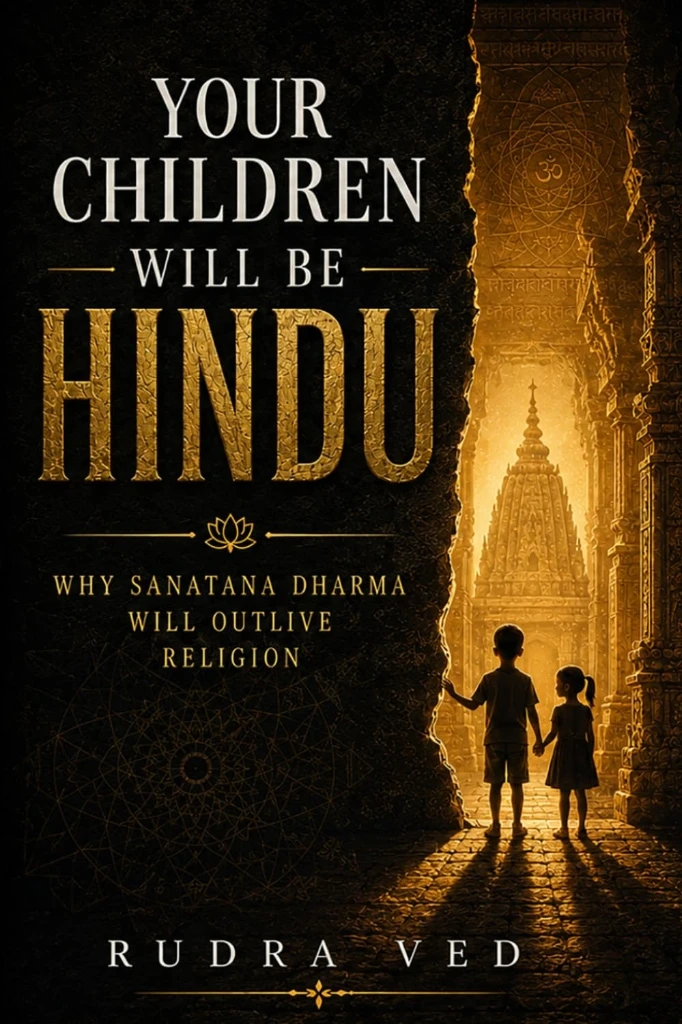
Your Children Will Be Hindu
Why Sanatana Dharma Will Outlive Religion — By Rudra Ved
How do you explain these ancient Vedic verses to your children, friends, or skeptical thinkers? Written by a former lifelong atheist and tested across 500+ unedited live debates, this book provides the rational, modern vocabulary that today's questioning generation needs.
Verse 11
कर्मेति च क्रियमाणेन्द्रियैः कर्माण्यहं करोमीत्यध्यात्मनिष्ठतया कृतं कर्मैव कर्म। अकर्मेति च कर्तृत्वभोत्त्कृत्वाद्यहंकारतया बन्धरूपं जन्मादिकारणां नित्यनैमित्तिकया-गव्रततपोदानादिषु फलाभिसंधानं यत्तदकर्म॥
karmeti ca kriyamāṇendriyaiḥ karmāṇyahaṃ karomītyadhyātmaniṣṭhatayā kṛtaṃ karmaiva karma। akarmeti ca kartṛtvabhottkṛtvādyahaṃkāratayā bandharūpaṃ janmādikāraṇāṃ nityanaimittikayā-gavratatapodānādiṣu phalābhisaṃdhānaṃ yattadakarma॥
That alone is 'Karma' which is performed with spiritual steadfastness, with the thought, "I perform these actions through the functioning senses." 'Akarma' is that which, due to the ego of doership and enjoyership, constitutes a bond, is the cause of birth and so forth, and involves the desire for results in daily and occasional sacrifices, vows, austerities, donations, and so on.
Verse 12
ज्ञानमिति देहेन्द्रियनिग्रहसद्गुरूपासनश्रवणमनननिदिध्यासनैर्यद्यद्दृग्दृश्यस्वरूपं सर्वान्तरस्थं सर्वसमं घटपटादिपदार्थमिवाविकारं विकारेषु चैतन्यं विना किंचिन्नास्तीति साक्षात्कारानुभवो ज्ञानम्॥
jñānamiti dehendriyanigrahasadgurūpāsanaśravaṇamanananididhyāsanairyadyaddṛgdṛśyasvarūpaṃ sarvāntarasthaṃ sarvasamaṃ ghaṭapaṭādipadārthamivāvikāraṃ vikāreṣu caitanyaṃ vinā kiṃcinnāstīti sākṣātkārānubhavo jñānam॥
Knowledge is the direct realization, attained through control of the body and senses, service to a true guru, and the practices of listening, reflection, and deep meditation, that whatever constitutes the nature of the seer and the seen—which is present within all, uniform in all, and unchanging (unlike transient objects such as pots and cloths)—and furthermore, that in all transformations, absolutely nothing exists without Consciousness.
Verse 13
अज्ञानमिति च रज्जौ सर्पभ्रान्तिरिवाद्वितीये सर्वानुस्यूते सर्वमये ब्रह्मणि देवतिर्यङ्- नरस्थावरस्त्रीपुरुषवर्णाश्रमबन्धमोक्षोपाधिनानात्मभेदकल्पितं ज्ञानमज्ञानम्॥
ajñānamiti ca rajjau sarpabhrāntirivādvitīye sarvānusyūte sarvamaye brahmaṇi devatiryaṅ- narasthāvarastrīpuruṣavarṇāśramabandhamokṣopādhinānātmabhedakalpitaṃ jñānamajñānam॥
And ignorance (ajñāna) is the knowledge (jñāna) that, like the delusion of a snake in a rope, imagines distinctions of various selves—such as gods, animals, humans, immovables, women, men, social classes, stages of life, bondage, and liberation—owing to limiting adjuncts (upādhis), within the non-dual, all-pervading, all-comprising Brahman. This (kind of) knowledge is ignorance.
Verse 14
सुखमिति च सच्चिदानन्दस्वरूपं ज्ञात्वानन्दरूपा या स्थितिः सैव सुखम्॥
sukhamiti ca saccidānandasvarūpaṃ jñātvānandarūpā yā sthitiḥ saiva sukham॥
And 'happiness' is this: having realized the Saccidananda-nature, that state which is of the nature of bliss, that alone is happiness.
Verse 15
दुःखमिति अनात्मरूपो विषयसंकल्प एव दुःखम्॥
duḥkhamiti anātmarūpo viṣayasaṃkalpa eva duḥkham॥
What is called 'suffering' is this: the mental construct concerning objects, which is of the nature of the non-self; that alone is suffering.
Verse 16
स्वर्ग इति च सत्संसर्गः स्वर्गः। नरक इति च असत्संसारविषयजनसंसर्ग एवं नरकः ॥
svarga iti ca satsaṃsargaḥ svargaḥ। naraka iti ca asatsaṃsāraviṣayajanasaṃsarga evaṃ narakaḥ ॥
That which is called heaven is association with the virtuous. And that which is called hell is indeed association with people engrossed in worldly, sense-objects.
Verse 17
बन्ध इति च अनाद्यविद्यावासनया जातोऽहमित्यादिसंकल्पो बन्धः॥
bandha iti ca anādyavidyāvāsanayā jāto'hamityādisaṃkalpo bandhaḥ॥
And bondage is the thought 'I am born,' and similar conceptions, which arise due to beginningless ignorance and its latent impressions; that is bondage.
Verse 18
पितृमातृसहोदरदारापत्यगृहारामक्षेत्रममतासंसारावरणसङ्कल्पो बन्धः॥
pitṛmātṛsahodaradārāpatyagṛhārāmakṣetramamatāsaṃsārāvaraṇasaṅkalpo bandhaḥ॥
Bondage is the mental fabrication which acts as a veil over worldly existence, stemming from the sense of 'mine-ness' towards father, mother, siblings, wife, children, house, garden, and field.
Verse 19
कर्तृत्वाद्यहंकारसंकल्पो बन्धः॥
kartṛtvādyahaṃkārasaṃkalpo bandhaḥ॥
The notion of doership, egoism, and the like, is bondage.
Verse 20
अणिमाद्यष्टैश्वर्याशासिद्धसंकल्पो बन्धः॥
aṇimādyaṣṭaiśvaryāśāsiddhasaṃkalpo bandhaḥ॥
The resolve for the fulfillment of the desire for the eight supernatural powers, beginning with Aṇimā, is bondage.
Key Takeaways & AI Summary
This chapter explores the profound teachings of Niralamba Upanishad. It includes 39 verses detailing core themes like "oṃ namaḥ śivāya gurave saccidānandamūrtaye। niṣprapañcāya śāntāya nirālambāya tejase। nirālambaṃ samāśritya sālambaṃ vijahāti yaḥ। sa saṃnyāsī ca yogī ca kaivalyaṃ padamaśnute।।", "eṣāmajñānajantūnāṃ samastāriṣṭaśāntaye। yadyadboddhavyamakhilaṃ tadāśaṅkaya bravīmyaham॥", "kiṃ brahma। ka īśvara । ko jīvaḥ। kā prakṛtiḥ। kaḥ paramātmā ko brahmā। ko viṣṇuḥ । ko rudraḥ । ka indraḥ । kaḥ śamanaḥ । kaḥ sūryaḥ। kaścandraḥ। ke surāḥ । ke asurāḥ । ke piśācāḥ । ke manuṣyāḥ। kāḥ striyaḥ। ke paśvādayaḥ। kiṃ sthāvaram। ke brāhmaṇādayaḥ । kā jātiḥ । kiṃ karma। kimakarma। kiṃ jñānam। kimajñānam। kiṃ sukham। kiṃ duḥkham। kaḥ svargaḥ । ko narakaḥ । ko bandhaḥ। ko mokṣaḥ । ka upāsyaḥ। kaḥ śiṣyaḥ। ko vidvān। ko mūḍhaḥ। kimāsuram। kiṃ tapaḥ । kiṃ paramaṃ padam। kiṃ grāhyam। kimagrāhyam। kaḥ saṃnyāsītyāśaṅkayāha brahmeti॥".The crown jewels of Vedic philosophy — a collection of 108+ texts exploring the nature of Brahman, Atman, and ultimate reality.