
The Chapter on Absolute Freedom and Liberation
(Chapter 4)
Verse 1
जन्मौषधिमन्त्रतपःसमाधिजाः सिद्धयः ॥ ४.१॥
janmauṣadhimantratapaḥsamādhijāḥ siddhayaḥ .. 4.1..
1. The Siddhis (powers) are attained by birth, chemical means, power of words, mortification, or concentration.
Verse 2
जात्यन्तरपरिणामः प्रकृत्यापूरात् ॥ ४.२॥
jātyantarapariṇāmaḥ prakṛtyāpūrāt .. 4.2..
2. The change into another species is by the filling in of nature.
Verse 3
निमित्तमप्रयोजकं प्रकृतीनां वरणभेदस्तु ततः क्षेत्रिकवत् ॥ ४.३॥
nimittamaprayojakaṃ prakṛtīnāṃ varaṇabhedastu tataḥ kṣetrikavat .. 4.3..
3. Good and bad deeds are not the direct causes in the transformations of nature, but they act as breakers of obstacles to the evolutions of nature: as a farmer breaks the obstacles to the course of water, which then runs down by its own nature.
Verse 4
निर्माणचित्तान्यस्मितामात्रात् ॥ ४.४॥
nirmāṇacittānyasmitāmātrāt .. 4.4..
4. From egoism alone proceed the created minds.
Verse 5
प्रवृत्तिभेदे प्रयोजकं चित्तमेकमनेकेषाम् ॥ ४.५॥
pravṛttibhede prayojakaṃ cittamekamanekeṣām .. 4.5..
5. Though the activities of the different created minds are various, the one original mind is the controller of them all.
Verse 6
तत्र ध्यानजमनाशयम् ॥ ४.६॥
tatra dhyānajamanāśayam .. 4.6..
6. Among the various Chittas, that which is attained by Samadhi is desireless.
Verse 7
कर्माशुक्लाकृष्णं योगिनस्त्रिविधमितरेषाम् ॥ ४.७॥
karmāśuklākṛṣṇaṃ yoginastrividhamitareṣām .. 4.7..
7. Works are neither black nor white for the Yogis; for others they are threefold — black, white, and mixed.
Verse 8
ततस्तद्विपाकानुगुणानामेवाभिव्यक्तिर्वासनानाम् ॥ ४.८॥
tatastadvipākānuguṇānāmevābhivyaktirvāsanānām .. 4.8..
8. From these threefold works are manifested in each state only those desires (which are) fitting to that state alone. (The others are held in abeyance for the time being.)
Verse 9
जातिदेशकालव्यवहितानामप्यानन्तर्यं स्मृतिसंस्कारयोरेकरूपत्वात् ॥ ४.९॥
jātideśakālavyavahitānāmapyānantaryaṃ smṛtisaṃskārayorekarūpatvāt .. 4.9..
9. There is consecutiveness in desires, even though separated by species, space, and time, there being identification of memory and impressions.
Verse 10
तासामनादित्वं चाशिषो नित्यत्वात् ॥ ४.१०॥
tāsāmanāditvaṃ cāśiṣo nityatvāt .. 4.10..
10. Thirst for happiness being eternal, desires are without beginning.
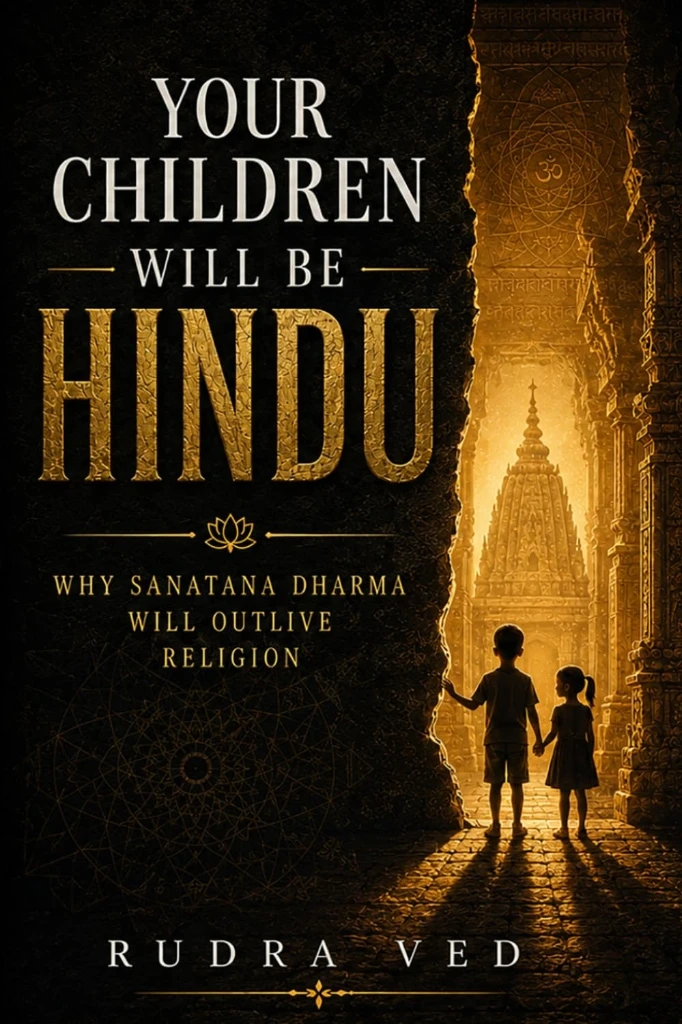
Your Children Will Be Hindu
Why Sanatana Dharma Will Outlive Religion — By Rudra Ved
How do you explain these ancient Vedic verses to your children, friends, or skeptical thinkers? Written by a former lifelong atheist and tested across 500+ unedited live debates, this book provides the rational, modern vocabulary that today's questioning generation needs.
Verse 11
हेतुफलाश्रयालम्बनैः संगृहीतत्वादेषामभावे तदभावः ॥ ४.११॥
hetuphalāśrayālambanaiḥ saṃgṛhītatvādeṣāmabhāve tadabhāvaḥ .. 4.11..
11. Being held together by cause, effect, support, and objects, in the absence of these is its absence.
Verse 12
अतीतानागतं स्वरूपतोऽस्त्यध्वभेदाद्धर्माणाम् ॥ ४.१२॥
atītānāgataṃ svarūpato’styadhvabhedāddharmāṇām .. 4.12..
12. The past and future exist in their own nature, qualities having different ways.
Verse 13
ते व्यक्तसूक्ष्मा गुणात्मानः ॥ ४.१३॥
te vyaktasūkṣmā guṇātmānaḥ .. 4.13..
13. They are manifested or fine, being of the nature of the Gunas.
Verse 14
परिणामैकत्वाद्वस्तुतत्त्वम् ॥ ४.१४॥
pariṇāmaikatvādvastutattvam .. 4.14..
14. The unity in things is from the unity in changes.
Verse 15
वस्तुसाम्ये चित्तभेदात्तयोर्विभक्तः पन्थाः ॥ ४.१५॥
vastusāmye cittabhedāttayorvibhaktaḥ panthāḥ .. 4.15..
15. Since perception and desire vary with regard to the same object, mind and object are of different nature.
Verse 16
न चैकचित्ततन्त्रं वस्तु तदप्रमाणकं तदा किं स्यात् ॥ ४.१६॥
na caikacittatantraṃ vastu tadapramāṇakaṃ tadā kiṃ syāt .. 4.16..
16. The object cannot be said to be dependent on the perception of a single mind. For, if this were the case, the object could be said to be non-existent when that single mind did not perceive it.
Verse 17
तदुपरागापेक्षित्वाच्चित्तस्य वस्तु ज्ञाताज्ञातम् ॥ ४.१७॥
taduparāgāpekṣitvāccittasya vastu jñātājñātam .. 4.17..
17. Things are known or unknown to the mind, being dependent on the colouring which they give to the mind.
Verse 18
सदा ज्ञाताश्चित्तवृत्तयस्तत्प्रभोः पुरुषस्यापरिणामित्वात् ॥ ४.१८॥
sadā jñātāścittavṛttayastatprabhoḥ puruṣasyāpariṇāmitvāt .. 4.18..
18. The states of the mind are always known, because the lord of the mind, the Purusha, is unchangeable.
Verse 19
न तत्स्वाभासं दृश्यत्वात् ॥ ४.१९॥
na tatsvābhāsaṃ dṛśyatvāt .. 4.19..
19. The mind is not self-luminous, being an object.
Verse 20
एकसमये चोभयानवधारणम् ॥ ४.२०॥
ekasamaye cobhayānavadhāraṇam .. 4.20..
20. From its being unable to cognise both at the same time.
Key Takeaways & AI Summary
This chapter explores the profound teachings of The Chapter on Absolute Freedom and Liberation. It includes 34 verses detailing core themes like "janmauṣadhimantratapaḥsamādhijāḥ siddhayaḥ ", "jātyantarapariṇāmaḥ prakṛtyāpūrāt ", "nimittamaprayojakaṃ prakṛtīnāṃ varaṇabhedastu tataḥ kṣetrikavat ".The foundational scripture of Yoga philosophy by Maharishi Patanjali — defining the 8 limbs of Yoga and the path to Samadhi.