
Unveiling the Supreme Brahman: The All- Pervading Reality
(Chapter 5)
Verse 1
द्वा सुपर्णा सयुजा सखाया समानं वृक्षं परिषस्वजाते । तयोरन्यः पिप्पलं स्वाद्वत्त्यनश्नन्नन्यो अभिचाकशीति ॥ १॥
dvā suparṇā sayujā sakhāyā samānaṃ vṛkṣaṃ pariṣasvajāte . tayoranyaḥ pippalaṃ svādvattyanaśnannanyo abhicākaśīti .. 1..
1 Two birds, united always and known by the same name, closely cling to the same tree. One of them eats the sweet fruit; the other looks on without eating.
Verse 2
समाने वृक्षे पुरुषो निमग्नोऽनिशया शोचति मुह्यमानः । जुष्टं यदा पश्यत्यन्यमीशमस्य महिमानमिति वीतशोकः ॥ २॥
samāne vṛkṣe puruṣo nimagno’niśayā śocati muhyamānaḥ . juṣṭaṃ yadā paśyatyanyamīśamasya mahimānamiti vītaśokaḥ .. 2..
2 Seated on the same tree, the jiva moans, bewildered by his impotence. But when he beholds the other, the Lord worshipped by all and His glory, he then becomes free from grief.
Verse 3
यदा पश्यः पश्यते रुक्मवर्णं कर्तारमीशं पुरुषं ब्रह्मयोनिम् । तदा विद्वान् पुण्यपापे विधूय निरञ्जनः परमं साम्यमुपैति ॥ ३॥
yadā paśyaḥ paśyate rukmavarṇaṃ kartāramīśaṃ puruṣaṃ brahmayonim . tadā vidvān puṇyapāpe vidhūya nirañjanaḥ paramaṃ sāmyamupaiti .. 3..
3 When the seer beholds the self-luminous Creator, the Lord, the Purusha, the progenitor of Brahma, then he, the wise seer, shakes off good and evil, becomes stainless and reaches the supreme unity.
Verse 4
प्रणो ह्येष यः सर्वभूतैर्विभाति विजानन् विद्वान् भवते नातिवादी । आत्मक्रीड आत्मरतिः क्रियावा- नेष ब्रह्मविदां वरिष्ठः ॥ ४॥
praṇo hyeṣa yaḥ sarvabhūtairvibhāti vijānan vidvān bhavate nātivādī . ātmakrīḍa ātmaratiḥ kriyāvā- neṣa brahmavidāṃ variṣṭhaḥ .. 4..
4 He indeed is Prana; He shines forth variously in all beings. The wise man who knows Him does not babble. Revelling in the Self, delighting in the Self, performing actions, he is the foremost among the knowers of Brahman.
Verse 5
सत्येन लभ्यस्तपसा ह्येष आत्मा सम्यग्ज्ञानेन ब्रह्मचर्येण नित्यम् । अन्तःशरीरे ज्योतिर्मयो हि शुभ्रो यं पश्यन्ति यतयः क्षीणदोषाः ॥ ५॥
satyena labhyastapasā hyeṣa ātmā samyagjñānena brahmacaryeṇa nityam . antaḥśarīre jyotirmayo hi śubhro yaṃ paśyanti yatayaḥ kṣīṇadoṣāḥ .. 5..
5 This Atman, resplendent and pure, whom the sinless sannyasins behold residing within the body, is attained by unceasing practice of truthfulness, austerity, right knowledge and continence
Verse 6
सत्यमेव जयते नानृतं सत्येन पन्था विततो देवयानः । येनाऽऽक्रमन्त्यृषयो ह्याप्तकामा यत्र तत् सत्यस्य परमं निधानम् ॥ ६॥
satyameva jayate nānṛtaṃ satyena panthā vitato devayānaḥ . yenā”kramantyṛṣayo hyāptakāmā yatra tat satyasya paramaṃ nidhānam .. 6..
6 Truth alone prevails, not falsehood. By truth the path is laid out, the Way of the Gods, on which the seers, whose every desire is satisfied, proceed to the Highest Abode of the True.
Verse 7
बृहच्च तद् दिव्यमचिन्त्यरूपं सूक्ष्माच्च तत् सूक्ष्मतरं विभाति । दूरात् सुदूरे तदिहान्तिके च पश्यन्त्विहैव निहितं गुहायाम् ॥ ७॥
bṛhacca tad divyamacintyarūpaṃ sūkṣmācca tat sūkṣmataraṃ vibhāti . dūrāt sudūre tadihāntike ca paśyantvihaiva nihitaṃ guhāyām .. 7..
7 That Brahman shines forth, vast, self-luminous, inconceivable, subtler than the subtle. He is far beyond what is far and yet here very near at hand. Verily, He is seen here, dwelling in the cave of the heart of conscious beings.
Verse 8
न चक्षुषा गृह्यते नापि वाचा नान्यैर्देवैस्तपसा कर्मण वा । ज्ञानप्रसादेन विशुद्धसत्त्व- स्ततस्तु तं पश्यते निष्कलं ध्यायमानः ॥ ८॥
na cakṣuṣā gṛhyate nāpi vācā nānyairdevaistapasā karmaṇa vā . jñānaprasādena viśuddhasattva- statastu taṃ paśyate niṣkalaṃ dhyāyamānaḥ .. 8..
8 Brahman is not grasped by the eye, nor by speech, nor by the other senses, nor by penance or good works. A man becomes pure through serenity of intellect; thereupon, in meditation, he beholds Him who is without parts.
Verse 9
एषोऽणुरात्मा चेतसा वेदितव्यो यस्मिन् प्राणः पञ्चधा संविवेश । प्राणैश्चित्तं सर्वमोतं प्रजानां यस्मिन् विशुद्धे विभवत्येष आत्मा ॥ ९॥
eṣo’ṇurātmā cetasā veditavyo yasmin prāṇaḥ pañcadhā saṃviveśa . prāṇaiścittaṃ sarvamotaṃ prajānāṃ yasmin viśuddhe vibhavatyeṣa ātmā .. 9..
9 That subtle Atman is to be known by the intellect here in the body where the prana has entered fivefold. By Atman the intellects of men are pervaded, together with the senses. When the intellect is purified, Atman shines forth.
Verse 10
यं यं लोकं मनसा संविभाति विशुद्धसत्त्वः कामयते यांश्च कामान् । तं तं लोकं जयते तांश्च कामां- स्तस्मादात्मज्ञं ह्यर्चयेत् भूतिकामः ॥ १०॥ ॥ इति मुण्डकोपनिषदि तृतीयमुण्डके प्रथमः खण्डः ॥
yaṃ yaṃ lokaṃ manasā saṃvibhāti viśuddhasattvaḥ kāmayate yāṃśca kāmān . taṃ taṃ lokaṃ jayate tāṃśca kāmāṃ- stasmādātmajñaṃ hyarcayet bhūtikāmaḥ .. 10.. .. iti muṇḍakopaniṣadi tṛtīyamuṇḍake prathamaḥ khaṇḍaḥ ..
10 Whatever world a man of pure understanding envisages in his mind and whatever desires he cherishes, that world he conquers and those desires he obtains, Therefore let everyone who wants prosperity worship the man who knows the Self.
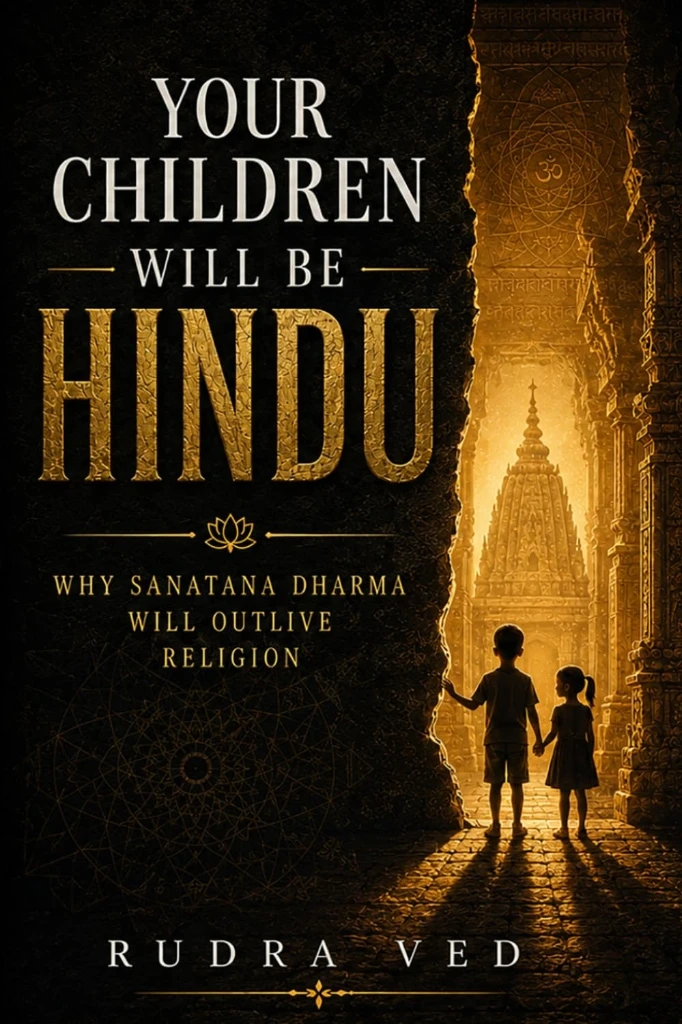
Your Children Will Be Hindu
Why Sanatana Dharma Will Outlive Religion — By Rudra Ved
How do you explain these ancient Vedic verses to your children, friends, or skeptical thinkers? Written by a former lifelong atheist and tested across 500+ unedited live debates, this book provides the rational, modern vocabulary that today's questioning generation needs.
Key Takeaways & AI Summary
This chapter explores the profound teachings of Unveiling the Supreme Brahman: The All- Pervading Reality. It includes 10 verses detailing core themes like "dvā suparṇā sayujā sakhāyā samānaṃ vṛkṣaṃ pariṣasvajāte ", "samāne vṛkṣe puruṣo nimagno’niśayā śocati muhyamānaḥ ", "yadā paśyaḥ paśyate rukmavarṇaṃ kartāramīśaṃ puruṣaṃ brahmayonim ".The Upanishad that distinguishes between lower and higher knowledge, and declares "Satyameva Jayate" — Truth alone triumphs.