
The Madhu Vidya: Meditation on Cosmic Honey
(Chapter 3)
तृतीयोऽध्यायः — Prapāṭhaka 3: Madhu Vidyā and the Sun
Verse 1
असौ वा आदित्यो देवमधु तस्य द्यौरेव तिरश्चीनवꣳशोऽन्तरिक्षमपूपो मरीचयः पुत्राः ॥ १ ॥
asau vā ādityo devamadhu tasya dyaureva tiraścīnavaṃśo 'ntarikṣam apūpo marīcayaḥ putrāḥ
The sun yonder is indeed the divine honey of the gods. Heaven is its crossbeam, the intermediate space (sky) is the honeycomb, and the rays are its offspring.
Verse 2
तस्य ये प्राञ्चो रश्मयस्ता एवास्य प्राच्यो मधुनाड्यः । ऋच एव मधुकृत ऋग्वेद एव पुष्पं ता अमृता आपस्ता वा एता ऋचः ॥ २ ॥
tasya ye prāñco raśmayastā evāsya prācyo madhunāḍyaḥ | ṛca eva madhukṛta ṛgveda eva puṣpaṃ tā amṛtā āpastā vā etā ṛcaḥ
Its eastern rays are its eastern honey-cells. The Rig-vedic verses are the honey-makers, the Rig-veda itself is the flower, and those liquid offerings are the nectar. Indeed, these very Rig-vedic verses...
Verse 3
एतमृग्वेदमभ्यतपꣳस्तस्याभितप्तस्य यशस्तेज इन्द्रियं वीर्यमन्नाद्यं रसोऽजायत ॥ ३ ॥
etam ṛgvedam abhyatapaṃs tasyābhitaptasya yaśas teja indriyaṃ vīryam annādyaṃ raso 'jāyata
They brooded upon this Rig-veda. From it, thus brooded upon, arose its essence in the form of fame, radiance, vigor, power, and food.
Verse 4
तद्व्यक्षरत्तदादित्यमभितोऽश्रयत्तद्वा एतद्यदेतदादित्यस्य रोहितꣳ रूपम् ॥ ४ ॥
tad vyakṣarat tad ādityam abhito 'śrayat tad vā etad yad etad ādityasya rohitaṃ rūpam
That essence flowed forth and settled around the sun. That, indeed, is what appears as the red form of the sun.
Verse 5
अथ येऽस्य दक्षिणा रश्मयस्ता एवास्य दक्षिणा मधुनाड्यो यजूꣳष्येव मधुकृतो यजुर्वेद एव पुष्पं ता अमृता आपः ॥ १ ॥
atha ye 'sya dakṣiṇā raśmayas tā evāsya dakṣiṇā madhunāḍyo yajūṃṣyeva madhukṛto yajurveda eva puṣpaṃ tā amṛtā āpaḥ
Now, its southern rays are its southern honey-cells. The Yajur-vedic mantras are the honey-makers, the Yajur-veda itself is the flower, and those liquid offerings are the nectar.
Verse 6
तानि वा एतानि यजूꣳष्येतं यजुर्वेदमभ्यतपꣳस्तस्याभितप्तस्य यशस्तेज इन्द्रियं वीर्यमन्नाद्यꣳ रसोऽजायत ॥ २ ॥
tāni vā etāni yajūṃṣyetaṃ yajurvedam abhyatapaṃs tasyābhitaptasya yaśas teja indriyaṃ vīryam annādyaṃ raso 'jāyata
These Yajur-vedic mantras brooded upon this Yajur-veda. From it, thus brooded upon, arose its essence in the form of fame, radiance, vigor, power, and food.
Verse 7
तद्व्यक्षरत्तदादित्यमभितोऽश्रयत्तद्वा एतद्यदेतदादित्यस्य शुक्लꣳ रूपम् ॥ ३ ॥
tad vyakṣarat tad ādityam abhito 'śrayat tad vā etad yad etad ādityasya śuklaṃ rūpam
That essence flowed forth and settled around the sun. That, indeed, is what appears as the white form of the sun.
Verse 8
अथ येऽस्य प्रत्यञ्चो रश्मयस्ता एवास्य प्रतीच्यो मधुनाड्यः सामान्येव मधुकृतः सामवेद एव पुष्पं ता अमृता आपः ॥ १ ॥
atha ye 'sya pratyañco raśmayas tā evāsya pratīcyo madhunāḍyaḥ sāmānyeva madhukṛtaḥ sāmaveda eva puṣpaṃ tā amṛtā āpaḥ
Now, its western rays are its western honey-cells. The Sama-chants are the honey-makers, the Sama-veda itself is the flower, and those liquid offerings are the nectar.
Verse 9
तानि वा एतानि सामान्येतं सामवेदमभ्यतपंस्तस्याभितप्तस्य यशस्तेज इन्द्रियं वीर्यमन्नाद्यꣳ रसोऽजायत ॥ २ ॥
tāni vā etāni sāmānyetaṃ sāmavedam abhyatapaṃs tasyābhitaptasya yaśas teja indriyaṃ vīryam annādyaṃ raso 'jāyata
These Sama-chants brooded upon this Sama-veda. From it, thus brooded upon, arose its essence in the form of fame, radiance, vigor, power, and food.
Verse 10
तद्व्यक्षरत्तदादित्यमभितोऽश्रयत्तद्वा एतद्यदेतदादित्यस्य कृष्णꣳ रूपम् ॥ ३ ॥
tad vyakṣarat tad ādityam abhito 'śrayat tad vā etad yad etad ādityasya kṛṣṇaṃ rūpam
That essence flowed forth and settled around the sun. That, indeed, is what appears as the dark form of the sun.
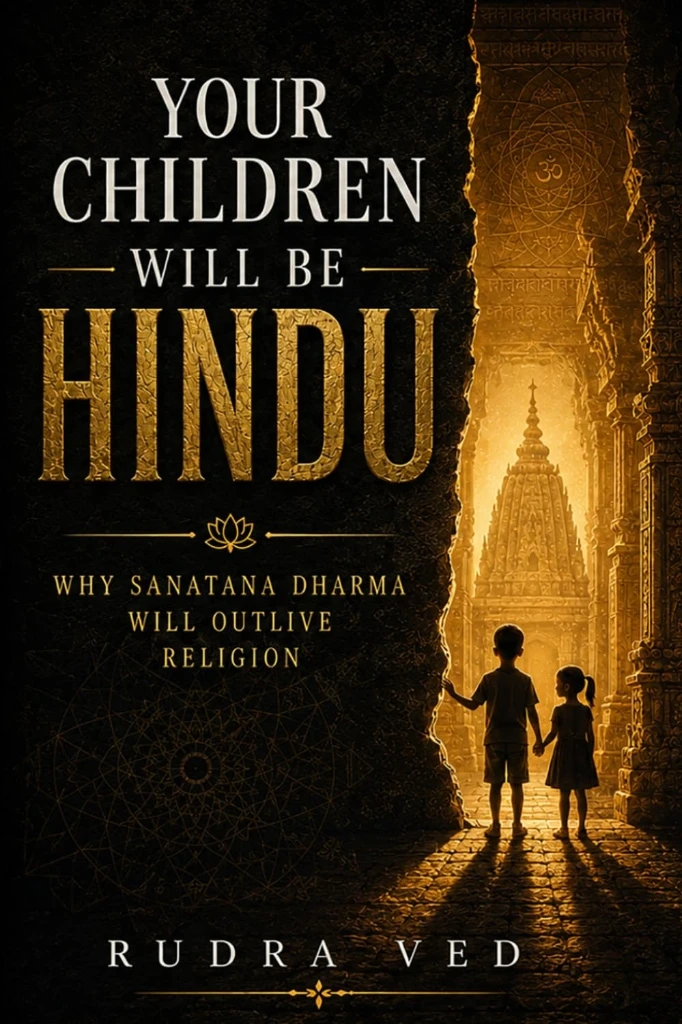
Your Children Will Be Hindu
Why Sanatana Dharma Will Outlive Religion — By Rudra Ved
How do you explain these ancient Vedic verses to your children, friends, or skeptical thinkers? Written by a former lifelong atheist and tested across 500+ unedited live debates, this book provides the rational, modern vocabulary that today's questioning generation needs.
Verse 11
अथ येऽस्योदञ्चो रश्मयस्ता एवास्योदीच्यो मधुनाड्योऽथर्वाङ्गिरस एव मधुकृत इतिहासपुराणं पुष्पं ता अमृता आपः ॥ १ ॥
atha ye'syodañco raśmayastā evāsyodīcyo madhunāḍyo'tharvāṅgirasa eva madhukṛta itihāsapurāṇaṃ puṣpaṃ tā amṛtā āpaḥ
Now, those which are its northern rays are its northern honey-cells. The Atharva-angiras chants are the bees, history and ancient lore are the flower, and those waters are the nectar.
Verse 12
ते वा एतेऽथर्वाङ्गिरस एतदितिहासपुराणमभ्यतपꣳ स्तस्याभितप्तस्य यशस्तेज इन्द्रियं वीर्यमन्नाद्यꣳ रसोऽजायत ॥ २ ॥
te vā ete'tharvāṅgirasa etaditihāsapurāṇamabhyatapaṃstasyābhitaptasya yaśasteja indriyaṃ vīryamannādyaṃ raso'jāyata
Verily, those Atharva-angiras chants brooded over history and ancient lore. From that when brooded over, fame, radiance, vigor, power, and food arose as the essence.
Verse 13
तद्व्यक्षरत्तदादित्यमभितोऽश्रयत्तद्वा एतद्यदेतदादित्यस्य परं कृष्णꣳ रूपम् ॥ ३ ॥
tadvyakṣarattadādityamabhito'śrayattadvā etadyadetadādityasya paraṃ kṛṣṇaṃ rūpam
That essence flowed forth and settled around the sun. That is what appears as the deep black color of the sun.
Verse 14
अथ येऽस्योर्ध्वा रश्मयस्ता एवास्योर्ध्वा मधुनाड्यो गुह्या एवादेशा मधुकृतो ब्रह्मैव पुष्पं ता अमृता आपः ॥ १ ॥
atha ye'syordhvā raśmayastā evāsyordhvā madhunāḍyo guhyā evādeśā madhukṛto brahmaiva puṣpaṃ tā amṛtā āpaḥ
Now, those which are its upward rays are its upward honey-cells. The secret instructions are the bees, Brahman itself is the flower, and those waters are the nectar.
Verse 15
ते वा एते गुह्या आदेशा एतद्ब्रह्माभ्यतपꣳ स्तस्याभितप्तस्य यशस्तेज इन्द्रियं वीर्यमन्नाद्यꣳ रसोऽजायत ॥ २ ॥
te vā ete guhyā ādeśā etadbrahmābhyatapaṃstasyābhitaptasya yaśasteja indriyaṃ vīryamannādyaṃ raso'jāyata
Verily, those secret instructions brooded over Brahman. From that when brooded over, fame, radiance, vigor, power, and food arose as the essence.
Verse 16
तद्व्यक्षरत्तदादित्यमभितोऽश्रयत्तद्वा एतद्यदेतदादित्यस्य मध्ये क्षोभत इव ॥ ३ ॥
tadvyakṣarattadādityamabhito'śrayattadvā etadyadetadādityasya madhye kṣobhata iva
That essence flowed forth and settled around the sun. That is what appears as the quivering center of the sun.
Verse 17
ते वा एते रसानाꣳ रसा वेदा हि रसास्तेषामेते रसास्तानि वा एतान्यमृतानाममृतानि वेदा ह्यमृतास्तेषामेतान्यमृतानि ॥ ४ ॥
te vā ete rasānāṃ rasā vedā hi rasāsteṣāmete rasāstāni vā etānyamṛtānāmamṛtāni vedā hyamṛtāsteṣāmetānyamṛtāni
These indeed are the essence of essences, for the Vedas are the essences, and these are their essences. These indeed are the nectar of nectars, for the Vedas are nectars, and these are their nectars.
Verse 18
तद्यत्प्रथमममृतं तद्वसव उपजीवन्त्यग्निना मुखेन न वै देवा अश्नन्ति न पिबन्त्येतदेवामृतं दृष्ट्वा तृप्यन्ति ॥ १ ॥
tadyatprathamamamṛtaṃ tadvasava upajīvantyagninā mukhena na vai devā aśnanti na pibantyetadevāmṛtaṃ dṛṣṭvā tṛpyanti
That which is the first nectar, upon that the Vasus live, through Agni as their mouth. The gods indeed neither eat nor drink; merely by seeing this nectar they are satisfied.
Verse 19
त एतदेव रूपमभिसंविशन्त्येतस्माद्रूपादुद्यन्ति ॥ २ ॥
ta etadeva rūpamabhisaṃviśantyetasmādrūpādudyanti
They enter into this very form and emerge from this form.
Verse 20
स य एतदेवममृतं वेद वसूनामेवैको भूत्वाग्निनैव मुखेनैतदेवामृतं दृष्ट्वा तृप्यति स एतदेव रूपमभिसंविशत्येतस्माद्रूपादुदेति ॥ ३ ॥
sa ya etadevamamṛtaṃ veda vasūnāmevaiko bhūtvāgninaiva mukhenaitadevāmṛtaṃ dṛṣṭvā tṛpyati sa etadeva rūpamabhisaṃviśatyetasmādrūpādudeti
He who knows this nectar thus becomes one of the Vasus themselves, and through Agni as his mouth, becomes satisfied merely by seeing this nectar. He enters into this very form and emerges from this form.
Key Takeaways & AI Summary
This chapter explores the profound teachings of The Madhu Vidya: Meditation on Cosmic Honey. It includes 92 verses detailing core themes like "asau vā ādityo devamadhu tasya dyaureva tiraścīnavaṃśo 'ntarikṣam apūpo marīcayaḥ putrāḥ", "tasya ye prāñco raśmayastā evāsya prācyo madhunāḍyaḥ | ṛca eva madhukṛta ṛgveda eva puṣpaṃ tā amṛtā āpastā vā etā ṛcaḥ", "etam ṛgvedam abhyatapaṃs tasyābhitaptasya yaśas teja indriyaṃ vīryam annādyaṃ raso 'jāyata".One of the oldest and largest Principal Upanishads from the Sama Veda — containing the foundational Mahāvākya "Tat Tvam Asi" (Thou Art That) and profound teachings on meditation, Prana, and the nature of Brahman through the dialogues of Uddalaka and Shvetaketu.