
Verse 1
हेतुद्वयं हि चित्तस्य वासना च समीरणः । तयोर्विनष्ट एकस्मिस्तद्वावपि विनश्यतः ॥
hetudvayaṃ hi cittasya vāsanā ca samīraṇaḥ । tayorvinaṣṭa ekasmistadvāvapi vinaśyataḥ ॥
Indeed, the mind has two causes: latent impressions (vāsanā) and vital air (samīraṇa). When one of these two is destroyed, then both of them also perish.
Verse 2
तयोरादौ समीरस्य जयं कुर्यान्नरः सदा। मिताहारश्चासनं च शक्तिचालस्तृतीयकः ॥
tayorādau samīrasya jayaṃ kuryānnaraḥ sadā। mitāhāraścāsanaṃ ca śakticālastṛtīyakaḥ ॥
Of those two (Prāṇa and semen), a person should always first achieve mastery over the breath. Moderate diet, posture, and Śakticāla are the third (practice).
Verse 3
एतेषां लक्षणं वक्ष्ये शृणु गौतम सादरम् । सुस्निग्धमधुराहारश्चतुर्थांशविवर्जितः ॥
eteṣāṃ lakṣaṇaṃ vakṣye śṛṇu gautama sādaram । susnigdhamadhurāhāraścaturthāṃśavivarjitaḥ ॥
I will explain their characteristics; listen, Gautama, with reverence. (One should partake of) food that is very unctuous and sweet, leaving one-fourth (of the stomach) empty.
Verse 4
भुज्यते शिवसंप्रीत्यै मिताहारः स उच्यते। आसनं द्विविधं प्रोक्तं पद्म वज्रासनं तथा॥
bhujyate śivasaṃprītyai mitāhāraḥ sa ucyate। āsanaṃ dvividhaṃ proktaṃ padma vajrāsanaṃ tathā॥
That which is partaken of for the satisfaction of Shiva is called a moderate diet (Mitahara). Asana (posture) is declared to be of two kinds: Padmasana (Lotus Posture) and Vajrasana (Thunderbolt Posture).
Verse 5
ऊर्वोपरि चेद्धत्ते उभे पादतले यथा । पद्मासनं भवेदेतत्सर्वपापप्रणाशनम्॥
ūrvopari ceddhatte ubhe pādatale yathā । padmāsanaṃ bhavedetatsarvapāpapraṇāśanam॥
If one places both soles of the feet upon the thighs, this becomes Padmasana (the Lotus Posture), which destroys all sins.
Verse 6
वामाङिघ्रमूलकन्दाधो ह्यन्यं तदुपरि क्षिपेत् । समग्रीवशिर:कायो वज्रासनमितीरितम्॥
vāmāṅighramūlakandādho hyanyaṃ tadupari kṣipet । samagrīvaśira:kāyo vajrāsanamitīritam॥
Place the heel of the left foot below the perineum, and indeed place the other (right) foot upon it. With the neck, head, and body held straight, this is declared to be Vajrasana.
Verse 7
कुण्डल्येव भवेच्छक्तिस्तां तु संचालयेद्बुधः । स्वस्थानादाभ्रुवोर्मध्यं शक्तिचालनमुच्यते ॥
kuṇḍalyeva bhavecchaktistāṃ tu saṃcālayedbudhaḥ । svasthānādābhruvormadhyaṃ śakticālanamucyate ॥
Kundalini itself is Śakti (power). A wise person should move that (Śakti). The movement of Śakti from its own place up to the center between the eyebrows is called Śakticālana.
Verse 8
तत्साधने द्वयं मुख्यं सरस्वत्यास्तु चालनम्। प्राणरोधमथाभ्यासादृज्वी कुण्डलिनी भवेत्।।
tatsādhane dvayaṃ mukhyaṃ sarasvatyāstu cālanam। prāṇarodhamathābhyāsādṛjvī kuṇḍalinī bhavet।।
In its practice, two are principal: the activation of Sarasvatī, and then, through the practice of breath retention, Kuṇḍalinī becomes straight.
Verse 9
तयोरादौ सरस्वत्याश्चालनं कथयामि ते। अरुन्धत्येव कथिता पुराविद्भिः सरस्वती ॥
tayorādau sarasvatyāścālanaṃ kathayāmi te। arundhatyeva kathitā purāvidbhiḥ sarasvatī ॥
First, I will describe to you the activation of Sarasvatī. This Sarasvatī is indeed called Arundhatī by the ancient sages.
Verse 10
यस्याः संचालनेनैव स्वयं चलति कुण्डली। इडायां वहति प्राणे बद्ध्वा पद्मासनं दृढम्॥
yasyāḥ saṃcālanenaiva svayaṃ calati kuṇḍalī। iḍāyāṃ vahati prāṇe baddhvā padmāsanaṃ dṛḍham॥
Having firmly assumed the Padmasana (lotus posture), when Prana flows in the Ida [nadi], by the very movement of which (i.e., this flow of Prana), Kundalini itself moves.
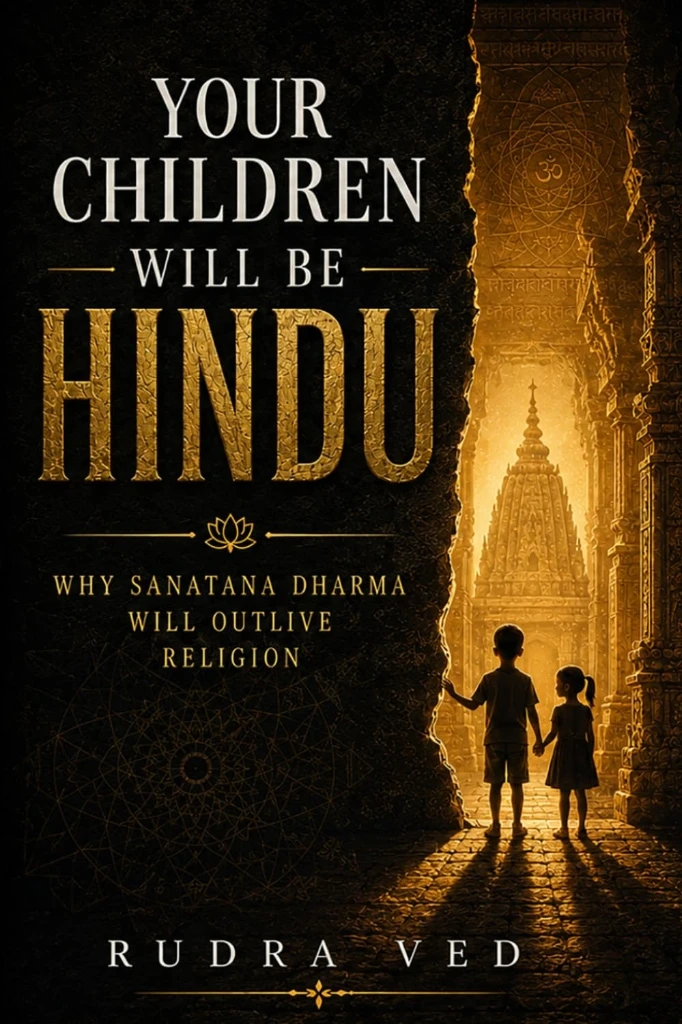
Your Children Will Be Hindu
Why Sanatana Dharma Will Outlive Religion — By Rudra Ved
How do you explain these ancient Vedic verses to your children, friends, or skeptical thinkers? Written by a former lifelong atheist and tested across 500+ unedited live debates, this book provides the rational, modern vocabulary that today's questioning generation needs.
Verse 11
द्वादशाङ्गुलदैयं च अम्बरं चतुरङ्गुलम्। विस्तीर्य तेन तन्नाडी वेष्टयित्वा ततः सुधीः ॥
dvādaśāṅguladaiyaṃ ca ambaraṃ caturaṅgulam। vistīrya tena tannāḍī veṣṭayitvā tataḥ sudhīḥ ॥
Having spread out a strip of cloth, twelve fingers long and four fingers wide, the wise one should then wrap that nāḍī with it.
Verse 12
अङ्गुष्ठतर्जनीभ्यां तु हस्ताभ्यां धारयेद्दढम्। स्वशक्त्या चालयेद्वामे दक्षिणेन पुनःपुनः ॥
aṅguṣṭhatarjanībhyāṃ tu hastābhyāṃ dhārayeddaḍham। svaśaktyā cālayedvāme dakṣiṇena punaḥpunaḥ ॥
One should hold firmly with the thumb and index finger of the hands. Then, with one's own strength, one should move (it) to the left and to the right repeatedly.
Verse 13
मुहूर्तद्वयपर्यन्तं निर्भयाच्यालयेत्सुधीः । ऊर्ध्वमाकर्षयेत्किंचित्सुषुम्नां कुण्डलीगताम्॥
muhūrtadvayaparyantaṃ nirbhayācyālayetsudhīḥ । ūrdhvamākarṣayetkiṃcitsuṣumnāṃ kuṇḍalīgatām॥
The wise one should fearlessly move [it] for two muhurtas (approximately 96 minutes). One should slightly draw upwards the Suṣumnā (channel) which has been entered by Kuṇḍalinī.
Verse 14
तेन कुण्डलिनी तस्याः सुषुम्नाया मुखं व्रजेत्। जहाति तस्मात्प्राणोऽयं सुषुम्नां व्रजति स्वतः ॥
tena kuṇḍalinī tasyāḥ suṣumnāyā mukhaṃ vrajet। jahāti tasmātprāṇo'yaṃ suṣumnāṃ vrajati svataḥ ॥
By means of that, Kundalini should enter the opening of that Suṣumnā. Consequently, this Prana abandons [its other channels] and spontaneously enters the Suṣumnā.
Verse 15
तुन्दे तु ताणं कुर्याच्च कण्ठसंकोचने कृते । सरस्वत्याश्चालनेन वक्षससचोर्ध्वगो मरुत् ॥
tunde tu tāṇaṃ kuryācca kaṇṭhasaṃkocane kṛte । sarasvatyāścālanena vakṣasasacordhvago marut ॥
When the throat is constricted, one should indeed create tension in the abdomen. And by the agitation of Sarasvati (nāḍī), the vital air (marut) moves upward from the chest.
Verse 16
सूर्येण रेचयेद्वायु सरस्वत्यास्तु चालने। कण्ठसंकोचनं कृत्वा वक्षसश्चोर्ध्वगो मरुत्॥
sūryeṇa recayedvāyu sarasvatyāstu cālane। kaṇṭhasaṃkocanaṃ kṛtvā vakṣasaścordhvago marut॥
One should exhale the breath through Sūrya (the right nostril), and with the movement of Sarasvatī. Having performed throat contraction, the breath moves upwards from the chest.
Verse 17
तस्मात्संचालयेन्नित्यं शब्दगर्भां सरस्वतीम्। यस्याः संचालनेनैव योगी रोगैः प्रमुच्यते ॥
tasmātsaṃcālayennityaṃ śabdagarbhāṃ sarasvatīm। yasyāḥ saṃcālanenaiva yogī rogaiḥ pramucyate ॥
Therefore, one should always activate the Sarasvatī (nāḍī), which is imbued with sound. For by its activation alone, a Yogi is freed from diseases.
Verse 18
गुल्मं जलोदरः प्लीहा ये चान्ये तुन्दमध्यगा: सर्वे तु शक्तिचालेन रोगा नश्यन्ति निश्चयम्॥
gulmaṃ jalodaraḥ plīhā ye cānye tundamadhyagā: sarve tu śakticālena rogā naśyanti niścayam॥
Abdominal tumors, dropsy, splenic diseases, and other ailments located in the middle of the abdomen—all these diseases are certainly destroyed by the movement of Shakti.
Verse 19
प्राणरोधमथेदानीं प्रवक्ष्यामि समासतः। प्राणश्च देहगो वायुरायामः कुम्भकः स्मृतः ॥
prāṇarodhamathedānīṃ pravakṣyāmi samāsataḥ। prāṇaśca dehago vāyurāyāmaḥ kumbhakaḥ smṛtaḥ ॥
Now I will concisely explain Prāṇarodha (breath retention). Prāṇa is the vital air dwelling in the body, and its control (āyāma) is known as Kumbhaka.
Verse 20
स एव द्विविध: प्रोक्तः सहितः केवलस्तथा। यावत्केवलसिद्धिः स्यात्तावत्सहितमभ्यसेत् ॥
sa eva dvividha: proktaḥ sahitaḥ kevalastathā। yāvatkevalasiddhiḥ syāttāvatsahitamabhyaset ॥
That (retention) is declared to be of two kinds: Sahita (with [effort]) and Kevala (spontaneous). One should practice Sahita (retention) as long as the perfection of Kevala (retention) is not attained.
Verse 21
सूर्योज्जायी शीतली च भस्त्री चैव चतुर्थिका। भेदैरव समं कुम्भो यः स्यात्सहितकुम्भकः ।।
sūryojjāyī śītalī ca bhastrī caiva caturthikā। bhedairava samaṃ kumbho yaḥ syātsahitakumbhakaḥ ।।
Surya (Bhedana), Ujjayi, Sheetali, and Bhastrika are indeed the four (methods). The breath retention (Kumbhaka) that is performed in conjunction with these varieties is called Sahita Kumbhaka.
Verse 22
पवित्रे निर्जने देशे शर्करादिविवर्जिते । धनुः प्रमाणपर्यन्ते शीताग्निजलवर्जिते ॥
pavitre nirjane deśe śarkarādivivarjite । dhanuḥ pramāṇaparyante śītāgnijalavarjite ॥
In a pure, secluded place, devoid of pebbles and the like, extending up to the measure of a bow, and free from cold, fire, and water.
Verse 23
पवित्रे नात्युच्चनीचे हयासने सुखदे सुखे। बद्धपद्मासनं कृत्वा सरस्वत्यास्तु चालनम् ॥
pavitre nātyuccanīce hayāsane sukhade sukhe। baddhapadmāsanaṃ kṛtvā sarasvatyāstu cālanam ॥
In a pure place, on a seat (made of grass or similar material) that is neither too high nor too low, comfortable and pleasant. Having assumed the Bound Lotus Posture, then the activation of Sarasvatī (is to be performed).
Verse 24
दक्षनाड्या समाकृष्य बहिष्ठं पवनं शनैः । यथेष्टं पूरयेद्वायु रेचयेदिडया ततः ॥
dakṣanāḍyā samākṛṣya bahiṣṭhaṃ pavanaṃ śanaiḥ । yatheṣṭaṃ pūrayedvāyu recayediḍayā tataḥ ॥
Slowly drawing in the external breath through the right channel (dakṣanāḍī), one should fill [the body] with air as desired, then exhale through the left channel (iḍā).
Verse 25
कपालशोधने वापि रेचयेत्पवनं शनैः चतुष्कं वातदोषं तु कृमिदोष निहन्ति च ॥
kapālaśodhane vāpi recayetpavanaṃ śanaiḥ catuṣkaṃ vātadoṣaṃ tu kṛmidoṣa nihanti ca ॥
In skull-cleansing (Kapalabhati), or even otherwise, one should slowly exhale the breath. This (practice) destroys the four types of Vata imbalance and also worm-related ailments.
Verse 26
पुनः पुनरिदं कार्यं सूर्यभेदमुदाहृतम् । मुखं संयम्य नाडीभ्यामाकृष्य पवनं शनैः ॥
punaḥ punaridaṃ kāryaṃ sūryabhedamudāhṛtam । mukhaṃ saṃyamya nāḍībhyāmākṛṣya pavanaṃ śanaiḥ ॥
This practice, known as Sūryabheda, should be performed repeatedly. With the mouth restrained (closed), one should slowly draw in the breath through the two nāḍīs (nostrils).
Verse 27
यथा लगति कण्ठात्तु हृदयावधि सस्वनम्। पूर्ववत्कुम्भयेत्प्राणं रेचयेदिडया ततः ॥
yathā lagati kaṇṭhāttu hṛdayāvadhi sasvanam। pūrvavatkumbhayetprāṇaṃ recayediḍayā tataḥ ॥
Just as it reaches from the throat down to the heart with a sound, one should retain the breath as before, then exhale through the Iḍā (nāḍī).
Verse 28
शीर्षोंदितानलहरं गलश्लेष्महरं परम् । सर्वरोगहरं पुण्यं देहानलविवर्धनम् ॥
śīrṣoṃditānalaharaṃ galaśleṣmaharaṃ param । sarvarogaharaṃ puṇyaṃ dehānalavivardhanam ॥
It removes the excess heat (or pitta disorders) that has risen in the head, removes phlegm from the throat, and is supreme. It removes all diseases, is meritorious, and enhances the digestive fire of the body.
Verse 29
नाडीजलोदरं धातुगतदोषविनाशनम्। गच्छतस्तिष्ठतः कार्यमुज्जाय्याख्यं तु कुम्भकम्॥
nāḍījalodaraṃ dhātugatadoṣavināśanam। gacchatastiṣṭhataḥ kāryamujjāyyākhyaṃ tu kumbhakam॥
It is the destroyer of diseases of the nāḍīs and dropsy, and of impurities located in the dhātus (body tissues). Ujjayi, the breath retention (kumbhaka) named Ujjayi, should be performed while walking or standing.
Verse 30
जिह्वया वायुमाकृष्य पूर्ववत्कुम्भकादनु। शनैस्तु घ्राणरन्ध्राभ्यां रेचयेदनिलं सुधीः ॥
jihvayā vāyumākṛṣya pūrvavatkumbhakādanu। śanaistu ghrāṇarandhrābhyāṃ recayedanilaṃ sudhīḥ ॥
Having drawn in air with the tongue as before, after the breath retention (kumbhaka), the wise person should then slowly exhale that air through both nostrils.
Verse 31
गुल्मप्लीहादिकान्दोषान्क्षयं पित्तं ज्वरं तृषाम् । विषाणि शीतली नाम कुम्भकोऽयं निहन्ति च।
gulmaplīhādikāndoṣānkṣayaṃ pittaṃ jvaraṃ tṛṣām । viṣāṇi śītalī nāma kumbhako'yaṃ nihanti ca।
This kumbhaka, named Śītalī, destroys diseases like gulma (abdominal tumors) and splenic disorders, wasting diseases, excess pitta, fever, thirst, and poisons.
Verse 32
ततः पद्मासनं बद्ध्वा समग्रीवोदरः सुधीः । मुखं संयम्य यत्नेन प्राणं घ्राणेन रेचयेत्॥
tataḥ padmāsanaṃ baddhvā samagrīvodaraḥ sudhīḥ । mukhaṃ saṃyamya yatnena prāṇaṃ ghrāṇena recayet॥
Then, the wise person, having assumed the lotus posture, with neck and abdomen straight, and carefully closing the mouth, should exhale the breath through the nostrils.
Verse 33
यथा लगति कण्ठात्तु कपाले सस्वनं ततः । वेगेन पूरयेत् किंचिदृध्त्पद्मावधि मारुतम् ॥
yathā lagati kaṇṭhāttu kapāle sasvanaṃ tataḥ । vegena pūrayet kiṃcidṛdhtpadmāvadhi mārutam ॥
As it (the sound) strikes the forehead from the throat with sound, then one should swiftly fill the breath a little, up to the upper lotus.
Verse 34
पुनर्विरेचयेत्तद्वत्पूरयेच्च पुनः पुनः । यथैव लोहकाराणां भस्त्रा वेगेन चाल्यते ॥
punarvirecayettadvatpūrayecca punaḥ punaḥ । yathaiva lohakārāṇāṃ bhastrā vegena cālyate ॥
Similarly, one should exhale again, and inhale repeatedly, just as the blacksmiths' bellows are operated with force.
Verse 35
तथैव स्वशरीरस्थं चालयेत्पवनं शनैः । यथा श्रमो भवेद्देहे तथा सूर्येण पूरयेत् ॥
tathaiva svaśarīrasthaṃ cālayetpavanaṃ śanaiḥ । yathā śramo bhaveddehe tathā sūryeṇa pūrayet ॥
Similarly, one should slowly stir the breath within one's own body. Then, one should inhale through the Sūrya (right nostril) until fatigue occurs in the body.
Verse 36
यथोदरं भवेत्पूर्ण पवनेन तथा लघु । धारयन्नासिकामध्यं तर्जनीभ्यां विना दृढम्॥
yathodaraṃ bhavetpūrṇa pavanena tathā laghu । dhārayannāsikāmadhyaṃ tarjanībhyāṃ vinā dṛḍham॥
Just as the abdomen becomes full with air, so it becomes light. One should firmly hold the middle of the nostrils, without using the index fingers.
Verse 37
कुम्भकं पूर्ववत्कृत्वा रेचयेदिडयानिलम्। कण्ठोत्थितानलहरं शरीराग्निविवर्धनम् ॥
kumbhakaṃ pūrvavatkṛtvā recayediḍayānilam। kaṇṭhotthitānalaharaṃ śarīrāgnivivardhanam ॥
Having performed Kumbhaka (breath retention) as before, one should exhale the breath through the Iḍā nāḍī. This (exhalation) removes the fire (or heat) that has risen from the throat and enhances the body's digestive fire.
Verse 38
कुण्डलीबोधकं पुण्यं पापघ्नं शुभदं सुखम्। ब्रह्मनाडीमुखान्तस्थकफाद्यर्गलनाशनम् ॥
kuṇḍalībodhakaṃ puṇyaṃ pāpaghnaṃ śubhadaṃ sukham। brahmanāḍīmukhāntasthakaphādyargalanāśanam ॥
It awakens Kundalini, is meritorious, destroys sins, bestows auspiciousness and happiness. It also destroys phlegm and other obstructions located within the entrance of the Brahma Nadi.
Verse 39
गुणत्रयसमुद्भूतग्रन्थित्रयविभेदकम् । विशेषेणैव कर्तव्यं भस्त्राख्यं कुम्भकं त्विदम्॥
guṇatrayasamudbhūtagranthitrayavibhedakam । viśeṣeṇaiva kartavyaṃ bhastrākhyaṃ kumbhakaṃ tvidam॥
This kumbhaka (breath retention), named Bhastrā (or Bhastrikā), which pierces the three knots born of the three qualities (gunas), should be particularly performed.
Verse 40
चतुर्णामपि भेदानां कुम्भके समुपस्थिते । बन्धत्रयमिदं कार्यं योगिभिर्वीतकल्मषैः ॥
caturṇāmapi bhedānāṃ kumbhake samupasthite । bandhatrayamidaṃ kāryaṃ yogibhirvītakalmaṣaiḥ ॥
When kumbhaka of all four kinds is well established, this triple bandha should be performed by yogis who are free from impurities.
Verse 41
प्रथमो मूलबन्धस्तु द्वितीयोड्डीयणाभिधः । जालन्धरस्तृतीयस्तु तेषां लक्षणमुच्यते ॥
prathamo mūlabandhastu dvitīyoḍḍīyaṇābhidhaḥ । jālandharastṛtīyastu teṣāṃ lakṣaṇamucyate ॥
The first is Mūlabandha, the second is called Uḍḍīyaṇa. Jālandhara is the third; their characteristics are now described.
Verse 42
अधोगतिमपानं वै ऊर्ध्वगं कुरुते बलात् । आकुञ्चनेन तं प्राहुर्मूलबन्धोऽयमुच्यते ॥
adhogatimapānaṃ vai ūrdhvagaṃ kurute balāt । ākuñcanena taṃ prāhurmūlabandho'yamucyate ॥
Indeed, Apāna, whose motion is downwards, is forcibly made to move upwards. By means of contraction, they call that Mūlabandha; this is what Mūlabandha is referred to as.
Verse 43
अपाने चोर्ध्वगे याते संप्राप्ते वह्निमण्डले। ततोऽनलशिखा दीर्घा वर्धते वायुना हता।।
apāne cordhvage yāte saṃprāpte vahnimaṇḍale। tato'nalaśikhā dīrghā vardhate vāyunā hatā।।
When Apana, having ascended, reaches the sphere of fire, then a long flame of fire, fanned by the wind, grows.
Verse 44
ततो यातौ वह्न्यपानौ प्राणमुष्णस्वरूपकम् । तेनात्यन्तप्रदीप्तेन ज्वलनो देहजस्तथा ॥
tato yātau vahnyapānau prāṇamuṣṇasvarūpakam । tenātyantapradīptena jvalano dehajastathā ॥
Then, Vahni (the fire element) and Apāna (the downward breath) converge into Prāṇa, which is characterized by heat. By that exceedingly blazing (Prāṇa), the fire residing within the body also becomes kindled.
Verse 45
तेन कुण्डलिनी सुप्ता संतप्ता संप्रबुध्यते । दण्डाहतभुजङ्गीव निःश्वस्य ऋजुतां व्रजेत् ॥
tena kuṇḍalinī suptā saṃtaptā saṃprabudhyate । daṇḍāhatabhujaṅgīva niḥśvasya ṛjutāṃ vrajet ॥
By that, the sleeping Kundalini, being intensely heated (or stimulated), fully awakens. Like a serpent struck by a stick, it hisses and assumes straightness.
Verse 46
बिलप्रवेशतो यत्र ब्रह्मनाड्यन्तरं व्रजेत् । तस्मान्नित्यं मूलबन्धः कर्तव्यो योगिभिः सदा ॥
bilapraveśato yatra brahmanāḍyantaraṃ vrajet । tasmānnityaṃ mūlabandhaḥ kartavyo yogibhiḥ sadā ॥
Where, by entering the aperture, one enters the interior of the Brahma-nadi, therefore Mula Bandha should always be practiced by yogis.
Verse 47
कुम्भकान्ते रेचकादौ कर्तव्यस्तूड्डियाणकः। बन्धो येन सुषुम्नायां प्राणस्तूड्डीयते यतः ॥
kumbhakānte recakādau kartavyastūḍḍiyāṇakaḥ। bandho yena suṣumnāyāṃ prāṇastūḍḍīyate yataḥ ॥
At the end of Kumbhaka (breath retention) and the beginning of Rechaka (exhalation), Uḍḍiyāṇaka (Bandha) should be performed. This bandha is (so called) because by it, Prāṇa (vital energy) 'flies up' into the Suṣumnā (central psychic channel).
Verse 48
तस्मादुड्डीयणाख्योऽयं योगिभिः समुदाहृतः। सति वज्रासने पादौ कराभ्यां धारयेदढम्॥
tasmāduḍḍīyaṇākhyo'yaṃ yogibhiḥ samudāhṛtaḥ। sati vajrāsane pādau karābhyāṃ dhārayedaḍham॥
Therefore, this is declared by yogis as Uḍḍīyāṇa. While in the Vajrāsana posture, one should firmly hold the feet with both hands.
Verse 49
गुल्फदेशसमीपे च कन्दं तत्र प्रपीडयेत् । पश्चिमं ताणमुदरे धारयेदये गले ॥
gulphadeśasamīpe ca kandaṃ tatra prapīḍayet । paścimaṃ tāṇamudare dhārayedaye gale ॥
Near the ankle region, one should press the Kanda there. One should hold the posterior tension in the abdomen, and then in the throat.
Verse 50
शनैः शनैर्यदा प्राणस्तुन्दसन्धिं निगच्छति। तुन्ददोषं विनिर्धेय कर्तव्यं सततं शनैः ॥
śanaiḥ śanairyadā prāṇastundasandhiṃ nigacchati। tundadoṣaṃ vinirdheya kartavyaṃ satataṃ śanaiḥ ॥
When Prana gradually reaches the navel region, abdominal defects should be continually and gradually eliminated.
Verse 51
पूरकान्ते तु कर्तव्यो बन्धो जालन्धराभिधः । कण्ठसंकोचरूपोऽसौ वायुमार्गनिरोधकः ॥
pūrakānte tu kartavyo bandho jālandharābhidhaḥ । kaṇṭhasaṃkocarūpo'sau vāyumārganirodhakaḥ ॥
At the end of inhalation, the lock (bandha) named Jālandhara should be performed. This is characterized by the contraction of the throat, obstructing the passage of air.
Verse 52
अधस्तात्कुञ्चनेनाशु कण्ठसंकोचने कृते । मध्ये पश्चिमताणेन स्यात्प्राणो ब्रह्मनाडिगः ॥
adhastātkuñcanenāśu kaṇṭhasaṃkocane kṛte । madhye paścimatāṇena syātprāṇo brahmanāḍigaḥ ॥
By quickly contracting from below, and when the throat is contracted, and by stretching the back in the middle, Prana enters the Brahma-nadi.
Verse 53
पूर्वोक्तेन क्रमेणैव सम्यगासनमास्थितः । चालनं तु सरस्वत्याः कृत्वा प्राणं निरोधयेत् ॥
pūrvoktena krameṇaiva samyagāsanamāsthitaḥ । cālanaṃ tu sarasvatyāḥ kṛtvā prāṇaṃ nirodhayet ॥
Having properly settled into the posture precisely according to the previously described method, and having performed the stirring (or activation) of Sarasvatī (nāḍī), one should restrain the breath (Prāṇa).
Verse 54
प्रथमे दिवसे कार्यं कुम्भकानां चतुष्टयम्। प्रत्येकं दशसंख्याकं द्वितीये पञ्चभिस्तथा ॥
prathame divase kāryaṃ kumbhakānāṃ catuṣṭayam। pratyekaṃ daśasaṃkhyākaṃ dvitīye pañcabhistathā ॥
On the first day, four Kumbhakas (breath retentions) are to be performed, each (lasting) for ten counts. On the second (day), similarly, (the duration should be increased) by five (counts).
Verse 55
विंशत्यलं तृतीयेऽह्नि पञ्चवृद्ध्या दिनेदिने । कर्तव्यः कुम्भको नित्यं बन्धत्रयसमन्वितः ।।
viṃśatyalaṃ tṛtīye'hni pañcavṛddhyā dinedine । kartavyaḥ kumbhako nityaṃ bandhatrayasamanvitaḥ ।।
On the third day, (the number of Kumbhakas) should be twenty. Thereafter, it should be performed daily, with an increase of five (Kumbhakas each day), always accompanied by the three Bandhas.
Verse 56
दिवा सुप्तिर्निशायां तु जागरादतिमैथुनात्। बहुसंक्रमणं नित्यं रोधान्मूत्रपुरीषयोः ॥
divā suptirniśāyāṃ tu jāgarādatimaithunāt। bahusaṃkramaṇaṃ nityaṃ rodhānmūtrapurīṣayoḥ ॥
Daytime sleep, staying awake at night, excessive sexual activity, constant excessive wandering, and the suppression of urine and feces (are detrimental).
Verse 57
विषमासनदोषाच्च प्रयासप्राणचिन्तनात्। शीघ्रमुत्पद्यते रोगः स्तम्भयेद्यदि संयमी ।।
viṣamāsanadoṣācca prayāsaprāṇacintanāt। śīghramutpadyate rogaḥ stambhayedyadi saṃyamī ।।
If a disciplined practitioner, due to the fault of an improper posture and the strenuous effort of focusing on *prāṇa*, holds (the breath), disease quickly arises.
Verse 58
योगाभ्यासेन मे रोग उत्पन्न इति कथ्यते। ततोऽभ्यासं त्यजेदेवं प्रथमं विघ्नमुच्यते ॥
yogābhyāsena me roga utpanna iti kathyate। tato'bhyāsaṃ tyajedevaṃ prathamaṃ vighnamucyate ॥
It is said, 'A disease has arisen in me due to yoga practice.' Consequently, one abandons the practice. This is declared to be the first obstacle.
Verse 59
द्वितीयं संशयाख्यं च तृतीयं च प्रमत्तता। आलस्याख्यं चतुर्थं च निद्रारूपं तु पञ्चमम्॥
dvitīyaṃ saṃśayākhyaṃ ca tṛtīyaṃ ca pramattatā। ālasyākhyaṃ caturthaṃ ca nidrārūpaṃ tu pañcamam॥
The second is called doubt, and the third is heedlessness. The fourth is known as sloth, and the fifth is indeed the form of sleep.
Verse 60
षष्ठं तु विरतिर्भ्रान्तिः सप्तमं परिकीर्तितम् । विषयं चाष्टमं चैव अनाख्यं नवमं स्मृतम् ॥
ṣaṣṭhaṃ tu viratirbhrāntiḥ saptamaṃ parikīrtitam । viṣayaṃ cāṣṭamaṃ caiva anākhyaṃ navamaṃ smṛtam ॥
The sixth is detachment; delusion is declared as the seventh. The eighth is indeed sense-objects, and the unnameable is remembered as the ninth.
Verse 61
अलब्धिर्योगतत्त्वस्य दशमं प्रोच्यते बुधैः । इत्येतद्विघ्नदशकं विचारेण त्यजेद्बुधः ॥
alabdhiryogatattvasya daśamaṃ procyate budhaiḥ । ityetadvighnadaśakaṃ vicāreṇa tyajedbudhaḥ ॥
Non-attainment of the essence of Yoga is declared as the tenth [obstacle] by the wise. Therefore, a wise person should abandon this group of ten obstacles through proper reflection.
Verse 62
प्राणाभ्यासस्ततः कार्यों नित्यं सत्त्वस्थया धिया। सुषुम्ना लीयते चितं तथा वायुः प्रधावति ॥
prāṇābhyāsastataḥ kāryoṃ nityaṃ sattvasthayā dhiyā। suṣumnā līyate citaṃ tathā vāyuḥ pradhāvati ॥
Thereafter, the practice of Prāṇa (Pranayama) should always be performed with an intellect fixed in purity (sattva). (When this is done), the mind (consciousness) merges into the Suṣumnā, and thus the vital air (Prāṇa) flows (through it).
Verse 63
शुष्के मले तु योगी च स्याद्गतिञ्जलिता ततः । अधोगतिमपानं वै ऊर्ध्वगं कुरुते बलात्॥
śuṣke male tu yogī ca syādgatiñjalitā tataḥ । adhogatimapānaṃ vai ūrdhvagaṃ kurute balāt॥
And indeed, even when impurities are dry, the Yogi's path becomes radiant from that [very effort]. He indeed, by force, makes the downward-moving Apana rise upwards.
Verse 64
आकुच्चनेन तं प्राहुर्मूलबन्धोऽयमुच्यते । अपानश्चोर्ध्वगो भूत्वा वह्निना सह गच्छति ॥
ākuccanena taṃ prāhurmūlabandho'yamucyate । apānaścordhvago bhūtvā vahninā saha gacchati ॥
By means of contraction, they call this Mūlabandha. And Apana, having become upward-moving, goes along with the fire.
Verse 65
प्राणस्थानं ततो वह्निः प्राणापानौ च सत्वरम् । मिलित्वा कुण्डलीं याति प्रसुप्ता कुण्डलाकृतिः ॥
prāṇasthānaṃ tato vahniḥ prāṇāpānau ca satvaram । militvā kuṇḍalīṃ yāti prasuptā kuṇḍalākṛtiḥ ॥
Thence, the fire from the seat of Prana, and Prana and Apana, having quickly united, go to Kundalini, who is sleeping in a coiled form.
Verse 66
तेनाग्निना च संतप्ता पवनेनैव चालिता। प्रसार्य स्वशरीरं तु सुषुम्ना वदनान्तरे।।
tenāgninā ca saṃtaptā pavanenaiva cālitā। prasārya svaśarīraṃ tu suṣumnā vadanāntare।।
Heated by that fire and moved by the wind, spreading its own body, it (enters) into the opening of the Sushumna.
Verse 67
ब्रह्मग्रन्थिं ततो भित्त्वा रजोगुणसमुद्भवम् । सुषुम्नावदने शीघ्रं विद्युल्लेखेव संस्फुरेत्॥
brahmagranthiṃ tato bhittvā rajoguṇasamudbhavam । suṣumnāvadane śīghraṃ vidyullekheva saṃsphuret॥
Thereafter, having pierced the Brahma knot, which arises from the quality of rajas, it (the Kundalini) should swiftly flash forth into the mouth of the Sushumna, like a streak of lightning.
Verse 68
विष्णुग्रन्थिं प्रयात्युच्चैः सत्वरं ह्यदि संस्थिता । ऊर्ध्वं गच्छति यच्चान्ते रुद्रग्रन्थिं तदुद्भवम् ॥
viṣṇugranthiṃ prayātyuccaiḥ satvaraṃ hyadi saṃsthitā । ūrdhvaṃ gacchati yaccānte rudragranthiṃ tadudbhavam ॥
Being situated in the heart, it quickly and forcefully pierces the Viṣṇu knot. And going upwards, it finally pierces the Rudra knot which arises there.
Verse 69
भ्रुवोर्मध्यं तु संभिद्य याति शीतांशुमण्डलम् । अनाहताख्यं यच्चक्रं दलैः षोडशभिर्युतम् ॥
bhruvormadhyaṃ tu saṃbhidya yāti śītāṃśumaṇḍalam । anāhatākhyaṃ yaccakraṃ dalaiḥ ṣoḍaśabhiryutam ॥
Having pierced the middle of the eyebrows, it goes to the orb of the cool-rayed moon. And that chakra named Anahata is endowed with sixteen petals.
Verse 70
तत्र शीतांशुसंजातं द्रवं शोषयति स्वयम्। चलिते प्राणवेगेन रक्तं पित्तं रवेर्ग्रहात्॥
tatra śītāṃśusaṃjātaṃ dravaṃ śoṣayati svayam। calite prāṇavegena raktaṃ pittaṃ ravergrahāt॥
There, the fluid originating from the moon dries up spontaneously. When moved by the force of prana, blood and bile are absorbed by the sun's influence.
Verse 71
यातेन्दुचक्रं यत्रास्ते शुद्धश्लेष्मद्रवात्मकम् । तत्र सिक्तं ग्रसत्युष्णं कथं शीतस्वभावकम्॥
yātenducakraṃ yatrāste śuddhaśleṣmadravātmakam । tatra siktaṃ grasatyuṣṇaṃ kathaṃ śītasvabhāvakam॥
Where the moon-region exists, which is of the nature of pure phlegmatic fluid (nectar). How can the heat, when poured there, consume that which is cold by nature?
Verse 72
तथैव रभसा शुक्लं चन्द्ररूपं हि तप्यते । ऊर्ध्वं प्रवहति क्षुब्धा तदैवं भ्रमतेतराम्॥
tathaiva rabhasā śuklaṃ candrarūpaṃ hi tapyate । ūrdhvaṃ pravahati kṣubdhā tadaivaṃ bhramatetarām॥
Similarly, the white moon-form is indeed heated swiftly. Agitated, it flows upwards and then thus revolves intensely.
Verse 73
तस्यास्वादवशाच्चित्तं बहिष्ठं विषयेषु यत्। तदेव परमं भुक्त्वा स्वस्थ: स्वात्मरतो युवा ॥
tasyāsvādavaśāccittaṃ bahiṣṭhaṃ viṣayeṣu yat। tadeva paramaṃ bhuktvā svastha: svātmarato yuvā ॥
Due to the taste of that (nectar), the mind, which was outwardly directed towards sense objects, having then enjoyed that supreme (bliss) itself, becomes steady, delighted in its own Self, and youthful.
Verse 74
प्रकृत्यष्टकरूपं च स्थानं गच्छति कुण्डली । क्रोडीकृत्य शिवं याति क्रोडीकृत्य विलीयते।।
prakṛtyaṣṭakarūpaṃ ca sthānaṃ gacchati kuṇḍalī । kroḍīkṛtya śivaṃ yāti kroḍīkṛtya vilīyate।।
The Kundalini reaches the state that is the eightfold form of Prakriti. Embracing Shiva, it proceeds; and embracing (the ultimate), it dissolves.
Verse 75
इत्यधोर्ध्वरजः शुक्लं शिवे तदनु मारुतः । प्राणापानौ समौ याति सदा जातौ तथैव च ॥
ityadhordhvarajaḥ śuklaṃ śive tadanu mārutaḥ । prāṇāpānau samau yāti sadā jātau tathaiva ca ॥
Thus, when the lower and upper energies (rajas and śukla) are united in Śivā, then the vital breath causes Prāṇa and Apāna to become balanced, and they always arise in that very same balanced state.
Verse 76
भूतेऽल्पे चाप्यनल्पे वा वाचके त्वतिवर्धते । धावयत्यखिला वाता अग्निमूषाहिरण्यवत् ॥
bhūte'lpe cāpyanalpe vā vācake tvativardhate । dhāvayatyakhilā vātā agnimūṣāhiraṇyavat ॥
Whether in a small or a large being, or in the vocalizer, [the vital energy] indeed grows exceedingly. It purifies all the vital airs, just as fire in a crucible purifies gold.
Verse 77
आधिभौतिकदेहं तु आधिदैविकविग्रहे। देहोऽतिविमलं याति चातिवाहिकतामियात् ॥
ādhibhautikadehaṃ tu ādhidaivikavigrahe। deho'tivimalaṃ yāti cātivāhikatāmiyāt ॥
The gross elemental body, indeed, [transformed] into a divine form, the body becomes exceedingly pure and attains the state of being a subtle, transcendent vehicle.
Verse 78
जाड्यभावविनिर्मुक्तममलं चिन्मयात्मकम् । तस्यातिवाहिकं मुख्यं सर्वेषां तु मदात्मकम् ॥
jāḍyabhāvavinirmuktamamalaṃ cinmayātmakam । tasyātivāhikaṃ mukhyaṃ sarveṣāṃ tu madātmakam ॥
Freed from the state of inertness, pure, and of the nature of consciousness – its subtle conveying body is the primary one among all, and indeed, it is of My very nature.
Verse 79
जायाभवविनिर्मुक्तिः कालरूपस्य विभ्रमः । इति तं स्वरूपा हि मती रज्जुभुजङ्गवत् ॥
jāyābhavavinirmuktiḥ kālarūpasya vibhramaḥ । iti taṃ svarūpā hi matī rajjubhujaṅgavat ॥
Liberation from wife and worldly existence, and the form of time, is an illusion. Thus, that (illusion) is indeed (superimposed on) the mind, which is its own true nature, just like a snake (is superimposed) on a rope.
Verse 80
मृषैवोदेति सकलं मृधैव प्रविलीयते । रौप्यबुद्धिः शुक्तिकायां स्त्रीपुंसोर्भ्रमतो यथा॥
mṛṣaivodeti sakalaṃ mṛdhaiva pravilīyate । raupyabuddhiḥ śuktikāyāṃ strīpuṃsorbhramato yathā॥
Everything arises falsely, everything dissolves falsely. It is like the perception of silver in a conch-shell, or the delusion regarding male and female.
Verse 81
पिण्डब्रह्माण्डयोरैक्यं लिङ्गसूत्रात्मनोरपि। स्वापाव्याकृतयोरैक्यं स्वप्रकाशचिदात्मनोः ॥
piṇḍabrahmāṇḍayoraikyaṃ liṅgasūtrātmanorapi। svāpāvyākṛtayoraikyaṃ svaprakāśacidātmanoḥ ॥
There is oneness between the microcosm and the macrocosm, and between the subtle body and the Sūtrātman (cosmic subtle body). There is oneness between the state of deep sleep and the unmanifest (causal state), and between the self-luminous consciousness and the Atman (the ultimate Self).
Verse 82
शक्तिः कुण्डलिनी नाम बिसतन्तुनिभा शुभा। मूलकन्दं फणाग्रेण दृष्ट्वा कमलकन्दवत् ॥
śaktiḥ kuṇḍalinī nāma bisatantunibhā śubhā। mūlakandaṃ phaṇāgreṇa dṛṣṭvā kamalakandavat ॥
The auspicious power, named Kundalini, is subtle like a lotus fiber. She grasps the Mūlakanda (root-bulb) with the tip of her hood, just like a lotus bulb.
Verse 83
मुखेन पुच्छं संगृह्य ब्रह्मरन्ध्रसमन्विता । पद्मासनगतः स्वस्थो गुदमाकुञ्च्य साधकः ।।
mukhena pucchaṃ saṃgṛhya brahmarandhrasamanvitā । padmāsanagataḥ svastho gudamākuñcya sādhakaḥ ।।
Having grasped its (the Kundalini's) tail with its mouth, and being connected with the Brahmarandhra, the practitioner, seated firmly in Padmasana and self-abiding, contracts the anus.
Verse 84
वायुमूर्ध्वगतं कुर्वन्कुम्भकाविष्टमानसः । वाय्वाघातवशादग्निः स्वाधिष्ठानगतो ज्वलन्॥
vāyumūrdhvagataṃ kurvankumbhakāviṣṭamānasaḥ । vāyvāghātavaśādagniḥ svādhiṣṭhānagato jvalan॥
Making the breath go upwards, with the mind absorbed in breath retention (kumbhaka), the fire situated in the Svadhisthana (chakra) blazes due to the impact of the breath.
Verse 85
ज्वलनाघातपवनाघातैरुन्निद्रितोऽहिराट्। ब्रह्मग्रन्थिं ततो भित्त्वा विष्णुग्रन्थिं भिनत्त्यतः ॥
jvalanāghātapavanāghātairunnidrito'hirāṭ। brahmagranthiṃ tato bhittvā viṣṇugranthiṃ bhinattyataḥ ॥
The king of serpents (Kundalini) is awakened by the impact of fire and air. Then, having pierced the Brahma knot, it subsequently pierces the Vishnu knot.
Verse 86
रुद्रग्रन्थिं च भित्त्वैव कमलानि भिनत्ति षट्। सहस्त्रकमले शक्तिः शिवेन सह मोदते ॥
rudragranthiṃ ca bhittvaiva kamalāni bhinatti ṣaṭ। sahastrakamale śaktiḥ śivena saha modate ॥
Just by piercing the Rudra-knot, (Shakti) pierces the six lotuses (chakras). In the thousand-petaled lotus (Sahasrara), Shakti rejoices together with Shiva.
Verse 87
सैवावस्था परा ज्ञेया सैव निर्वृतिकारिणी॥
saivāvasthā parā jñeyā saiva nirvṛtikāriṇī॥
That very state is to be known as the supreme; that very one brings about ultimate bliss (or liberation).
Verse 88
अथाहं संप्रवक्ष्यामि विद्यां खेचरिसंज्ञिकाम्। यथा विज्ञानवानस्या लोकेऽस्मिन्नजरोऽमरः।।
athāhaṃ saṃpravakṣyāmi vidyāṃ khecarisaṃjñikām। yathā vijñānavānasyā loke'sminnajaro'maraḥ।।
Now I will fully explain the knowledge called Khecari, by which one who has knowledge of it becomes ageless and immortal in this world.
Verse 89
मृत्युव्याधिजराग्नस्तो दृष्ट्वा विद्यामिमां मुने । बुद्धिं दृढतरां कृत्वा खेचरीं तु समभ्यसेत् ॥
mṛtyuvyādhijarāgnasto dṛṣṭvā vidyāmimāṃ mune । buddhiṃ dṛḍhatarāṃ kṛtvā khecarīṃ tu samabhyaset ॥
O sage, one who is afflicted by the fire of death, sickness, and old age, having realized this knowledge, should make their intellect (or resolve) very firm and indeed diligently practice Khecarī Mudra.
Verse 90
जरामृत्युगदघ्नो यः खेचरीं वेत्ति भूतले । ग्रन्थतश्चार्थतश्चैव तदभ्यासप्रयोगतः ॥
jarāmṛtyugadaghno yaḥ khecarīṃ vetti bhūtale । granthataścārthataścaiva tadabhyāsaprayogataḥ ॥
He who on earth understands Khecarī (Mudra)—the destroyer of old age, death, and disease—both through the scriptures and its true meaning, and through its practical application.
Verse 91
तं मुने सर्वभावेन गुरुं मत्वा समाश्रयेत्। दुर्लभा खेचरी विद्या तदभ्यासोऽपि दुर्लभः ॥
taṃ mune sarvabhāvena guruṃ matvā samāśrayet। durlabhā khecarī vidyā tadabhyāso'pi durlabhaḥ ॥
O sage, one should resort to the Guru, having considered him with all one's being. The knowledge (or practice) of Khecarī is rare to obtain, and its practice is also difficult.
Verse 92
अभ्यास मेलनं चैव युगपन्नैव सिध्यति । अभ्यासमात्रनिरता न विन्दन्ते ह मेलनम्॥
abhyāsa melanaṃ caiva yugapannaiva sidhyati । abhyāsamātraniratā na vindante ha melanam॥
Practice and union certainly do not occur simultaneously. Indeed, those solely devoted to practice do not attain union.
Verse 93
अभ्यासं लभते ब्रह्मजन्मजन्मान्तरे क्वचित्। मेलनं तत्तु जन्मनां शतान्तेऽपि न लभ्यते ॥
abhyāsaṃ labhate brahmajanmajanmāntare kvacit। melanaṃ tattu janmanāṃ śatānte'pi na labhyate ॥
One obtains the practice (of Yoga) sometimes, in a spiritual birth, or across many births. But that union is not attained even at the end of a hundred births.
Verse 94
अभ्यास बहुजन्मान्ते कृत्वा तद्भावसाधितम्। मेलनं लभते कश्चिद्योगी जन्मान्तरे क्वचित् ॥
abhyāsa bahujanmānte kṛtvā tadbhāvasādhitam। melanaṃ labhate kaścidyogī janmāntare kvacit ॥
After many births, having performed practice (abhyāsa) perfected through identification with that state (tadbhāva), some yogi attains union (melana), sometimes in another birth.
Verse 95
यदा तु मेलनं योगी लभते गुरुवक्त्रतः । तदा तत्सिद्धिमाप्नोति यदुक्ता शास्त्रसंततौ।।
yadā tu melanaṃ yogī labhate guruvaktrataḥ । tadā tatsiddhimāpnoti yaduktā śāstrasaṃtatau।।
When the yogi obtains the union (or proper instruction) from the guru's mouth, then he attains that perfection which is declared in the lineage of the scriptures.
Verse 96
ग्रन्थतश्चार्थतश्चैव मेलनं लभते यदा । तदा शिवत्वमाप्नोति निर्मुक्तः सर्वसंसृतेः ॥
granthataścārthataścaiva melanaṃ labhate yadā । tadā śivatvamāpnoti nirmuktaḥ sarvasaṃsṛteḥ ॥
When one obtains the assimilation of both the text and its meaning, then one attains the state of Shiva, liberated from all transmigration.
Verse 97
शास्त्रं विनापि संबोद्धं गुरवोऽपि न शक्नुयुः । तस्मात्सुदुर्लभतरं लभ्यं शास्त्रमिदं मुने ॥
śāstraṃ vināpi saṃboddhaṃ guravo'pi na śaknuyuḥ । tasmātsudurlabhataraṃ labhyaṃ śāstramidaṃ mune ॥
Even gurus cannot impart understanding without scripture. Therefore, O sage, this scripture, which is to be obtained, is exceedingly rare.
Verse 98
यावन्न लभ्यते शास्त्रं तावद्गां पर्यटेद्यतिः । यदा संलभ्यते शास्त्रं तदा सिद्धिः करे स्थिता ।।
yāvanna labhyate śāstraṃ tāvadgāṃ paryaṭedyatiḥ । yadā saṃlabhyate śāstraṃ tadā siddhiḥ kare sthitā ।।
As long as the teaching is not comprehended, the ascetic should wander the earth. When the teaching is fully comprehended, then spiritual perfection is in hand.
Verse 99
न शास्त्रेण विना सिद्धिर्दष्टा चैव जगत्त्रये। तस्मान्मेलनदातारं शास्त्रदातारमच्युतम्॥
na śāstreṇa vinā siddhirdaṣṭā caiva jagattraye। tasmānmelanadātāraṃ śāstradātāramacyutam॥
Perfection is not seen without scripture, even in the three worlds. Therefore, one should consider the giver of union and the giver of scripture to be the infallible (Achyuta).
Verse 100
तदभ्यासप्रदातारं शिवं मत्वा समाश्रयेत् । लब्ध्वा शास्त्रमिदं मह्यमन्येषां न प्रकाशयेत्॥
tadabhyāsapradātāraṃ śivaṃ matvā samāśrayet । labdhvā śāstramidaṃ mahyamanyeṣāṃ na prakāśayet॥
Considering the bestower of that practice as Śiva, one should take refuge (in him). Having obtained this scripture for oneself, one should not reveal it to others.
Verse 101
तस्मात्सर्वप्रयत्नेन गोपनीयं विजानता । यत्रास्ते च गुरुर्ब्रह्मन्दिव्ययोगप्रदायकः ॥
tasmātsarvaprayatnena gopanīyaṃ vijānatā । yatrāste ca gururbrahmandivyayogapradāyakaḥ ॥
Therefore, by one who knows, it should be kept secret with all effort; and where, O Brahman, resides the Guru, the bestower of divine Yoga.
Verse 102
तत्र गत्वा च तेनोक्तविद्यां संगृह्य खेचरीम्। तेनोक्तः सम्यगभ्यासं कुर्यादादावतन्द्रितः ॥
tatra gatvā ca tenoktavidyāṃ saṃgṛhya khecarīm। tenoktaḥ samyagabhyāsaṃ kuryādādāvatandritaḥ ॥
Having gone there and acquired the knowledge of Khecarī as taught by him, one should diligently perform the proper practice, as instructed by him, right from the start.
Verse 103
अनया विद्यया योगी खेचरीसिद्धिभाग्भवेत्। खेचर्या खेचरी युञ्जन्खेचरीबीजपूरया ॥
anayā vidyayā yogī khecarīsiddhibhāgbhavet। khecaryā khecarī yuñjankhecarībījapūrayā ॥
By means of this knowledge, the yogi will attain the siddhi (perfection) of Khecarī, uniting Khecarī with Khecarī by means of the Khecarī seed-mantra.
Verse 104
खेचराधिपतिर्भूत्वा खेचरेषु सदा वसेत् । खेचरावसथं वह्निमम्बुमण्डलभूषितम् ॥
khecarādhipatirbhūtvā khecareṣu sadā vaset । khecarāvasathaṃ vahnimambumaṇḍalabhūṣitam ॥
Having become the lord of the Khecaras (those who move in the ether), one should always reside among the Khecaras. This abode of the Khecaras is adorned by fire and the sphere of water (nectar).
Verse 105
आख्यातं खेचरीबीजं तेन योगः प्रसिध्यति । सोमांशनवकं वर्णं प्रतिलोमेन चोद्धरेत् ॥
ākhyātaṃ khecarībījaṃ tena yogaḥ prasidhyati । somāṃśanavakaṃ varṇaṃ pratilomena coddharet ॥
The Khecarī Bīja (seed mantra) has been declared; through it, Yoga is perfected. One should utter the nine lunar constituents of the syllable in reverse order.
Verse 106
तस्मात् त्र्यंशकमाख्यातमक्षरं चन्द्ररूपकम् । तस्मादप्यष्टमं वर्णं विलोमेन परं मुने ॥
tasmāt tryaṃśakamākhyātamakṣaraṃ candrarūpakam । tasmādapyaṣṭamaṃ varṇaṃ vilomena paraṃ mune ॥
Therefore, the three-part syllable is declared to be moon-like. From that (syllable), O sage, the eighth letter, when reversed, is supreme.
Verse 107
तथा तत्परमं विद्धि तदादिरपि पञ्चमी । इन्दोश्च बहुभिन्ने च कूटोऽयं परिकीर्तितः ॥
tathā tatparamaṃ viddhi tadādirapi pañcamī । indośca bahubhinne ca kūṭo'yaṃ parikīrtitaḥ ॥
Similarly, know that supreme (state). Its origin is also the fifth (level or chakra). And this profound secret (or essence), which is of the moon and manifests in many varied forms, is thus declared.
Verse 108
गुरूपदेशलभ्यं च सर्वयोगप्रसिद्धिदम्। यत्तस्य देहजा माया निरुद्धकरणाश्रया॥
gurūpadeśalabhyaṃ ca sarvayogaprasiddhidam। yattasya dehajā māyā niruddhakaraṇāśrayā॥
And that which is obtainable through the instruction of the Guru and bestows success in all Yogas, for such a person, the illusion born of the body finds its basis in the restrained senses.
Verse 109
स्वप्नेऽपि न लभेत्तस्य नित्यं द्वादशजप्यतः । य इमां पञ्च लक्षाणि जपेदपि सुयन्त्रितः ॥
svapne'pi na labhettasya nityaṃ dvādaśajapyataḥ । ya imāṃ pañca lakṣāṇi japedapi suyantritaḥ ॥
Even in a dream, one who, though well-controlled, recites this (mantra) five hundred thousand times, does not attain the benefit of that constant twelve-fold recitation.
Verse 110
तस्य श्रीखेचरीसिद्धिः स्वयमेव प्रवर्तते । नश्यन्ति सर्वविघ्नानि प्रसीदन्ति च देवताः ॥
tasya śrīkhecarīsiddhiḥ svayameva pravartate । naśyanti sarvavighnāni prasīdanti ca devatāḥ ॥
His auspicious Khecarī accomplishment manifests spontaneously. All obstacles are destroyed, and the deities are pleased.
Verse 111
वलीपलितनाशश्च भविष्यति न संशयः । एवं लब्ध्वा महाविद्यामभ्यासं कारयेत्ततः ॥
valīpalitanāśaśca bhaviṣyati na saṃśayaḥ । evaṃ labdhvā mahāvidyāmabhyāsaṃ kārayettataḥ ॥
The destruction of wrinkles and grey hair will certainly occur; there is no doubt. Having thus obtained this great knowledge, one should thereafter practice it.
Verse 112
अन्यथा क्लिश्यते ब्रह्मन्न सिद्धिः खेचरीपथे। यद्भ्यासविधौ विद्यां न लभेद्यः सुधामयीम् ॥
anyathā kliśyate brahmanna siddhiḥ khecarīpathe। yadbhyāsavidhau vidyāṃ na labhedyaḥ sudhāmayīm ॥
Otherwise, O Brahman, one suffers; there is no success in the path of Khecarī for him who does not obtain the nectar-like knowledge in its practice.
Verse 113
ततः संमेलकादौ च लब्ध्वा विद्यां सदा जपेत् । नान्यथा रहितो ब्रह्मन्न किंचित्सिद्धिभाग्भवेत्॥
tataḥ saṃmelakādau ca labdhvā vidyāṃ sadā japet । nānyathā rahito brahmanna kiṃcitsiddhibhāgbhavet॥
Thereafter, having obtained the knowledge (or sacred teaching) from the union (of principles or with the guru) and similar methods, one should always chant (or practice) it. Otherwise, O knower of Brahman, one who is deprived of it will not attain any perfection (or spiritual success).
Verse 114
यदिदं लभ्यते शास्त्रं यदा विद्यां समाश्रयेत् । ततस्तदोदितां सिद्धिमाशु तां लभते मुनिः ।।
yadidaṃ labhyate śāstraṃ yadā vidyāṃ samāśrayet । tatastadoditāṃ siddhimāśu tāṃ labhate muniḥ ।।
When one resorts to the knowledge (vidyā) that is available in this scripture, then the sage quickly attains that perfection (siddhi) which is described therein.
Verse 115
तालुमूलं समुत्कृष्य सप्तवासरमात्मवित् । स्वगुरूक्तप्रकारेण मलं सर्वं विशोधयेत् ॥
tālumūlaṃ samutkṛṣya saptavāsaramātmavit । svagurūktaprakāreṇa malaṃ sarvaṃ viśodhayet ॥
A knower of the Self, stimulating the root of the palate for seven days, according to the method taught by one's own guru, should purify all impurities.
Verse 116
स्त्रुहिपत्रनिभं शस्त्रं सुतीक्ष्णं स्निग्धनिर्मलम्। समादाय ततस्तेन रोममात्रं समुच्छिनेत्॥
struhipatranibhaṃ śastraṃ sutīkṣṇaṃ snigdhanirmalam। samādāya tatastena romamātraṃ samucchinet॥
Taking a very sharp, smooth, and clean blade, resembling a spurge leaf, one should then cut off only a hair's breadth with it.
Verse 117
हित्वा सैन्धवपथ्याभ्यां चूर्णिताभ्यां प्रकर्षयेत् । पुनः सप्तदिने प्राप्ते रोममात्रं समुच्छिनेत्॥
hitvā saindhavapathyābhyāṃ cūrṇitābhyāṃ prakarṣayet । punaḥ saptadine prāpte romamātraṃ samucchinet॥
Using powdered rock salt and myrobalan, one should extract (the hair). Again, when the seventh day arrives, one should completely remove even a single hair.
Verse 118
एवं क्रमेण षाण्मासं नित्योद्युक्तः समाचरेत् । षाण्मासाद्रसनामूलं सिराबन्धं प्रणश्यति ॥
evaṃ krameṇa ṣāṇmāsaṃ nityodyuktaḥ samācaret । ṣāṇmāsādrasanāmūlaṃ sirābandhaṃ praṇaśyati ॥
Thus, one should practice diligently for six months in this sequence. After six months, the obstruction of the veins at the root of the tongue is destroyed.
Verse 119
अथ वागीश्वरीधाम शिरो वस्त्रेण वेष्टयेत्। शनैरुत्कर्षवेद्योगी कालवेलाविधानवित्॥
atha vāgīśvarīdhāma śiro vastreṇa veṣṭayet। śanairutkarṣavedyogī kālavelāvidhānavit॥
Then, one should wrap the head, the abode of Vāgīśvarī, with a cloth. The yogi, who knows the method for the appropriate time and occasion, should slowly draw (it) upwards.
Verse 120
पुनः षाण्मासमात्रेण नित्यं संघर्षणान्मुने। भ्रुमध्यावधि चाप्येति तिर्यक्कर्णबिलायधि॥
punaḥ ṣāṇmāsamātreṇa nityaṃ saṃgharṣaṇānmune। bhrumadhyāvadhi cāpyeti tiryakkarṇabilāyadhi॥
Again, O sage, by constant practice, within merely six months, it (the tongue) reaches up to the middle of the eyebrows and sideways up to the ear-holes.
Verse 121
अधश्च चुबुकं मूलं प्रयाति क्रमचारिता। पुनः संवत्सराणां तु तृतीयादेव लीलया ॥
adhaśca cubukaṃ mūlaṃ prayāti kramacāritā। punaḥ saṃvatsarāṇāṃ tu tṛtīyādeva līlayā ॥
And the chin gradually reaches downwards to the root (mūla). Again, from the third year (of practice) itself, this happens with ease.
Verse 122
केशान्तमूर्ध्वं क्रमति तिर्यक्शाखावधिर्मुने। अधस्तात्कण्ठकूपान्तं पुनर्वर्धत्रयेण तु॥
keśāntamūrdhvaṃ kramati tiryakśākhāvadhirmune। adhastātkaṇṭhakūpāntaṃ punarvardhatrayeṇa tu॥
It ascends upwards to the hairline, O sage, and extends up to the horizontal branches (or side paths). Downwards, it again goes up to the hollow of the throat for a measure of three finger-breadths.
Verse 123
ब्रह्मरन्ध्र समावृत्य तिष्ठेदेव न संशयः । तिर्यक् चूलितलं याति अधः कण्ठबिलावधिः ॥
brahmarandhra samāvṛtya tiṣṭhedeva na saṃśayaḥ । tiryak cūlitalaṃ yāti adhaḥ kaṇṭhabilāvadhiḥ ॥
Having enclosed the Brahmarandhra, one should certainly remain (in that state), there is no doubt. (The tongue) goes sideways to the root of the uvula and downwards up to the cavity of the throat.
Verse 124
शनैः शनैर्मस्तकाच्च महावज्रकपाटभित्। पूर्वं बीजयुता विद्या ह्याख्याता याऽतिदुर्लभा॥
śanaiḥ śanairmastakācca mahāvajrakapāṭabhit। pūrvaṃ bījayutā vidyā hyākhyātā yā'tidurlabhā॥
Slowly, slowly, from the head, splitting the great vajra-door, indeed, that knowledge endowed with the seed-mantra, which was previously taught, is exceedingly rare.
Verse 125
तस्याः षडङ्गं कुर्वीत तया षट्स्वरभिन्नया। कुर्यादेवं करन्यासं सर्वसिद्धयादिहेतवे ॥
tasyāḥ ṣaḍaṅgaṃ kurvīta tayā ṣaṭsvarabhinnayā। kuryādevaṃ karanyāsaṃ sarvasiddhayādihetave ॥
One should perform her six-limbed (ritual), with her (the mantra/deity) being differentiated by six notes. Thus, one should perform the hand nyāsa for the attainment of all accomplishments and so forth.
Verse 126
शनैरेवं प्रकर्तव्यमभ्यास युगपन्न हि । युगपद्वर्तते यस्य शरीरं विलयं व्रजेत् ॥
śanairevaṃ prakartavyamabhyāsa yugapanna hi । yugapadvartate yasya śarīraṃ vilayaṃ vrajet ॥
This practice should be undertaken gradually; indeed, not all at once. For one who performs it simultaneously, the body will go to destruction.
Verse 127
तस्माच्छनैः शनैः कार्यमभ्यास मुनिपुङ्गव। यदा च बाह्यमार्गेण जिह्वा ब्रह्मबिलं व्रजेत् ॥
tasmācchanaiḥ śanaiḥ kāryamabhyāsa munipuṅgava। yadā ca bāhyamārgeṇa jihvā brahmabilaṃ vrajet ॥
Therefore, O best of sages, this practice should be done slowly, gradually. And when the tongue enters the Brahmabila through the outer passage.
Verse 128
तदा ब्रह्मार्गलं ब्रह्मन्दुर्भद्यं त्रिदशैरपि । अङ्गुल्यग्रेण संघृष्य जिह्वामात्रंनिवेशयेत् ॥
tadā brahmārgalaṃ brahmandurbhadyaṃ tridaśairapi । aṅgulyagreṇa saṃghṛṣya jihvāmātraṃniveśayet ॥
Then, O Brahman, the bolt of Brahman, which is difficult for even the gods to penetrate, one should insert only the tongue, having rubbed it with the tip of the finger.
Verse 129
एवं वर्षत्रयं कृत्वा ब्रह्मद्वारं प्रविश्यति । ब्रह्मद्वारे प्रविष्टे तु सम्यङ्मथनमाचरेत्॥
evaṃ varṣatrayaṃ kṛtvā brahmadvāraṃ praviśyati । brahmadvāre praviṣṭe tu samyaṅmathanamācaret॥
Having practiced thus for three years, one enters the Brahmadvāra. And having entered the Brahmadvāra, one should perform the churning properly.
Verse 130
मथनेन विना केचित्साधयन्ति विपश्चितः । खेचरीमन्त्रसिद्धस्य सिध्यते मथनं विना॥
mathanena vinā kecitsādhayanti vipaścitaḥ । khecarīmantrasiddhasya sidhyate mathanaṃ vinā॥
Some wise ones accomplish (the practice) without churning (effort). For one who has perfected the Khecarī mantra, (the practice) is accomplished without churning (effort).
Verse 131
जपं च मथनं चैव कृत्वा शीघ्रं फलं लभेत्। स्वर्णजां रौप्यजां वापि लोहज वा शलाकिकाम्।।
japaṃ ca mathanaṃ caiva kṛtvā śīghraṃ phalaṃ labhet। svarṇajāṃ raupyajāṃ vāpi lohaja vā śalākikām।।
By performing chanting and churning, one quickly obtains the result, (using) a rod made of gold, silver, or even iron.
Verse 132
नियोग्य नासिकारन्ध्रं दुग्धसिक्तेन तन्तुना। प्राणान्निध्य हृदये सुखमासनमात्मनः ॥
niyogya nāsikārandhraṃ dugdhasiktena tantunā। prāṇānnidhya hṛdaye sukhamāsanamātmanaḥ ॥
Having inserted a milk-moistened thread into the nostril, and having settled the vital breaths (prāṇas) in the heart, one should make a comfortable seat for the Self.
Verse 133
शनैः सुमधनं कुर्याद्भ्रूमध्ये न्यस्तचक्षुषी। षाण्मासं मथनावस्था भावेनैव प्रजायते ॥
śanaiḥ sumadhanaṃ kuryādbhrūmadhye nyastacakṣuṣī। ṣāṇmāsaṃ mathanāvasthā bhāvenaiva prajāyate ॥
One should slowly perform the excellent churning, fixing the gaze between the eyebrows. For six months, the state of (spiritual) churning arises solely through this contemplation.
Verse 134
यथा सुषुप्तिर्बालानां यथा भावस्तथा भवेत् । न सदा मथनं शस्तं मासे मासे समाचरेत् ॥
yathā suṣuptirbālānāṃ yathā bhāvastathā bhavet । na sadā mathanaṃ śastaṃ māse māse samācaret ॥
Just as there is deep sleep for children, so should that state (of being) be. Constant vigorous practice is not recommended; one should perform it month by month.
Verse 135
सदा रसनया योगी मार्गं न परिसंक्रमेत् । एवं द्वादशवर्षान्ते संसिद्धिर्भवति ध्रुवा ।।
sadā rasanayā yogī mārgaṃ na parisaṃkramet । evaṃ dvādaśavarṣānte saṃsiddhirbhavati dhruvā ।।
The yogi should always keep the tongue on its path and not deviate from it. Thus, at the end of twelve years, unfailing perfection is attained.
Verse 136
शरीरे सकलं विश्वं पश्यत्यात्मविभेदतः । ब्रह्माण्डोऽयं महामार्गो राजदन्तोर्ध्वकुण्डली ॥
śarīre sakalaṃ viśvaṃ paśyatyātmavibhedataḥ । brahmāṇḍo'yaṃ mahāmārgo rājadantordhvakuṇḍalī ॥
One perceives the entire universe within the body, due to the differentiations of the Self. This cosmic egg (universe) is the great path, the eminent upward-moving Kundalini.
Verse 137
मेलनमन्त्रः ह्रीं भं सं मं पं सं क्षम्। पद्मज उवाच। अमावास्या च प्रतिपत्पौर्णमासी च शंकर। अस्याः का वर्ण्यते संज्ञा एतदाख्याहि तत्त्वतः ।।
melanamantraḥ hrīṃ bhaṃ saṃ maṃ paṃ saṃ kṣam। padmaja uvāca। amāvāsyā ca pratipatpaurṇamāsī ca śaṃkara। asyāḥ kā varṇyate saṃjñā etadākhyāhi tattvataḥ ।।
The mantra for union is hrīṃ bhaṃ saṃ maṃ paṃ saṃ kṣam. Padmaja (Brahma) said: O Shankara! Amavasya, Pratipat, and Purnamasi — what is the designation described for this? Please tell me this truthfully.
Verse 138
प्रतिपद्दिनतोऽकाले अमावास्या तथैव च । पौर्णमास्यां स्थिरीकुर्यात्स च पन्था हि नान्यथा ॥
pratipaddinato'kāle amāvāsyā tathaiva ca । paurṇamāsyāṃ sthirīkuryātsa ca panthā hi nānyathā ॥
One should firmly establish (this practice) from the first day (of the lunar fortnight), continuously, on the new moon day, and likewise on the full moon day. Indeed, that is the path, and no other way.
Verse 139
कामेन विषयाकाङ्क्षी विषयाकाममोहितः । द्वावेव संत्यजेन्नित्यं निरञ्जनमुपाश्रयेत् ॥
kāmena viṣayākāṅkṣī viṣayākāmamohitaḥ । dvāveva saṃtyajennityaṃ nirañjanamupāśrayet ॥
The desire for sense objects driven by lust, and the delusion arising from the craving for sense objects — these two one should always abandon. One should take refuge in the Immaculate (Self/Brahman).
Verse 140
अपरं संत्यजेत्सर्वं यदीच्छेदात्मनो हितम् । शक्तिमध्ये मनः कृत्वा मनः शक्तेश्च मध्यगम् ॥
aparaṃ saṃtyajetsarvaṃ yadīcchedātmano hitam । śaktimadhye manaḥ kṛtvā manaḥ śakteśca madhyagam ॥
One should abandon all else if one desires one's own well-being. Having placed the mind in the midst of Shakti, the mind should remain centered within Shakti.
Verse 141
मनसा मन आलोक्य तत्त्यजेत्परमं पदम्। मन एव हि बिन्दुश्च उत्पत्तिस्थितिकारणम्॥
manasā mana ālokya tattyajetparamaṃ padam। mana eva hi binduśca utpattisthitikāraṇam॥
Having observed the mind by means of the mind, one should then abandon it (the mind) to attain the supreme state. For the mind itself is indeed the bindu, and the cause of creation and sustenance.
Verse 142
मनसोत्पद्यते बिन्दुर्यथा क्षीरं घृतात्मकम् । न च बन्धनमध्यस्थं तद्वै कारणमानसम्॥
manasotpadyate binduryathā kṣīraṃ ghṛtātmakam । na ca bandhanamadhyasthaṃ tadvai kāraṇamānasam॥
From the mind, the bindu (vital essence) is produced, just as milk is inherently of the nature of ghee. And it (the bindu) is not situated amidst bondage; that indeed is the mental cause.
Verse 143
चन्द्रार्कमध्यमा शक्तिर्यत्रस्था तत्र बन्धनम्। ज्ञात्वा सुषुम्नां तद्भेदं कृत्वा वायुं च मध्यगम्।।
candrārkamadhyamā śaktiryatrasthā tatra bandhanam। jñātvā suṣumnāṃ tadbhedaṃ kṛtvā vāyuṃ ca madhyagam।।
Wherever the power (śakti) residing between the Moon (Ida Nadi) and the Sun (Pingala Nadi) is located, there is bondage. Having known the Suṣumnā and having pierced it, one should make the vital air (Prāṇa) enter the central channel.
Verse 144
स्थित्वासौ बैन्दवस्थाने घ्राणरन्ध्रे निरोधयेत् । वायु बिन्दु समाख्यातं सत्त्वं प्रकृतिमेव च ॥
sthitvāsau baindavasthāne ghrāṇarandhre nirodhayet । vāyu bindu samākhyātaṃ sattvaṃ prakṛtimeva ca ॥
Having stationed oneself in the *bindu* region, one should restrain the breath in the nostril. *Vāyu* (prana/life-breath) is declared to be the *bindu*, and *sattva* (purity/essence) is indeed *prakriti* (primordial nature).
Verse 145
षट् चक्राणि परिज्ञात्वा प्रविशत्सुखमण्डलम् । मूलाधारं स्वाधिष्ठानं मणिपूर तृतीयकम् ॥
ṣaṭ cakrāṇi parijñātvā praviśatsukhamaṇḍalam । mūlādhāraṃ svādhiṣṭhānaṃ maṇipūra tṛtīyakam ॥
Having thoroughly known the six chakras, one enters the sphere of bliss. (These are) Mūlādhāra, Svādhiṣṭhāna, and Maṇipūra, the third one.
Verse 146
अनाहतं विशुद्धिं च आज्ञाचक्रं च षष्ठकम्। आधारं गुदमित्युक्तं स्वाधिष्ठानं तु लैङ्गिकम्॥
anāhataṃ viśuddhiṃ ca ājñācakraṃ ca ṣaṣṭhakam। ādhāraṃ gudamityuktaṃ svādhiṣṭhānaṃ tu laiṅgikam॥
Anahata and Vishuddhi, and the Ajna chakra, which is the sixth. The Adhara (Muladhara) is said to be the anus/perineum, and Svadhisthana is indeed related to the genitals.
Verse 147
मणिपूरं नाभिदेशं हृदयस्थमनाहतम् । विशुद्धिः कण्ठमूले च आज्ञाचक्रं च मस्तकम् ॥
maṇipūraṃ nābhideśaṃ hṛdayasthamanāhatam । viśuddhiḥ kaṇṭhamūle ca ājñācakraṃ ca mastakam ॥
Manipura (chakra) is in the region of the navel, Anahata (chakra) is located in the heart. Vishuddhi (chakra) is at the base of the throat, and Ajna chakra is in the head.
Verse 148
षट् चक्राणि परिज्ञात्वा प्रविशेत्सखमण्डले । प्रविशेद्वायुमाकृष्य तथैवोर्ध्व नियोजयेत् ॥
ṣaṭ cakrāṇi parijñātvā praviśetsakhamaṇḍale । praviśedvāyumākṛṣya tathaivordhva niyojayet ॥
Having thoroughly understood the six chakras, one should enter the spatial region. One should draw in the breath and similarly direct it upwards.
Verse 149
एवं समभ्यसेद्वायुं स ब्रह्माण्डमयो भवेत्। वायुं बिन्दुं तथा चक्रं चित्तं चैव समभ्यसेत् ॥
evaṃ samabhyasedvāyuṃ sa brahmāṇḍamayo bhavet। vāyuṃ binduṃ tathā cakraṃ cittaṃ caiva samabhyaset ॥
Thus, one should diligently practice the breath (vāyu), and he will become one with the entire cosmos. One should also diligently practice the breath, the bindu, the chakra, and the mind.
Verse 150
समाधिमेकेन समममृतं यान्ति योगिनः । यथाग्निर्दारुमध्यस्थो नोत्तिष्ठेन्मथनं विना ॥
samādhimekena samamamṛtaṃ yānti yoginaḥ । yathāgnirdārumadhyastho nottiṣṭhenmathanaṃ vinā ॥
Yogis attain immortality all at once through samadhi, just as fire, though residing within wood, does not arise without churning (or friction).
Verse 151
विना चाभ्यासयोगेन ज्ञानदीपस्तथा न हि। घटमध्यगतो दीपो बाह्ये नैव प्रकाशते ॥
vinā cābhyāsayogena jñānadīpastathā na hi। ghaṭamadhyagato dīpo bāhye naiva prakāśate ॥
Without the discipline of practice, the lamp of knowledge does not truly shine forth. Indeed, a lamp situated inside a pot does not illuminate outside at all.
Verse 152
भिन्ने तस्मिन्घटे चैव दीपज्वाला च भासते। स्वकायं घटमित्युक्तं यथा दीपो हि तत्पदम् ॥
bhinne tasminghaṭe caiva dīpajvālā ca bhāsate। svakāyaṃ ghaṭamityuktaṃ yathā dīpo hi tatpadam ॥
When that pot is broken, the lamp's flame shines forth. One's own body is declared to be the pot, just as the lamp is verily that ultimate state.
Verse 153
गुरुवाक्यसमाभिन्ने ब्रह्मज्ञानं स्फुटीभवेत्। कर्णधारं गुरुं प्राप्य कृत्या सूक्ष्मं तरन्ति च ॥
guruvākyasamābhinne brahmajñānaṃ sphuṭībhavet। karṇadhāraṃ guruṃ prāpya kṛtyā sūkṣmaṃ taranti ca ॥
When one is completely absorbed in the words of the Guru, the knowledge of Brahman becomes manifest. And having obtained the Guru as a helmsman, people cross over subtle difficulties.
Verse 154
अभ्यासवासनाशवत्या तरन्ति भवसागरम्। परायामङ्कुरीभूय पश्यन्त्यां द्विदलीकृता॥
abhyāsavāsanāśavatyā taranti bhavasāgaram। parāyāmaṅkurībhūya paśyantyāṃ dvidalīkṛtā॥
By the strength of the latent impressions of practice, they cross the ocean of existence. That which was a sprout in Parā (the supreme stage of speech/consciousness), having become split into two, (manifests) in Paśyantī (the seeing stage).
Verse 155
मध्यमायां मुकुलिता वैखर्यां विकसीकृता । पूर्वं यथोदिता या वाग्विलोमेनास्तगा भवेत्॥
madhyamāyāṃ mukulitā vaikharyāṃ vikasīkṛtā । pūrvaṃ yathoditā yā vāgvilomenāstagā bhavet॥
That speech which was previously nascent in the Madhyamā state and fully developed in the Vaikharī state, should now disappear in reverse order.
Verse 156
तस्या वाचः परो देवः कूटस्थो वाक्प्रबोधकः । सोऽहमस्मीति निश्चित्य यः सदा वर्तते पुमान्॥
tasyā vācaḥ paro devaḥ kūṭastho vākprabodhakaḥ । so'hamasmīti niścitya yaḥ sadā vartate pumān॥
Beyond that speech is the supreme God, who is immutable and the awakener of speech. That person who, having ascertained 'I am He,' always lives (in that truth).
Verse 157
शब्दैरुच्चावचैर्नीचैर्भाषितोऽपि न लिप्यते । विश्वश्च तैजस शचैव प्राज्ञ शचेति च ते त्रयः ॥
śabdairuccāvacairnīcairbhāṣito'pi na lipyate । viśvaśca taijasa śacaiva prājña śaceti ca te trayaḥ ॥
One is not affected even when addressed by varied (high and low) and base words. And Viśva, Taijasa, and Prājña—these three are indeed such.
Verse 158
विराड्ढिरण्यगर्भश्च ईश्वरशचेति ते त्रयः । ब्रह्माण्डं चैव पिण्डाण्डे लोका भूरादयः क्रमात् ॥
virāḍḍhiraṇyagarbhaśca īśvaraśaceti te trayaḥ । brahmāṇḍaṃ caiva piṇḍāṇḍe lokā bhūrādayaḥ kramāt ॥
Virāṭ, Hiraṇyagarbha, and Īśvara—these are the three. Both the macrocosm (Brahmāṇḍa) and indeed the microcosm (Piṇḍāṇḍa) contain the worlds, starting with Bhūr (Bhūr-loka, Bhuvar-loka, etc.), in successive order.
Verse 159
स्वस्वोपाधिलयादेव लीयन्ते प्रत्यगात्मनि । अण्डं ज्ञानाग्निना तप्तं लीयते कारणैः सह ॥
svasvopādhilayādeva līyante pratyagātmani । aṇḍaṃ jñānāgninā taptaṃ līyate kāraṇaiḥ saha ॥
By the mere dissolution of their respective limiting adjuncts (upādhis), they merge into the inner Self (Pratyagātman). Just as the cosmic egg, heated by the fire of knowledge, dissolves along with its causes.
Verse 160
परमात्मनि लीनं तत्परं ब्रह्मैव जायते । ततः स्तिमितगम्भीरं न तेजो न तमस्ततम्॥
paramātmani līnaṃ tatparaṃ brahmaiva jāyate । tataḥ stimitagambhīraṃ na tejo na tamastatam॥
That supreme (state or being), absorbed in the Supreme Self, verily becomes Brahman itself. Thereafter, it is still and profound, neither light nor pervasive darkness.
Verse 161
अनाख्यमनभिव्यक्तं सत्किचिदवशिष्यते । ध्यात्वा मध्यस्थमात्मानं कलशान्तरदीपवत्॥
anākhyamanabhivyaktaṃ satkicidavaśiṣyate । dhyātvā madhyasthamātmānaṃ kalaśāntaradīpavat॥
Having meditated on the Self, which abides centrally like a lamp inside a pot, something nameless, unmanifest, and truly existent remains.
Verse 162
अङ्गुष्ठमात्रमात्मानमधूमज्योतिरूपकम् । प्रकाशयन्तमन्तःस्थं ध्यायेत्कूटस्थमव्ययम् ॥
aṅguṣṭhamātramātmānamadhūmajyotirūpakam । prakāśayantamantaḥsthaṃ dhyāyetkūṭasthamavyayam ॥
One should meditate on the thumb-sized Self, which has the form of a smokeless light, illuminates that which is within, and is immutable and imperishable.
Verse 163
विज्ञानात्मा तथा देहे जागृत्स्वप्नसुषुप्तितः । मायया मोहितः पश्चाद्बहुजन्मान्तरे पुनः ॥
vijñānātmā tathā dehe jāgṛtsvapnasuṣuptitaḥ । māyayā mohitaḥ paścādbahujanmāntare punaḥ ॥
The knowing self (or individual soul), similarly, in the body, becomes deluded by Māyā through the states of waking, dreaming, and deep sleep, and thereafter, again and again, through many subsequent births.
Verse 164
सत्कर्मपरिपाकात्तु स्वविकारं चिकीर्षति । कोऽहं कथमयं दोषः संसाराख्य उपागतः ॥
satkarmaparipākāttu svavikāraṃ cikīrṣati । ko'haṃ kathamayaṃ doṣaḥ saṃsārākhya upāgataḥ ॥
From the ripening of good deeds, one desires to investigate one's own nature. 'Who am I? How has this flaw, called Saṃsāra, come upon me?'
Verse 165
जाग्रत्स्वप्ने व्यवहरन्सुषुप्तौ क गतिर्मम । इति चिन्तापरो भूत्वा स्वभासा च विशेषतः ॥
jāgratsvapne vyavaharansuṣuptau ka gatirmama । iti cintāparo bhūtvā svabhāsā ca viśeṣataḥ ॥
While active in the waking and dream states, what is my state (or destination) in deep sleep? Thus, having become absorbed in such thought, and especially by one's own inherent light.
Verse 166
अज्ञानात्तु चिदाभासो बहिस्तापेन तापितः। दग्धं भवत्येव तदा तूलपिण्डुमिवाग्निना ॥
ajñānāttu cidābhāso bahistāpena tāpitaḥ। dagdhaṃ bhavatyeva tadā tūlapiṇḍumivāgninā ॥
But the reflection of consciousness, tormented by external suffering due to ignorance, is then indeed burnt, just like a ball of cotton by fire.
Verse 167
दहरस्थः प्रत्यगात्मा नष्टे ज्ञाने ततः परम् । विततो व्याप्य विज्ञानं दहत्येव क्षणेन तु ॥
daharasthaḥ pratyagātmā naṣṭe jñāne tataḥ param । vitato vyāpya vijñānaṃ dahatyeva kṣaṇena tu ॥
The inner Self, abiding in the heart-space, when (worldly) knowledge is destroyed, thereafter, supremely, having expanded and pervaded empirical consciousness, indeed burns it up in an instant.
Verse 168
मनोमयज्ञानमयान्त्सम्यग्दग्ध्वा क्रमेण तु । घटस्थदीपवच्छश्वदन्तरेव प्रकाशते ॥
manomayajñānamayāntsamyagdagdhvā krameṇa tu । ghaṭasthadīpavacchaśvadantareva prakāśate ॥
Having properly burnt away, in due course, the mental and intellectual formations, (the Self) shines constantly within, like a lamp placed inside a jar.
Verse 169
ध्यायन्नास्ते मुनिश्चैवमासुप्तेरामृतेस्तु यः । जीवन्मुक्तः स विज्ञेयः स धन्यः कृतकृत्यवान्॥
dhyāyannāste muniścaivamāsupterāmṛtestu yaḥ । jīvanmuktaḥ sa vijñeyaḥ sa dhanyaḥ kṛtakṛtyavān॥
He who, a sage, thus remains meditating from waking until death, he is to be known as a jīvanmukta (one liberated while living). He is blessed and has accomplished all that needs to be done.
Verse 170
जीवन्मुक्तपदं त्यक्त्वा स्वदेहे कालसात्कृते । विशत्यदेहमुक्तत्वं पवनोऽस्पन्दतामिव ॥
jīvanmuktapadaṃ tyaktvā svadehe kālasātkṛte । viśatyadehamuktatvaṃ pavano'spandatāmiva ॥
Having abandoned the state of a living liberated one, when his own body becomes subject to time (i.e., perishes), he attains bodiless liberation, just as wind attains stillness.
Verse 171
अशब्दमस्पर्शमरूपमव्ययं तथाऽरसं नित्यमगन्धवच्च यत्। अनाद्यनन्तं महतः परं ध्रुवं तदेव शिष्यत्यमलं निरामयम्॥ इत्युपनिषत्
aśabdamasparśamarūpamavyayaṃ tathā'rasaṃ nityamagandhavacca yat। anādyanantaṃ mahataḥ paraṃ dhruvaṃ tadeva śiṣyatyamalaṃ nirāmayam॥ ityupaniṣat
That which is without sound, without touch, without form, imperishable; and similarly, without taste, eternal, and without smell; without beginning, without end, beyond the Mahat (cosmic intellect), and immutable – that alone remains, pure and free from all affliction. This is the Upanishad.
Key Takeaways & AI Summary
This chapter explores the profound teachings of Yogakundalini Upanishad. It includes 171 verses detailing core themes like "hetudvayaṃ hi cittasya vāsanā ca samīraṇaḥ । tayorvinaṣṭa ekasmistadvāvapi vinaśyataḥ ॥", "tayorādau samīrasya jayaṃ kuryānnaraḥ sadā। mitāhāraścāsanaṃ ca śakticālastṛtīyakaḥ ॥", "eteṣāṃ lakṣaṇaṃ vakṣye śṛṇu gautama sādaram । susnigdhamadhurāhāraścaturthāṃśavivarjitaḥ ॥".The crown jewels of Vedic philosophy — a collection of 108+ texts exploring the nature of Brahman, Atman, and ultimate reality.