
Amritabindu Upanishad
(Chapter 7)
Amritabindu Upanishad
Verse 1
मनो हि द्विविधं प्रोक्तं शुद्धं चाशुद्धमेव च । अशुद्धं कामसंकल्पं शुद्धं कामविवर्जितम् ॥ १॥
manah hi dvividham proktam shuddham cha ashuddham eva cha . ashuddham kaamasankalpam shuddham kaama-vivarjitam .. 1..
The mind is said to be of two types: the pure and the impure. The impure mind is filled with desires and thoughts, while the pure mind is devoid of desires.
Verse 2
मन एव मनुष्याणां कारणं बन्धमोक्षयोः । बन्धाय विषयालसक्तं मुक्त्यै निर्विषयं स्मृतम् ॥ २॥
manah eva manushyaanaam kaaranam bandha-mokshayoh . bandhaaya vishayaa-saktam muktam nirvishayam smritam .. 2..
For human beings, the mind alone is the cause of both bondage and liberation. When attached to sense objects, it leads to bondage; when free from objects, it is considered liberated.
Verse 3
यतो निर्विषयस्यास्य मनसो मुक्तिरिष्यते । अतो निर्विषयं नित्यं मनः कार्यं मुमुक्षुणा ॥ ३॥
yatah nirvishayasya asya manasah muktih ishyate . atah nirvishayam nityam manah kaaryam mumukshunaa .. 3..
Since liberation is desired for the mind that is free from sense objects, the seeker of liberation (mumukshu) should constantly keep the mind free from such objects.
Verse 4
निरस्तविषयासंगं संनिरुद्धं मनो हृदि । यदाऽऽयात्यात्मनो भावं तदा तत्परमं पदम् ॥ ४॥
nirasta vishayaa-sangam sanniruddham manah hridi . yadaa aayaati aatmanah bhaavam tadaa tat paramam padam .. 4..
When the mind has renounced attachment to sense objects and is well-controlled within the heart, attaining the nature of the Self, that is the Supreme Abode.
Verse 5
तावदेव निरोद्धव्यं यावद्धृदि गतं क्षयम् । एतज्ज्ञानं च ध्यानं च शेषो न्यायश्च विस्तरः ॥ ५॥
taavat eva niroddhavyam yaavat hridi gatam kshayam . etat jnaanam cha dhyaanam cha sheshah nyaayah cha vistarah .. 5..
The mind should be restrained only as long as it takes for it to dissolve into the heart. This is true knowledge and meditation; the rest is merely logical argumentation and elaboration.
Verse 6
नैव चिन्त्यं न चाचिन्त्यं न चिन्त्यं चिन्त्यमेव च । पक्षपातविनिर्मुक्तं ब्रह्म संपद्यते तदा ॥ ६॥
na eva chintyam na cha achintyam na chintyam chintyam eva tat . pakshapaata-vinirmuktam brahma sampadyate tadaa .. 6..
It is neither to be thought of (as favourable) nor avoided (as unfavourable), nor objectified. When one's contemplation is free from such partiality, one attains Brahman.
Verse 7
स्वरेण संधयेद्योगमस्वरं भावयेत्परम् । अस्वरेणानुभावेन न भावो भाव इष्यते ॥ ७॥
svarena sandhayet yogam asvaram bhaavayet param . asvarena anubhaavena bhaahav vaa abhaavah ishyate .. 7..
Union should be established through the sound (Om); then one should meditate upon the Supreme which is beyond sound. By realizing that which is beyond sound, the distinction between existence and non-existence vanishes.
Verse 8
तदेव निष्कलं ब्रह्म निर्विकल्पं निरञ्जनम् । तद्ब्रह्माहमिति ज्ञात्वा ब्रह्म संपद्यते ध्रुवम् ॥ ८॥
tad eva nishkalam brahma nirvikalpam niranjanam . tat brahma aham iti jnaatvaa brahma sampadyate dhruvam .. 8..
That Brahman is without parts, free from differences, and taintless. Knowing 'I am that Brahman', one surely becomes Brahman.
Verse 9
निर्विकल्पमनन्तं च हेतुदृष्टान्तवर्जितम् । अप्रमेयमनादिं च यज्ज्ञात्वा मुच्यते बुधः ॥ ९॥
nirvikalpam anantam cha hetu-drishtaanta varjitam . aprameyam anaadim cha yat jnaatvaa muchyate budhah .. 9..
Knowing That which is free from division, endless, beyond logic and comparison, immeasurable, and without beginning, the wise one is liberated.
Verse 10
न निरोधो न चोत्पत्तिर्न बद्धो न च साधकः । न मुमुक्षुर्न वै मुक्त इत्येषा परमार्थता ॥ १०॥
na nirodhah na cha utpattih na baddhah na cha saadhakah . na mumukshuh na vai muktah iti eshaa paramaarthataa .. 10..
There is no dissolution, no creation, none bound, none a practitioner, none a seeker of liberation, and none liberated. This is the Supreme Truth.
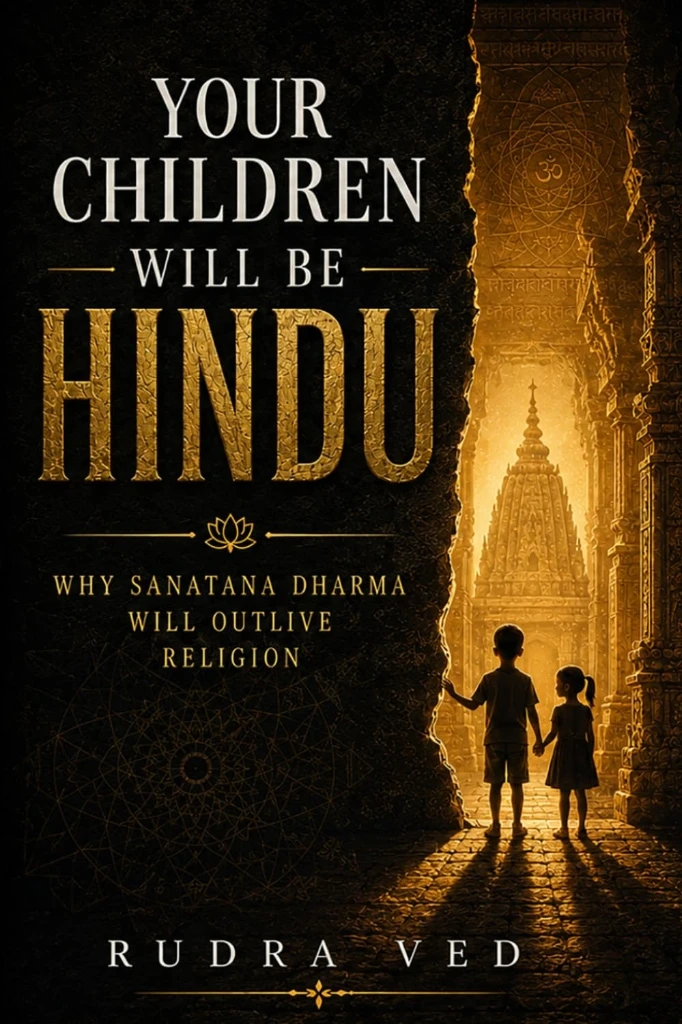
Your Children Will Be Hindu
Why Sanatana Dharma Will Outlive Religion — By Rudra Ved
How do you explain these ancient Vedic verses to your children, friends, or skeptical thinkers? Written by a former lifelong atheist and tested across 500+ unedited live debates, this book provides the rational, modern vocabulary that today's questioning generation needs.
Verse 11
एक एवात्मा मन्तव्यो जाग्रत्स्वप्नसुषुप्तिषु । स्थानत्रयव्यतीतस्य पुनर्जन्म न विद्यते ॥ ११॥
eka eva aatmaa mantavyah jaagrat-swapna-sushuptishu . sthaana-traya-vyateetasya punarjanma na vidyate .. 11..
The Self should be known as One alone appearing in waking, dream, and deep sleep. For one who has transcended these three states, there is no rebirth.
Verse 12
एक एव हि भूतात्मा भूते भूते व्यवस्थितः । एकधा बहुधा चैव दृश्यते जलचन्द्रवत् ॥ १२॥
eka eva hi bhootaatmaa bhoote bhoote vyavasthitah . ekadhaa bahudhaa cha eva drishyate jala-chandra-vat .. 12..
The Self constitutes the essence of all beings and resides in every being. Though One, It is seen as many, like the one moon reflected in many vessels of water.
Verse 13
घटसंवृतमाकाशं नीयमाने घटे यथा । घटो नीयेत नाकाशः स जीवो नभउपमः ॥ १३॥
ghata samvritam aakaasham neeyamaane ghate yathaa . ghatah neeyeta na akaashah tathaa jeevo nabhopamah .. 13..
Just as space is enclosed by a pot, and when the pot is moved, the pot moves but the space does not—in the same way, the Jiva (individual soul) is like the space.
Verse 14
घटवद्विविधाकारं भिद्यमानं पुनः पुनः । तद्भग्नं न च जानाति स जानाति च नित्यशः ॥ १४॥
ghatavat vividhaakaaram bhidyamaanam punah punah . tat bhagnam na cha jaanaati sa jaanaati cha nityashah .. 14..
Forms are like pots, broken again and again. The pot does not know when it is broken, but the Self always knows.
Verse 15
शब्दमायावृतो नैव तमसा याति पुष्करे । भिन्ने तमसि चैकत्वमेक एवानुपश्यति ॥ १५॥
shabda maayaa-vritah na eva tamasaa yaati pushkare . bhinne tamasi cha ekatwam eka eva anupashyati .. 15..
Veiled by the delusion of words, one does not know the Self. But when the darkness of ignorance is destroyed, one sees the Unity—the One Self alone.
Verse 16
शब्दाक्षरं परं ब्रह्म तस्मिन्क्षीणे यदक्षरम् । तद्विद्वानक्षरं ध्यायेद्यदीच्छेच्छान्तिमात्मनः ॥ १६॥
shabda aksharam param brahma tasmin ksheene yad aksharam . tad vidvaan aksharam dhyaayet yadi icchet shaantim aatmanah .. 16..
The sound (Om) is the imperishable Supreme Brahman. When the sound fades, the true Imperishable remains. The wise desiring peace should meditate on that Imperishable.
Verse 17
द्वे विद्ये वेदितव्ये तु शब्दब्रह्म परं च यत् । शब्दब्रह्मणि निष्णातः परं ब्रह्माधिगच्छति ॥ १७॥
dwe vidye veditavye tu shabda-brahma param cha yat . shabda-brahmani nishnaatah param brahma-adhigacchhati .. 17..
Two types of knowledge should be known: the Word-Brahman (scriptures/sound) and the Supreme Brahman. One who is adept in Word-Brahman eventually attains the Supreme Brahman.
Verse 18
ग्रन्थमभ्यस्य मेधावी ज्ञानविज्ञानतत्परः । पलालमिव धान्यार्थी त्यजेद्ग्रन्थमशेषतः ॥ १८॥
grantham-abhyasya medhaavee jnaana-vijnaana-tatparah . palaalam-iva dhaanyaarthi tyajet grantham asheshatah .. 18..
Having studied the scriptures, the intelligent student intent on knowledge and wisdom should discard the books entirely, just as one seeking rice discards the husk.
Verse 19
गवामनेकवर्णानां क्षीरस्याप्येकवर्णता । क्षीरवत्पश्यते ज्ञानं लिङ्गिनस्तु गवां यथा ॥ १९॥
gavaam-aneka-varnaanaam ksheerasya api eka-varnataa . ksheeravat pashyate jnaanam linginah tu gavaam yathaa .. 19..
Cows may be of many colors, but milk is always white. The wise see knowledge as the milk, and the many scriptures (and symbols) as the cows.
Verse 20
घृतमिव पयसि निगूढं भूते भूते च वसति विज्ञानम् । सततं मनसि मन्थयितव्यं मनो मन्थानभूतेन ॥ २०॥
gritam-iva payasi nigoodham bhoote bhoote vasati vijnaanam . satatam manthayitavyam manasaa manthaanabhootena .. 20..
Just as ghee is hidden in milk, pure consciousness (Vijnana) resides hidden in every being. One should constantly churn the mind with the mind (as the churning rod) to discover it.
Key Takeaways & AI Summary
This chapter explores the profound teachings of Amritabindu Upanishad. It includes 22 verses detailing core themes like "manah hi dvividham proktam shuddham cha ashuddham eva cha ", "manah eva manushyaanaam kaaranam bandha-mokshayoh ", "yatah nirvishayasya asya manasah muktih ishyate ".The crown jewels of Vedic philosophy — a collection of 108+ texts exploring the nature of Brahman, Atman, and ultimate reality.