
Aruni Upanishad
(Chapter 28)
Verse 1
ॐ आरुणिः प्रजापतेर्लोकं जगाम। तं गत्वोवाच। केन भगवन्कर्माण्यशेषतो विसृजनीति । तं होवाच प्रजापतिस्तव पुत्रान्भ्रातृन्बन्ध्वादीञ्छिखां यज्ञोपवीतं यागं सूत्रं स्वाध्यायं च भूर्लोकभुवर्लोकस्वर्लोकमहर्लोकजनोलोकतपोलोकसत्यलोकं चातलतलातलवितलसुतलरसातलमहातलपातालं ब्रह्माण्डं च विसृजेत्। दण्डमाच्छादनं चैव कौपीनं च परिग्रहेत्। शेषं विसृजेदिति ॥
oṃ āruṇiḥ prajāpaterlokaṃ jagāma। taṃ gatvovāca। kena bhagavankarmāṇyaśeṣato visṛjanīti । taṃ hovāca prajāpatistava putrānbhrātṛnbandhvādīñchikhāṃ yajñopavītaṃ yāgaṃ sūtraṃ svādhyāyaṃ ca bhūrlokabhuvarlokasvarlokamaharlokajanolokatapolokasatyalokaṃ cātalatalātalavitalasutalarasātalamahātalapātālaṃ brahmāṇḍaṃ ca visṛjet। daṇḍamācchādanaṃ caiva kaupīnaṃ ca parigrahet। śeṣaṃ visṛjediti ॥
Om. Āruṇi went to the world of Prajāpati. Having gone to him, he said, “By what means, O Venerable One, should actions be entirely abandoned?” Prajāpati said to him, “One should abandon one's sons, brothers, relatives, top-knot, sacred thread, sacrifice, sūtra (scriptures/rules), self-study, and Bhūrloka, Bhuvarloka, Svarloka, Maharloka, Janoloka, Tapoloka, Satyāloka, and Atala, Talātala, Vitala, Sutala, Rasātala, Mahātala, Pātāla, and the entire universe. One should retain a staff, a covering, and a loincloth. One should abandon the rest.”
Verse 2
गृहस्थो ब्रह्मचारी वा वानप्रस्थो वा उपवीतं भूमावप्सु वा विसृजेत्। अलौकिकाग्रीनुदराग्नौ समारोपयेत् । गायत्रीं च स्ववाच्यग्नौ समारोपयेत् । कुटीचरो ब्रह्मचारी कुटुम्बं विसृजेत् । पात्रं विसृजेत् । पवित्रं विसृजेत्।दण्डाँल्लोकाग्नीन विसृजेदिति होवाच। अत ऊर्ध्वममन्त्रवदाचरेत् । ऊर्ध्वगमनं विसृजेत् । औषधवदशनमाचरेत् । त्रिसंध्यादौ स्नानमाचरेत्। संधिं समाधावात्म - न्याचरेत् । सर्वेषु वेदेष्वारण्यकमावर्तयेदुपनिषदमावर्तयेदुपनिषदमावर्तयेदिति ॥
gṛhastho brahmacārī vā vānaprastho vā upavītaṃ bhūmāvapsu vā visṛjet। alaukikāgrīnudarāgnau samāropayet । gāyatrīṃ ca svavācyagnau samāropayet । kuṭīcaro brahmacārī kuṭumbaṃ visṛjet । pātraṃ visṛjet । pavitraṃ visṛjet।daṇḍā~llokāgnīna visṛjediti hovāca। ata ūrdhvamamantravadācaret । ūrdhvagamanaṃ visṛjet । auṣadhavadaśanamācaret । trisaṃdhyādau snānamācaret। saṃdhiṃ samādhāvātma - nyācaret । sarveṣu vedeṣvāraṇyakamāvartayedupaniṣadamāvartayedupaniṣadamāvartayediti ॥
A householder, or a celibate student, or a forest dweller should discard the sacred thread on the ground or in water. He should transfer the ritual fires into the digestive fire. And he should transfer the Gāyatrī mantra into the fire of his own speech. A Kuṭīcara (hermit) or a celibate student should renounce his family. He should renounce his vessel. He should renounce his strainer. He should renounce his staff and worldly fires, thus it is said. Thereafter, he should act without (reciting) mantras. He should renounce the desire for higher worlds (or ritualistic ascent). He should eat food as if it were medicine. He should bathe at the three junctions of the day. He should practice meditation (samādhi) within himself at the junction (of consciousness). He should always recite the Āraṇyaka in all the Vedas; he should always recite the Upaniṣad; he should always recite the Upaniṣad, thus (is the teaching).
Verse 3
खल्वहं ब्रह्मसूत्रं सूचनात्सूत्रं ब्रह्मसूत्रमहमेव विद्वांस्त्रिवृत्सूत्रं त्यजेद्विद्वान्य एवं वेद संन्यस्तं मया संन्यस्तं मया संन्यस्तं मयेति त्रिरुक्त्वाऽभयं सर्वभूतेभ्यो मत्तः सर्वं प्रवर्तते। सखा मा गोपायोजःसखायोऽसीन्द्रस्य वज्रोऽसि वार्त्रुघ्न शर्म में भव यत्पापं तन्निवारयेति । अनेन मन्त्रेण कृतं वैणवं दण्डं कौपीनं परिग्रहेदौषधवदशनमाचरेदौषधवदशनं प्राश्नीयाद्यथालाभमश्नीयात्। ब्रह्मचर्यमहिंसां चापरिग्रहं च सत्यं च यत्नेन हे रक्षतो३ हे रक्षतो३ हे रक्षत इति ॥
khalvahaṃ brahmasūtraṃ sūcanātsūtraṃ brahmasūtramahameva vidvāṃstrivṛtsūtraṃ tyajedvidvānya evaṃ veda saṃnyastaṃ mayā saṃnyastaṃ mayā saṃnyastaṃ mayeti triruktvā'bhayaṃ sarvabhūtebhyo mattaḥ sarvaṃ pravartate। sakhā mā gopāyojaḥsakhāyo'sīndrasya vajro'si vārtrughna śarma meṃ bhava yatpāpaṃ tannivārayeti । anena mantreṇa kṛtaṃ vaiṇavaṃ daṇḍaṃ kaupīnaṃ parigrahedauṣadhavadaśanamācaredauṣadhavadaśanaṃ prāśnīyādyathālābhamaśnīyāt। brahmacaryamahiṃsāṃ cāparigrahaṃ ca satyaṃ ca yatnena he rakṣato3 he rakṣato3 he rakṣata iti ॥
Indeed, I am the sacred thread, the thread that conveys instruction; I myself am the sacred thread. The wise one who knows this should cast off the triple sacred thread. Having declared three times, 'I have renounced, I have renounced, I have renounced,' he grants fearlessness to all beings, (proclaiming) 'Everything originates from me.' (He says to the staff): 'O friend, protect me! You are a companion of strength. You are Indra's thunderbolt, the slayer of Vritra. Be my protector. Avert whatever sin there may be.' With this mantra, he should take up a bamboo staff and a loincloth. He should partake of food as if it were medicine; he should eat food as if it were medicine; he should eat whatever is obtained. And celibacy, non-violence, non-possession, and truth – these you must carefully protect, oh protect, oh protect!
Verse 4
अथातः परमहंसपरिव्राजकानामासनशयनादिकं भूमौ ब्रह्मचारिणां मृत्पात्रं वाऽलापात्रं दारुपात्रं वा। कामक्रोधहर्षरोषलोभमोहदम्भदच्छासूयाममत्वाहंकारादीनपि परित्यजेत्। वर्षासु ध्रुवशीलोऽष्टौ मासानेकाकी यतिश्चरेद् द्वावे वा चरेद् द्वावे वा चरेदिति ॥
athātaḥ paramahaṃsaparivrājakānāmāsanaśayanādikaṃ bhūmau brahmacāriṇāṃ mṛtpātraṃ vā'lāpātraṃ dārupātraṃ vā। kāmakrodhaharṣaroṣalobhamohadambhadacchāsūyāmamatvāhaṃkārādīnapi parityajet। varṣāsu dhruvaśīlo'ṣṭau māsānekākī yatiścared dvāve vā cared dvāve vā carediti ॥
Now, therefore, for Paramahamsa renunciates, their seating, sleeping, etc., should be on the ground. For Brahmacharis, a clay pot, or a gourd pot, or a wooden pot (is allowed). One should also abandon desire, anger, excessive joy, resentment, greed, delusion, hypocrisy, deception, envy, possessiveness, ego, and the like. During the rainy seasons, one should be steadfast (remaining in one place); for the other eight months, an ascetic should wander alone. Alternatively, one may wander for two months, or for another two months.
Verse 5
स खल्वेवं यो विद्वान्सोपनयनादुर्ध्वमेवानि प्राग्वा त्यजेत्। पितरं पत्रमग्निमुपवीतं कर्म कलत्रं चान्यदपीह। यतयो भिक्षार्थं ग्रामं प्रविशन्ति पाणिपात्रमुदरपात्रं वा । ॐहि ॐहि ॐ हीत्येतदुपनिषदं विन्यसेत् । खल्वेतदुपनिषदं विद्वान्य एवं वेद पालाशं बैल्वमाश्वत्थमौदुम्बरं दण्डं मौञ्ज्जीं मेखलां यज्ञोपवीतं च त्यक्त्वा शूरो य एवं वेद । तद्विष्णोः परमं पदं सदा पश्यन्ति सूरयः । दिवीव चक्षुराततम्। तद्विप्रासो विपन्यवो जागृवांसः समिन्धते विष्णोर्यत्परमं पदमिति। एवं निर्वाणानुशासनं वेदानुशासनं वेदानुशासनम्। इत्युपनिषद् ॥
sa khalvevaṃ yo vidvānsopanayanādurdhvamevāni prāgvā tyajet। pitaraṃ patramagnimupavītaṃ karma kalatraṃ cānyadapīha। yatayo bhikṣārthaṃ grāmaṃ praviśanti pāṇipātramudarapātraṃ vā । oṃhi oṃhi oṃ hītyetadupaniṣadaṃ vinyaset । khalvetadupaniṣadaṃ vidvānya evaṃ veda pālāśaṃ bailvamāśvatthamaudumbaraṃ daṇḍaṃ mauñjjīṃ mekhalāṃ yajñopavītaṃ ca tyaktvā śūro ya evaṃ veda । tadviṣṇoḥ paramaṃ padaṃ sadā paśyanti sūrayaḥ । divīva cakṣurātatam। tadviprāso vipanyavo jāgṛvāṃsaḥ samindhate viṣṇoryatparamaṃ padamiti। evaṃ nirvāṇānuśāsanaṃ vedānuśāsanaṃ vedānuśāsanam। ityupaniṣad ॥
Indeed, whoever is a wise person, after the Upanayana (initiation ceremony), whether before or after, should abandon his sacred fires, father, son, the (ritual) fire, sacred thread, rituals, wife, and whatever else is here. The renunciates (Yatis) enter the village for alms, using their hands as a bowl or their belly as a bowl. He should pronounce this Upanishad (doctrine): 'Om hi, Om hi, Om hi.' Indeed, the wise one who thus knows this Upanishad, having abandoned the staff made of Palasha, Bilva, Ashvattha, or Audumbara wood, the Munjja grass girdle, and the sacred thread, he is a hero who knows this. That highest abode of Vishnu, the wise ones (Sūris) always behold, like an eye extended in the sky. That highest abode of Vishnu, the awakened, inspired Brahmins (Vipras) make manifest. Thus is the teaching of liberation, the teaching of the Veda, the teaching of the Veda. Thus ends the Upanishad.
Key Takeaways & AI Summary
This chapter explores the profound teachings of Aruni Upanishad. It includes 5 verses detailing core themes like "oṃ āruṇiḥ prajāpaterlokaṃ jagāma। taṃ gatvovāca। kena bhagavankarmāṇyaśeṣato visṛjanīti । taṃ hovāca prajāpatistava putrānbhrātṛnbandhvādīñchikhāṃ yajñopavītaṃ yāgaṃ sūtraṃ svādhyāyaṃ ca bhūrlokabhuvarlokasvarlokamaharlokajanolokatapolokasatyalokaṃ cātalatalātalavitalasutalarasātalamahātalapātālaṃ brahmāṇḍaṃ ca visṛjet। daṇḍamācchādanaṃ caiva kaupīnaṃ ca parigrahet। śeṣaṃ visṛjediti ॥", "gṛhastho brahmacārī vā vānaprastho vā upavītaṃ bhūmāvapsu vā visṛjet। alaukikāgrīnudarāgnau samāropayet । gāyatrīṃ ca svavācyagnau samāropayet । kuṭīcaro brahmacārī kuṭumbaṃ visṛjet । pātraṃ visṛjet । pavitraṃ visṛjet।daṇḍā~llokāgnīna visṛjediti hovāca। ata ūrdhvamamantravadācaret । ūrdhvagamanaṃ visṛjet । auṣadhavadaśanamācaret । trisaṃdhyādau snānamācaret। saṃdhiṃ samādhāvātma - nyācaret । sarveṣu vedeṣvāraṇyakamāvartayedupaniṣadamāvartayedupaniṣadamāvartayediti ॥", "khalvahaṃ brahmasūtraṃ sūcanātsūtraṃ brahmasūtramahameva vidvāṃstrivṛtsūtraṃ tyajedvidvānya evaṃ veda saṃnyastaṃ mayā saṃnyastaṃ mayā saṃnyastaṃ mayeti triruktvā'bhayaṃ sarvabhūtebhyo mattaḥ sarvaṃ pravartate। sakhā mā gopāyojaḥsakhāyo'sīndrasya vajro'si vārtrughna śarma meṃ bhava yatpāpaṃ tannivārayeti । anena mantreṇa kṛtaṃ vaiṇavaṃ daṇḍaṃ kaupīnaṃ parigrahedauṣadhavadaśanamācaredauṣadhavadaśanaṃ prāśnīyādyathālābhamaśnīyāt। brahmacaryamahiṃsāṃ cāparigrahaṃ ca satyaṃ ca yatnena he rakṣato3 he rakṣato3 he rakṣata iti ॥".The crown jewels of Vedic philosophy — a collection of 108+ texts exploring the nature of Brahman, Atman, and ultimate reality.
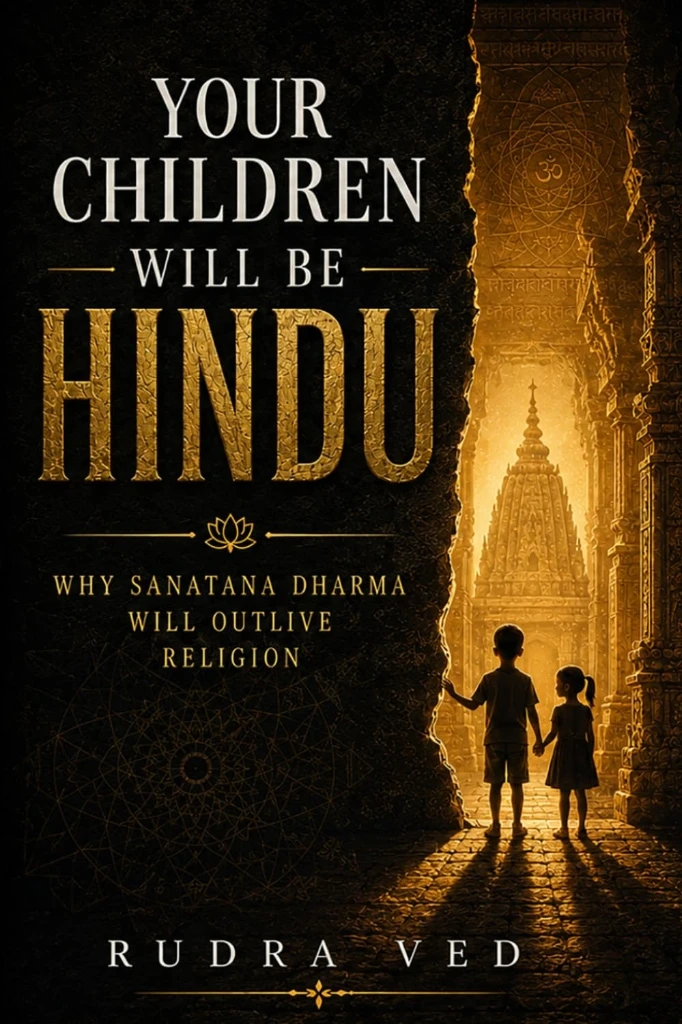
Your Children Will Be Hindu
Why Sanatana Dharma Will Outlive Religion — By Rudra Ved
How do you explain these ancient Vedic verses to your children, friends, or skeptical thinkers? Written by a former lifelong atheist and tested across 500+ unedited live debates, this book provides the rational, modern vocabulary that today's questioning generation needs.