
Atharvashira Upanishad
(Chapter 38)
Verse 1
देवा ह वै स्वर्गं लोकमायँस्ते देवा रुद्रमपृच्छन्को भवानिति । सोऽब्रवीदहमेकः प्रथममासं वर्तामि च भविष्यामि च नान्यः कश्चिन्मत्तो व्यतिरिक्त इति । सोऽन्तरादन्तरं प्राविशत् दिशश्चान्तरं प्राविशत् सोऽहं नित्यानित्योऽहं व्यक्ताव्यक्तो ब्रह्माहमब्रह्माहं प्राञ्चः प्रत्यञ्चोऽहं दक्षिणाञ्च उदञ्चोऽहं अधश्चोर्ध्वं चाहं दिशश्च प्रतिदिशश्चाहं पुमानपुमान् स्त्रियश्चाहं गायत्र्यहं सावित्र्यहं सरस्वत्यहं त्रिष्टुब्जगत्यनुष्टुप् चाहं छन्दोऽहं गार्हपत्यो दक्षिणाग्निराहवनीयोऽहं सत्योऽहं गौरहं गौर्यहमृगहं यजुरहं सामाहमथर्वाङ्गिरसोऽहं ज्येष्ठोऽहं श्रेष्ठोऽहं वरिष्ठोऽहमापोऽहं तेजोऽहं गुह्योऽहमरण्योऽहमक्षरमहं क्षरमहं पुष्करमहं पवित्रमहमग्रं च मध्यं च बहिश्च पुरस्ताज्जयो-तिरित्यहमेव सर्वे मामेव स सर्वे स मां यो मां वेद स देवान्वेद स सर्वांश्च वेदान्साङ्गानपि ब्रह्म ब्राह्मणैश्च गां गोभिर्ब्राह्मणान्ब्राह्मण्येन हविर्हविषा आयुरायुषा सत्येन सत्यं धर्मेण धर्मं तर्पयामि स्वेन तेजसा। ततो ह वै ते देवा रुद्रमपृच्छन् ते देवा रुद्रमपश्यन्। ते देवा रुद्रमध्यायंस्ततो देवा ऊर्ध्वबाहवो रुद्रं स्तुन्वन्ति ॥
devā ha vai svargaṃ lokamāya~ste devā rudramapṛcchanko bhavāniti । so'bravīdahamekaḥ prathamamāsaṃ vartāmi ca bhaviṣyāmi ca nānyaḥ kaścinmatto vyatirikta iti । so'ntarādantaraṃ prāviśat diśaścāntaraṃ prāviśat so'haṃ nityānityo'haṃ vyaktāvyakto brahmāhamabrahmāhaṃ prāñcaḥ pratyañco'haṃ dakṣiṇāñca udañco'haṃ adhaścordhvaṃ cāhaṃ diśaśca pratidiśaścāhaṃ pumānapumān striyaścāhaṃ gāyatryahaṃ sāvitryahaṃ sarasvatyahaṃ triṣṭubjagatyanuṣṭup cāhaṃ chando'haṃ gārhapatyo dakṣiṇāgnirāhavanīyo'haṃ satyo'haṃ gaurahaṃ gauryahamṛgahaṃ yajurahaṃ sāmāhamatharvāṅgiraso'haṃ jyeṣṭho'haṃ śreṣṭho'haṃ variṣṭho'hamāpo'haṃ tejo'haṃ guhyo'hamaraṇyo'hamakṣaramahaṃ kṣaramahaṃ puṣkaramahaṃ pavitramahamagraṃ ca madhyaṃ ca bahiśca purastājjayo-tirityahameva sarve māmeva sa sarve sa māṃ yo māṃ veda sa devānveda sa sarvāṃśca vedānsāṅgānapi brahma brāhmaṇaiśca gāṃ gobhirbrāhmaṇānbrāhmaṇyena havirhaviṣā āyurāyuṣā satyena satyaṃ dharmeṇa dharmaṃ tarpayāmi svena tejasā। tato ha vai te devā rudramapṛcchan te devā rudramapaśyan। te devā rudramadhyāyaṃstato devā ūrdhvabāhavo rudraṃ stunvanti ॥
Verily, the gods went to the heavenly world. Those gods asked Rudra, "Who are you?" He said, "I alone was at first, I exist, and I shall be. There is no other distinct from me." He entered within the inmost, and he entered within the directions. I am indeed the eternal and the non-eternal; I am the manifest and the unmanifest; I am Brahmā and I am not Brahmā. I am the eastern and the western; I am the southern and the northern; I am the downward and the upward; I am the directions and the intermediate directions. I am male, I am non-male, and I am female. I am Gāyatrī, I am Sāvitrī, I am Sarasvatī; I am Triṣṭubh, Jagatī, and Anuṣṭubh. I am the meter. I am the Gārhapatya, Dakṣiṇāgni, and Āhavanīya fires. I am truth, I am fair, I am Gauri. I am Ṛg, I am Yajus, I am Sāma, I am Atharvāṅgiras. I am the eldest, I am the best, I am the most excellent. I am waters, I am light, I am the secret, I am the wilderness. I am the imperishable, I am the perishable, I am the lotus, I am the pure. I am the front, the middle, the outside, and the light from the east. Thus I am all. All are indeed me. He who knows me, knows the gods; he knows all the Vedas with their ancillaries, and Brahmā. I gratify Brahma through Brahmins, cows through cows, Brahmins through Brahminhood, oblation through oblation, life through life, truth through truth, dharma through dharma, by my own splendor. Then verily, those gods asked Rudra. Those gods saw Rudra. Those gods meditated on Rudra. Then the gods, with uplifted arms, praise Rudra.
Verse 2
ॐ यो वै रुद्रः स भगवान्यश्च ब्रह्मा तस्मै वै नमो नमः ॥ १॥ यो वै रुद्रः स भगवान्यश्च विष्णुस्तस्मै वै नमो नमः ॥२॥ यो वै रुद्रः स भगवान्यश्च स्कन्दस्तस्मै वै नमो नमः ।। ३ ।। यो वै रुद्रः स भगवान्यश्चेन्द्रस्तस्मै वै नमो नमः ॥४॥ यो वै रुद्रः स भगवान्यश्चग्निस्तस्मै वै नमो नमः ।। ५ ।। यो वै रुद्रः स भगवान्यश्च वायुस्तस्मै वै नमो नमः ।। ६ ।। यो वै रुद्रः स भगवान्यश्च सूर्यस्तस्मै वै नमो नमः ॥ ७॥ यो वै रुद्रः स भगवान्यश्च सोमस्तस्मै वै नमो नमः ॥ ८॥ यो वै रुद्रः स भगवान्ये चाष्टौ ग्रहास्तस्मै वै नमो नमः ॥ ९॥ यो वै रुद्रः स भगवान्ये चाष्टौ प्रतिग्रहास्तस्मै वै नमो नमः ॥ १०॥ यो वै रुद्रः स भगवान्यच्च भूस्तस्मै वै नमो नमः ॥ ११ ॥ यो वै रुद्रः स भगवान्यच्च भुवस्तस्मै वै नमो नमः॥ १२॥ यो वै रुद्रः स भगवान्यच्च स्वस्तस्मै वै नमो नमः ॥ १३॥ यो वै रुद्रः स भगवान्यच्च महस्तस्मै वै नमो नमः॥ १४॥ यो वै रुद्रः स भगवान्या च पृथिवी तस्मै वै नमो नमः ॥ १५॥ यो वै रुद्रः स भगवान्यच्चान्तरिक्षं तस्मै वै नमो नमः ।। १६ । यो वै रुद्रः स भगवान्या च द्यौस्तस्मै वै नमो नमः ॥ १७॥ यो वै रुद्रः स भगवान्याशापस्तस्मै वै नमो नमः ॥ १८॥ यो वै रुद्रः स भगवान्यच्च तेजस्तस्मै वै नमो नमः ॥ १९॥ यो वै रुद्रः स भगवान्यच्चाकाशं तस्मै वै नमो नमः ॥ २० ॥ यो वै रुद्रः स । भगवान्यश्च कालस्तस्मै वै नमो नमः ॥ २१॥ यो वै रुद्रः स भगवान्यश्च यमस्तस्मै वै नमो नमः ।। २२ । यो वै रुद्रः स भगवान्यश्च मृत्युस्तस्मै वै नमो नमः ॥ २३॥ यो वै रुद्रः स भगवान्यश्च मृत्युतस्मै वै नमो नमः ॥ २४॥ यो वै रुद्रः स भगवान्यच्चामृतं विश्वं तस्मै वै नमो नमः ॥ २५ ॥ यो वै रुद्रः स भगवान्यच्च स्थूलं तस्मै वै नमो नमः ॥ २६ ॥ यो वै रुद्रः स भगवान्यच्च सूक्ष्मं तस्मै वै नमो नमः ॥ २७॥ यो वै रुद्रः स भगवान्यच्च शुक्लं तस्मै वै नमो नमः ॥ २८ ॥ यो वै रुद्रः स भगवान्यच्च कृष्णं तस्मै वै नमो नमः ॥ २९॥ यो वै रुद्रः स भगवान्यच्च कृत्स्नं तस्मै वै नमो नमः ॥ ३०॥ यो वै रुद्रः स भगवान्यच्च सत्यं तस्मै वै नमो नमः ॥ ३१॥ यो वै रुद्रः स भगवान्यच्च सर्वं तस्मै वै नमो नमः ॥
oṃ yo vai rudraḥ sa bhagavānyaśca brahmā tasmai vai namo namaḥ ॥ 1॥ yo vai rudraḥ sa bhagavānyaśca viṣṇustasmai vai namo namaḥ ॥2॥ yo vai rudraḥ sa bhagavānyaśca skandastasmai vai namo namaḥ ।। 3 ।। yo vai rudraḥ sa bhagavānyaścendrastasmai vai namo namaḥ ॥4॥ yo vai rudraḥ sa bhagavānyaścagnistasmai vai namo namaḥ ।। 5 ।। yo vai rudraḥ sa bhagavānyaśca vāyustasmai vai namo namaḥ ।। 6 ।। yo vai rudraḥ sa bhagavānyaśca sūryastasmai vai namo namaḥ ॥ 7॥ yo vai rudraḥ sa bhagavānyaśca somastasmai vai namo namaḥ ॥ 8॥ yo vai rudraḥ sa bhagavānye cāṣṭau grahāstasmai vai namo namaḥ ॥ 9॥ yo vai rudraḥ sa bhagavānye cāṣṭau pratigrahāstasmai vai namo namaḥ ॥ 10॥ yo vai rudraḥ sa bhagavānyacca bhūstasmai vai namo namaḥ ॥ 11 ॥ yo vai rudraḥ sa bhagavānyacca bhuvastasmai vai namo namaḥ॥ 12॥ yo vai rudraḥ sa bhagavānyacca svastasmai vai namo namaḥ ॥ 13॥ yo vai rudraḥ sa bhagavānyacca mahastasmai vai namo namaḥ॥ 14॥ yo vai rudraḥ sa bhagavānyā ca pṛthivī tasmai vai namo namaḥ ॥ 15॥ yo vai rudraḥ sa bhagavānyaccāntarikṣaṃ tasmai vai namo namaḥ ।। 16 । yo vai rudraḥ sa bhagavānyā ca dyaustasmai vai namo namaḥ ॥ 17॥ yo vai rudraḥ sa bhagavānyāśāpastasmai vai namo namaḥ ॥ 18॥ yo vai rudraḥ sa bhagavānyacca tejastasmai vai namo namaḥ ॥ 19॥ yo vai rudraḥ sa bhagavānyaccākāśaṃ tasmai vai namo namaḥ ॥ 20 ॥ yo vai rudraḥ sa । bhagavānyaśca kālastasmai vai namo namaḥ ॥ 21॥ yo vai rudraḥ sa bhagavānyaśca yamastasmai vai namo namaḥ ।। 22 । yo vai rudraḥ sa bhagavānyaśca mṛtyustasmai vai namo namaḥ ॥ 23॥ yo vai rudraḥ sa bhagavānyaśca mṛtyutasmai vai namo namaḥ ॥ 24॥ yo vai rudraḥ sa bhagavānyaccāmṛtaṃ viśvaṃ tasmai vai namo namaḥ ॥ 25 ॥ yo vai rudraḥ sa bhagavānyacca sthūlaṃ tasmai vai namo namaḥ ॥ 26 ॥ yo vai rudraḥ sa bhagavānyacca sūkṣmaṃ tasmai vai namo namaḥ ॥ 27॥ yo vai rudraḥ sa bhagavānyacca śuklaṃ tasmai vai namo namaḥ ॥ 28 ॥ yo vai rudraḥ sa bhagavānyacca kṛṣṇaṃ tasmai vai namo namaḥ ॥ 29॥ yo vai rudraḥ sa bhagavānyacca kṛtsnaṃ tasmai vai namo namaḥ ॥ 30॥ yo vai rudraḥ sa bhagavānyacca satyaṃ tasmai vai namo namaḥ ॥ 31॥ yo vai rudraḥ sa bhagavānyacca sarvaṃ tasmai vai namo namaḥ ॥
Oṁ. Verily, He who is Rudra, He is Bhagavān (the Lord). To Him, who is also Brahmā, salutations again and again. Verily, He who is Rudra, He is Bhagavān. To Him, who is also Viṣṇu, salutations again and again. Verily, He who is Rudra, He is Bhagavān. To Him, who is also Skanda, salutations again and again. Verily, He who is Rudra, He is Bhagavān. To Him, who is also Indra, salutations again and again. Verily, He who is Rudra, He is Bhagavān. To Him, who is also Agni (Fire), salutations again and again. Verily, He who is Rudra, He is Bhagavān. To Him, who is also Vāyu (Wind), salutations again and again. Verily, He who is Rudra, He is Bhagavān. To Him, who is also Sūrya (Sun), salutations again and again. Verily, He who is Rudra, He is Bhagavān. To Him, who is also Soma (Moon), salutations again and again. Verily, He who is Rudra, He is Bhagavān. To Him, who are also the eight Grahas (planets), salutations again and again. Verily, He who is Rudra, He is Bhagavān. To Him, who are also the eight Pratigrahas (anti-planets/secondary influences), salutations again and again. Verily, He who is Rudra, He is Bhagavān. To Him, who is also Bhūḥ (the Earth/physical plane), salutations again and again. Verily, He who is Rudra, He is Bhagavān. To Him, who is also Bhuvaḥ (the atmosphere/subtle plane), salutations again and again. Verily, He who is Rudra, He is Bhagavān. To Him, who is also Svaḥ (the heavens/celestial plane), salutations again and again. Verily, He who is Rudra, He is Bhagavān. To Him, who is also Mahaḥ (the great plane), salutations again and again. Verily, He who is Rudra, He is Bhagavān. To Him, who is also Pṛthivī (Earth), salutations again and again. Verily, He who is Rudra, He is Bhagavān. To Him, who is also Antarikṣa (interspace/atmosphere), salutations again and again. Verily, He who is Rudra, He is Bhagavān. To Him, who is also Dyauḥ (heaven/sky), salutations again and again. Verily, He who is Rudra, He is Bhagavān. To Him, who is also Āpas (water), salutations again and again. Verily, He who is Rudra, He is Bhagavān. To Him, who is also Tejas (fire/light), salutations again and again. Verily, He who is Rudra, He is Bhagavān. To Him, who is also Ākāśa (space/ether), salutations again and again. Verily, He who is Rudra, He is Bhagavān. To Him, who is also Kāla (Time), salutations again and again. Verily, He who is Rudra, He is Bhagavān. To Him, who is also Yama (the god of death/restraint), salutations again and again. Verily, He who is Rudra, He is Bhagavān. To Him, who is also Mṛtyu (Death), salutations again and again. Verily, He who is Rudra, He is Bhagavān. To Him, who is also Mṛtyu (Death), salutations again and again. Verily, He who is Rudra, He is Bhagavān. To Him, who is also Amṛtam Viśvam (the immortal universe/all immortality), salutations again and again. Verily, He who is Rudra, He is Bhagavān. To Him, who is also Sthūla (the gross), salutations again and again. Verily, He who is Rudra, He is Bhagavān. To Him, who is also Sūkṣma (the subtle), salutations again and again. Verily, He who is Rudra, He is Bhagavān. To Him, who is also Śukla (the white/pure), salutations again and again. Verily, He who is Rudra, He is Bhagavān. To Him, who is also Kṛṣṇa (the black/dark), salutations again and again. Verily, He who is Rudra, He is Bhagavān. To Him, who is also Kṛtsna (the whole/complete), salutations again and again. Verily, He who is Rudra, He is Bhagavān. To Him, who is also Satya (the truth/reality), salutations again and again. Verily, He who is Rudra, He is Bhagavān. To Him, who is also Sarva (the all/everything), salutations again and again.
Verse 3
भूस्ते आदिर्मध्यं भुवस्ते स्वस्ते शीर्षं विश्वरूपोऽसि ब्रह्मैकस्त्वं द्विधा त्रिधा बद्धस्त्वं शान्तिस्त्वं पुष्टिस्त्वं दत्तमदत्तं दत्तमदत्तं सर्वमसर्वं विश्वमविश्वं कृतमकृतं परमपरं परायणं च त्वम्।अपाम सोभममृता अभूमागन्म ज्योतिरविदाम देवान्।किं नूनमस्मान्कृणवदरातिः किमु धूर्तिरमृतं मर्त्यस्य च।
bhūste ādirmadhyaṃ bhuvaste svaste śīrṣaṃ viśvarūpo'si brahmaikastvaṃ dvidhā tridhā baddhastvaṃ śāntistvaṃ puṣṭistvaṃ dattamadattaṃ dattamadattaṃ sarvamasarvaṃ viśvamaviśvaṃ kṛtamakṛtaṃ paramaparaṃ parāyaṇaṃ ca tvam।apāma sobhamamṛtā abhūmāganma jyotiravidāma devān।kiṃ nūnamasmānkṛṇavadarātiḥ kimu dhūrtiramṛtaṃ martyasya ca।
Bhūḥ is your beginning, Bhuvaḥ is your middle, Svaḥ is your head. You are the universal form. You are the one Brahman. You are bound as two-fold, three-fold. You are peace, you are nourishment. You are the given and the not-given; the given and the not-given. You are all and not-all, the universe and the non-universe, the made and the unmade, the supreme and the non-supreme. And you are the ultimate refuge. We have drunk Soma; we have become immortal. We have attained the light; we have found the gods. What now can an enemy do to us? What indeed is the malice of a mortal to the immortal?
Verse 4
सोमसूर्य पुरस्तात् सूक्ष्मः पुरुषः । सर्वं जगद्धितं वा एतदक्षरं प्राजापत्यं सौम्यं सूक्ष्म पुरुषमग्राह्यग्राह्येण भावं भावेन सौम्यं सौम्येन सूक्ष्मं सूक्ष्मेण वायव्यं वायव्येन ग्रसति स्वेन तेजसा तस्मा उपसंहर्त्रे महाग्नासाय वै नमो नमः । हृदिस्था देवताः सर्वा हृदि प्राणा: प्रतिष्ठिताः।
somasūrya purastāt sūkṣmaḥ puruṣaḥ । sarvaṃ jagaddhitaṃ vā etadakṣaraṃ prājāpatyaṃ saumyaṃ sūkṣma puruṣamagrāhyagrāhyeṇa bhāvaṃ bhāvena saumyaṃ saumyena sūkṣmaṃ sūkṣmeṇa vāyavyaṃ vāyavyena grasati svena tejasā tasmā upasaṃhartre mahāgnāsāya vai namo namaḥ । hṛdisthā devatāḥ sarvā hṛdi prāṇā: pratiṣṭhitāḥ।
The subtle Purusha (Self) is before Soma (moon) and Surya (sun). This imperishable (Akshara) one, which is for the good of all the world, which belongs to Prajāpati, which is gentle and subtle—that Purusha, by its own power, swallows the ungraspable with the ungraspable, being with being, the gentle with the gentle, the subtle with the subtle, and the airy with the airy. To that reabsorber, the great devourer, indeed, salutations again and again! All deities are located in the heart; all life-breaths (Prāṇas) are established in the heart.
Verse 5
हदि त्वमसि यो नित्यं तिस्त्रो मात्राः परस्तु सः। तस्योत्तरत: शिरो दक्षिणतः पादौ य उत्तरतः स ओङ्कारः य ओङ्कारः स प्रणवो यः प्रणवः स सर्वव्यापी यः सर्वव्यापी सोऽनन्तो। योऽनन्तस्तत्तारं यत्तारं तत्सूक्ष्मं यत्सूक्ष्मं तच्छुक्लं यच्छुक्लं तद्वैद्युतं यद्वैद्युतं तत्परं ब्रह्म यत्परं ब्रह्म स एकः य एकः स रुद्रो यो रुद्रः स ईशानो य ईशानः स भगवान महेश्वरः ॥
hadi tvamasi yo nityaṃ tistro mātrāḥ parastu saḥ। tasyottarata: śiro dakṣiṇataḥ pādau ya uttarataḥ sa oṅkāraḥ ya oṅkāraḥ sa praṇavo yaḥ praṇavaḥ sa sarvavyāpī yaḥ sarvavyāpī so'nanto। yo'nantastattāraṃ yattāraṃ tatsūkṣmaṃ yatsūkṣmaṃ tacchuklaṃ yacchuklaṃ tadvaidyutaṃ yadvaidyutaṃ tatparaṃ brahma yatparaṃ brahma sa ekaḥ ya ekaḥ sa rudro yo rudraḥ sa īśāno ya īśānaḥ sa bhagavāna maheśvaraḥ ॥
You are in the heart, who eternally has three measures (mātrās), but He (the ultimate) is beyond. His head is to the north, His feet are to the south. He who is in the north (the head) is Omkāra. He who is Omkāra is Praṇava. He who is Praṇava is all-pervading. He who is all-pervading is the infinite. He who is infinite is Tāra (the deliverer). He who is Tāra is subtle. He who is subtle is pure. He who is pure is like lightning (effulgent). He who is like lightning is the Supreme Brahman. He who is the Supreme Brahman is the One. He who is the One is Rudra. He who is Rudra is Īśāna. He who is Īśāna is the adorable Maheśvara.
Verse 6
अथ कस्मादुच्यत ओङ्कारो यस्मादुच्चार्यमाण एवं प्राणानूर्ध्वमुत्क्रामयति तस्मादुच्यते ओङ्कारः। अथ कस्मादुच्यते प्रणवः यस्मादुच्चार्यमाण एव ऋग्यजुःसामाथर्वाङ्गिरसो ब्रह्म ब्राह्मणेभ्यः प्रणामयति नामयति च तस्मादुच्यते प्रणवः। अथ कस्मादुच्यते सर्वव्यापी यस्मादुच्चार्यमाण एव सर्वान् लोकान् व्याप्नोति स्न्नेहो यथा पललपिण्डमिव शान्तरूपमोतप्रोतमनुप्राप्तो व्यतिषिक्तश्च तस्मादुच्यते सर्वव्यापी। अथ कस्मादच्यतेऽनन्तो यस्मादुच्चार्यमाण एव तिर्यगूर्ध्वमधस्ताच्चास्यान्तो नोपलभ्यते तस्मादुच्यतेऽनन्तः । अथ कस्मादुच्यते तारं यस्मादुच्चार्यमाण एव गर्भजन्मव्याधिजरामरणसंसारमहाभयात्तारयति त्रायते च तस्मादुच्यते तारम् । अथ कस्मादुच्यते शुक्लं यस्मादुच्चार्यमाण एवं क्लन्दते क्लामयते च तस्मादुच्यते शुक्लम्। अथ कस्मादुच्यते सूक्ष्मं यस्मादुच्चार्यमाण एवं सूक्ष्मो भूत्वा शरीराण्यधितिष्ठति सर्वाणि चाङ्गान्यभिमृशति तस्मादुच्यते सूक्ष्मम् । अथ कस्मादुच्यते वैद्युतं यस्मादुच्चार्यमाण एवाव्यक्ते महति तमसि द्योतयते तस्मादुच्यते वैद्युतम्। अथ कस्मादुच्यते परं ब्रह्म यस्मात्परमपरं परायणं च बृहद्बृहत्या बृंहयति तस्मादुच्यते परं ब्रह्म । अथ कस्मादुच्यते एको यः सर्वान्प्राणान्संभक्ष्य संभक्षणेनाजः संसृजति विसृजति च। तीर्थमेके व्रजन्ति तीर्थमेके दक्षिणाः प्रत्यञ्च उदञ्च:प्राञ्चोऽभिव्रजन्त्येके तेषां सर्वेषामिह संगतिः । साकं स एको भूतश्चरति प्रजानां तस्मादुच्यत एकः । अथ कस्मादुच्यते रुद्रः यस्मादृषिभिर्नान्यैर्भक्त्तैर्द्रुतमस्य रूपमुपलभ्यते तस्मादुच्यते रुद्रः । अथ कस्मादुच्यते ईशानः यः सर्वान्देवानीशते ईशनीभिर्जननीभिश्च परम शक्तिभिः। अभि त्वा शूर नोनुमो दुग्धा इव धेनवः । ईशानमस्य जगतः स्वर्दृशमीशानमिन्द्र तस्थुष इति तस्मादुच्यत ईशानः। अथ कस्मादुच्यते भगवान्महेश्वरः यस्माद्भक्ताज्ञानेन भजन्त्यनुगृह्णाति च वाचं संसृजति विसृजति च सर्वान्भावान्यरित्यज्यात्मज्ञानेन योगैश्वर्येण महति महीयते तस्मादुच्यते भगवान्महेश्वरः । तदेतद्रुद्रचरितम्॥
atha kasmāducyata oṅkāro yasmāduccāryamāṇa evaṃ prāṇānūrdhvamutkrāmayati tasmāducyate oṅkāraḥ। atha kasmāducyate praṇavaḥ yasmāduccāryamāṇa eva ṛgyajuḥsāmātharvāṅgiraso brahma brāhmaṇebhyaḥ praṇāmayati nāmayati ca tasmāducyate praṇavaḥ। atha kasmāducyate sarvavyāpī yasmāduccāryamāṇa eva sarvān lokān vyāpnoti snneho yathā palalapiṇḍamiva śāntarūpamotaprotamanuprāpto vyatiṣiktaśca tasmāducyate sarvavyāpī। atha kasmādacyate'nanto yasmāduccāryamāṇa eva tiryagūrdhvamadhastāccāsyānto nopalabhyate tasmāducyate'nantaḥ । atha kasmāducyate tāraṃ yasmāduccāryamāṇa eva garbhajanmavyādhijarāmaraṇasaṃsāramahābhayāttārayati trāyate ca tasmāducyate tāram । atha kasmāducyate śuklaṃ yasmāduccāryamāṇa evaṃ klandate klāmayate ca tasmāducyate śuklam। atha kasmāducyate sūkṣmaṃ yasmāduccāryamāṇa evaṃ sūkṣmo bhūtvā śarīrāṇyadhitiṣṭhati sarvāṇi cāṅgānyabhimṛśati tasmāducyate sūkṣmam । atha kasmāducyate vaidyutaṃ yasmāduccāryamāṇa evāvyakte mahati tamasi dyotayate tasmāducyate vaidyutam। atha kasmāducyate paraṃ brahma yasmātparamaparaṃ parāyaṇaṃ ca bṛhadbṛhatyā bṛṃhayati tasmāducyate paraṃ brahma । atha kasmāducyate eko yaḥ sarvānprāṇānsaṃbhakṣya saṃbhakṣaṇenājaḥ saṃsṛjati visṛjati ca। tīrthameke vrajanti tīrthameke dakṣiṇāḥ pratyañca udañca:prāñco'bhivrajantyeke teṣāṃ sarveṣāmiha saṃgatiḥ । sākaṃ sa eko bhūtaścarati prajānāṃ tasmāducyata ekaḥ । atha kasmāducyate rudraḥ yasmādṛṣibhirnānyairbhakttairdrutamasya rūpamupalabhyate tasmāducyate rudraḥ । atha kasmāducyate īśānaḥ yaḥ sarvāndevānīśate īśanībhirjananībhiśca parama śaktibhiḥ। abhi tvā śūra nonumo dugdhā iva dhenavaḥ । īśānamasya jagataḥ svardṛśamīśānamindra tasthuṣa iti tasmāducyata īśānaḥ। atha kasmāducyate bhagavānmaheśvaraḥ yasmādbhaktājñānena bhajantyanugṛhṇāti ca vācaṃ saṃsṛjati visṛjati ca sarvānbhāvānyarityajyātmajñānena yogaiśvaryeṇa mahati mahīyate tasmāducyate bhagavānmaheśvaraḥ । tadetadrudracaritam॥
Now, why is it called Oṅkāra? Because, when uttered, it causes the vital breaths to rise upwards; therefore, it is called Oṅkāra. Now, why is it called Praṇava? Because, when uttered, it causes the Ṛg, Yajus, Sāma, Atharvāṅgiras, and the Brahma Veda to bow down to the Brahmins; therefore, it is called Praṇava. Now, why is it called Sarvavyāpī (All-Pervading)? Because, when uttered, it pervades all worlds, like oil pervades a ball of ground sesame, existing in a peaceful form, interwoven and interpenetrated, and mingled; therefore, it is called Sarvavyāpī. Now, why is it called Ananta (Endless)? Because, when uttered, its end is not perceived transversely, upwards, or downwards; therefore, it is called Ananta. Now, why is it called Tāram (Deliverer)? Because, when uttered, it delivers and saves one from the great fear of transmigration (saṃsāra) – birth, disease, old age, and death; therefore, it is called Tāram. Now, why is it called Śuklam (White/Pure)? Because, when uttered, it cries out and causes weariness; therefore, it is called Śuklam. Now, why is it called Sūkṣmam (Subtle)? Because, when uttered, it becomes subtle, dwells in all bodies, and touches all limbs; therefore, it is called Sūkṣmam. Now, why is it called Vaidyutam (Lightning-like)? Because, when uttered, it shines in the unmanifest great darkness; therefore, it is called Vaidyutam. Now, why is it called Param Brahma (Supreme Brahman)? Because it expands the supreme, the non-supreme, and the ultimate refuge with its great greatness; therefore, it is called Param Brahma. Now, why is it called Eka (One)? Who, having devoured all vital breaths, by this act of devouring, the unborn creates and dissolves. Some go to sacred places, some go to the south, west, north, and east, some resort to pilgrimage. For all of them, here is the union. He alone, having become all beings, moves among creatures; therefore, it is called Eka. Now, why is it called Rudra? Because its form is quickly perceived by seers (Ṛṣis) and other devotees; therefore, it is called Rudra. Now, why is it called Īśāna (Ruler)? Because he rules over all gods with his ruling and generative supreme powers. (Vedic quote:) 'We praise you, O hero, as cows that have been milked; O Indra, lord of this world, seer of the heavens, lord of the stable ones.' Therefore, it is called Īśāna. Now, why is he called Bhagavān Maheśvara (Lord Great God)? Because he blesses devotees who worship even with their ignorance; he creates and dissolves speech, and, abandoning all states, is glorified in greatness by self-knowledge and yogic power; therefore, he is called Bhagavān Maheśvara. This is the conduct of Rudra.
Verse 7
एषो हदेवः प्रदिशो नु सर्वाःपूर्वो ह जातः स उ गर्भे अन्तः । स एव जातः स जनिष्यमाणः प्रत्यङ्जनास्तिष्ठति सर्वतोमुखः ।एको रुद्रो न द्वितीयाय तस्मै य इमाँल्लोकानीशत ईशनीभिः। प्रत्यङ्जनास्तिष्ठति संचुकोचान्तकाले संसृन्य विश्वा भुवनानि गोप्ता । यो योनि योनिमधितिष्ठत्येको येनेदं संचरति विचरति सर्वम्। तमीशानं वरदं देवमीडयं निचाय्येमां शान्तिमत्यन्तमेति। क्षमां हित्वा हेतुजालस्य मूलं बुद्ध्या संचितं स्थापयित्वा तु रुद्रे रुद्रमेकत्वमाहुः । शाश्वतं वै पुराणमिषमूर्जेन पशवोऽनुनामयन्तं मृत्युपाशान्। तदेतेनात्मन्नेतेनार्धचतुर्थमात्रेण शान्तिं संसृजति पाशविमोक्षणम्। या सा प्रथमा मात्रा ब्रह्मदेवत्या रक्ता वर्णन यस्तां ध्यायते नित्यं स गच्छेद्वाह्यं पदम्। या सा द्वितीया मात्रा विष्णुदेवत्या कृष्णा वर्णन यस्तां ध्यायते नित्यं स गच्छेद्वैष्णवं पदम्। या सा तृतीया मात्रा ईशानदेवत्या कपिला वर्णन यस्तां ध्यायते नित्यं स गच्छेदैशानं पदम्। या साऽर्धचतुर्थी मात्रा सर्वदेवत्याऽव्यक्तीभूता खं विचरति शुद्धस्फटिकसन्निभा वर्णेन यस्तां ध्यायते नित्यं स गच्छेत्पदमनामयम् तदेतमुपासीत मुनयोऽर्वाग्वदन्ति न तस्य ग्रहणमयं पन्था विहित उत्तरेण येन देवा यान्ति येन पितरो येन ऋषयः परमपरं परायणं चेति । बालाग्रमात्रं हृदयस्य मध्ये विश्वं देवं जातरूपं वरेण्यम्।तमात्मस्थं ये नु पश्यन्ति धीरास्तेषां शान्तिर्भवति नेतरेषाम् । यस्मिन्क्रोधं यां च तृष्णां क्षमां च तृष्णां हित्वा हेतुजालस्य मूलम्। बुद्धया संचितं स्थापयित्वा तु रुद्रे रुद्रमेकत्वमाहुः । रुद्रो हि शाश्वतेन वै पुराणेनेषमूर्जेण तपसा नियन्ता। अग्निरिति भस्म वायुरिति भस्म जलमिति भस्म स्थलमिति भस्म व्योमेति भस्म सर्वहँ वा इदं भस्म मन एतानि चक्षुंषि भस्मानि यस्माद्व्रतमिदं पाशुपतं यद्भस्मनाङ्गानि संस्पृशेत्तस्माद्ब्रह्म तदेतत्पाशुपतं पशुपाशविमोक्षणाय ॥
eṣo hadevaḥ pradiśo nu sarvāḥpūrvo ha jātaḥ sa u garbhe antaḥ । sa eva jātaḥ sa janiṣyamāṇaḥ pratyaṅjanāstiṣṭhati sarvatomukhaḥ ।eko rudro na dvitīyāya tasmai ya imā~llokānīśata īśanībhiḥ। pratyaṅjanāstiṣṭhati saṃcukocāntakāle saṃsṛnya viśvā bhuvanāni goptā । yo yoni yonimadhitiṣṭhatyeko yenedaṃ saṃcarati vicarati sarvam। tamīśānaṃ varadaṃ devamīḍayaṃ nicāyyemāṃ śāntimatyantameti। kṣamāṃ hitvā hetujālasya mūlaṃ buddhyā saṃcitaṃ sthāpayitvā tu rudre rudramekatvamāhuḥ । śāśvataṃ vai purāṇamiṣamūrjena paśavo'nunāmayantaṃ mṛtyupāśān। tadetenātmannetenārdhacaturthamātreṇa śāntiṃ saṃsṛjati pāśavimokṣaṇam। yā sā prathamā mātrā brahmadevatyā raktā varṇana yastāṃ dhyāyate nityaṃ sa gacchedvāhyaṃ padam। yā sā dvitīyā mātrā viṣṇudevatyā kṛṣṇā varṇana yastāṃ dhyāyate nityaṃ sa gacchedvaiṣṇavaṃ padam। yā sā tṛtīyā mātrā īśānadevatyā kapilā varṇana yastāṃ dhyāyate nityaṃ sa gacchedaiśānaṃ padam। yā sā'rdhacaturthī mātrā sarvadevatyā'vyaktībhūtā khaṃ vicarati śuddhasphaṭikasannibhā varṇena yastāṃ dhyāyate nityaṃ sa gacchetpadamanāmayam tadetamupāsīta munayo'rvāgvadanti na tasya grahaṇamayaṃ panthā vihita uttareṇa yena devā yānti yena pitaro yena ṛṣayaḥ paramaparaṃ parāyaṇaṃ ceti । bālāgramātraṃ hṛdayasya madhye viśvaṃ devaṃ jātarūpaṃ vareṇyam।tamātmasthaṃ ye nu paśyanti dhīrāsteṣāṃ śāntirbhavati netareṣām । yasminkrodhaṃ yāṃ ca tṛṣṇāṃ kṣamāṃ ca tṛṣṇāṃ hitvā hetujālasya mūlam। buddhayā saṃcitaṃ sthāpayitvā tu rudre rudramekatvamāhuḥ । rudro hi śāśvatena vai purāṇeneṣamūrjeṇa tapasā niyantā। agniriti bhasma vāyuriti bhasma jalamiti bhasma sthalamiti bhasma vyometi bhasma sarvaha~ vā idaṃ bhasma mana etāni cakṣuṃṣi bhasmāni yasmādvratamidaṃ pāśupataṃ yadbhasmanāṅgāni saṃspṛśettasmādbrahma tadetatpāśupataṃ paśupāśavimokṣaṇāya ॥
This God, indeed, is in all directions; He was born first, and He is within the womb. He alone is born, and He will be born, facing all beings, having faces everywhere. There is only one Rudra, there is no second for Him; He rules over all these worlds with His powers. He stands facing all beings, and at the end of time, as the protector, He retracts all worlds. He alone presides over every womb, through whom all this moves and moves about. Perceiving Him, the Lord, the giver of boons, the adorable God, one attains this ultimate peace. Having abandoned patience/forgiveness and the root of the network of causes, and having established what is accumulated by intellect in Rudra, they declare Rudra to be one. Indeed, through the eternal, ancient nourishment and vitality, the bound souls are made to submit to the snares of death. Therefore, by this Self, by this three-and-a-half measures (of Om), one creates peace and liberation from bonds. The first measure (A) is sacred to Brahma, red in color; one who meditates on it daily attains the outer realm. The second measure (U) is sacred to Vishnu, black in color; one who meditates on it daily attains the Vaishnava realm. The third measure (M) is sacred to Ishana, tawny in color; one who meditates on it daily attains the Ishana realm. The half-fourth measure, sacred to all deities, unmanifested, moves in space, pure like a crystal in color; one who meditates on it daily attains the fearless, disease-free state. This (the half-fourth measure/Brahman) should be worshipped, say the sages who speak forth. There is no attainment for it; this path is laid out to the north, by which the gods go, by which the ancestors go, by which the Rishis go, and the supreme, higher ultimate goal. In the middle of the heart, smaller than a hair's tip, is the universal God, self-manifested, the most excellent. Those wise ones who perceive Him residing in the Self, to them belongs peace, not to others. In whom (Rudra), having abandoned anger, and desire, and patience/forgiveness, and (again) desire, and the root of the network of causes; and having established what is accumulated by intellect in Rudra, they declare Rudra to be one. Indeed, Rudra is the controller through the eternal, ancient nourishment, and through strength, and through austerity. Fire is ashes, air is ashes, water is ashes, earth is ashes, space is ashes; indeed, all this is ashes. The mind, these eyes, are ashes. Therefore, this Pasupata vow, by which one touches the limbs with ashes, therefore it is Brahman; this Pasupata (vow) is for the liberation of bound souls from their bonds.
Verse 8
योऽग्नौ रुद्रो योऽप्स्वन्तर्य ओषधीवरुध आविवेश। य इमा विश्वा भुवनानि चक्लृपे तस्मै रुद्राय नमोऽस्त्वग्नये । यो रुद्रोऽग्नौ यो रुद्रोप्स्वन्तर्यो रुद्र ओषधीर्वीरुध आविवेश । यो रुद्र इमा विश्वा भुवनानि चक्लुपे तस्मै रुद्राय वै नमो नमः । यो रुद्रोऽप्सु यो रुद्र ओषधीषु यो रुद्रो वनस्पतिषु । येन रुद्रेण जगवं धारितं पृथिवी द्विधा त्रिधाधर्ता धारिता नागा येऽन्तरिक्षे तस्मै रुद्राय वै नमो नमः । मूर्धानमस्य संसीव्याथर्वा हृद यं च यत्। मस्तिष्कादुर्ध्वं प्रेरयन्। पवमानोऽधि शीर्षतः । तद्वा अथर्वणः शिरो देवकोशः समुज्झितः। तत्प्राणोऽभिरक्षति शिरोऽन्तमथो मनः। न च दिवो देवजनेन गुप्ता नचान्तरिक्षाणि न च भूम इमाः । यस्मिन्निदं सर्वमोतप्रोतं यस्मादन्यन्न परं किंचनास्ति। न तस्मात्पूर्वं न परं तदस्ति न भूतं नोत भव्यं यदासीत्। सहस्त्रपादेकमूर्ध्नां व्याप्तं स एवेदमावरीवर्ति भूतम्। अक्षरात्संजायते कालः कालाद्व्यापक उच्यते । व्यापको हि भगवान्रुद्रो भोगायमानो यदा शेते रुद्रस्तदा संहार्यते प्रजाः । उच्छवसिते तमो भवति तमस आपोऽप्स्वङ्गुल्या मथिते मथितं शिशिरे शिशिरं मध्यमानं फेनो भवति, फेनादण्डं भवत्यण्डाद्ब्रह्मा भवति, ब्रह्मणो वायुः वायोरोंकार ॐकारात्सावित्री सावित्र्या गायत्री गायत्र्या लोका भवन्ति। अर्चयन्ति तपः सत्यं मधु क्षरन्ति यदध्रुवम् । एतद्धि परमं तप आपो ज्योतीरसोऽमृतं ब्रह्म भूर्भुवः स्वरों नम इति ॥
yo'gnau rudro yo'psvantarya oṣadhīvarudha āviveśa। ya imā viśvā bhuvanāni caklṛpe tasmai rudrāya namo'stvagnaye । yo rudro'gnau yo rudropsvantaryo rudra oṣadhīrvīrudha āviveśa । yo rudra imā viśvā bhuvanāni caklupe tasmai rudrāya vai namo namaḥ । yo rudro'psu yo rudra oṣadhīṣu yo rudro vanaspatiṣu । yena rudreṇa jagavaṃ dhāritaṃ pṛthivī dvidhā tridhādhartā dhāritā nāgā ye'ntarikṣe tasmai rudrāya vai namo namaḥ । mūrdhānamasya saṃsīvyātharvā hṛda yaṃ ca yat। mastiṣkādurdhvaṃ prerayan। pavamāno'dhi śīrṣataḥ । tadvā atharvaṇaḥ śiro devakośaḥ samujjhitaḥ। tatprāṇo'bhirakṣati śiro'ntamatho manaḥ। na ca divo devajanena guptā nacāntarikṣāṇi na ca bhūma imāḥ । yasminnidaṃ sarvamotaprotaṃ yasmādanyanna paraṃ kiṃcanāsti। na tasmātpūrvaṃ na paraṃ tadasti na bhūtaṃ nota bhavyaṃ yadāsīt। sahastrapādekamūrdhnāṃ vyāptaṃ sa evedamāvarīvarti bhūtam। akṣarātsaṃjāyate kālaḥ kālādvyāpaka ucyate । vyāpako hi bhagavānrudro bhogāyamāno yadā śete rudrastadā saṃhāryate prajāḥ । ucchavasite tamo bhavati tamasa āpo'psvaṅgulyā mathite mathitaṃ śiśire śiśiraṃ madhyamānaṃ pheno bhavati, phenādaṇḍaṃ bhavatyaṇḍādbrahmā bhavati, brahmaṇo vāyuḥ vāyoroṃkāra oṃkārātsāvitrī sāvitryā gāyatrī gāyatryā lokā bhavanti। arcayanti tapaḥ satyaṃ madhu kṣaranti yadadhruvam । etaddhi paramaṃ tapa āpo jyotīraso'mṛtaṃ brahma bhūrbhuvaḥ svaroṃ nama iti ॥
He who is Rudra in the fire, who is within the waters, who has entered into herbs and plants. He who created all these worlds – to that Rudra, to Agni, salutations be! He who is Rudra in the fire, who is Rudra within the waters, who is Rudra who has entered into herbs and plants. He who, as Rudra, created all these worlds – to that Rudra, indeed, salutations again and again! He who is Rudra in the waters, who is Rudra in the herbs, who is Rudra in the trees. By that Rudra the universe is sustained, the earth is held in two or three ways, the Nāgas who are in the sky are held – to that Rudra, indeed, salutations again and again! Atharvan, having sewn up his head and heart, pushing upwards from the brain, the purifying one (Pavamāna) above the head. That, indeed, is Atharvan's head, the divine sheath, revealed. That Prāṇa protects the head, and also the mind. Not protected by the divine folk of heaven, nor by the skies, nor by these lands. That in which all this is interwoven and interpenetrated, than which there is nothing else higher. There is nothing before that, nor after that; neither past nor future was it. Pervaded by (He who has) a thousand feet and one head, He alone repeatedly brings forth this being/universe. From the Imperishable (Akṣara) time is born; from time, the Pervader is spoken of. For the Pervader is indeed the Lord Rudra. When Rudra, enjoying (or experiencing), rests, then beings are dissolved. In his exhalation, darkness comes to be; from darkness, waters. When churned with a finger in the waters, the churning, in the cold, the cold being churned, foam comes to be; from foam, the cosmic egg comes to be; from the egg, Brahmā comes to be; from Brahmā, Vāyu (wind); from Vāyu, Omkāra; from Omkāra, Sāvitrī; from Sāvitrī, Gāyatrī; from Gāyatrī, the worlds come to be. They worship penance and truth; they pour forth honey, which is impermanent. This, indeed, is the supreme austerity: waters, light-essence, immortality, Brahman, Bhūḥ, Bhuvaḥ, Svaḥ, Om. Salutations!
Verse 9
य इदमथर्वशिरो ब्राह्मणोऽधीते अश्रोत्रियः श्रोत्रियो भवति अनुपनीत उपनीतो भवति सोऽग्निपूतो भवति स वायुपूतो भवति स सूर्यपूतो भवति स सोमपूतो भवति स सत्यपूतो भवति स सर्वपूतो भवति स सर्वैर्देवैज्ञतो भवति स सर्वैर्वेदैरनुध्यातो भवति स सर्वेषु तीर्थेषु स्नातो भवति तेन सर्वेः क्रतुभिरिष्टं भवति गायत्र्याः षष्टिसहस्त्राणि जप्तानि भवन्ति इतिहासपुराणानां रुद्राणां शतसहस्त्राणि जप्तानि भवन्ति। प्रणवानामयुतं जप्तं भवति। आ चक्षुषः पडिंक्त पुनाति । आ सप्तमात्पुरुषयुगान्पुनातीत्याह भगवानथर्वशिरः सकृज्जप्त्वैव शुचिः स पूतः कर्मण्यो भवति । द्वितीयं जप्त्वा गणाधिपत्यमवाप्नोति । तृतीयं जप्त्वैवमेवानु-प्रविशत्यों सत्यमों सत्यम्॥
ya idamatharvaśiro brāhmaṇo'dhīte aśrotriyaḥ śrotriyo bhavati anupanīta upanīto bhavati so'gnipūto bhavati sa vāyupūto bhavati sa sūryapūto bhavati sa somapūto bhavati sa satyapūto bhavati sa sarvapūto bhavati sa sarvairdevaijñato bhavati sa sarvairvedairanudhyāto bhavati sa sarveṣu tīrtheṣu snāto bhavati tena sarveḥ kratubhiriṣṭaṃ bhavati gāyatryāḥ ṣaṣṭisahastrāṇi japtāni bhavanti itihāsapurāṇānāṃ rudrāṇāṃ śatasahastrāṇi japtāni bhavanti। praṇavānāmayutaṃ japtaṃ bhavati। ā cakṣuṣaḥ paḍiṃkta punāti । ā saptamātpuruṣayugānpunātītyāha bhagavānatharvaśiraḥ sakṛjjaptvaiva śuciḥ sa pūtaḥ karmaṇyo bhavati । dvitīyaṃ japtvā gaṇādhipatyamavāpnoti । tṛtīyaṃ japtvaivamevānu-praviśatyoṃ satyamoṃ satyam॥
A Brahmin who studies this Atharvaśira [Upanishad], though not a Śrotriya, becomes a Śrotriya. Though not initiated, he becomes initiated. He becomes purified by Agni (fire), purified by Vāyu (wind), purified by Sūrya (sun), purified by Soma (moon), purified by Truth; he becomes entirely purified. He becomes known by all gods and meditated upon by all Vedas. He is considered to have bathed in all sacred places. Through him, all sacrifices are deemed performed. Sixty thousand recitations of the Gayatri mantra are considered performed; one hundred thousand recitations of Itihāsas, Purāṇas, and Rudra hymns are considered performed; ten thousand recitations of Praṇavas (Om) are considered performed. He purifies his immediate lineage. Lord Atharvaśira declares that he purifies generations up to the seventh. By reciting it once, he becomes pure, sanctified, and capable of performing rites. By reciting it a second time, he attains lordship over the Gaṇas. By reciting it a third time, he indeed enters into Om Truth, Om Truth.
Key Takeaways & AI Summary
This chapter explores the profound teachings of Atharvashira Upanishad. It includes 9 verses detailing core themes like "devā ha vai svargaṃ lokamāya~ste devā rudramapṛcchanko bhavāniti । so'bravīdahamekaḥ prathamamāsaṃ vartāmi ca bhaviṣyāmi ca nānyaḥ kaścinmatto vyatirikta iti । so'ntarādantaraṃ prāviśat diśaścāntaraṃ prāviśat so'haṃ nityānityo'haṃ vyaktāvyakto brahmāhamabrahmāhaṃ prāñcaḥ pratyañco'haṃ dakṣiṇāñca udañco'haṃ adhaścordhvaṃ cāhaṃ diśaśca pratidiśaścāhaṃ pumānapumān striyaścāhaṃ gāyatryahaṃ sāvitryahaṃ sarasvatyahaṃ triṣṭubjagatyanuṣṭup cāhaṃ chando'haṃ gārhapatyo dakṣiṇāgnirāhavanīyo'haṃ satyo'haṃ gaurahaṃ gauryahamṛgahaṃ yajurahaṃ sāmāhamatharvāṅgiraso'haṃ jyeṣṭho'haṃ śreṣṭho'haṃ variṣṭho'hamāpo'haṃ tejo'haṃ guhyo'hamaraṇyo'hamakṣaramahaṃ kṣaramahaṃ puṣkaramahaṃ pavitramahamagraṃ ca madhyaṃ ca bahiśca purastājjayo-tirityahameva sarve māmeva sa sarve sa māṃ yo māṃ veda sa devānveda sa sarvāṃśca vedānsāṅgānapi brahma brāhmaṇaiśca gāṃ gobhirbrāhmaṇānbrāhmaṇyena havirhaviṣā āyurāyuṣā satyena satyaṃ dharmeṇa dharmaṃ tarpayāmi svena tejasā। tato ha vai te devā rudramapṛcchan te devā rudramapaśyan। te devā rudramadhyāyaṃstato devā ūrdhvabāhavo rudraṃ stunvanti ॥", "oṃ yo vai rudraḥ sa bhagavānyaśca brahmā tasmai vai namo namaḥ ॥ 1॥ yo vai rudraḥ sa bhagavānyaśca viṣṇustasmai vai namo namaḥ ॥2॥ yo vai rudraḥ sa bhagavānyaśca skandastasmai vai namo namaḥ ।। 3 ।। yo vai rudraḥ sa bhagavānyaścendrastasmai vai namo namaḥ ॥4॥ yo vai rudraḥ sa bhagavānyaścagnistasmai vai namo namaḥ ।। 5 ।। yo vai rudraḥ sa bhagavānyaśca vāyustasmai vai namo namaḥ ।। 6 ।। yo vai rudraḥ sa bhagavānyaśca sūryastasmai vai namo namaḥ ॥ 7॥ yo vai rudraḥ sa bhagavānyaśca somastasmai vai namo namaḥ ॥ 8॥ yo vai rudraḥ sa bhagavānye cāṣṭau grahāstasmai vai namo namaḥ ॥ 9॥ yo vai rudraḥ sa bhagavānye cāṣṭau pratigrahāstasmai vai namo namaḥ ॥ 10॥ yo vai rudraḥ sa bhagavānyacca bhūstasmai vai namo namaḥ ॥ 11 ॥ yo vai rudraḥ sa bhagavānyacca bhuvastasmai vai namo namaḥ॥ 12॥ yo vai rudraḥ sa bhagavānyacca svastasmai vai namo namaḥ ॥ 13॥ yo vai rudraḥ sa bhagavānyacca mahastasmai vai namo namaḥ॥ 14॥ yo vai rudraḥ sa bhagavānyā ca pṛthivī tasmai vai namo namaḥ ॥ 15॥ yo vai rudraḥ sa bhagavānyaccāntarikṣaṃ tasmai vai namo namaḥ ।। 16 । yo vai rudraḥ sa bhagavānyā ca dyaustasmai vai namo namaḥ ॥ 17॥ yo vai rudraḥ sa bhagavānyāśāpastasmai vai namo namaḥ ॥ 18॥ yo vai rudraḥ sa bhagavānyacca tejastasmai vai namo namaḥ ॥ 19॥ yo vai rudraḥ sa bhagavānyaccākāśaṃ tasmai vai namo namaḥ ॥ 20 ॥ yo vai rudraḥ sa । bhagavānyaśca kālastasmai vai namo namaḥ ॥ 21॥ yo vai rudraḥ sa bhagavānyaśca yamastasmai vai namo namaḥ ।। 22 । yo vai rudraḥ sa bhagavānyaśca mṛtyustasmai vai namo namaḥ ॥ 23॥ yo vai rudraḥ sa bhagavānyaśca mṛtyutasmai vai namo namaḥ ॥ 24॥ yo vai rudraḥ sa bhagavānyaccāmṛtaṃ viśvaṃ tasmai vai namo namaḥ ॥ 25 ॥ yo vai rudraḥ sa bhagavānyacca sthūlaṃ tasmai vai namo namaḥ ॥ 26 ॥ yo vai rudraḥ sa bhagavānyacca sūkṣmaṃ tasmai vai namo namaḥ ॥ 27॥ yo vai rudraḥ sa bhagavānyacca śuklaṃ tasmai vai namo namaḥ ॥ 28 ॥ yo vai rudraḥ sa bhagavānyacca kṛṣṇaṃ tasmai vai namo namaḥ ॥ 29॥ yo vai rudraḥ sa bhagavānyacca kṛtsnaṃ tasmai vai namo namaḥ ॥ 30॥ yo vai rudraḥ sa bhagavānyacca satyaṃ tasmai vai namo namaḥ ॥ 31॥ yo vai rudraḥ sa bhagavānyacca sarvaṃ tasmai vai namo namaḥ ॥", "bhūste ādirmadhyaṃ bhuvaste svaste śīrṣaṃ viśvarūpo'si brahmaikastvaṃ dvidhā tridhā baddhastvaṃ śāntistvaṃ puṣṭistvaṃ dattamadattaṃ dattamadattaṃ sarvamasarvaṃ viśvamaviśvaṃ kṛtamakṛtaṃ paramaparaṃ parāyaṇaṃ ca tvam।apāma sobhamamṛtā abhūmāganma jyotiravidāma devān।kiṃ nūnamasmānkṛṇavadarātiḥ kimu dhūrtiramṛtaṃ martyasya ca।".The crown jewels of Vedic philosophy — a collection of 108+ texts exploring the nature of Brahman, Atman, and ultimate reality.
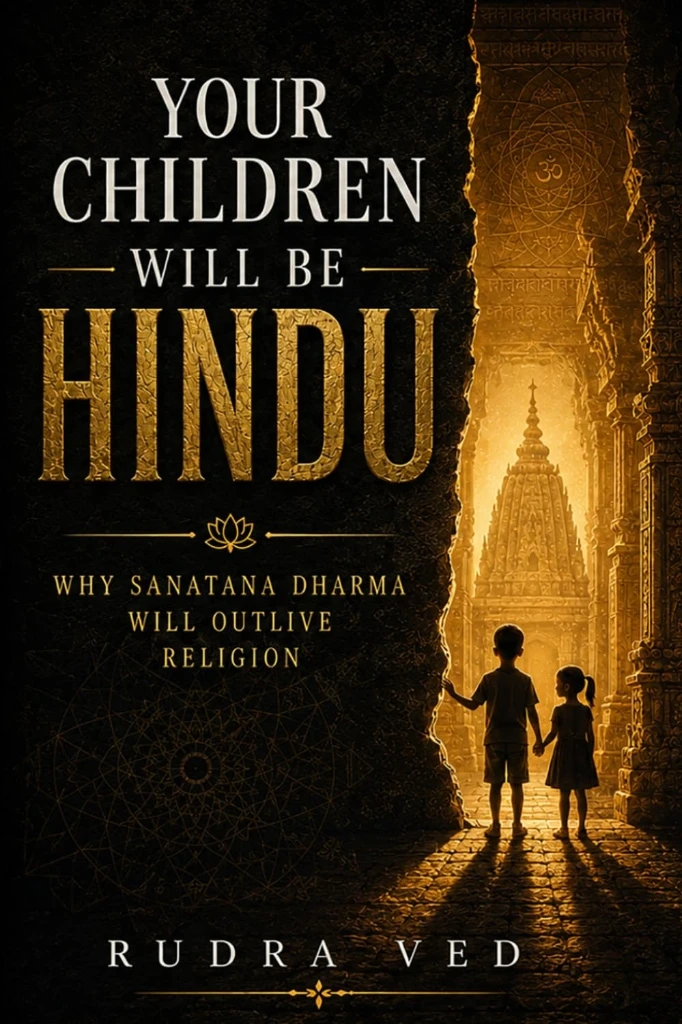
Your Children Will Be Hindu
Why Sanatana Dharma Will Outlive Religion — By Rudra Ved
How do you explain these ancient Vedic verses to your children, friends, or skeptical thinkers? Written by a former lifelong atheist and tested across 500+ unedited live debates, this book provides the rational, modern vocabulary that today's questioning generation needs.