
Bahvṛca Upaniṣad
(Chapter 34)
Verse 1
देवी ह्येकाग्न आसीत्। सैव जगदण्डमसृजत् । कामकलेति विज्ञायते । शृङ्गारकलेति विज्ञायते ॥
devī hyekāgna āsīt। saiva jagadaṇḍamasṛjat । kāmakaleti vijñāyate । śṛṅgārakaleti vijñāyate ॥
The Goddess was indeed the sole Fire (or primal energy). She alone created the cosmic egg (universe). She is known as Kāmakalā. She is known as Śṛṅgārakalā.
Verse 2
तस्या एव ब्रह्मा अजीजनत् । विष्णुरजीजनत् । रुद्रोऽजीजनत् । सर्वे मरुद्गणा अजीजनन्। गन्धर्वा-प्सरसः किंनरा वादित्रवादिनः समन्तादजीजनन्। भोग्यमजीजनत् । सर्वमजीजनत् । सर्वं शाक्तम-जीजनतू। अण्डणं स्वेदजमुद्भिज्जं जरायुजं यत्किचैतत्प्राणिस्थावरजङ्गमं मनुष्यमजीजनत् ।।
tasyā eva brahmā ajījanat । viṣṇurajījanat । rudro'jījanat । sarve marudgaṇā ajījanan। gandharvā-psarasaḥ kiṃnarā vāditravādinaḥ samantādajījanan। bhogyamajījanat । sarvamajījanat । sarvaṃ śāktama-jījanatū। aṇḍaṇaṃ svedajamudbhijjaṃ jarāyujaṃ yatkicaitatprāṇisthāvarajaṅgamaṃ manuṣyamajījanat ।।
From her alone, Brahmā was created. Viṣṇu was created. Rudra was created. All the hosts of Maruts were created. Gandharvas, Apsarases, Kinnaras, and musicians playing instruments were created all around. Objects of enjoyment were created. Everything was created. All that is Śākta (of the nature of divine power) was created. The egg-born, the sweat-born, the earth-born (plants), the womb-born, whatever sentient beings, immovable entities, movable creatures, and humans – all these were created.
Verse 3
सैषाऽपरा शक्तिः । सैषा शांभवी विद्या कादिविद्येति वा हादिविद्येति वा सादिविद्येति वा रहस्यम्। ओमों वाचि प्रतिष्ठा ।।
saiṣā'parā śaktiḥ । saiṣā śāṃbhavī vidyā kādividyeti vā hādividyeti vā sādividyeti vā rahasyam। omoṃ vāci pratiṣṭhā ।।
This is the supreme power. This is the Śāmbhavī knowledge, whether it be called Kādī-vidyā, Hādī-vidyā, or Sādī-vidyā; this is the secret. Om is established in speech.
Verse 4
सैव पुरत्रयं शरीरत्रयं व्याप्य बहिरन्तरवभासयन्ती देशकालवस्त्वन्तरसङ्गान्महात्रिपुरसुन्दरी वै प्रत्यक् चितिः ॥
saiva puratrayaṃ śarīratrayaṃ vyāpya bahirantaravabhāsayantī deśakālavastvantarasaṅgānmahātripurasundarī vai pratyak citiḥ ॥
Indeed, that very Mahātripurasundarī is the inner consciousness (Pratyak Citiḥ), pervading the three cities (states of consciousness) and the three bodies (gross, subtle, causal), illuminating them both externally and internally, and is free from attachment to any other place, time, or object.
Verse 5
सैवात्मा ततोऽन्यदसत्यमनात्मा। अत एषा ब्रह्मसंवित्तिर्भावाभावकलाविनिर्मुक्ता चिद्विद्याद्वितीयब्रह्मसंवित्तिः सच्चिदानन्दलहरी महात्रिपुरसुन्दरी बहिरन्तरनुप्रविश्य स्वयमेकैव विभाति । यदस्ति सन्मात्रम्। यद्विभाति चिन्मात्रम्। यत्प्रियमानन्दं तदेतत्सर्वाकारा महात्रिपुरसुन्दरी। त्वं चाहे च सर्वं विश्वं सर्वदेवता। इतरत्सर्वं महात्रिपुरसुन्दरी। सत्यमेकं ललिताख्यं वस्तु तदद्वितीयमखण्डार्थं परं ब्रह्म॥
saivātmā tato'nyadasatyamanātmā। ata eṣā brahmasaṃvittirbhāvābhāvakalāvinirmuktā cidvidyādvitīyabrahmasaṃvittiḥ saccidānandalaharī mahātripurasundarī bahirantaranupraviśya svayamekaiva vibhāti । yadasti sanmātram। yadvibhāti cinmātram। yatpriyamānandaṃ tadetatsarvākārā mahātripurasundarī। tvaṃ cāhe ca sarvaṃ viśvaṃ sarvadevatā। itaratsarvaṃ mahātripurasundarī। satyamekaṃ lalitākhyaṃ vastu tadadvitīyamakhaṇḍārthaṃ paraṃ brahma॥
She alone is the Self; anything other than that is unreal and not the Self. Thus, this awareness of Brahman, free from the distinctions of being and non-being, is the knowledge of consciousness, the non-dual Brahman-awareness, the wave of Existence-Consciousness-Bliss. Mahātripurasundarī, having pervaded inside and out, shines forth as the sole entity. That which exists is merely Being; that which shines is merely Consciousness; that which is beloved is Bliss. All this, in all its forms, is Mahātripurasundarī. You and I, the entire universe, and all deities are She. Everything else is Mahātripurasundarī. The one reality named Lalitā is that non-dual, indivisible supreme Brahman.
Verse 6
पञ्चपपरित्यागादस्वरूपप्रहाणतः । अधिष्ठानं परं तत्त्वमेकं सच्छिष्यते महत् इति ॥
pañcapaparityāgādasvarūpaprahāṇataḥ । adhiṣṭhānaṃ paraṃ tattvamekaṃ sacchiṣyate mahat iti ॥
By the abandonment of the 'five-fives' (the twenty-five categories of phenomenal existence) and the relinquishment of their unreal nature, the great, supreme, one, real substratum remains.
Verse 7
प्रज्ञानं ब्रह्मेति वा अहं ब्रह्मास्मीति वा भाष्यते। तत्त्वमसीत्येव संभाष्यते। अयमात्मा ब्रह्मेति वा अहं ब्रह्मास्मीति वा ब्रह्मैवाहमस्मीति वा ॥
prajñānaṃ brahmeti vā ahaṃ brahmāsmīti vā bhāṣyate। tattvamasītyeva saṃbhāṣyate। ayamātmā brahmeti vā ahaṃ brahmāsmīti vā brahmaivāhamasmīti vā ॥
“Consciousness is Brahman” or “I am Brahman”—thus it is spoken. “That thou art”—thus alone is it truly declared. “This Self is Brahman” or “I am Brahman” or “I am indeed Brahman”—thus (it is also expressed).
Verse 8
योऽहमस्मीति वा सोऽहमस्मीति वा योऽसौ सोऽहमस्मीति वा या भाष्यते सैषा षोडशी श्रीविद्या पञ्चदशाक्षरी श्रीमहात्रिपुरसुन्दरी बालाम्बिकेति बगलेति वा मातङ्गीति स्वयंवरकल्या-णीति भुवनेश्वरीति चामुण्डेति चण्डेति वाराहीति तिरस्करिणीति राजमातङ्गीति वा शुकश्यामलेति वा लघुश्यामलेति वा अश्वारूढेति वा प्रत्यङ्गिरा धूमावती सावित्री सरस्वती गायत्री ब्रह्मानन्दकलेति ॥
yo'hamasmīti vā so'hamasmīti vā yo'sau so'hamasmīti vā yā bhāṣyate saiṣā ṣoḍaśī śrīvidyā pañcadaśākṣarī śrīmahātripurasundarī bālāmbiketi bagaleti vā mātaṅgīti svayaṃvarakalyā-ṇīti bhuvaneśvarīti cāmuṇḍeti caṇḍeti vārāhīti tiraskariṇīti rājamātaṅgīti vā śukaśyāmaleti vā laghuśyāmaleti vā aśvārūḍheti vā pratyaṅgirā dhūmāvatī sāvitrī sarasvatī gāyatrī brahmānandakaleti ॥
Whether 'I am He' or 'He is I' or 'That one is I'—that which is thus spoken of is this Ṣoḍaśī Śrīvidyā, the fifteen-syllabled (goddess/mantra) Śrī Mahātripurasundarī; or Bālāmbikā, or Bagalā, or Mātaṅgī, Svayaṃvarakalyāṇī, Bhuvaneśvarī, Cāmuṇḍā, Caṇḍā, Vārāhī, Tiraskariṇī; or Rājamātaṅgī, or Śukśyāmalā, or Laghuśyāmalā, or Aśvārūḍhā; Pratyaṅgirā, Dhūmāvatī, Sāvitrī, Sarasvatī, Gāyatrī, and Brahmānandakalā.
Verse 9
ऋचो अक्षरे परमे व्योमन्। यस्मिन्देवा अधि विश्वे निषेदुः । यस्तन्न वेद किमृचा करिष्यति। य इत्तद्विदुस्त इमे समासते ॥ इत्युपनिषत् ॥
ṛco akṣare parame vyoman। yasmindevā adhi viśve niṣeduḥ । yastanna veda kimṛcā kariṣyati। ya ittadvidusta ime samāsate ॥ ityupaniṣat ॥
The Riks (Vedic hymns) are in the imperishable, in the supreme space, in which all the gods are seated. He who does not know that, what will he do with the Riks? Those who indeed know that, they are established.
Key Takeaways & AI Summary
This chapter explores the profound teachings of Bahvṛca Upaniṣad. It includes 9 verses detailing core themes like "devī hyekāgna āsīt। saiva jagadaṇḍamasṛjat । kāmakaleti vijñāyate । śṛṅgārakaleti vijñāyate ॥", "tasyā eva brahmā ajījanat । viṣṇurajījanat । rudro'jījanat । sarve marudgaṇā ajījanan। gandharvā-psarasaḥ kiṃnarā vāditravādinaḥ samantādajījanan। bhogyamajījanat । sarvamajījanat । sarvaṃ śāktama-jījanatū। aṇḍaṇaṃ svedajamudbhijjaṃ jarāyujaṃ yatkicaitatprāṇisthāvarajaṅgamaṃ manuṣyamajījanat ।।", "saiṣā'parā śaktiḥ । saiṣā śāṃbhavī vidyā kādividyeti vā hādividyeti vā sādividyeti vā rahasyam। omoṃ vāci pratiṣṭhā ।।".The crown jewels of Vedic philosophy — a collection of 108+ texts exploring the nature of Brahman, Atman, and ultimate reality.
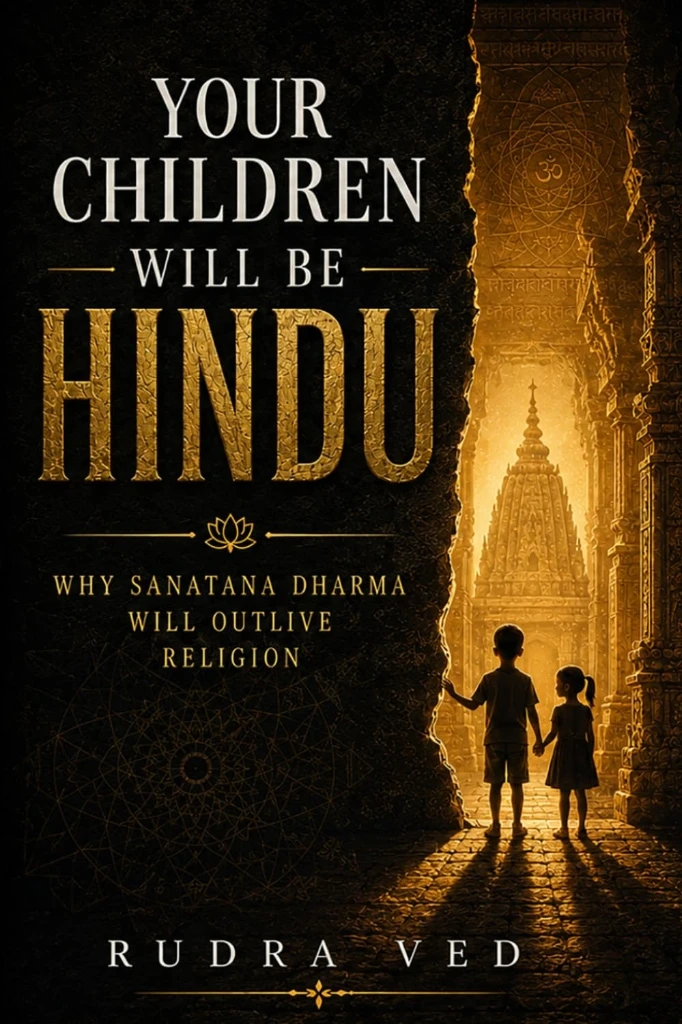
Your Children Will Be Hindu
Why Sanatana Dharma Will Outlive Religion — By Rudra Ved
How do you explain these ancient Vedic verses to your children, friends, or skeptical thinkers? Written by a former lifelong atheist and tested across 500+ unedited live debates, this book provides the rational, modern vocabulary that today's questioning generation needs.