
Bhavan Upanishad
(Chapter 9)
Verse 1
श्रीगुरुः सर्वकारणभूता शक्तिः ॥
śrīguruḥ sarvakāraṇabhūtā śaktiḥ ॥
The revered Guru is the Power (Śakti) who is the fundamental cause of all.
Verse 2
केन नवरन्ध्ररूपो देहः। नवशक्तिरूपं श्रीचक्रम। वाराही पितृरूपा। कुरुकुल्ला बलिदेवता माता। पुरुषार्थाः सागराः। देहो नवरत्नद्वीपः। आधारनवकमुद्रा: शक्तयः। त्वगादिसप्तधातुभिर-नेकैः संयुक्ताः संकल्पाः कल्पतरवः। तेज: कल्पकोद्यानम्।रसनया भाव्यमाना मधुराम्लतिक्त-कटुकषायलवणभेदाः षड्रसाः षडृतवः । क्रियाशक्तिः पीठम्। कुण्डलिनी ज्ञानशक्तिर्गृहम्। इच्छाशक्तिर्महात्रिपुरसुन्दरी। ज्ञाता होता ज्ञानमग्निः ज्ञेयं हविः। ज्ञातृज्ञानज्ञेयानामभेदभावनं श्रीचक्रपूजनम्। नियतिसहिताः श्रृङ्गारादयो नव रसा अणिमादयः। कामक्रोधलोभमोहमद-मात्सर्यपुण्यपापमया ब्राह्मयाद्यष्टशक्तयः । पृथिव्यप्तेजोवाय्वाकाशश्रोत्रत्वक्चक्षुर्जिह्वाघ्राणवा-क्पाणिपादपायूपस्थमनोविकाराः षोडश शक्तयः । वचनादानगमनविसर्गानन्दहानोपेक्षाबुद्धयो-ऽनङ्गकुसुमादिशक्तयोऽष्टौ। अलम्बुसा कुहूर्विश्वोदरी वरुणा हस्तिजिह्वा यशस्वत्यश्विनी गान्धारी पूषा शङ्खिनी सरस्वतीडा पिङ्गला सुषुम्ना चेति चतुर्दश नाड्यः। सर्वसंक्षोभिण्यादिचतुर्दशारगा देवताः। प्राणापानव्यानोदानसमाननागकूर्मकृकरदेवदत्तधनंजया इति दश वायवः । सर्वसिद्धि-प्रदा देव्यो बहिर्दशारगा देवताः। एतद्वायुदशकसंसर्गोपाथिभेदेन रेचकपूरकशोषकदाहक-प्लावका अमृतमिति प्राणमुख्यत्वेन पञ्चविधोऽस्ति । क्षारको दारकः क्षोभको मोहको जृम्भक इत्यपालनमुख्यत्वेन पञ्चविधोऽस्ति । तेन मनुष्याणां मोहको दाहको भक्ष्यभोज्यलेह्यचोष्यपेया-त्मकं चतुर्विधमन्नं पाचयति। एता दश वह्निकलाः सर्वात्वाद्यन्तर्दशारगा देवताः। शीतोष्णसुखदुःखेच्छासत्त्वरजस्तमोगुणा वशिन्यादिशक्तयोऽष्टौ। शब्दस्पर्शरूपरसगन्धाः पञ्चतन्मात्राः पञ्च पुष्पबाणा मन इक्षुधनुः। वश्यो बाणो रागः पाशः। द्वेषोऽङ्कुशः। अव्यक्तमहत्तत्त्वमहदहंकार इति कामेश्वरीवज्नेश्वरीभगमालिन्योऽन्तस्त्रिकोणाग्नगा देवताः । पञ्चदशतिथिरूपेण कालस्य परिणामावलोकनस्थितिः पञ्चदश नित्या श्रद्धानुरूपाधिदेवता। तयोः कामेश्वरी सदानन्दघना परिपूर्णस्वात्मैक्यरूपा देवता ।।
kena navarandhrarūpo dehaḥ। navaśaktirūpaṃ śrīcakrama। vārāhī pitṛrūpā। kurukullā balidevatā mātā। puruṣārthāḥ sāgarāḥ। deho navaratnadvīpaḥ। ādhāranavakamudrā: śaktayaḥ। tvagādisaptadhātubhira-nekaiḥ saṃyuktāḥ saṃkalpāḥ kalpataravaḥ। teja: kalpakodyānam।rasanayā bhāvyamānā madhurāmlatikta-kaṭukaṣāyalavaṇabhedāḥ ṣaḍrasāḥ ṣaḍṛtavaḥ । kriyāśaktiḥ pīṭham। kuṇḍalinī jñānaśaktirgṛham। icchāśaktirmahātripurasundarī। jñātā hotā jñānamagniḥ jñeyaṃ haviḥ। jñātṛjñānajñeyānāmabhedabhāvanaṃ śrīcakrapūjanam। niyatisahitāḥ śrṛṅgārādayo nava rasā aṇimādayaḥ। kāmakrodhalobhamohamada-mātsaryapuṇyapāpamayā brāhmayādyaṣṭaśaktayaḥ । pṛthivyaptejovāyvākāśaśrotratvakcakṣurjihvāghrāṇavā-kpāṇipādapāyūpasthamanovikārāḥ ṣoḍaśa śaktayaḥ । vacanādānagamanavisargānandahānopekṣābuddhayo-'naṅgakusumādiśaktayo'ṣṭau। alambusā kuhūrviśvodarī varuṇā hastijihvā yaśasvatyaśvinī gāndhārī pūṣā śaṅkhinī sarasvatīḍā piṅgalā suṣumnā ceti caturdaśa nāḍyaḥ। sarvasaṃkṣobhiṇyādicaturdaśāragā devatāḥ। prāṇāpānavyānodānasamānanāgakūrmakṛkaradevadattadhanaṃjayā iti daśa vāyavaḥ । sarvasiddhi-pradā devyo bahirdaśāragā devatāḥ। etadvāyudaśakasaṃsargopāthibhedena recakapūrakaśoṣakadāhaka-plāvakā amṛtamiti prāṇamukhyatvena pañcavidho'sti । kṣārako dārakaḥ kṣobhako mohako jṛmbhaka ityapālanamukhyatvena pañcavidho'sti । tena manuṣyāṇāṃ mohako dāhako bhakṣyabhojyalehyacoṣyapeyā-tmakaṃ caturvidhamannaṃ pācayati। etā daśa vahnikalāḥ sarvātvādyantardaśāragā devatāḥ। śītoṣṇasukhaduḥkhecchāsattvarajastamoguṇā vaśinyādiśaktayo'ṣṭau। śabdasparśarūparasagandhāḥ pañcatanmātrāḥ pañca puṣpabāṇā mana ikṣudhanuḥ। vaśyo bāṇo rāgaḥ pāśaḥ। dveṣo'ṅkuśaḥ। avyaktamahattattvamahadahaṃkāra iti kāmeśvarīvajneśvarībhagamālinyo'ntastrikoṇāgnagā devatāḥ । pañcadaśatithirūpeṇa kālasya pariṇāmāvalokanasthitiḥ pañcadaśa nityā śraddhānurūpādhidevatā। tayoḥ kāmeśvarī sadānandaghanā paripūrṇasvātmaikyarūpā devatā ।।
The body is of the nature of nine apertures. The Śrīcakra is of the nature of nine powers. Vārāhī is of the nature of the father. Kurukullā, the deity of offerings, is the mother. The human aims (Puruṣārthas) are the oceans. The body is the island of nine jewels. The nine Ādhāra-Mudrās are the powers. The resolutions (saṃkalpas), united with the many seven primary constituents (dhātus) like skin, are the wish-fulfilling trees. Radiance (Tejas) is the wish-fulfilling garden. The six tastes—sweet, sour, bitter, pungent, astringent, and salty—perceived by the tongue, are the six seasons. The power of action (Kriyāśakti) is the seat (pīṭha). Kuṇḍalinī, the power of knowledge (Jñānaśakti), is the home. The power of will (Icchāśakti) is Mahātripurasundarī. The knower is the sacrificer (hotā), knowledge is the fire, and the known is the oblation. The contemplation of the non-difference between the knower, knowledge, and the known is the worship of Śrīcakra. The nine emotions (rasas) such as Śṛṅgāra, along with Niyati, are the Siddhis beginning with Aṇimā. Desire, anger, greed, delusion, arrogance, envy, merit, and demerit—these are the eight powers beginning with Brāhmī. Earth, water, fire, air, ether, ear, skin, eye, tongue, nose, speech, hands, feet, anus, genitals, and mind-modifications—these are the sixteen powers. Speaking, grasping, moving, releasing, enjoying, rejecting, indifference, and intelligence—these eight are the powers like Anaṅgakusumā. Alambusā, Kuhū, Viśvadorī, Varuṇā, Hastijihvā, Yaśasvatī, Aśvinī, Gāndhārī, Pūṣā, Śaṅkhinī, Sarasvatī, Iḍā, Piṅgalā, and Suṣumnā—these are the fourteen Nāḍīs, which are the deities in the fourteen-spoked wheel (Sarvasaṃkṣobhiṇī, etc.). Prāṇa, Apāna, Vyāna, Udāna, Samāna, Nāga, Kūrma, Kṛkara, Devadatta, and Dhanañjaya—these are the ten vital airs, which are the goddesses who grant all siddhis (Sarvasiddhi-pradā, etc.) in the outer ten-spoked wheel. Through the interaction and conditional differences of these ten vital airs, there are five kinds based on the dominance of prāṇa: recaka (exhalation), pūraka (inhalation), śoṣaka (drying), dāhaka (burning), and plāvaka (moistening/saturating), which are considered amṛta (nectar). And there are five kinds based on the dominance of apāna: kṣāraka (expelling), dāraka (splitting), kṣobhaka (agitating), mohaka (deluding), and jṛmbhaka (yawning). Through these, the deluding and burning principles digest the four kinds of food (eaten, chewed, licked, and drunk) for humans. These ten aspects of fire (vahnikalās) are the deities in the inner ten-spoked wheel (Sarvātmikā, etc.). Cold, heat, pleasure, pain, desire, and the qualities of sattva, rajas, tamas—these eight are the powers like Vaśinī. Sound, touch, form, taste, and smell—these five subtle elements (tanmātrās) are the five flower-arrows, and the mind is the sugarcane bow. Control (vaśya) is the arrow, attachment (rāga) is the noose, and aversion (dveṣa) is the goad. Unmanifest (Avyakta), the great principle (Mahat-tattva), and ego (Ahaṃkāra)—these are Kāmeśvarī, Vajreśvarī, and Bhagamālinī, the deities in the inner triangle's angles. The state of observing the transformations of time in the form of the fifteen lunar days (tithis) is the fifteen Nityā goddesses, who are the presiding deities corresponding to faith. Among them, Kāmeśvarī is the deity who is eternally solidified bliss and of the nature of perfect oneness with one's own Self.
Verse 3
सलिलमिति सौहित्यकारणं सत्त्वं । कर्तव्यमकर्तव्यमिति भावनायुक्त उपचारः। अस्ति नास्तीति कर्तव्यता उपचारः। बाह्याभ्यन्त:करणानां रूपग्रहणयोग्यताऽस्त्वित्यावाहनम्। तस्य वाह्याभ्यन्तःकरणानामेकरूपविषयग्रहणमासनम्। रक्तशुक्लपदैकीकरणं पाद्यम्। उज्ज्वलदा-मोदानन्दासनदानमर्घ्यम्। स्वच्छं स्वत:सिद्धमित्याचमनीयम्। चिच्चन्द्रमयीति सर्वाङ्गस्त्रवणं स्नानम्। चिदग्निस्वरूपपरमानन्दशक्तिस्फुरणं वस्त्रम्। प्रत्येकं सप्तविंशतिधा भिन्नत्वेनेच्छाज्ञान-क्रियात्मकब्रह्मग्रन्थिमद्रसतन्तुब्रह्मनाडी ब्रह्मसूत्रम्। स्वव्यतिरिक्तवस्तुसङ्गरहितस्मरणं विभूषणम्। स्वच्छस्वपरिपूर्णतास्मरणं गन्धः । समस्तविषयाणां मनसः स्थैर्येणानुसंधानं कुसुमम् । तेषामेव सर्वदा स्वीकरणं धूपः । पवनावच्छिन्नोर्ध्वग्वलनसच्चिदुल्काकाशदेहो दीपः । समस्तयाताया-तवर्ज्यं नैवेद्यम् । अवस्थात्रयाणामेकीकरणं ताम्बूलम्। मूलाधारादाब्रह्मरन्ध्रपर्यन्तं ब्रह्मरन्ध्रादा-मूलाधारपर्यन्तं गतागतरूपेण प्रादक्षिण्यम्। तुर्यावस्था नमस्कारः । देहशून्यप्रमातृतानिमज्जनं बलिहरणम्। सत्यमस्ति कर्तव्यमकर्तव्यमौदासीन्यनित्यात्मविलापनं होमः। स्वयं तत्पादुका-निमज्जनं परिपूर्णध्यानम्॥
salilamiti sauhityakāraṇaṃ sattvaṃ । kartavyamakartavyamiti bhāvanāyukta upacāraḥ। asti nāstīti kartavyatā upacāraḥ। bāhyābhyanta:karaṇānāṃ rūpagrahaṇayogyatā'stvityāvāhanam। tasya vāhyābhyantaḥkaraṇānāmekarūpaviṣayagrahaṇamāsanam। raktaśuklapadaikīkaraṇaṃ pādyam। ujjvaladā-modānandāsanadānamarghyam। svacchaṃ svata:siddhamityācamanīyam। ciccandramayīti sarvāṅgastravaṇaṃ snānam। cidagnisvarūpaparamānandaśaktisphuraṇaṃ vastram। pratyekaṃ saptaviṃśatidhā bhinnatvenecchājñāna-kriyātmakabrahmagranthimadrasatantubrahmanāḍī brahmasūtram। svavyatiriktavastusaṅgarahitasmaraṇaṃ vibhūṣaṇam। svacchasvaparipūrṇatāsmaraṇaṃ gandhaḥ । samastaviṣayāṇāṃ manasaḥ sthairyeṇānusaṃdhānaṃ kusumam । teṣāmeva sarvadā svīkaraṇaṃ dhūpaḥ । pavanāvacchinnordhvagvalanasaccidulkākāśadeho dīpaḥ । samastayātāyā-tavarjyaṃ naivedyam । avasthātrayāṇāmekīkaraṇaṃ tāmbūlam। mūlādhārādābrahmarandhraparyantaṃ brahmarandhrādā-mūlādhāraparyantaṃ gatāgatarūpeṇa prādakṣiṇyam। turyāvasthā namaskāraḥ । dehaśūnyapramātṛtānimajjanaṃ baliharaṇam। satyamasti kartavyamakartavyamaudāsīnyanityātmavilāpanaṃ homaḥ। svayaṃ tatpādukā-nimajjanaṃ paripūrṇadhyānam॥
‘Water’ (salila) is the essence (sattva) that causes satisfaction. The offering (upacāra) is endowed with the sentiment of ‘what should be done’ and ‘what should not be done’. The offering is the duty of ‘is’ and ‘is not’. The invocation (āvāhanam) is the desire for the external and internal organs to possess the capacity to grasp forms. The seat (āsanam) is the grasping of a single form of object by those external and internal organs. The foot-wash (pādyam) is the unification of the red and white principles. The offering (arghyam) is the giving of the seat of shining, delightful bliss. The sipping water (ācamanīyam) is the thought: ‘pure, self-perfected’. The bathing (snānam) is the streaming over all limbs with the thought: ‘consciousness is moon-like’. The garment (vastram) is the manifestation of the supreme bliss-power, which is the nature of the fire of consciousness. The Brahma-thread (brahmasūtram) is the Brahma-nadi, a juice-thread possessing the Brahma-knot, consisting of will, knowledge, and action, differentiated in twenty-seven ways, each one. The ornament (vibhūṣaṇam) is the remembrance free from attachment to objects other than oneself. The fragrance (gandha) is the remembrance of one's own pure perfection. The flower (kusumam) is the investigation of all objects with mental steadfastness. The incense (dhūpa) is the constant acceptance of those very things. The lamp (dīpa) is the body of the consciousness-fire, a meteor in the sky, burning upwards, uninterrupted by wind. The offering (naivedyam) is freedom from all coming and going. The betel leaf (tāmbūlam) is the unification of the three states (waking, dream, deep sleep). The circumambulation (pradakṣiṇam) is in the form of going from the Muladhara up to the Brahmarandhra and from the Brahmarandhra down to the Muladhara. The salutation (namaskāra) is the Turiya state. The offering of sacrifice (baliharaṇam) is the immersion in the state of being a knower free from the body. The oblation (homa) is the dissolution of the eternal Self into the indifference of 'truth exists', 'to be done', 'not to be done'. The perfect meditation (paripūrṇadhyānam) is the immersion in one's own sandals (or 'refuge').
Verse 4
एवं मुहूर्तत्रयं भावनापरो जीवन्मुक्तो भवति। तस्य देवतात्मैक्यसिद्धिः। चिन्तितकार्याण्य-यत्नेन सिद्धयन्ति। स एव शिवयोगीति कथ्यते ॥
evaṃ muhūrtatrayaṃ bhāvanāparo jīvanmukto bhavati। tasya devatātmaikyasiddhiḥ। cintitakāryāṇya-yatnena siddhayanti। sa eva śivayogīti kathyate ॥
Thus, one who is absorbed in contemplation for three muhurtas becomes a jivanmukta (liberated while living). For him, there is the realization of identity with the Divine Self. His desired tasks are accomplished effortlessly. He alone is called a Shivayogi.
Key Takeaways & AI Summary
This chapter explores the profound teachings of Bhavan Upanishad. It includes 4 verses detailing core themes like "śrīguruḥ sarvakāraṇabhūtā śaktiḥ ॥", "kena navarandhrarūpo dehaḥ। navaśaktirūpaṃ śrīcakrama। vārāhī pitṛrūpā। kurukullā balidevatā mātā। puruṣārthāḥ sāgarāḥ। deho navaratnadvīpaḥ। ādhāranavakamudrā: śaktayaḥ। tvagādisaptadhātubhira-nekaiḥ saṃyuktāḥ saṃkalpāḥ kalpataravaḥ। teja: kalpakodyānam।rasanayā bhāvyamānā madhurāmlatikta-kaṭukaṣāyalavaṇabhedāḥ ṣaḍrasāḥ ṣaḍṛtavaḥ । kriyāśaktiḥ pīṭham। kuṇḍalinī jñānaśaktirgṛham। icchāśaktirmahātripurasundarī। jñātā hotā jñānamagniḥ jñeyaṃ haviḥ। jñātṛjñānajñeyānāmabhedabhāvanaṃ śrīcakrapūjanam। niyatisahitāḥ śrṛṅgārādayo nava rasā aṇimādayaḥ। kāmakrodhalobhamohamada-mātsaryapuṇyapāpamayā brāhmayādyaṣṭaśaktayaḥ । pṛthivyaptejovāyvākāśaśrotratvakcakṣurjihvāghrāṇavā-kpāṇipādapāyūpasthamanovikārāḥ ṣoḍaśa śaktayaḥ । vacanādānagamanavisargānandahānopekṣābuddhayo-'naṅgakusumādiśaktayo'ṣṭau। alambusā kuhūrviśvodarī varuṇā hastijihvā yaśasvatyaśvinī gāndhārī pūṣā śaṅkhinī sarasvatīḍā piṅgalā suṣumnā ceti caturdaśa nāḍyaḥ। sarvasaṃkṣobhiṇyādicaturdaśāragā devatāḥ। prāṇāpānavyānodānasamānanāgakūrmakṛkaradevadattadhanaṃjayā iti daśa vāyavaḥ । sarvasiddhi-pradā devyo bahirdaśāragā devatāḥ। etadvāyudaśakasaṃsargopāthibhedena recakapūrakaśoṣakadāhaka-plāvakā amṛtamiti prāṇamukhyatvena pañcavidho'sti । kṣārako dārakaḥ kṣobhako mohako jṛmbhaka ityapālanamukhyatvena pañcavidho'sti । tena manuṣyāṇāṃ mohako dāhako bhakṣyabhojyalehyacoṣyapeyā-tmakaṃ caturvidhamannaṃ pācayati। etā daśa vahnikalāḥ sarvātvādyantardaśāragā devatāḥ। śītoṣṇasukhaduḥkhecchāsattvarajastamoguṇā vaśinyādiśaktayo'ṣṭau। śabdasparśarūparasagandhāḥ pañcatanmātrāḥ pañca puṣpabāṇā mana ikṣudhanuḥ। vaśyo bāṇo rāgaḥ pāśaḥ। dveṣo'ṅkuśaḥ। avyaktamahattattvamahadahaṃkāra iti kāmeśvarīvajneśvarībhagamālinyo'ntastrikoṇāgnagā devatāḥ । pañcadaśatithirūpeṇa kālasya pariṇāmāvalokanasthitiḥ pañcadaśa nityā śraddhānurūpādhidevatā। tayoḥ kāmeśvarī sadānandaghanā paripūrṇasvātmaikyarūpā devatā ।।", "salilamiti sauhityakāraṇaṃ sattvaṃ । kartavyamakartavyamiti bhāvanāyukta upacāraḥ। asti nāstīti kartavyatā upacāraḥ। bāhyābhyanta:karaṇānāṃ rūpagrahaṇayogyatā'stvityāvāhanam। tasya vāhyābhyantaḥkaraṇānāmekarūpaviṣayagrahaṇamāsanam। raktaśuklapadaikīkaraṇaṃ pādyam। ujjvaladā-modānandāsanadānamarghyam। svacchaṃ svata:siddhamityācamanīyam। ciccandramayīti sarvāṅgastravaṇaṃ snānam। cidagnisvarūpaparamānandaśaktisphuraṇaṃ vastram। pratyekaṃ saptaviṃśatidhā bhinnatvenecchājñāna-kriyātmakabrahmagranthimadrasatantubrahmanāḍī brahmasūtram। svavyatiriktavastusaṅgarahitasmaraṇaṃ vibhūṣaṇam। svacchasvaparipūrṇatāsmaraṇaṃ gandhaḥ । samastaviṣayāṇāṃ manasaḥ sthairyeṇānusaṃdhānaṃ kusumam । teṣāmeva sarvadā svīkaraṇaṃ dhūpaḥ । pavanāvacchinnordhvagvalanasaccidulkākāśadeho dīpaḥ । samastayātāyā-tavarjyaṃ naivedyam । avasthātrayāṇāmekīkaraṇaṃ tāmbūlam। mūlādhārādābrahmarandhraparyantaṃ brahmarandhrādā-mūlādhāraparyantaṃ gatāgatarūpeṇa prādakṣiṇyam। turyāvasthā namaskāraḥ । dehaśūnyapramātṛtānimajjanaṃ baliharaṇam। satyamasti kartavyamakartavyamaudāsīnyanityātmavilāpanaṃ homaḥ। svayaṃ tatpādukā-nimajjanaṃ paripūrṇadhyānam॥".The crown jewels of Vedic philosophy — a collection of 108+ texts exploring the nature of Brahman, Atman, and ultimate reality.
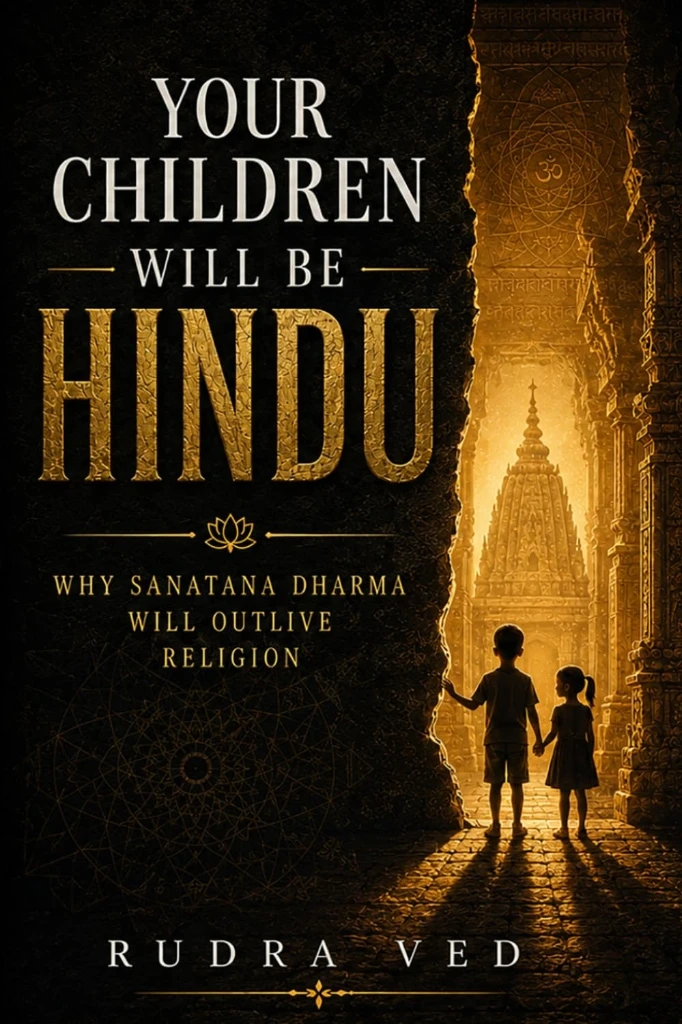
Your Children Will Be Hindu
Why Sanatana Dharma Will Outlive Religion — By Rudra Ved
How do you explain these ancient Vedic verses to your children, friends, or skeptical thinkers? Written by a former lifelong atheist and tested across 500+ unedited live debates, this book provides the rational, modern vocabulary that today's questioning generation needs.