
Bhikshu Upanishad
(Chapter 48)
Verse 1
ॐ अथ भिक्षुणां मोक्षार्थिनां कुटीचकबहूदकहंसपरमहंसाश्चेति चत्वारः ॥
oṃ atha bhikṣuṇāṃ mokṣārthināṃ kuṭīcakabahūdakahaṃsaparamahaṃsāśceti catvāraḥ ॥
Om. Now, among the mendicants who desire liberation, there are four types: Kuṭīcaka, Bahūdaka, Haṃsa, and Paramahaṃsa.
Verse 2
कुटीचका नाम गौतमभरद्वाजयाज्ञवल्क्यवसिष्ठप्रभृतयोऽष्टौ ग्रासांश्चरन्तो योगमार्गे मोक्षमेव प्रार्थयन्ते ॥
kuṭīcakā nāma gautamabharadvājayājñavalkyavasiṣṭhaprabhṛtayo'ṣṭau grāsāṃścaranto yogamārge mokṣameva prārthayante ॥
The Kuṭīcakas, named (among them) Gautama, Bharadvāja, Yājñavalkya, Vasiṣṭha and others, subsisting on eight mouthfuls (of food), strive for liberation alone on the path of Yoga.
Verse 3
अथ बहूदका नाम त्रिदण्डकमण्डलुशिखायज्ञोपवीतकाषायवस्त्रधारिणो ब्रह्मर्षिगृहे मधुमांसं वर्जयित्वाऽष्टौ ग्रासान्भैक्षाचरणं कृत्वा योगमार्गे मोक्षमेव प्रार्थयन्ते ॥
atha bahūdakā nāma tridaṇḍakamaṇḍaluśikhāyajñopavītakāṣāyavastradhāriṇo brahmarṣigṛhe madhumāṃsaṃ varjayitvā'ṣṭau grāsānbhaikṣācaraṇaṃ kṛtvā yogamārge mokṣameva prārthayante ॥
Now, those called Bahūdakas, who bear a triple staff, a water pot, a top-knot, a sacred thread, and ochre robes, having abstained from honey and meat in the house of a Brahmarishi, and having performed the act of begging for eight mouthfuls [of food], they truly seek liberation on the path of Yoga.
Verse 4
अथ हंसा नाम ग्राम एकरात्रं नगरे पञ्चरात्रं क्षेत्रे सप्तरात्रं तदुपरि न वसेयुः ।। गोमूत्रगोमयाहारिणो नित्यं चान्द्रायणपरायणा योगमार्गे मोक्षमेव प्रार्थयन्ते ॥
atha haṃsā nāma grāma ekarātraṃ nagare pañcarātraṃ kṣetre saptarātraṃ tadupari na vaseyuḥ ।। gomūtragomayāhāriṇo nityaṃ cāndrāyaṇaparāyaṇā yogamārge mokṣameva prārthayante ॥
Now, those called Hamsas should not stay more than one night in a village, five nights in a city, and seven nights in a sacred place. Those who subsist on cow urine and cow dung, constantly observing the Cāndrāyaṇa vow, pray only for liberation on the path of Yoga.
Verse 5
अथ परमहंसा नाम संवर्तकारुणिश्वेतकेतुजडभरतदत्तात्रेयशुकवामदेवहारीतक-प्रभृतयोऽष्टौ ग्रासांश्चरन्तो योगमार्गे मोक्षमेव प्रार्थयन्ते । वृक्षमूले शुन्यगृहे श्मशानवासिनो वा साम्बरा वा दिगम्बरा वा । न तेषां धर्माधर्मौ लाभालाभौ शुद्धाशुद्धौ द्वैतवर्जिता समलोष्टाश्म-काञ्चनाः सर्ववर्णेषु भैक्षाचरणं कृत्वा सर्वत्रात्मैवेति पश्यन्ति । अथ जातरूपधरा निर्द्वन्द्वा निष्परिग्रहाः शुक्लध्यानपरायणा आत्मनिष्ठाः प्राणसंधारणार्थं यथोक्तकाले भैक्षमाचरन्तः । शून्यागारदेवगृहतृणकूट वल्मीकवृक्षमूलकुलालशालाग्निहोत्रशालानदीपुलिनगिरिकन्दर-कुहरकोटरनिर्झरस्थण्डिले तत्र ब्रह्ममार्गे सम्यक्संपन्नाः शुद्धमानसाः परमहंसाचरणेन संन्यासेन देहत्यागं कुर्वन्ति ते परमहंसा नामेत्युपनिषत् ॥
atha paramahaṃsā nāma saṃvartakāruṇiśvetaketujaḍabharatadattātreyaśukavāmadevahārītaka-prabhṛtayo'ṣṭau grāsāṃścaranto yogamārge mokṣameva prārthayante । vṛkṣamūle śunyagṛhe śmaśānavāsino vā sāmbarā vā digambarā vā । na teṣāṃ dharmādharmau lābhālābhau śuddhāśuddhau dvaitavarjitā samaloṣṭāśma-kāñcanāḥ sarvavarṇeṣu bhaikṣācaraṇaṃ kṛtvā sarvatrātmaiveti paśyanti । atha jātarūpadharā nirdvandvā niṣparigrahāḥ śukladhyānaparāyaṇā ātmaniṣṭhāḥ prāṇasaṃdhāraṇārthaṃ yathoktakāle bhaikṣamācarantaḥ । śūnyāgāradevagṛhatṛṇakūṭa valmīkavṛkṣamūlakulālaśālāgnihotraśālānadīpulinagirikandara-kuharakoṭaranirjharasthaṇḍile tatra brahmamārge samyaksaṃpannāḥ śuddhamānasāḥ paramahaṃsācaraṇena saṃnyāsena dehatyāgaṃ kurvanti te paramahaṃsā nāmetyupaniṣat ॥
Now, the Paramahamsas, such as Saṃvarta, Kāruṇi, Śvetaketu, Jaḍabharata, Dattātreya, Śuka, Vāmadeva, Hārītaka, and others, subsisting on eight mouthfuls of food, pray only for liberation on the path of Yoga. They may dwell at the foot of a tree, in an empty house, or in a cremation ground, either clothed or nude. For them, there is no merit or demerit, gain or loss, purity or impurity; free from dualities, they regard a clod of earth, a stone, and gold as equal. Having begged for alms from all castes, they perceive the Self alone everywhere. Further, appearing in their natural form, free from dualities and possessions, devoted to pure contemplation and firm in the Self, they practice begging for alms at the prescribed time for the mere sustenance of life. In an empty house, a temple, a haystack, an anthill, at the foot of a tree, a potter's shed, a fire-sacrificer's shed, a riverbank, a mountain cave, a hole, a hollow, a waterfall, or an open ground—in such places, being perfectly established on the path of Brahman and with purified minds, they cast off the body through the Paramahamsa conduct of renunciation. Such are called Paramahamsas. This is the Upanishad.
Key Takeaways & AI Summary
This chapter explores the profound teachings of Bhikshu Upanishad. It includes 5 verses detailing core themes like "oṃ atha bhikṣuṇāṃ mokṣārthināṃ kuṭīcakabahūdakahaṃsaparamahaṃsāśceti catvāraḥ ॥", "kuṭīcakā nāma gautamabharadvājayājñavalkyavasiṣṭhaprabhṛtayo'ṣṭau grāsāṃścaranto yogamārge mokṣameva prārthayante ॥", "atha bahūdakā nāma tridaṇḍakamaṇḍaluśikhāyajñopavītakāṣāyavastradhāriṇo brahmarṣigṛhe madhumāṃsaṃ varjayitvā'ṣṭau grāsānbhaikṣācaraṇaṃ kṛtvā yogamārge mokṣameva prārthayante ॥".The crown jewels of Vedic philosophy — a collection of 108+ texts exploring the nature of Brahman, Atman, and ultimate reality.
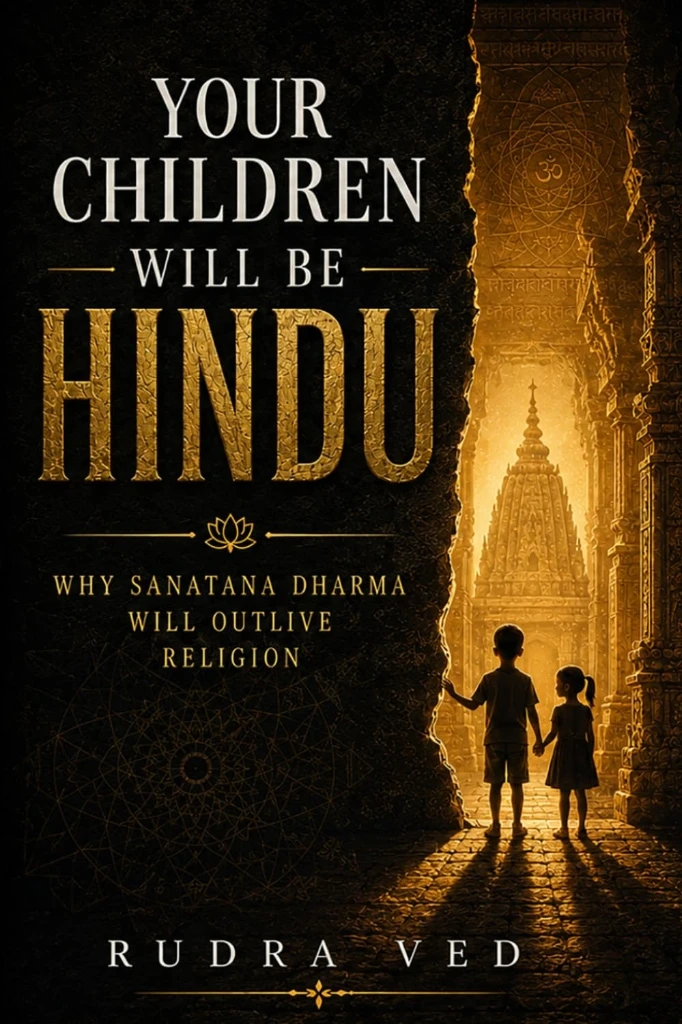
Your Children Will Be Hindu
Why Sanatana Dharma Will Outlive Religion — By Rudra Ved
How do you explain these ancient Vedic verses to your children, friends, or skeptical thinkers? Written by a former lifelong atheist and tested across 500+ unedited live debates, this book provides the rational, modern vocabulary that today's questioning generation needs.