
Brahmavidya Upanishad
(Chapter 50)
Verse 1
अथ ब्रह्मविद्योपनिषदुच्यते। प्रसादाद्ब्रह्मणस्तस्य विष्णोरद्भुतकर्मणः। रहस्यं ब्रह्मविद्याया ध्रुवाग्निं संप्रचक्षते ॥
atha brahmavidyopaniṣaducyate। prasādādbrahmaṇastasya viṣṇoradbhutakarmaṇaḥ। rahasyaṃ brahmavidyāyā dhruvāgniṃ saṃpracakṣate ॥
Now the Brahmavidya Upanishad is expounded. By the grace of that Brahman, Vishnu, the performer of wondrous deeds, they declare the secret of Brahmavidya to be Dhruvāgni (the constant fire).
Verse 2
ओमित्येकाक्षरं ब्रह्म यदुक्तं ब्रह्मवादिभिः । शरीरं तस्य वक्ष्यामि स्थानं कालत्रयं तथा ॥
omityekākṣaraṃ brahma yaduktaṃ brahmavādibhiḥ । śarīraṃ tasya vakṣyāmi sthānaṃ kālatrayaṃ tathā ॥
I shall explain the body, the place, and the three times of that one-syllable Brahman, Om, which has been declared by the expounders of Brahman.
Verse 3
तत्र देवास्त्रयः प्रोक्ता लोका वेदास्त्रयोऽग्नयः । तिस्त्रो मात्रार्धमात्रा च त्र्यक्षरस्य शिवस्य तु ॥
tatra devāstrayaḥ proktā lokā vedāstrayo'gnayaḥ । tistro mātrārdhamātrā ca tryakṣarasya śivasya tu ॥
There, three gods, (three) worlds, three Vedas, and (three) fires are declared. And the three syllables and the half-syllable (ardhamātrā) indeed belong to Shiva, who is the three-syllabled (Om).
Verse 4
ऋग्वेदो गार्हपत्यं च पृथिवी ब्रह्म एव च। अकारस्य शरीरं तु व्याख्यातं ब्रह्मवादिभिः ।।
ṛgvedo gārhapatyaṃ ca pṛthivī brahma eva ca। akārasya śarīraṃ tu vyākhyātaṃ brahmavādibhiḥ ।।
The Rigveda, the Gārhapatya fire, the Earth, and Brahman itself have been explained by the expounders of Brahman as the body of the letter 'A'.
Verse 5
यजुर्वेदोऽन्तरिक्षं च दक्षिणाग्निस्तथैव च। विष्णुश्च भगवान्देव उकारः परिकीर्तितः ॥
yajurvedo'ntarikṣaṃ ca dakṣiṇāgnistathaiva ca। viṣṇuśca bhagavāndeva ukāraḥ parikīrtitaḥ ॥
The Yajurveda, the atmosphere, and similarly the Dakṣiṇāgni (southern sacrificial fire), and Vishnu, the divine Lord, are declared to be the syllable 'U'.
Verse 6
सामवेदस्तथा द्यौशाहवनीयस्तथैव च। ईश्वरः परमो देवो मकारः परिकीर्तितः ॥
sāmavedastathā dyauśāhavanīyastathaiva ca। īśvaraḥ paramo devo makāraḥ parikīrtitaḥ ॥
The Sāmaveda, heaven (Dyaus), and the Āhavanīya (sacrificial fire) are likewise (identified with 'M'). Īśvara, the supreme deity, is declared to be Makāra (the sound 'M').
Verse 7
सूर्यमण्डलमध्येऽथ ह्यकारः शङ्खमध्यगः । उकारश्चन्द्रसंकाशस्तस्य मध्ये व्यवस्थितः ॥
sūryamaṇḍalamadhye'tha hyakāraḥ śaṅkhamadhyagaḥ । ukāraścandrasaṃkāśastasya madhye vyavasthitaḥ ॥
Then, within the solar orb, the syllable 'A' is found, situated in the middle of a conch. The syllable 'U', shining like the moon, is placed within its center.
Verse 8
मकारस्त्वग्निसंकाशो विधूमो विद्युतोपमः। तिस्त्रो मात्रास्तथा ज्ञेयाः सोमसूर्या ग्निरूपिणः ।।
makārastvagnisaṃkāśo vidhūmo vidyutopamaḥ। tistro mātrāstathā jñeyāḥ somasūryā gnirūpiṇaḥ ।।
The syllable 'Ma' is like fire, smokeless, resembling lightning. Similarly, the three mātrās (units) are to be known as embodying the forms of the Moon, the Sun, and Fire.
Verse 9
शिखा तु दीपसंकाशा तस्मिन्नुपरि वर्तते । अर्धमात्रा तथा ज्ञेया प्रणवस्योपरि स्थिता ॥
śikhā tu dīpasaṃkāśā tasminnupari vartate । ardhamātrā tathā jñeyā praṇavasyopari sthitā ॥
The śikhā (spiritual flame or crest), resembling a lamp's glow, resides above it. This, likewise, should be known as the Ardhamātrā, which is situated beyond Praṇava (Om).
Verse 10
पद्मसूत्रनिभा सूक्ष्मा शिखा सा दृश्यते परा। सा नाडी सूर्यसंकाशा सूर्यं भित्त्वा तथा परा ॥
padmasūtranibhā sūkṣmā śikhā sā dṛśyate parā। sā nāḍī sūryasaṃkāśā sūryaṃ bhittvā tathā parā ॥
That subtle flame, resembling a lotus fiber, is seen as supreme. That channel, brilliant like the sun, having pierced the sun, is then also beyond (it).
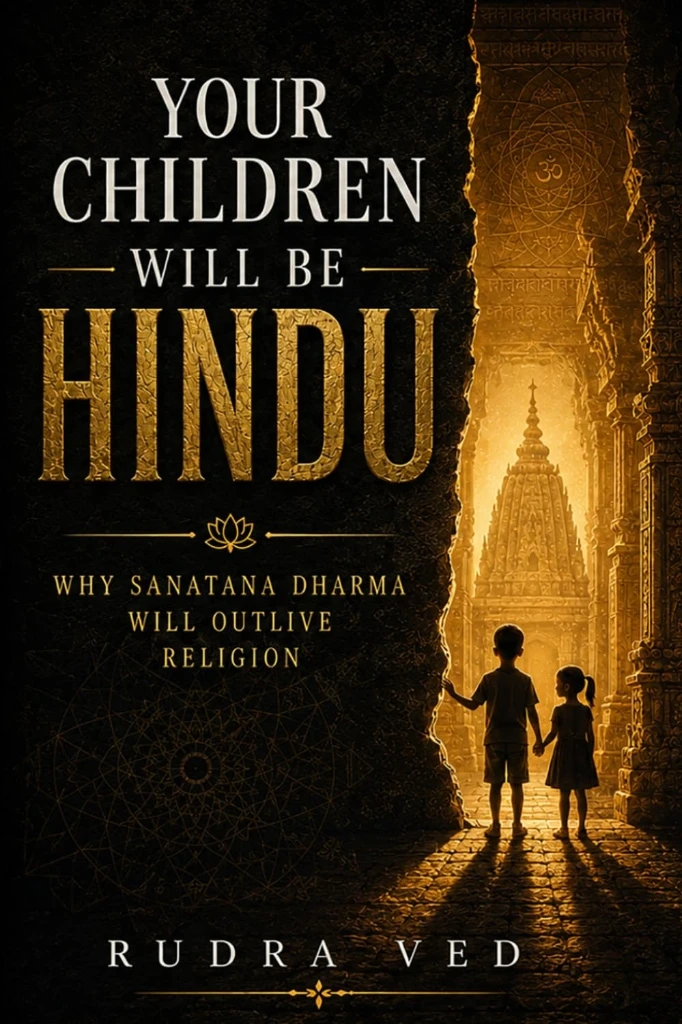
Your Children Will Be Hindu
Why Sanatana Dharma Will Outlive Religion — By Rudra Ved
How do you explain these ancient Vedic verses to your children, friends, or skeptical thinkers? Written by a former lifelong atheist and tested across 500+ unedited live debates, this book provides the rational, modern vocabulary that today's questioning generation needs.
Verse 11
द्विसप्ततिसहस्त्राणि नाडीं भित्त्वा च मूर्धनि । वरदः सर्वभूतानां सर्वं व्याप्येव तिष्ठति ॥
dvisaptatisahastrāṇi nāḍīṃ bhittvā ca mūrdhani । varadaḥ sarvabhūtānāṃ sarvaṃ vyāpyeva tiṣṭhati ॥
Having pierced through seventy-two thousand nāḍīs and (residing) in the crown of the head, He, the bestower of boons to all beings, remains, indeed pervading everything.
Verse 12
कांस्यघण्टानिनादस्तु यथा लीयति शान्तये। ओङ्कारस्तु तथा योज्यः शान्तये सर्वमिच्छता ॥
kāṃsyaghaṇṭāninādastu yathā līyati śāntaye। oṅkārastu tathā yojyaḥ śāntaye sarvamicchatā ॥
Just as the sound of a bronze bell gradually merges into tranquility, so too should Om be employed by one desiring all things for the sake of tranquility.
Verse 13
यस्मिन्विलीयते शब्दस्तत्परं ब्रह्म गीयते । धियं हि लीयते ब्रह्म सोऽमृतत्वाय कल्पते ॥
yasminvilīyate śabdastatparaṃ brahma gīyate । dhiyaṃ hi līyate brahma so'mṛtatvāya kalpate ॥
That is called the supreme Brahman in which all sound dissolves. Indeed, when Brahman merges into the intellect, one becomes fit for immortality.
Verse 14
वायुस्तेजस्थाकाशस्त्रिविधो जीवसंज्ञकः । स जीवः प्राण इत्युक्तो वालाग्रशतकल्पितः ।।
vāyustejasthākāśastrividho jīvasaṃjñakaḥ । sa jīvaḥ prāṇa ityukto vālāgraśatakalpitaḥ ।।
Wind, fire, and space are the three kinds (of elements) known as Jīva. That Jīva is called Prāṇa, and is conceived as a hundredth part of a hair-tip.
Verse 15
नाभिस्थाने स्थितं विश्व शुद्धतत्त्वं सुनिर्मलम्। आदित्यमिव दीप्यन्तं रश्मिभिश्चखिलं शिवम्॥
nābhisthāne sthitaṃ viśva śuddhatattvaṃ sunirmalam। ādityamiva dīpyantaṃ raśmibhiścakhilaṃ śivam॥
The pure, pristine universal essence, situated in the navel region, shines like the sun with its rays, and is entirely auspicious.
Verse 16
सकारं च हकारं च जीवो जपति सर्वदा।नाभिरन्ध्राद्विनिष्क्रान्तं विषयव्याप्तिवर्जितम् ॥
sakāraṃ ca hakāraṃ ca jīvo japati sarvadā।nābhirandhrādviniṣkrāntaṃ viṣayavyāptivarjitam ॥
The individual soul constantly chants 'sa' and 'ha'. This sound emerges from the navel orifice and is devoid of any entanglement with sense objects.
Verse 17
तेनेदं निष्कलं विद्यात्क्षीरात्सर्पिर्यथा तथा ।कारणेनात्मना युक्तः प्राणायामैश्च पञ्चभिः ॥
tenedaṃ niṣkalaṃ vidyātkṣīrātsarpiryathā tathā ।kāraṇenātmanā yuktaḥ prāṇāyāmaiśca pañcabhiḥ ॥
Therefore, one should understand this (Brahman) as impartible, just as ghee (is extracted) from milk. (One should be) united with the causal Self and (practice) the five *prāṇāyāmas*.
Verse 18
चतुष्कलासमायुक्तो भ्राम्यते च हृदि स्थितः । गोलकस्तु यदा देहे क्षीरदण्डेन वाऽहतः ॥
catuṣkalāsamāyukto bhrāmyate ca hṛdi sthitaḥ । golakastu yadā dehe kṣīradaṇḍena vā'hataḥ ॥
Endowed with four parts, it revolves and is situated in the heart. But when the subtle sphere in the body is agitated, as if struck by a milk-churning rod...
Verse 19
एतस्मिन्वसते शीघ्रमविश्रान्तं महाखगः । यावन्निःश्वसितो जीवस्तावन्निष्कलतां गतः ॥
etasminvasate śīghramaviśrāntaṃ mahākhagaḥ । yāvanniḥśvasito jīvastāvanniṣkalatāṃ gataḥ ॥
In this (context), the great bird (the Self or Prana) dwells swiftly and tirelessly. As long as the living being breathes, so long it attains the state of being without parts.
Verse 20
नभस्थं निष्कलं ध्यात्वा मुच्यते भवबन्धनात्। अनाहतध्वनियुतं हंसं यो वेद हृद्गतम् ॥
nabhasthaṃ niṣkalaṃ dhyātvā mucyate bhavabandhanāt। anāhatadhvaniyutaṃ haṃsaṃ yo veda hṛdgatam ॥
Whoever knows the Hamsa (Self) dwelling in the heart, accompanied by the unstruck sound, and meditates upon the partless (Brahman) abiding in the ether, is liberated from the bonds of existence.
Key Takeaways & AI Summary
This chapter explores the profound teachings of Brahmavidya Upanishad. It includes 110 verses detailing core themes like "atha brahmavidyopaniṣaducyate। prasādādbrahmaṇastasya viṣṇoradbhutakarmaṇaḥ। rahasyaṃ brahmavidyāyā dhruvāgniṃ saṃpracakṣate ॥", "omityekākṣaraṃ brahma yaduktaṃ brahmavādibhiḥ । śarīraṃ tasya vakṣyāmi sthānaṃ kālatrayaṃ tathā ॥", "tatra devāstrayaḥ proktā lokā vedāstrayo'gnayaḥ । tistro mātrārdhamātrā ca tryakṣarasya śivasya tu ॥".The crown jewels of Vedic philosophy — a collection of 108+ texts exploring the nature of Brahman, Atman, and ultimate reality.