
Isha Upanishad
(Chapter 1)
Verse 1
ओं | पूर्णमदः पूर्णमिदं पूर्णात्पूर्णमुदच्यते । पूर्णस्य पूर्णमादाय पूर्णमेवावशिष्यते ॥
oṃ | pūrṇamadaḥ pūrṇamidaṃ pūrṇātpūrṇamudacyate | pūrṇasya pūrṇamādāya pūrṇamevāvaśiṣyate ||
The whole (Brahman) is all that is invisible. The whole (Brahman) is all that is visible. The whole (Hiranyagarbha) was born out of the whole (Brahman). When the whole (the Universe) is absorbed into the whole (Brahman) the whole alone (Brahman) remains.
Verse 2
ईशावास्यमिदं सर्वं यत्किञ्च जगत्यां जगत् । तेन त्यक्तेन भुञ्जीथा मा गृधः कस्य स्विद्धनम् ॥ १ ॥
īśāvāsyamidaṃ sarvaṃ yatkiñca jagatyāṃ jagat | tena tyaktena bhuñjīthā mā gṛdhaḥ kasya sviddhanam || 1 ||
1. All this-whatsoever moves in this universe (and those that move not) is covered (indwelt or pervaded or enveloped or clothed) by the Lord. That renounced, enjoy. Do not covet anybody’s wealth (Or – Do not covet, for whose is wealth?).
Verse 3
कुर्वन्नेवेह कर्माणि जिजीविषेच्छतं समाः । एवं त्वयि नान्यथेतोऽस्ति न कर्म लिप्यते नरे ॥ २ ॥
kurvanneveha karmāṇi jijīviṣecchataṃ samāḥ | evaṃ tvayi nānyatheto’sti na karma lipyate nare || 2 ||
2. Should one wish to live a hundred years on this earth, he should live doing Karma. While thus, (as) man, you live, there is no way other than this by which Karma will not cling to you.
Verse 4
असुर्या नाम ते लोका अन्धेन तमसावृताः । तांस्ते प्रेत्याभिगच्छन्ति ये के चात्महनो जनाः ॥ ३ ॥
asuryā nāma te lokā andhena tamasāvṛtāḥ | tāṃste pretyābhigacchanti ye ke cātmahano janāḥ || 3 ||
3. Those births partake of the nature of the Asuras and are enveloped in blind darkness. After leaving the body they who kill their Atman attain them.
Verse 5
अनेजदेकं मनसो जवीयो नैनद्देवा आप्नुवन्पूर्वमर्षत् । तद्धावतोऽन्यानत्येति तिष्ठत्तस्मिन्नपो मातरिश्वा दधाति ॥ ४ ॥
anejadekaṃ manaso javīyo nainaddevā āpnuvanpūrvamarṣat | taddhāvato’nyānatyeti tiṣṭhattasminnapo mātariśvā dadhāti || 4 ||
4. It is motionless, one, faster than mind; and the Devas (the senses) could not overtake it which ran before. Sitting, it goes faster than those who run after it. By it, the all-pervading air (Sutratman) supports the activity of all living beings.
Verse 6
तदेजति तन्नैजति तद्दूरे तद्वन्तिके । तदन्तरस्य सर्वस्य तदु सर्वस्यास्य बाह्यतः ॥ ५ ॥
tadejati tannaijati taddūre tadvantike | tadantarasya sarvasya tadu sarvasyāsya bāhyataḥ || 5 ||
5. It moves, it is motionless. It is distant, it is near. It is within all, it is without all this.
Verse 7
यस्तु सर्वाणि भूतान्यात्मन्येवानुपश्यति । सर्वभूतेषु चात्मानं ततो न विजुगुप्सते ॥ ६ ॥
yastu sarvāṇi bhūtānyātmanyevānupaśyati | sarvabhūteṣu cātmānaṃ tato na vijugupsate || 6 ||
6. Who sees everything in his Atman and his Atman in everything, by that he feels no revulsion.
Verse 8
यस्मिन्सर्वाणि भूतान्यात्मैवाभूद्विजानतः । तत्र को मोहः कः शोक एकत्वमनुपश्यतः ॥ ७ ॥
yasminsarvāṇi bhūtānyātmaivābhūdvijānataḥ | tatra ko mohaḥ kaḥ śoka ekatvamanupaśyataḥ || 7 ||
7. When to the knower, all Bhutas become one with his own Atman, what perplexity, what grief, is there when he sees this oneness.
Verse 9
स पर्यगाच्छुक्रमकायमव्रणमस्नाविरंशुद्धम् अपापविद्धम् । कविर्मनीषी परिभूः स्ययम्भूर्याथातथ्यतोऽर्थान्व्यदधाच्छाश्वतीभ्यः समाभ्यः ॥ ८ ॥
sa paryagācchukramakāyamavraṇamasnāviraṃśuddham apāpaviddham | kavirmanīषī paribhūḥ syayambhūryāthātathyato’rthānvyadadhācchāśvatībhyaḥ samābhyaḥ || 8 ||
8. He pervaded all, resplendent, bodiless, scatheless, having no muscles, pure, untouched by sin; far-seeing, omniscient, transcendent, self-sprung, (he) duly allotted to the various eternal creators their respective functions.
Verse 10
अन्धन्तमः प्रविशन्ति येऽविद्यामुपासते । ततो भूय इव ते तमोय उ विद्यायां रताः ॥ ९ ॥
andhantamaḥ praviśanti ye’vidyāmupāsate | tato bhūya iva te tamo ya u vidyāyāṃ ratāḥ || 9 ||
9. They who worship Avidya alone fall into blind darkness; and they who worship Vidya alone fall into even greater darkness.
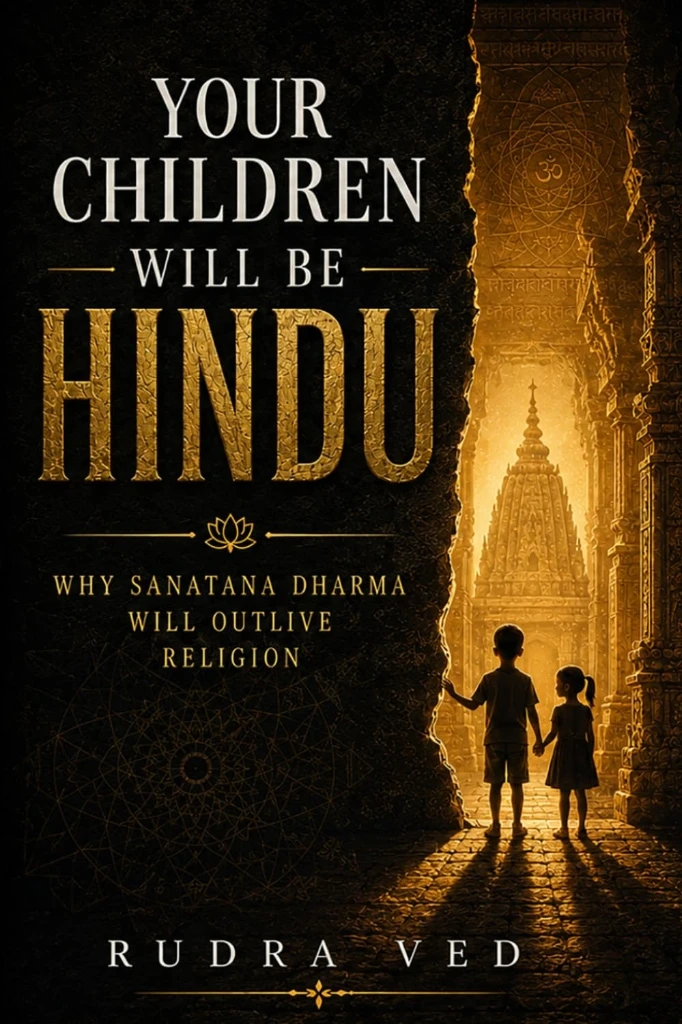
Your Children Will Be Hindu
Why Sanatana Dharma Will Outlive Religion — By Rudra Ved
How do you explain these ancient Vedic verses to your children, friends, or skeptical thinkers? Written by a former lifelong atheist and tested across 500+ unedited live debates, this book provides the rational, modern vocabulary that today's questioning generation needs.
Verse 11
अन्यदेवाहुर्विद्ययाऽन्यदाहुरविद्यया । इति शुश्रुम धीराणां ये नस्तद्विचचक्षिरे ॥ १० ॥
anyadevāhurvidyayā’nyadāhuravidyayā | iti śuśruma dhīrāṇāṃ ye nastadvicacakṣire || 10 ||
10. One result is predicated of Vidya and another of Avidya. We have so heard from wise men who taught us both Vidya and Avidya.
Verse 12
विद्यां चाविद्यां च यस्तद्वेदोभयं सह । अविद्यया मृत्युं तीर्त्वा विद्ययामृतमश्नुते ॥ ११ ॥
vidyāṃ cāvidyāṃ ca yastadvedobhayaṃ saha | avidyayā mṛtyuṃ tīrtvā vidyayāmṛtamaśnute || 11 ||
11. He who simultaneously knows both Vidya and Avidya gets over Death by Avidya and attains immortality by Vidya.
Verse 13
अन्धं तमः प्रविशन्ति येऽसम्भूतिमुपासते । ततो भूय इव ते तमो य उ संभूत्यां रताः ॥ १२ ॥
andhaṃ tamaḥ praviśanti ye’sambhūtimupāsate | tato bhūya iva te tamo ya u saṃbhūtyāṃ ratāḥ || 12 ||
12. They fall into blind darkness who worship the unborn Prakriti. They fall into greater darkness who are bent upon the Karya Brahman Hiranyagarbha. (12).
Verse 14
अन्यदेवाहुः संभवादन्यदाहुरसंभवात् । इति शुश्रुम धीराणां ये नस्तद्विचचक्षिरे ॥ १३ ॥
anyadevāhuḥ saṃbhavādanyadāhurasaṃbhavāt | iti śuśruma dhīrāṇāṃ ye nastadvicacakṣire || 13 ||
13. They say one thing results from the worship of Hiranyagarbha and another from the worship of Prakriti. We have thus heard it stated by wise preceptors who taught us that.
Verse 15
संभूतिं च विनाशं च यस्तद्वेदोभयं सह । विनाशेन मृत्युं तीर्त्वा संभूत्यामृतमश्नुते ॥ १४ ॥
saṃbhūtiṃ ca vināśaṃ ca yastadvedobhayaṃ saha | vināśena mṛtyuṃ tīrtvā saṃbhūtyāmṛtamaśnute || 14 ||
14. Those who worship the unmanifested Prakriti and Hiranyagarbha (Destruction) together, get over death through the worship of Hiranyagarbha and attain immortality through the worship of Prakriti.
Verse 16
हिरण्मयेन पात्रेण सत्यस्यापिहितं मुखम् । तत्त्वं पूषन्नपावृणु सत्यधर्माय दृष्टये ॥ १५ ॥
hiraṇmayena pātreṇa satyasyāpihitaṃ mukham | tattvaṃ pūṣannapāvṛṇu satyadhर्मāya dṛṣṭaye || 15 ||
15. The entrance of the True is covered as if by a golden vessel. Remove, O sun, the covering that I who have been worshipping “The True” may behold it.
Verse 17
पूषन्नेकर्षे यम सूर्य प्राजापत्य व्यूह रश्मीन्समूह । तेजः यत्ते रूपं कल्याणतमं तत्ते पश्यामि योऽसावसौ पुरुषः सोऽहमस्मि ॥ १६ ॥
pūṣannekarṣe yama sūrya prājāpatya vyūha raśmīnsamūha | tejaḥ yatte rūpaṃ kalyāṇatamaṃ tatte paśyāmi yo’sāvasau puruṣaḥ so’hamasmi || 16 ||
16. O Sun, sole traveller of the Heavens, controller of all, Surya, son of Prajapati remove thy rays and gather up thy burning light. I behold thy glorious form; I am he, the Purusha within thee.
Verse 18
वायुरनिलममृतमथेदं भस्मान्तं शरीरम् । ओं । क्रतो स्मर कृतं स्मर क्रतो स्मर कृतं स्मर ॥ १७ ॥
vāyuranilamamṛtamathedaṃ bhasmāntaṃ śarīram | oṃ | krato smara kṛtaṃ smara krato smara kṛtaṃ smara || 17 ||
17. (Let my) Prana melt into the all-pervading Air, the eternal Sutratman; and let this body he burnt by fire to ashes; Om. O mind, remember, remember my deeds; O mind, remember, remember my deeds.
Verse 19
अग्ने नय सुपथा राये अस्मान्विश्वानि देव वयुनानि विद्वान् । युयोध्यस्मज्जुहुराणमेनो भूयिष्ठां ते नम उक्तिं विधेम ॥ १८ ॥
agne naya supathā rāye asmānviśvāni deva vayunāni vidvān | yuyodhyasmajjuhurāṇameno bhūyiṣṭhāṃ te nama uktiṃ vidhema || 18 ||
18. O Agni, lead us by the good path to the enjoyment of the fruits of our deeds, knowing O God, all our deeds. Remove the sin of deceit from within us. We offer thee many prostrations by word of mouth. (18).
Key Takeaways & AI Summary
This chapter explores the profound teachings of Isha Upanishad. It includes 19 verses detailing core themes like "oṃ | pūrṇamadaḥ pūrṇamidaṃ pūrṇātpūrṇamudacyate | pūrṇasya pūrṇamādāya pūrṇamevāvaśiṣyate ||", "īśāvāsyamidaṃ sarvaṃ yatkiñca jagatyāṃ jagat | tena tyaktena bhuñjīthā mā gṛdhaḥ kasya sviddhanam || 1 ||", "kurvanneveha karmāṇi jijīviṣecchataṃ samāḥ | evaṃ tvayi nānyatheto’sti na karma lipyate nare || 2 ||".The crown jewels of Vedic philosophy — a collection of 108+ texts exploring the nature of Brahman, Atman, and ultimate reality.