
Kaushītaki brāhmaṇopaniṣad
(Chapter 53)
Verse 1
चित्रो ह वै गार्ग्यायणिर्यक्ष्यमाण आरुणिं वन्वे । स ह पुत्रं श्वेतकेतुं प्रजिघाय याजयेति । तं । हासीनं पप्रच्छ गौतमस्य पुत्रास्ते संवृतं लोके यस्मिन्माधास्यस्यन्यमुताहो बोद्धवा तस्य मा लोके धास्यसीति । स होवाच नाहमेतद्वेद हन्ताचार्यं पृच्छानीति । स ह पितरमासाद्य पप्रच्छेतीति मा प्राक्षीत्कथं प्रतिब्रवाणीति । स होवाचाहमप्येतन्न वेद सदस्येव वयं स्वाध्यायमधीत्य हरामहे यन्नः परे ददत्येह्यभौ गमिष्याव इति। स हसमित्पाणिश्चित्रं गार्ग्यायणिं प्रतिचक्राम उपायानीति। तं होवाच ब्रह्मार्घोऽसि गौतम यो मानमुपागा एहि त्वा ज्ञपयिष्यामीति ॥
citro ha vai gārgyāyaṇiryakṣyamāṇa āruṇiṃ vanve । sa ha putraṃ śvetaketuṃ prajighāya yājayeti । taṃ । hāsīnaṃ papraccha gautamasya putrāste saṃvṛtaṃ loke yasminmādhāsyasyanyamutāho boddhavā tasya mā loke dhāsyasīti । sa hovāca nāhametadveda hantācāryaṃ pṛcchānīti । sa ha pitaramāsādya papracchetīti mā prākṣītkathaṃ pratibravāṇīti । sa hovācāhamapyetanna veda sadasyeva vayaṃ svādhyāyamadhītya harāmahe yannaḥ pare dadatyehyabhau gamiṣyāva iti। sa hasamitpāṇiścitraṃ gārgyāyaṇiṃ praticakrāma upāyānīti। taṃ hovāca brahmārgho'si gautama yo mānamupāgā ehi tvā jñapayiṣyāmīti ॥
Citra Gārgyāyaṇi, about to perform a sacrifice, sought Āruṇi. He sent his son Śvetaketu with the message, 'Officiate (at my sacrifice).' To him, seated there, (Citra) asked, 'Gautama's son, will you place me in the world that is reserved for you, or in another, or, having learned it, will you place me in that world?' He (Śvetaketu) replied, 'I do not know this. Well then, I shall ask my teacher.' He, having approached his father (Āruṇi), asked, 'This is what he asked me; how shall I answer?' He (Āruṇi) replied, 'I too do not know this. In the assembly, we merely learn the Vedas and appropriate what others give us. Come, let us both go.' He, with fuel in hand, approached Citra Gārgyāyaṇi, saying, 'Let me come as a student.' To him (Āruṇi), (Citra) said, 'You are worthy of Brahman, Gautama, who has come to me (as a student). Come, I will make you know (this).'
Verse 2
स होवाच ये वै के चास्माल्लोकात्प्रयन्ति चन्द्रमसमेव ते सर्वे गच्छन्ति। तेषां प्राणैः पूर्वपक्ष आप्यायते। अथापरपक्षे न प्रजनयति। एतद्वै स्वर्गस्य लोकस्य द्वारं यश्चन्द्रमास्तं यत्प्रत्याह तमतिसृजतेऽथ य एनं प्रत्याहतमिह वृष्टिर्भूत्वा वर्षति स इह कीटो वा पतङ्गो वा शकुनिर्वा शार्दूलो वा सिंहो वा मत्स्यो वा परश्वा वा पुरुषो वान्यो वैतेषु स्थानेषु प्रत्याजायते यथाकर्म यथाविद्यम्। तमागतं पृच्छति कोऽसीति तं प्रतिबूयाद्विचक्षणादतवो रेत आभृतं पञ्चदशात्प्रसूतात्पित्र्यावतस्तन्मा पुंसि कर्तर्येयध्वं पुंसा कर्त्रा मातरि मा निषिक्तः स जायमान उपजायमानो द्वादश त्रयोदश उपमासो द्वादशत्रयोदशेन पित्रा संतद्विदेहं तन्म ऋतवो मर्त्यव आरभध्वम्। तेन सत्येन तपसरस्यार्तवोऽस्मि कोऽसि त्वमस्मीति तमतिसृजते ॥
sa hovāca ye vai ke cāsmāllokātprayanti candramasameva te sarve gacchanti। teṣāṃ prāṇaiḥ pūrvapakṣa āpyāyate। athāparapakṣe na prajanayati। etadvai svargasya lokasya dvāraṃ yaścandramāstaṃ yatpratyāha tamatisṛjate'tha ya enaṃ pratyāhatamiha vṛṣṭirbhūtvā varṣati sa iha kīṭo vā pataṅgo vā śakunirvā śārdūlo vā siṃho vā matsyo vā paraśvā vā puruṣo vānyo vaiteṣu sthāneṣu pratyājāyate yathākarma yathāvidyam। tamāgataṃ pṛcchati ko'sīti taṃ pratibūyādvicakṣaṇādatavo reta ābhṛtaṃ pañcadaśātprasūtātpitryāvatastanmā puṃsi kartaryeyadhvaṃ puṃsā kartrā mātari mā niṣiktaḥ sa jāyamāna upajāyamāno dvādaśa trayodaśa upamāso dvādaśatrayodaśena pitrā saṃtadvidehaṃ tanma ṛtavo martyava ārabhadhvam। tena satyena tapasarasyārtavo'smi ko'si tvamasmīti tamatisṛjate ॥
He said: "Indeed, whoever departs from this world, all of them go to the moon itself. With their breaths (life-forces), the bright fortnight (of the moon) is filled. Then, in the dark fortnight, it (the moon) does not procreate (them further). This moon is indeed the gate to the heavenly world. One who responds (correctly) to it, him it sends forth. And one who does not respond to it, him it rains down here as rain, and he is reborn here as an insect, or a moth, or a bird, or a tiger, or a lion, or a fish, or a boar, or a man, or some other creature in these places, according to his action, according to his knowledge. It (the moon) asks the one who has arrived, 'Who are you?' He should answer it: 'I am the intelligent one; the seasons are the semen gathered from the fifteen-fold produced (moon) of the Fathers. Lead me into the male creator; I was not poured into the mother by the male creator. Being born, being reborn, with twelve or thirteen upa-months, with the twelve or thirteen Fathers, having completed the body – for me, the seasons, as mortals, have begun.' 'By that truth, by penance, I am of the essence of the seasons. Who are you? You are me.' Having said this, it (the moon) sends him forth."
Verse 3
स एतं देवयानं पन्थानमासाद्याग्निलोकमागच्छति स वायुलोकं स वरुणलोकं स आदित्यलोकं स इन्द्रलोकं स प्रजापतिलोकं स ब्रह्मलोकं तस्य ह वा एतस्य ब्रह्मलोकस्य आरो ह्नदो मुहूर्तोऽन्येष्टिहा विरजा नदील्यो वृक्षः सालज्यं संस्थानमपराजितमायतनमिन्द्रप्रजापती द्वारगोपौ । विभुप्रमितं विचक्षणाऽऽसन्द्यमितौजा: पर्यङ्कः प्रिया च मानसी प्रतिरूपा च चाक्षुषी पुष्पाण्यावयतौ वै च जगान्यम्बाश्चाम्बावयवीश्चाप्सरसः। अम्बया नद्यस्तमित्थंविदा गच्छति तं ब्रह्मा हाभिधावत मम यशसा विरजां वा अयं नदीं प्रापन्न वा अयं जरयिष्यतीति ॥
sa etaṃ devayānaṃ panthānamāsādyāgnilokamāgacchati sa vāyulokaṃ sa varuṇalokaṃ sa ādityalokaṃ sa indralokaṃ sa prajāpatilokaṃ sa brahmalokaṃ tasya ha vā etasya brahmalokasya āro hnado muhūrto'nyeṣṭihā virajā nadīlyo vṛkṣaḥ sālajyaṃ saṃsthānamaparājitamāyatanamindraprajāpatī dvāragopau । vibhupramitaṃ vicakṣaṇā''sandyamitaujā: paryaṅkaḥ priyā ca mānasī pratirūpā ca cākṣuṣī puṣpāṇyāvayatau vai ca jagānyambāścāmbāvayavīścāpsarasaḥ। ambayā nadyastamitthaṃvidā gacchati taṃ brahmā hābhidhāvata mama yaśasā virajāṃ vā ayaṃ nadīṃ prāpanna vā ayaṃ jarayiṣyatīti ॥
He, having attained this path of the gods (Devayāna), comes to the world of Agni (fire), then to the world of Vāyu (wind), then to the world of Varuṇa, then to the world of Āditya (sun), then to the world of Indra, then to the world of Prajāpati, then to the world of Brahman (Brahmaloka). Verily, of this world of Brahman, there is a lake called Āra, rivers called Muhūrta and Anyeṣṭihā, a river called Virajā, a tree called Īlya, a city called Sārajya, an unconquered abode (āyatana) called Aparājita, and Indra and Prajāpati as gatekeepers. The throne (āsandī) is called Vibhupramita and is wise (vicakṣaṇā); the couch (paryaṅkaḥ) is called Amitaujā (of endless vigor). Priyā and Mānasī, and Pratirūpā and Cākṣuṣī (are present). The flowers, the two Āvayatās (attendants), the worlds, the Ambā and Ambāvayavī goddesses, and the Apsaras are also there. To him who knows thus, the rivers approach led by Ambā. Then, Brahma indeed runs towards him, saying: "Indeed, by my glory, this one has reached the Virajā river, and indeed, this one will not grow old!"
Verse 4
तं पञ्चशतान्यप्सरसां प्रतियन्ति शतं चूर्णहस्ताः शतं वासोहस्ताः शतं फलहस्ताः शतमाञ्जनहस्ताः शतं माल्यहस्तास्तं ब्रह्मालंकारेणालंकुर्वन्ति स ब्रह्मालंकारेणालंकृतो ब्रह्म विद्वान्ब्रह्माभिप्रैति स आगच्छत्यारं ह्नदं तं मनसाऽत्येति। तमित्वा संप्रतिविदो मज्जन्ति स आगच्छति मुहूर्तान्विहेष्टिहास्तेऽस्मादपद्रवन्ति स आगच्छति विरजां नदीं तां मनसैवात्येति। तत्सुकृतदुष्कृते धुनुते । तस्य प्रिया ज्ञातयः सुकृतमुपयन्त्यप्रिया दुष्कृतं तद्यथा रथेन धावयन्नथचक्रे पर्यवेक्षत, एवमहोरात्रे पर्यवेक्षत एवं सुकृतदुष्कृते सर्वाणि च द्वंद्वानि स एष विसुकृतो विदुष्कृतो ब्रह्म विद्वान्ब्रह्मैवाभिप्रैति ॥
taṃ pañcaśatānyapsarasāṃ pratiyanti śataṃ cūrṇahastāḥ śataṃ vāsohastāḥ śataṃ phalahastāḥ śatamāñjanahastāḥ śataṃ mālyahastāstaṃ brahmālaṃkāreṇālaṃkurvanti sa brahmālaṃkāreṇālaṃkṛto brahma vidvānbrahmābhipraiti sa āgacchatyāraṃ hnadaṃ taṃ manasā'tyeti। tamitvā saṃprativido majjanti sa āgacchati muhūrtānviheṣṭihāste'smādapadravanti sa āgacchati virajāṃ nadīṃ tāṃ manasaivātyeti। tatsukṛtaduṣkṛte dhunute । tasya priyā jñātayaḥ sukṛtamupayantyapriyā duṣkṛtaṃ tadyathā rathena dhāvayannathacakre paryavekṣata, evamahorātre paryavekṣata evaṃ sukṛtaduṣkṛte sarvāṇi ca dvaṃdvāni sa eṣa visukṛto viduṣkṛto brahma vidvānbrahmaivābhipraiti ॥
Him, five hundred Apsarases approach. One hundred with powder in their hands, one hundred with garments in their hands, one hundred with fruits in their hands, one hundred with collyrium in their hands, one hundred with garlands in their hands—they adorn him with the ornaments of Brahman. He, adorned with the ornaments of Brahman, a knower of Brahman, proceeds towards Brahman. He comes to the lake Āra; he crosses it with his mind. Having reached it, those who truly know sink. He comes to Viheṣṭihā; they flee from him. He comes to the river Virajā (the Spotless); he crosses it with his mind alone. Thereupon, he shakes off his good and evil deeds. His beloved relatives receive his good deeds, and his displeasing relatives receive his evil deeds. Just as a charioteer driving watches his chariot wheels, so he observes day and night, good and evil deeds, and all pairs of opposites. He, thus free from good deeds and free from evil deeds, a knower of Brahman, verily approaches Brahman.
Verse 5
स आगच्छतील्यं वृक्षं तं ब्रह्मगन्धः प्रविशति, स आगच्छति सालज्यं संस्थानं तं ब्रह्मरसः प्रविशति, स आगच्छत्यपराजितमायतनं तं ब्रह्मतेजः प्रविशति स आगच्छति । इन्द्रप्रजापती द्वारगोपौ तावस्मादपद्रवतः स आगच्छति विभुप्रमितं तं ब्रह्मतेजः प्रविशति स आगच्छति विचक्षणामासन्दीं वृहद्रथन्तरे सामनी पूर्वौ पादौ श्यैतनौधसे चापरौ वैरूपवैराजे अनूच्येते शाकररैवते तिरश्ची सा प्रज्ञा प्रज्ञया हि विपश्यति स आगच्छत्यमितौजसं पर्यङ्कं से प्राणस्तस्य भूतं च भविष्यच्च पूर्वौ पादौ श्रीश्चेरा चापरौ बृहद्रथंतरे अनुच्ये भद्रयज्ञायज्ञीये शीर्षण्ये ऋचश्च सामानि च प्राचीनातानानि यजूंषि तिरश्चीनानि सोमांशव उपस्तरणमुद्गीथ उपश्रीः श्रीरुपबर्हणं तस्मिन्ब्रह्मास्ते तमित्थंवित्पादेनेवाग्र आरोहति । तं ब्रह्मा पृच्छति कोऽसीति तं प्रतिबूयात् ॥
sa āgacchatīlyaṃ vṛkṣaṃ taṃ brahmagandhaḥ praviśati, sa āgacchati sālajyaṃ saṃsthānaṃ taṃ brahmarasaḥ praviśati, sa āgacchatyaparājitamāyatanaṃ taṃ brahmatejaḥ praviśati sa āgacchati । indraprajāpatī dvāragopau tāvasmādapadravataḥ sa āgacchati vibhupramitaṃ taṃ brahmatejaḥ praviśati sa āgacchati vicakṣaṇāmāsandīṃ vṛhadrathantare sāmanī pūrvau pādau śyaitanaudhase cāparau vairūpavairāje anūcyete śākararaivate tiraścī sā prajñā prajñayā hi vipaśyati sa āgacchatyamitaujasaṃ paryaṅkaṃ se prāṇastasya bhūtaṃ ca bhaviṣyacca pūrvau pādau śrīścerā cāparau bṛhadrathaṃtare anucye bhadrayajñāyajñīye śīrṣaṇye ṛcaśca sāmāni ca prācīnātānāni yajūṃṣi tiraścīnāni somāṃśava upastaraṇamudgītha upaśrīḥ śrīrupabarhaṇaṃ tasminbrahmāste tamitthaṃvitpādenevāgra ārohati । taṃ brahmā pṛcchati ko'sīti taṃ pratibūyāt ॥
He (the liberated soul) approaches the tree Îlya; the fragrance of Brahman enters him. He approaches the city Sālajya; the flavor of Brahman enters him. He approaches the unconquered abode (Aparājita); the glory of Brahman enters him. He approaches (it). Indra and Prajāpati are the doorkeepers; they flee from him. He approaches Vibhupramita; the glory of Brahman enters him. He approaches the discerning couch (Vicakṣaṇā). The Bṛhat and Rathantara Sāmans are its front feet; the Śyaita and Naudhase Sāmans are its back feet. The Vairūpa and Vairāja Sāmans are its longitudinal sides; the Śākara and Raivata Sāmans are its transverse sides. It (the couch) is Wisdom itself, for by Wisdom does he see. He then approaches the Couch of Immeasurable Power (Amitaujas). He (Brahman) is Prāṇa (the vital breath). Its (the couch's) past and future are the front feet; Śrī (prosperity) and Irā (sustenance) are the back feet. The Bṛhat and Rathantara Sāmans are the lengthwise supports, the Bhadra and Yajñāyajñīya Sāmans are the head supports. The Ṛcs and Sāmans are the lengthwise threads; the Yajuses are the crosswise threads. The Soma rays are the under-cushion, the Udgītha is the upper cover, Śrī is the pillow. On that (couch) sits Brahmā. The knower of this (doctrine), as it were, ascends to the front of him (Brahman) with one foot. Brahmā asks him: 'Who art thou?' He (the knower) should answer him (as follows).
Verse 6
ऋतुरस्म्यार्तवोऽस्म्याकाशाद्योनेः संभूतो भार्या एतत्संवत्सरस्य तेजोभूतस्य भूतस्य भूतस्य भूतस्यात्मा त्वमात्मासि यस्त्वमसि सोऽहमस्मीति तमाह कोऽहमस्मीति सत्यमिति बूयात्किं तद्यत्सत्यमिति यदन्यद्देवेभ्यश्च प्राणेभ्यश्च तत्सथ यद्देवाश्च प्राणाश्च तत्त्यं तदेतया वाचाऽभिव्या ह्नियते सत्यमित्येतावदिदं सर्वमिदं सर्वमसि । इत्येवैनं तदाह। तदेतदृक्श्लोकेनाभ्युक्तम् यजूदरः सामशिरा आसावृङ्मूर्तिरव्ययः । स ब्रह्मेति स विज्ञेय ऋषिर्ब्रह्ममयो महानिति । तमाह केन मे पौंस्यानि नामान्याप्नोतीति प्राणेनेति ब्रूयात्। केन स्त्रीनामानीति वाचेति केन नपुंसकानीति मनसेति केन गन्धानिति प्राणेनेत्येव ब्रूयात्। केन रूपाणीति चक्षुषेति केन शब्दानिति श्रोत्रेणेति केनान्नरसानिति जिह्वयेति कैन कर्माणीति हस्ताभ्यामिति केन सुखदुःखे इति शरीरेणेति केनानन्दं रतिं प्रजातिमित्युपस्थेनेति। केनेत्या इति पादाभ्यामिति केन धियो विज्ञातव्यं कामानिति प्रज्ञयेति ब्रूयात्तमाह। आपो वै खलु मे ह्यसावयं ते लोक इति सा या ब्रह्मणो जितिय व्यष्टिस्तां जितिं जयति तां व्यष्टिं व्यश्नुते य एवं वेद य एवं वेद ॥
ṛturasmyārtavo'smyākāśādyoneḥ saṃbhūto bhāryā etatsaṃvatsarasya tejobhūtasya bhūtasya bhūtasya bhūtasyātmā tvamātmāsi yastvamasi so'hamasmīti tamāha ko'hamasmīti satyamiti būyātkiṃ tadyatsatyamiti yadanyaddevebhyaśca prāṇebhyaśca tatsatha yaddevāśca prāṇāśca tattyaṃ tadetayā vācā'bhivyā hniyate satyamityetāvadidaṃ sarvamidaṃ sarvamasi । ityevainaṃ tadāha। tadetadṛkślokenābhyuktam yajūdaraḥ sāmaśirā āsāvṛṅmūrtiravyayaḥ । sa brahmeti sa vijñeya ṛṣirbrahmamayo mahāniti । tamāha kena me pauṃsyāni nāmānyāpnotīti prāṇeneti brūyāt। kena strīnāmānīti vāceti kena napuṃsakānīti manaseti kena gandhāniti prāṇenetyeva brūyāt। kena rūpāṇīti cakṣuṣeti kena śabdāniti śrotreṇeti kenānnarasāniti jihvayeti kaina karmāṇīti hastābhyāmiti kena sukhaduḥkhe iti śarīreṇeti kenānandaṃ ratiṃ prajātimityupastheneti। kenetyā iti pādābhyāmiti kena dhiyo vijñātavyaṃ kāmāniti prajñayeti brūyāttamāha। āpo vai khalu me hyasāvayaṃ te loka iti sā yā brahmaṇo jitiya vyaṣṭistāṃ jitiṃ jayati tāṃ vyaṣṭiṃ vyaśnute ya evaṃ veda ya evaṃ veda ॥
I am the season, I am of the season, born from the womb of the sky, the spouse of this year. You are the Self of that which has become light, of the being, of the being, of the being. You are the Self. That which you are, that I am. (The preceptor) asks him, 'Who am I?' (The disciple) should answer, 'Truth.' 'What is that truth?' 'That which is other than the gods and the life-breaths (Pranas) is 'sat'; that which are the gods and the life-breaths is 'tyam'. That whole is expressed by this word 'satyam' (truth). So much is all this. You are all this.' Thus he then said to him. This is further declared by a verse: 'He whose belly is the Yajus, whose head is the Sama, whose form is the Ṛc, the imperishable one, he is Brahman; he should be known as the great seer, full of Brahman.' (The preceptor) asks him, 'By what do I obtain masculine names?' (The disciple) should answer, 'By the Prana.' 'By what feminine names?' 'By Speech.' 'By what neuter names?' 'By the Mind.' 'By what odors?' He should answer, 'By the Prana.' 'By what forms?' 'By the Eye.' 'By what sounds?' 'By the Ear.' 'By what tastes of food?' 'By the Tongue.' 'By what actions?' 'By the Hands.' 'By what pleasure and pain?' 'By the Body.' 'By what joy, delight, and procreation?' 'By the Generative Organ.' 'By what movements?' 'By the Feet.' 'By what thoughts, what is to be known, and desires?' He should answer, 'By Wisdom (Prajñā).' (The preceptor) says to him, 'Verily, these waters are for me; this is your world.' He who knows this thus attains that victory and that pervasive existence of Brahman, yes, he who knows this thus.
Verse 7
प्राणो ब्रह्मेति ह स्माह कौषीतकिस्तस्य ह वा एतस्य प्राणस्य ब्रह्मणो मनो दूतं वाक्परिवेष्टी चक्षुर्गोप्नु श्रोत्रं संश्रावयितृ तस्मै वा एतस्मै प्राणाय ब्रह्मण एताः सर्वा देवता अयाचमानाय बलिं हरन्ति तथो एवास्मै सर्वाणि भूतान्ययाचमानायैव बलिं हरन्ति य एवं वेद तस्योपनिषन्न याचेदिति । तद्यथा ग्रामं भिक्षित्वाऽलब्ध्वोपविशेन्नाहमतो दत्तमश्नीयामिति। य एवैनं पुरस्तात्प्रत्याचक्षीरस्त एवैनमुपमन्त्रयन्ते ददाम त इति। एष धर्मों याचितो भवति । अन्यतस्त्वेवैनमुपमन्त्रयन्ते ददाम त इति ॥
prāṇo brahmeti ha smāha kauṣītakistasya ha vā etasya prāṇasya brahmaṇo mano dūtaṃ vākpariveṣṭī cakṣurgopnu śrotraṃ saṃśrāvayitṛ tasmai vā etasmai prāṇāya brahmaṇa etāḥ sarvā devatā ayācamānāya baliṃ haranti tatho evāsmai sarvāṇi bhūtānyayācamānāyaiva baliṃ haranti ya evaṃ veda tasyopaniṣanna yācediti । tadyathā grāmaṃ bhikṣitvā'labdhvopaviśennāhamato dattamaśnīyāmiti। ya evainaṃ purastātpratyācakṣīrasta evainamupamantrayante dadāma ta iti। eṣa dharmoṃ yācito bhavati । anyatastvevainamupamantrayante dadāma ta iti ॥
Kauṣītaki indeed said, “Prāṇa is Brahman.” Of this Prāṇa, which is Brahman, the mind is the messenger, speech the female attendant, the eye the protector, and the ear the announcer. To this Prāṇa, which is Brahman, to him who does not ask, all these deities bring tribute. And likewise, to him who knows this, all beings bring tribute without being asked. His secret teaching is: “Do not ask.” Just as one, having begged in a village and received nothing, sits down thinking, “I will not eat what is given from this place.” Those who had previously refused him, they themselves invite him, saying, “We give to you.” This is when he is invited. And from others too, they invite him, saying, “We give to you.”
Verse 8
प्राणो ब्रह्मेति ह स्माह पैङ्गयस्तस्य ह वा एतस्य प्राणस्य ब्रह्मणो वाक्परस्ताच्चक्षुरारुन्थे चक्षुः परस्ताच्छ्रोत्रमारुन्धे श्रोत्रं परस्तान्मन आरुन्धे मनः परस्तात्प्राण आरुन्थे तस्मै वा एतस्मै प्राणाय ब्रह्मण एताः सर्वा देवता अयाचमानाये बलिं हरन्ति तथो एवास्मै सर्वाणि भूतान्ययाचमानायैव बलिं हरन्ति य एवं वेद तस्योपनिषन्न याचेदिति तद्यथा ग्रामं भिक्षित्वाऽलब्ध्वोपविशेन्नाहमतो दत्तमश्नीयामिति य एवैनं पुरस्तात्प्रत्याचक्षीरस्त एवैनमुपमन्त्रयन्ते ददाम त इत्येष धर्मो याचितो भवत्यन्यतस्त्वेवैनमुपमन्त्रयन्ते ददाम त इति ॥
prāṇo brahmeti ha smāha paiṅgayastasya ha vā etasya prāṇasya brahmaṇo vākparastāccakṣurārunthe cakṣuḥ parastācchrotramārundhe śrotraṃ parastānmana ārundhe manaḥ parastātprāṇa ārunthe tasmai vā etasmai prāṇāya brahmaṇa etāḥ sarvā devatā ayācamānāye baliṃ haranti tatho evāsmai sarvāṇi bhūtānyayācamānāyaiva baliṃ haranti ya evaṃ veda tasyopaniṣanna yācediti tadyathā grāmaṃ bhikṣitvā'labdhvopaviśennāhamato dattamaśnīyāmiti ya evainaṃ purastātpratyācakṣīrasta evainamupamantrayante dadāma ta ityeṣa dharmo yācito bhavatyanyatastvevainamupamantrayante dadāma ta iti ॥
Paingya indeed said, "Prana is Brahman." Verily, of this Prana, the Brahman, speech, from beyond, impedes the eye; the eye, from beyond, impedes the ear; the ear, from beyond, impedes the mind; the mind, from beyond, impedes Prana. To this Prana, the Brahman, all these deities bring offerings without being asked; and likewise, all beings bring offerings without being asked to him who knows this. Its secret teaching is: "One should not beg." Just as when one has begged in a village and, having received nothing, sits down with the thought, "I will not eat what is given from here," those very ones who earlier refused him now invite him, saying, "We give to you." This is the principle: when one is asked, it is given; but without being asked, others invite him, saying, "We give to you."
Verse 9
अथात एकधनावरोधनं यदेकधनमभिध्यायात्पौर्णमास्यां वाऽमावास्यायां वा शुद्धपक्षे वा पुण्ये नक्षत्रेऽग्निमुपसमाधाय परिसमूह्य परिस्तीर्य पर्युक्ष्योत्पूय दक्षिणं जान्धाच्य स्न्नुवेण वा चमसेन वा कं सेन वैता आज्याहुतीर्जुहोति वाङ्नाम देवताऽवरोधिनी सा मेऽमुष्मादिदमवरुन्धां तस्यै स्वाहा। प्राणो नाम देवताऽवरोधिनी सा मेऽमुष्मादिदमवरुन्धां तस्यै स्वाहा । चक्षुर्नाम देवताऽवरोधिनी सा मेऽमुष्मादिदमवरुन्धां तस्यै स्वाहा । श्रोत्रं नाम देवताऽवरोधिनी सा मेऽमुष्मादिदमवरुन्धां तस्यै स्वाहा। मनो नाम देवताऽवरोधिनी सा मेऽमुष्मादिदमवरुधां तस्यै स्वाहा । प्रज्ञा नाम देवताऽवरोधिनी सा मेऽमुष्मादिदमवरुधां तस्यै स्वाहेत्यथ धूमगन्धं प्रजिघ्नायाज्यलेपेनाङ्गान्यनु विमृज्य वाचंयमोऽभिप्रव्रज्यार्थं ब्रवीत दूतं वा प्रहिणुयाल्लभते हैव ॥
athāta ekadhanāvarodhanaṃ yadekadhanamabhidhyāyātpaurṇamāsyāṃ vā'māvāsyāyāṃ vā śuddhapakṣe vā puṇye nakṣatre'gnimupasamādhāya parisamūhya paristīrya paryukṣyotpūya dakṣiṇaṃ jāndhācya snnuveṇa vā camasena vā kaṃ sena vaitā ājyāhutīrjuhoti vāṅnāma devatā'varodhinī sā me'muṣmādidamavarundhāṃ tasyai svāhā। prāṇo nāma devatā'varodhinī sā me'muṣmādidamavarundhāṃ tasyai svāhā । cakṣurnāma devatā'varodhinī sā me'muṣmādidamavarundhāṃ tasyai svāhā । śrotraṃ nāma devatā'varodhinī sā me'muṣmādidamavarundhāṃ tasyai svāhā। mano nāma devatā'varodhinī sā me'muṣmādidamavarudhāṃ tasyai svāhā । prajñā nāma devatā'varodhinī sā me'muṣmādidamavarudhāṃ tasyai svāhetyatha dhūmagandhaṃ prajighnāyājyalepenāṅgānyanu vimṛjya vācaṃyamo'bhipravrajyārthaṃ bravīta dūtaṃ vā prahiṇuyāllabhate haiva ॥
Now, therefore, concerning the obtainment of a desirable object: if one desires a particular object, on a full moon day or a new moon day, or during the bright fortnight, or on an auspicious constellation, having kindled the fire, swept around it, spread grass around it, sprinkled water around it, purified the ghee, and bent the right knee, he offers these ghee oblations with a ladle (snūva), or a spoon (camasa), or a bowl (kaṁsa): 'The deity named Speech is the obtainer; may she obtain this from that for me. To her, svāhā!' 'The deity named Prana (Life-breath) is the obtainer; may she obtain this from that for me. To her, svāhā!' 'The deity named Sight is the obtainer; may she obtain this from that for me. To her, svāhā!' 'The deity named Hearing is the obtainer; may she obtain this from that for me. To her, svāhā!' 'The deity named Mind is the obtainer; may she obtain this from that for me. To her, svāhā!' 'The deity named Wisdom is the obtainer; may she obtain this from that for me. To her, svāhā!' Having said this, then, having smelled the scent of the smoke and having rubbed his limbs with the unguent of ghee, keeping silent, he should go forth to (achieve) his purpose or send a messenger. He indeed obtains it.
Verse 10
अथातो दैवः स्मरो यस्य प्रियो बुभूषेद्यस्यै वा एषां वै तेषामेवैकस्मिन्पर्वण्यग्निमुपसमाधायैतयैवावृतैता आज्याहुतीर्जुहोति वाचं ते मयि जुहोम्यसौ स्वाहा। प्राणं ते मयि जुहोम्यसौ स्वाहा । चक्षुस्ते मयि जुहोम्यसौ स्वाहा। श्रोत्रं ते मयि जुहोम्यसौ स्वाहा। मनस्ते मयि जुहोम्यसौ स्वाहा । प्रज्ञां ते मयि जुहोम्यसौ स्वाहेत्यथ धूमगन्धं प्रजिघ्रायान्यलेपेनाङ्गान्यनु विमृज्य वाचंयमोऽभिप्रव्रज्य संस्पर्श जिगमिषेदपि वाताद्वा संभाषमाणस्तिष्ठेत्प्रियो हैव भवति स्मरन्ति हैवास्य ॥
athāto daivaḥ smaro yasya priyo bubhūṣedyasyai vā eṣāṃ vai teṣāmevaikasminparvaṇyagnimupasamādhāyaitayaivāvṛtaitā ājyāhutīrjuhoti vācaṃ te mayi juhomyasau svāhā। prāṇaṃ te mayi juhomyasau svāhā । cakṣuste mayi juhomyasau svāhā। śrotraṃ te mayi juhomyasau svāhā। manaste mayi juhomyasau svāhā । prajñāṃ te mayi juhomyasau svāhetyatha dhūmagandhaṃ prajighrāyānyalepenāṅgānyanu vimṛjya vācaṃyamo'bhipravrajya saṃsparśa jigamiṣedapi vātādvā saṃbhāṣamāṇastiṣṭhetpriyo haiva bhavati smaranti haivāsya ॥
Now, concerning the divine love-spell. If one desires to be dear to someone, or to any of these (people), on a single auspicious day, after kindling the fire and performing these ghee oblations with this very ritual, he offers: 'I offer your speech into me, O Such-and-such, svāhā! I offer your breath into me, O Such-and-such, svāhā! I offer your eye into me, O Such-and-such, svāhā! I offer your ear into me, O Such-and-such, svāhā! I offer your mind into me, O Such-and-such, svāhā! I offer your understanding into me, O Such-and-such, svāhā!' Then, having inhaled the scent of the smoke, and having anointed his limbs with a different unguent, he, keeping silent, should go forth and desire to touch the person, or stand conversing with them even from a distance (lit. from the wind). He verily becomes dear, and they verily remember him.
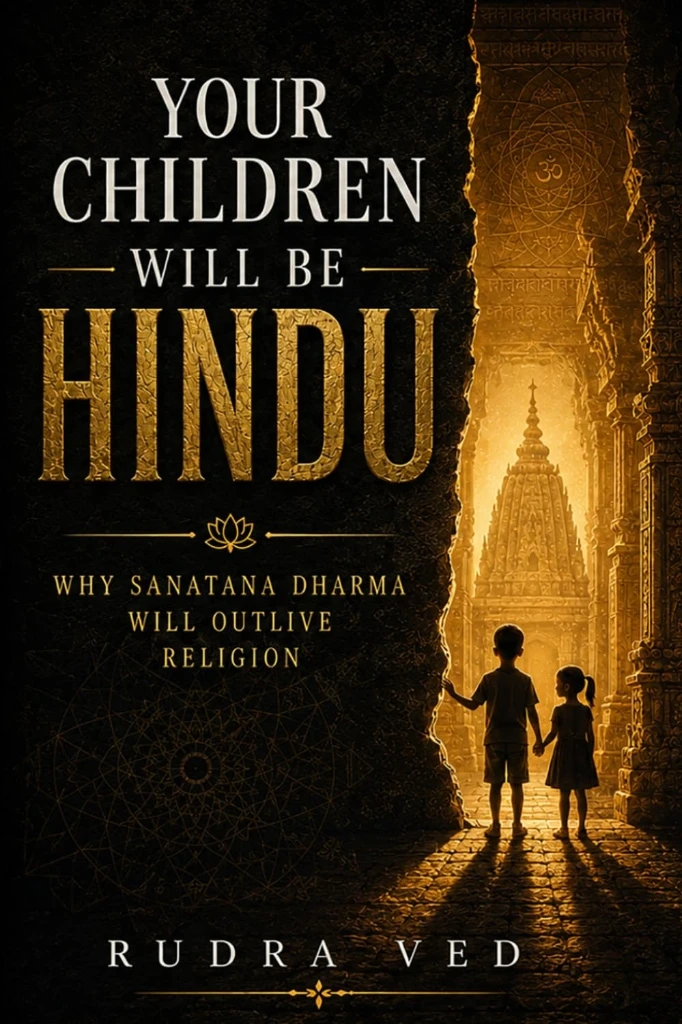
Your Children Will Be Hindu
Why Sanatana Dharma Will Outlive Religion — By Rudra Ved
How do you explain these ancient Vedic verses to your children, friends, or skeptical thinkers? Written by a former lifelong atheist and tested across 500+ unedited live debates, this book provides the rational, modern vocabulary that today's questioning generation needs.
Verse 11
अथातः सांयमनं प्रातर्दनमान्तरमग्निहोत्रमिति चाचक्षते यावद्वै पुरुषो भाषते न तावत्प्राणितुं शक्नोति प्राणं तदा वाचि जुहोति । यावद्वै पुरुषः प्राणिति न तावद्भाषितुं शक्नोति वाचं तदा प्राणे जुहोति । एते अनन्ते अमृताहुती जाग्रच्च स्वपंश्च संततमव्यवच्छिन्नं जुहोत्यर्थ या अन्याः आहुतयोऽन्तवत्यस्ताः कर्ममय्यो हि भवन्त्येतद्ध वै पूर्वे विद्वांसोऽग्निहोत्रं १ जुहवांचक्रुः ॥
athātaḥ sāṃyamanaṃ prātardanamāntaramagnihotramiti cācakṣate yāvadvai puruṣo bhāṣate na tāvatprāṇituṃ śaknoti prāṇaṃ tadā vāci juhoti । yāvadvai puruṣaḥ prāṇiti na tāvadbhāṣituṃ śaknoti vācaṃ tadā prāṇe juhoti । ete anante amṛtāhutī jāgracca svapaṃśca saṃtatamavyavacchinnaṃ juhotyartha yā anyāḥ āhutayo'ntavatyastāḥ karmamayyo hi bhavantyetaddha vai pūrve vidvāṃso'gnihotraṃ 1 juhavāṃcakruḥ ॥
Now, therefore, they call this restraint of Prātardana the inner Agnihotra. As long as a person speaks, he cannot breathe; he then offers the breath into speech. As long as a person breathes, he cannot speak; he then offers speech into the breath. These two are unending, immortal oblations which one offers continuously and uninterruptedly, both when waking and when sleeping. For those other oblations that are finite are indeed made of action. Truly, it was this Agnihotra that the ancient wise ones performed.
Verse 12
उक्थं ब्रह्मेति ह स्माह शुष्कभृङ्गारस्तदृगित्युपासीत सर्वाणि हास्मै भूतानि श्रेष्ठयायाभ्यर्चन्ते तद्यजुरित्युपासीत सर्वाणि हास्मै भूतानि श्रेष्ठयाय युज्यन्ते तत्सामेत्युपासीत सर्वाणि हास्मै भूतानि श्रेष्ठयाय संनमन्ते तच्छीरित्युपासीत तद्यश इत्युपासीत तत्तेज इत्युपासीत तद्यथैतच्छास्त्राणां श्रीमत्तमं यशस्वितमं तेजस्वितमं भवति । तथैवैवं विद्वान् सर्वेषां भूतानां श्रीमत्तमो यशस्वितमस्तेजस्वितमो भवति । तमेतमैष्टकं कर्ममयमात्मानमध्वर्युः संस्करोति तस्मिन्यजुर्मयं प्रवयति यजुर्मय ऋड्मयं होता ऋड्मये साममयमुद्गाता स एष सर्वस्यै त्रयीविद्याया आत्मैष उ एवास्यात्मा एतदात्मा भवति य एवं वेद ॥
ukthaṃ brahmeti ha smāha śuṣkabhṛṅgārastadṛgityupāsīta sarvāṇi hāsmai bhūtāni śreṣṭhayāyābhyarcante tadyajurityupāsīta sarvāṇi hāsmai bhūtāni śreṣṭhayāya yujyante tatsāmetyupāsīta sarvāṇi hāsmai bhūtāni śreṣṭhayāya saṃnamante tacchīrityupāsīta tadyaśa ityupāsīta tatteja ityupāsīta tadyathaitacchāstrāṇāṃ śrīmattamaṃ yaśasvitamaṃ tejasvitamaṃ bhavati । tathaivaivaṃ vidvān sarveṣāṃ bhūtānāṃ śrīmattamo yaśasvitamastejasvitamo bhavati । tametamaiṣṭakaṃ karmamayamātmānamadhvaryuḥ saṃskaroti tasminyajurmayaṃ pravayati yajurmaya ṛḍmayaṃ hotā ṛḍmaye sāmamayamudgātā sa eṣa sarvasyai trayīvidyāyā ātmaiṣa u evāsyātmā etadātmā bhavati ya evaṃ veda ॥
“Uktha is Brahman,” thus indeed said Śuṣkabhṛṅgāra. One should meditate on it as ‘That is Ṛc.’ Verily, all beings worship him for supremacy. One should meditate on it as ‘That is Yajus.’ Verily, all beings unite for him for supremacy. One should meditate on it as ‘That is Sāman.’ Verily, all beings bow to him for supremacy. One should meditate on it as ‘That is Splendor.’ One should meditate on it as ‘That is Fame.’ One should meditate on it as ‘That is Lustre.’ Just as this (Uktha) among scriptures becomes the most splendid, most famous, and most luminous; so indeed, a knower of this becomes the most splendid, most famous, and most luminous among all beings. The Adhvaryu priest consecrates this self, which is made of bricks and consists of ritual actions. Into it, he weaves that which is made of Yajus. Into that which is made of Yajus, the Hotṛ priest weaves that which is made of Ṛc. Into that which is made of Ṛc, the Udgātṛ priest weaves that which is made of Sāman. This indeed is the self of all the threefold knowledge (Trayī Vidyā). This indeed is his self. He who knows this becomes this self.
Verse 13
अथातः सर्वजितः कौषीतकेस्त्रीण्युपासनानि भवन्ति यज्ञोपवीतं कृत्वाऽप आचम्य त्रिरुदपात्रं प्रसिच्योद्यन्तमादित्यमुपतिष्ठेत वर्गोऽसि पाप्मानं मे वृङ्धीत्येतयैवावृता मध्ये सन्तमुर्गोऽसि पाप्मानं मे वृङ्धीत्येतयैवावृताऽस्तं यन्तं संवर्गोऽसि पाप्मानं मे संवृड्धीति । यदहोरात्राभ्यां पापं करोति सं तद्वृङ्क्ते ॥
athātaḥ sarvajitaḥ kauṣītakestrīṇyupāsanāni bhavanti yajñopavītaṃ kṛtvā'pa ācamya trirudapātraṃ prasicyodyantamādityamupatiṣṭheta vargo'si pāpmānaṃ me vṛṅdhītyetayaivāvṛtā madhye santamurgo'si pāpmānaṃ me vṛṅdhītyetayaivāvṛtā'staṃ yantaṃ saṃvargo'si pāpmānaṃ me saṃvṛḍdhīti । yadahorātrābhyāṃ pāpaṃ karoti saṃ tadvṛṅkte ॥
Now, therefore, these are the three meditations of Sarvajit Kauṣītaki. Having put on the sacred thread, having sipped water, and having sprinkled water thrice from a water-pot, one should worship the rising sun with the mantra: 'You are Varga (the gatherer); gather away my sin!' In the same manner, at midday, one should say to the sun: 'You are Urga (the gatherer); gather away my sin!' In the same manner, to the setting sun, one should say: 'You are Saṁvarga (the complete gatherer); completely gather away my sin!' Whatever sin one commits by day and night, that (sin) he completely removes.
Verse 14
अथ मासि मास्यमावास्यायां पश्चाच्चन्द्रमसं दृश्यमानमुपतिष्ठेतैतयैवावृता हरिततृणाभ्यां वाक्प्रत्यस्यति यत्ते सुसीमं हृदयमधि चन्द्रमसि श्रितं तेनामृतत्वस्येशाने माऽहं पौत्रमघं रुदमिति न हास्मात्पूर्वाः प्रजाः प्रैतीति नुजातपुत्रस्याथाजातपुत्रस्याप्यायस्व समेतु ते सं ते पयांसि समु यन्तु वाजा यमादित्या अंशुमाप्याययन्तीत्येतास्तिस्त्र ऋचो जपित्वा माऽस्माकं प्राणेन प्रजया पशुभिराप्याययिष्ठा योऽस्मान्द्वेष्टि यं च वयं द्विष्मस्तस्य प्राणेन प्रजया पशुभिराप्याययस्वेति दैवीमावृतमावर्त आदित्यस्यावृतमन्वावर्त इति दक्षिणं बाहुमन्वावर्तते ॥
atha māsi māsyamāvāsyāyāṃ paścāccandramasaṃ dṛśyamānamupatiṣṭhetaitayaivāvṛtā haritatṛṇābhyāṃ vākpratyasyati yatte susīmaṃ hṛdayamadhi candramasi śritaṃ tenāmṛtatvasyeśāne mā'haṃ pautramaghaṃ rudamiti na hāsmātpūrvāḥ prajāḥ praitīti nujātaputrasyāthājātaputrasyāpyāyasva sametu te saṃ te payāṃsi samu yantu vājā yamādityā aṃśumāpyāyayantītyetāstistra ṛco japitvā mā'smākaṃ prāṇena prajayā paśubhirāpyāyayiṣṭhā yo'smāndveṣṭi yaṃ ca vayaṃ dviṣmastasya prāṇena prajayā paśubhirāpyāyayasveti daivīmāvṛtamāvarta ādityasyāvṛtamanvāvarta iti dakṣiṇaṃ bāhumanvāvartate ॥
Then, every month, on the new moon day, one should stand facing the moon visible in the west, and with two green blades of grass, cast back the word with this very formula: 'O Moon, your beautifully bounded heart which is established in you, by that be the lord of immortality. May I not weep for the misfortune of my descendants.' (This is) for a son already born, so that previous generations do not perish from him. Then, for an unborn son, having recited these three verses: 'Swell, may (prosperity) come together for you; may your milk streams unite, may your strengths unite, which the Adityas cause to swell as a ray.' Having recited these, (one should say): 'Do not swell us with our vital breath, progeny, and cattle. Swell him, who hates us and whom we hate, with his vital breath, progeny, and cattle.' (Saying this,) one should turn with the divine turn, 'I turn following the turn of Aditya (the sun),' and then turn following the right arm.
Verse 15
अथ पौर्णमास्यां पुरस्ताच्चन्द्रमसं दृश्यमानमुपतिष्ठेतैतयैवावृता सोमो राजाऽसि विचक्षणः पञ्चमुखोऽसि प्रजापतिर्बाह्मणस्त एकं मुखं तेन मुखेन राज्ञोऽत्सि तेन मुखेन मामन्नादं कुरु राजा त एकं मुखं तेन मुखेन विशोऽत्सि तेन मुखेन मामन्नादं कुरु श्येनस्त एकं मुखं तेन । मुखेन पक्षिणोऽत्सि तेन मुखेन मामन्नादं कुर्वग्निष्ट एकं मुखं तेन मुखेनेमं लोकमत्सि तेन मुखेन मामन्नादं कुरु त्वयि पञ्चमं मुखं तेन मुखेन सर्वाणि भूतान्यत्सि तेन मुखेन मामन्नादं कुरु माऽस्माकं प्राणेन प्रजया पशुभिरवक्षेष्ठा योऽस्मान्द्वेष्टि यं च वयं द्विष्मस्तस्य प्राणेन प्रजया पशुभिरवक्षीयस्वेति दैवीमावृतमावर्त आदित्यस्यावृतमन्वावर्तन्त इति दक्षिणं बाहुमन्वावर्तते ॥
atha paurṇamāsyāṃ purastāccandramasaṃ dṛśyamānamupatiṣṭhetaitayaivāvṛtā somo rājā'si vicakṣaṇaḥ pañcamukho'si prajāpatirbāhmaṇasta ekaṃ mukhaṃ tena mukhena rājño'tsi tena mukhena māmannādaṃ kuru rājā ta ekaṃ mukhaṃ tena mukhena viśo'tsi tena mukhena māmannādaṃ kuru śyenasta ekaṃ mukhaṃ tena । mukhena pakṣiṇo'tsi tena mukhena māmannādaṃ kurvagniṣṭa ekaṃ mukhaṃ tena mukhenemaṃ lokamatsi tena mukhena māmannādaṃ kuru tvayi pañcamaṃ mukhaṃ tena mukhena sarvāṇi bhūtānyatsi tena mukhena māmannādaṃ kuru mā'smākaṃ prāṇena prajayā paśubhiravakṣeṣṭhā yo'smāndveṣṭi yaṃ ca vayaṃ dviṣmastasya prāṇena prajayā paśubhiravakṣīyasveti daivīmāvṛtamāvarta ādityasyāvṛtamanvāvartanta iti dakṣiṇaṃ bāhumanvāvartate ॥
Then, on the full moon day, one should worship the visible Moon in the east with this very formula: 'You are Soma, the King, the discerning one; you are Prajapati, the five-mouthed. The Brahman is your one mouth; with that mouth, you consume the kings; with that mouth, make me an eater of food. The king is your one mouth; with that mouth, you consume the common people; with that mouth, make me an eater of food. The hawk is your one mouth; with that mouth, you consume the birds; with that mouth, make me an eater of food. Agni is your one mouth; with that mouth, you consume this world; with that mouth, make me an eater of food. The fifth mouth is in you; with that mouth, you consume all beings; with that mouth, make me an eater of food. Do not diminish us in breath, offspring, or cattle. May he who hates us, and whom we hate, be diminished in breath, offspring, and cattle.' He performs the divine turn. Saying 'They turn following the turn of the Sun', he turns his right arm.
Verse 16
अथ संवेश्यञ्जायायै हृदयमभिमृशेद्यत्ते सुसीमे हृदये हितमन्तः प्रजापतौ मन्येऽहं मां तद्विद्वांसं तेन माऽहं पौत्रमधं रुदमिति न हास्मात्पूर्वाः प्रजाः प्रेतीति ॥
atha saṃveśyañjāyāyai hṛdayamabhimṛśedyatte susīme hṛdaye hitamantaḥ prajāpatau manye'haṃ māṃ tadvidvāṃsaṃ tena mā'haṃ pautramadhaṃ rudamiti na hāsmātpūrvāḥ prajāḥ pretīti ॥
Now, when he makes his wife lie down, he should touch her heart (and say): 'O beautiful-hipped one, that which is placed in your heart, within Prajāpati, I consider myself to be the knower of that. By this, let me not weep over the misfortune of a grandson.' Verily, from him, earlier generations (or descendants) do not pass away (prematurely).
Verse 17
अथ प्रोष्यायन्पुत्रस्य मूर्धानमभिमृशेत्। अङ्गादङ्गात्संभवसि हृदयादधिजायसे। आत्मा त्वं पुत्र माविध स जीव शरदः शतमसाविति नामास्य गृह्णाति। अश्मा भव परशुर्भव हिरण्यमस्तृतं भव तेजो वै पुत्रनामासि स जीव शरदः शतमसाविति नामास्य गृह्णाति येन प्रजापतिः प्रजाः पर्यगृह्णादरिष्टयै तेन त्वा परिगृह्णाम्यसाविति नामास्य गृह्णात्यथास्य दक्षिणे कर्णे जपत्यस्मै प्रयन्धि मघवन्नृजीषिन्नितीन्द्र श्रेष्ठानि द्रविणानि धेहीति सव्ये माच्छित्था मा व्यथिष्ठाः शतं शरद आयुषो जीव पुत्र ते नाम्ना मूर्धानमवजिघ्राम्यसाविति त्रिर्मूर्धानमवजिघ्नाद्रवां त्वा हिंकारेणाभि हिं करोमीति त्रिमूर्धानमभि हिं कुर्यात्॥
atha proṣyāyanputrasya mūrdhānamabhimṛśet। aṅgādaṅgātsaṃbhavasi hṛdayādadhijāyase। ātmā tvaṃ putra māvidha sa jīva śaradaḥ śatamasāviti nāmāsya gṛhṇāti। aśmā bhava paraśurbhava hiraṇyamastṛtaṃ bhava tejo vai putranāmāsi sa jīva śaradaḥ śatamasāviti nāmāsya gṛhṇāti yena prajāpatiḥ prajāḥ paryagṛhṇādariṣṭayai tena tvā parigṛhṇāmyasāviti nāmāsya gṛhṇātyathāsya dakṣiṇe karṇe japatyasmai prayandhi maghavannṛjīṣinnitīndra śreṣṭhāni draviṇāni dhehīti savye mācchitthā mā vyathiṣṭhāḥ śataṃ śarada āyuṣo jīva putra te nāmnā mūrdhānamavajighrāmyasāviti trirmūrdhānamavajighnādravāṃ tvā hiṃkāreṇābhi hiṃ karomīti trimūrdhānamabhi hiṃ kuryāt॥
Then, upon returning from a journey, he should touch his son's head (and say): "From limb to limb you are born, from the heart you arise. You are the self, O son; may you not be struck down. May he live a hundred autumns." (Thus saying, he calls him by name, saying 'O [name]'). "Be a stone, be an axe, be unfading gold. Indeed, O son, you are splendor by name. May he live a hundred autumns." (Thus saying, he calls him by name, saying 'O [name]'). "With that by which Prajāpati held together creatures for their safety, with that I hold you together." (Thus saying, he calls him by name, saying 'O [name]'). Then, into his right ear, he mutters: "To him do thou give, O liberal Indra, O possessor of strength," and "O Indra, bestow excellent treasures." Into the left (ear, he says): "Be not cut off, be not pained. Live a hundred autumns of life, O son. With your name, I smell your head." (Thus saying, he calls him by name, saying 'O [name]'). Three times he smells the head. (Then he says): "With the sound 'hiṃ', I 'hiṃ' you, O roaring one." Three times he should make the 'hiṃ' sound over the head.
Verse 18
अथातो दैवः परिमर एतद्वै ब्रह्म दीप्यते यदग्निर्चलत्यथैतन्म्रियते यन्न ज्वलति तस्यादित्यमेव तेजो गच्छति वायु प्राण एतद्वै ब्रह्म दीप्यते यदादित्यो दृश्यतेऽथैतन्मियते यन्न दृश्यते तस्य चन्द्रमसमेव तेजो गच्छति वायु प्राण एतद्वै ब्रह्म दीप्यते यच्चन्द्रमा दृश्यते। अथैतन्मियते यन्न दृश्यते तस्य विद्युतमेव तेजो गच्छति वायु प्राण एतद्वै ब्रह्म दीप्यते यद्विद्विद्योततेऽथैतन्मियते यन्न विद्योतते तस्य वायुमेव तेजो गच्छति वायु प्राणः । ता वा एताः सर्वा देवता वायुमेव प्रविश्य वायौ मृता न मृच्छन्ते तस्मादेव उ पुनरुदीरत इत्यधिदैवत-मथाध्यात्मम्॥
athāto daivaḥ parimara etadvai brahma dīpyate yadagnircalatyathaitanmriyate yanna jvalati tasyādityameva tejo gacchati vāyu prāṇa etadvai brahma dīpyate yadādityo dṛśyate'thaitanmiyate yanna dṛśyate tasya candramasameva tejo gacchati vāyu prāṇa etadvai brahma dīpyate yaccandramā dṛśyate। athaitanmiyate yanna dṛśyate tasya vidyutameva tejo gacchati vāyu prāṇa etadvai brahma dīpyate yadvidvidyotate'thaitanmiyate yanna vidyotate tasya vāyumeva tejo gacchati vāyu prāṇaḥ । tā vā etāḥ sarvā devatā vāyumeva praviśya vāyau mṛtā na mṛcchante tasmādeva u punarudīrata ityadhidaivata-mathādhyātmam॥
Now, therefore, the divine absorption. This Brahman shines when fire burns; then it dies when it does not burn. Its light goes to the sun, and its vital breath to the wind. This Brahman shines when the sun is seen; then it dies when it is not seen. Its light goes to the moon, and its vital breath to the wind. This Brahman shines when the moon is seen; then it dies when it is not seen. Its light goes to lightning, and its vital breath to the wind. This Brahman shines when lightning flashes; then it dies when it does not flash. Its light goes to the wind, and its vital breath to the wind. These all deities, indeed, entering into the wind, though dead within the wind, are not lost; therefore, they rise again. This is concerning the deities (adhidaivatam). Now (follows the explanation) concerning the self (adhyātmam).
Verse 19
एतदै ब्रा दीप्यते चद्वाचा वदत्यथैतन्म्रियते यन्न वदति तस्य चक्षुरेव तेजो गच्छति प्राणं प्राण एतद्वै ब्रह्म दीप्यते यच्चक्षुषा पश्यत्यथैतन्म्रियते यन्न पश्यति तस्य श्रोत्रमेव तेजो गच्छति प्राणं प्राण एतदै ब्रह्म दीप्यते यच्छ्रोत्रेण शृणोत्यथैतन्म्रियते यन्न शृणोति तस्य पन एव तेजो गच्छति प्राणं प्राण एतद्वै ब्रह्म दीप्यते यन्मनसा ध्यायत्यथैतन्म्रियते यन्त्र ध्यायति तस्य प्राणमेव तेजो गच्छति प्राणं प्राणस्ता वा एताः सर्वा देवता: प्राणमेव प्रविश्य प्राणे मृता न मृच्छन्ते तस्मा दव उ पुनरुदीरते तद्यदिह वा एवं विद्वांस उभौ पर्वतावभिप्रवर्तेयातां तुस्तूर्षमाणौ दक्षिणशोत्तरश्च न हैवैनं स्तृण्वीयाताम्। अथ य एनं द्विषन्ति यांचे स्वयं द्वेष्टि त एनं सर्वे परिम्रियन्ते ॥
etadai brā dīpyate cadvācā vadatyathaitanmriyate yanna vadati tasya cakṣureva tejo gacchati prāṇaṃ prāṇa etadvai brahma dīpyate yaccakṣuṣā paśyatyathaitanmriyate yanna paśyati tasya śrotrameva tejo gacchati prāṇaṃ prāṇa etadai brahma dīpyate yacchrotreṇa śṛṇotyathaitanmriyate yanna śṛṇoti tasya pana eva tejo gacchati prāṇaṃ prāṇa etadvai brahma dīpyate yanmanasā dhyāyatyathaitanmriyate yantra dhyāyati tasya prāṇameva tejo gacchati prāṇaṃ prāṇastā vā etāḥ sarvā devatā: prāṇameva praviśya prāṇe mṛtā na mṛcchante tasmā dava u punarudīrate tadyadiha vā evaṃ vidvāṃsa ubhau parvatāvabhipravarteyātāṃ tustūrṣamāṇau dakṣiṇaśottaraśca na haivainaṃ stṛṇvīyātām। atha ya enaṃ dviṣanti yāṃce svayaṃ dveṣṭi ta enaṃ sarve parimriyante ॥
This `brā` shines forth when one speaks with speech; then it dies when one does not speak. Its light, which is verily the eye, goes to Prāṇa, the life-breath. This Brahman shines forth when one sees with the eye; then it dies when one does not see. Its light, which is verily the ear, goes to Prāṇa, the life-breath. This `brā` shines forth when one hears with the ear; then it dies when one does not hear. Its light, which is verily the `pana`, goes to Prāṇa, the life-breath. This Brahman shines forth when one thinks with the mind; then it dies when one does not think. Its light, which is verily Prāṇa itself, goes to Prāṇa, the life-breath. Verily, all these divinities, entering Prāṇa alone, though dead in Prāṇa, do not perish. Therefore, they rise again. Indeed, if here two mountains, wishing to crush, one from the south and one from the north, were to approach such a knower, they would certainly not crush him. And those who hate him, and those whom he himself hates, all these perish around him.
Verse 20
अथातो निःश्रेयसादानं सर्वा ह वै देवता अहंश्रेयसे विवदमानाः । अस्माच्छरीरादुच्चक्रमुस्तद्यारुभूतं शिश्येऽथैनद्वाप्रविवेश तद्वाचा वदच्छिश्य एव। अथैनच्चक्षुः प्रविवेश तद्वाचा वदच्चक्षुषा पश्यच्छिश्य एवार्थेनच्छ्रोत्रं प्रविवेश तद्वाचा वदच्चक्षुषा पश्यच्छ्रोत्रेण शृण्वच्छिश्य एवाथैनन्मनः प्रविवेश तद्वाचा वदच्चक्षुषा पश्यच्छ्रोत्रेण शृण्वन्मनसा ध्यायच्छिश्य एवाथैनत्प्राणः प्रविवेश तत्तत एव समुत्तस्थौ ते देवाः प्राणे निःश्रेयसं विदित्वा प्राणमेव प्रज्ञात्मानमभिसंभूय सहैतैः सर्वैरस्माल्लोकादुच्चक्रमुः। ते वायुप्रतिष्ठा आकाशात्मानः स्वरीयुस्तथो एवैवं विद्वान्सर्वेषां भूतानां प्राणमेव प्रज्ञात्मानमभिसंभूय सहैतैः सर्वैरस्माच्छरीरादुत्क्रामति से वायुप्रतिष्ठ आकाशात्मा स्वरेति स तद्भवति यत्रैते देवास्तत्प्राप्य तदमृतो भवति यदमृता देवाः ।।
athāto niḥśreyasādānaṃ sarvā ha vai devatā ahaṃśreyase vivadamānāḥ । asmāccharīrāduccakramustadyārubhūtaṃ śiśye'thainadvāpraviveśa tadvācā vadacchiśya eva। athainaccakṣuḥ praviveśa tadvācā vadaccakṣuṣā paśyacchiśya evārthenacchrotraṃ praviveśa tadvācā vadaccakṣuṣā paśyacchrotreṇa śṛṇvacchiśya evāthainanmanaḥ praviveśa tadvācā vadaccakṣuṣā paśyacchrotreṇa śṛṇvanmanasā dhyāyacchiśya evāthainatprāṇaḥ praviveśa tattata eva samuttasthau te devāḥ prāṇe niḥśreyasaṃ viditvā prāṇameva prajñātmānamabhisaṃbhūya sahaitaiḥ sarvairasmāllokāduccakramuḥ। te vāyupratiṣṭhā ākāśātmānaḥ svarīyustatho evaivaṃ vidvānsarveṣāṃ bhūtānāṃ prāṇameva prajñātmānamabhisaṃbhūya sahaitaiḥ sarvairasmāccharīrādutkrāmati se vāyupratiṣṭha ākāśātmā svareti sa tadbhavati yatraite devāstatprāpya tadamṛto bhavati yadamṛtā devāḥ ।।
Now then, the acquisition of the supreme good. Indeed, all the deities, disputing about who was superior, departed from this body. That body lay like a dry log. Then Speech entered it; it spoke with Speech, but still lay. Then the Eye entered it; it spoke with Speech, saw with the Eye, but still lay. Then the Ear entered it; it spoke with Speech, saw with the Eye, heard with the Ear, but still lay. Then the Mind entered it; it spoke with Speech, saw with the Eye, heard with the Ear, thought with the Mind, but still lay. Then the Breath (Prana) entered it, and immediately it stood up. Those deities, having recognized the supreme good in the Breath, and having realized the Breath itself as the intelligent Self, together with all these faculties, departed from this world. They, established in Vayu (air) and whose essence is Akasha (space), ascended to heaven. Just so, a knower, having realized the Breath itself as the intelligent Self in all beings, together with all these faculties, departs from this body. He, established in Vayu and whose essence is Akasha, ascends to heaven. He attains that state where these deities are; having attained that, he becomes immortal, as the deities are immortal.
Key Takeaways & AI Summary
This chapter explores the profound teachings of Kaushītaki brāhmaṇopaniṣad. It includes 50 verses detailing core themes like "citro ha vai gārgyāyaṇiryakṣyamāṇa āruṇiṃ vanve । sa ha putraṃ śvetaketuṃ prajighāya yājayeti । taṃ । hāsīnaṃ papraccha gautamasya putrāste saṃvṛtaṃ loke yasminmādhāsyasyanyamutāho boddhavā tasya mā loke dhāsyasīti । sa hovāca nāhametadveda hantācāryaṃ pṛcchānīti । sa ha pitaramāsādya papracchetīti mā prākṣītkathaṃ pratibravāṇīti । sa hovācāhamapyetanna veda sadasyeva vayaṃ svādhyāyamadhītya harāmahe yannaḥ pare dadatyehyabhau gamiṣyāva iti। sa hasamitpāṇiścitraṃ gārgyāyaṇiṃ praticakrāma upāyānīti। taṃ hovāca brahmārgho'si gautama yo mānamupāgā ehi tvā jñapayiṣyāmīti ॥", "sa hovāca ye vai ke cāsmāllokātprayanti candramasameva te sarve gacchanti। teṣāṃ prāṇaiḥ pūrvapakṣa āpyāyate। athāparapakṣe na prajanayati। etadvai svargasya lokasya dvāraṃ yaścandramāstaṃ yatpratyāha tamatisṛjate'tha ya enaṃ pratyāhatamiha vṛṣṭirbhūtvā varṣati sa iha kīṭo vā pataṅgo vā śakunirvā śārdūlo vā siṃho vā matsyo vā paraśvā vā puruṣo vānyo vaiteṣu sthāneṣu pratyājāyate yathākarma yathāvidyam। tamāgataṃ pṛcchati ko'sīti taṃ pratibūyādvicakṣaṇādatavo reta ābhṛtaṃ pañcadaśātprasūtātpitryāvatastanmā puṃsi kartaryeyadhvaṃ puṃsā kartrā mātari mā niṣiktaḥ sa jāyamāna upajāyamāno dvādaśa trayodaśa upamāso dvādaśatrayodaśena pitrā saṃtadvidehaṃ tanma ṛtavo martyava ārabhadhvam। tena satyena tapasarasyārtavo'smi ko'si tvamasmīti tamatisṛjate ॥", "sa etaṃ devayānaṃ panthānamāsādyāgnilokamāgacchati sa vāyulokaṃ sa varuṇalokaṃ sa ādityalokaṃ sa indralokaṃ sa prajāpatilokaṃ sa brahmalokaṃ tasya ha vā etasya brahmalokasya āro hnado muhūrto'nyeṣṭihā virajā nadīlyo vṛkṣaḥ sālajyaṃ saṃsthānamaparājitamāyatanamindraprajāpatī dvāragopau । vibhupramitaṃ vicakṣaṇā''sandyamitaujā: paryaṅkaḥ priyā ca mānasī pratirūpā ca cākṣuṣī puṣpāṇyāvayatau vai ca jagānyambāścāmbāvayavīścāpsarasaḥ। ambayā nadyastamitthaṃvidā gacchati taṃ brahmā hābhidhāvata mama yaśasā virajāṃ vā ayaṃ nadīṃ prāpanna vā ayaṃ jarayiṣyatīti ॥".The crown jewels of Vedic philosophy — a collection of 108+ texts exploring the nature of Brahman, Atman, and ultimate reality.