
Mantrika Upanishad
(Chapter 24)
Verse 1
ॐ अष्टपादं शुचिं हंसं त्रिसूत्रमणुमव्ययम्। त्रिवर्त्मानं तेजसोऽहं सर्वत:पश्यन्न पश्यति॥
oṃ aṣṭapādaṃ śuciṃ haṃsaṃ trisūtramaṇumavyayam। trivartmānaṃ tejaso'haṃ sarvata:paśyanna paśyati॥
Om. (It is) the eight-footed, pure Swan, possessing three threads, subtle, imperishable, and having three paths. I am of that effulgence. Though seeing everywhere, one does not perceive (it).
Verse 2
भूतसंमोहने काले भिन्न्ने तपसि वैखरे। अन्तः पश्यन्ति सत्त्वस्था निर्गुणं गुणगह्वरे॥
bhūtasaṃmohane kāle bhinnne tapasi vaikhare। antaḥ paśyanti sattvasthā nirguṇaṃ guṇagahvare॥
In the time of the delusion of beings, when external asceticism is dissolved, those established in Sattva see inwardly the attributeless (Brahman) within the deep cavern of qualities.
Verse 3
अशक्यः सोऽन्यथा द्रष्टुं ध्यायमानः कुमारकैः। विकारजननीमज्ञामष्टरूपामजां ध्रुवाम्॥
aśakyaḥ so'nyathā draṣṭuṃ dhyāyamānaḥ kumārakaiḥ। vikārajananīmajñāmaṣṭarūpāmajāṃ dhruvām॥
He (the Supreme) is impossible to be seen in His true nature otherwise, even when meditated upon by the ignorant, who (in their meditation) perceive primordial nature as the generator of transformations, unconscious, having eight forms, unborn, and eternal.
Verse 4
ध्यायतेऽध्यासिता तेन तन्यते प्रेर्यते पुनः। सूयते पुरुषार्थं च तेनैवाधिष्ठितं जगत्॥
dhyāyate'dhyāsitā tena tanyate preryate punaḥ। sūyate puruṣārthaṃ ca tenaivādhiṣṭhitaṃ jagat॥
The world, presided over by Him, is meditated upon by Him, extended, and repeatedly impelled. It also yields human objectives. Indeed, the world is governed by Him alone.
Verse 5
गौरनाद्यन्तवती सा जनित्री भूतभाविनी। सितासिता च रक्ता च सर्वकामदुधा विभोः॥
gauranādyantavatī sā janitrī bhūtabhāvinī। sitāsitā ca raktā ca sarvakāmadudhā vibhoḥ॥
She, the golden one, without beginning or end, the Creatrix, the producer of all beings, who is white, black, and red, yields all desires for the Lord.
Verse 6
पिबन्त्येनामविषयामविज्ञातां कुमारकाः। एकस्तु पिबते देवःस्वच्छन्दोऽत्र वशानुगः॥
pibantyenāmaviṣayāmavijñātāṃ kumārakāḥ। ekastu pibate devaḥsvacchando'tra vaśānugaḥ॥
The immature ones drink this, which is imperceptible to the senses and unknown. But the one God here drinks, being self-willed and obedient (to His own will).
Verse 7
ध्यानक्रियाभ्यां भगवान्भुङ्क्तेऽसौ प्रसहद्विभुः। सर्वसाधारणीं दोग्ध्रीं पीयमानां तु यज्वभिः॥
dhyānakriyābhyāṃ bhagavānbhuṅkte'sau prasahadvibhuḥ। sarvasādhāraṇīṃ dogdhrīṃ pīyamānāṃ tu yajvabhiḥ॥
The mighty, all-pervading Lord (Bhagavan), by means of meditation and action, indeed enjoys (sustains) that universal milch-cow (Prakriti), which is also partaken of (enjoyed) by the sacrificers.
Verse 8
पश्यन्त्यस्यां महात्मानः सुवर्णं पिप्पलाशनम्। उदासीनं ध्रुवं हंसं स्नातकाध्वर्यवो जगुः॥
paśyantyasyāṃ mahātmānaḥ suvarṇaṃ pippalāśanam। udāsīnaṃ dhruvaṃ haṃsaṃ snātakādhvaryavo jaguḥ॥
Great souls perceive in this (reality) the golden one that partakes of the fruit. The Snātakas and Adhvaryus declared the indifferent, constant Swan (Supreme Self).
Verse 9
शंसन्तमनुशंसन्ति बह्वृचाः शास्त्रकोविदाः। रथन्तरं बृहत्साम सप्तवैधैस्तु गीयते ।।
śaṃsantamanuśaṃsanti bahvṛcāḥ śāstrakovidāḥ। rathantaraṃ bṛhatsāma saptavaidhaistu gīyate ।।
The Bahvṛcas, who are experts in the scriptures, praise the one who praises. The Rathantara and Bṛhatsāman (melodies) are sung by the seven Vaidhas (experts).
Verse 10
मन्त्रोपनिषदं ब्रह्म पदक्रमसमन्वितम्। पठन्ति भार्गवा ह्येते ह्यथर्वाणो भृगूत्तमाः॥
mantropaniṣadaṃ brahma padakramasamanvitam। paṭhanti bhārgavā hyete hyatharvāṇo bhṛgūttamāḥ॥
These Bhargavas, indeed, these Atharvans, the best among the Bhrigus, study the Mantropanishad, which is Brahman, complete with its sequential words.
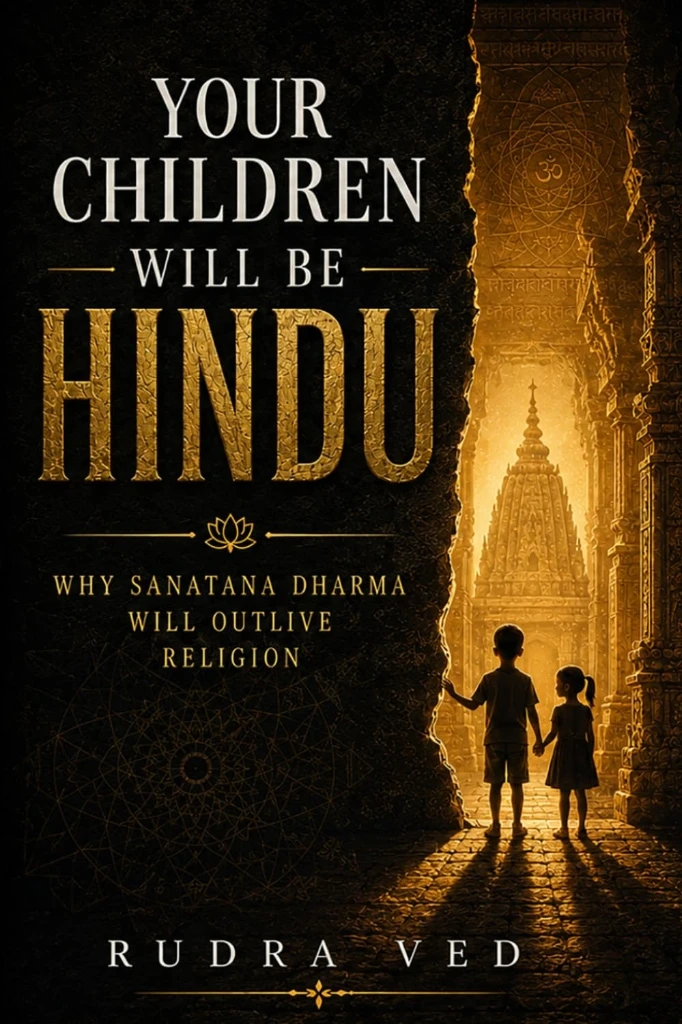
Your Children Will Be Hindu
Why Sanatana Dharma Will Outlive Religion — By Rudra Ved
How do you explain these ancient Vedic verses to your children, friends, or skeptical thinkers? Written by a former lifelong atheist and tested across 500+ unedited live debates, this book provides the rational, modern vocabulary that today's questioning generation needs.
Verse 11
सब्रह्मचारिवृत्तिश्च स्तम्भोऽथ फलितस्तथा। अनड्वान्रोहितोच्छिष्टःपश्यन्तो बहुविस्तरम्॥
sabrahmacārivṛttiśca stambho'tha phalitastathā। anaḍvānrohitocchiṣṭaḥpaśyanto bahuvistaram॥
And the conduct of a fellow spiritual aspirant, a pillar, then also the fruitful (one); similarly, an ox, a red (one), the remnant; and those who see much expansion.
Verse 12
कालः प्राणश्च भगवान्मृत्युः शर्वो महेश्वरः। उग्रो भवश्च रुद्रश्च ससुरः सासुरस्तथा॥
kālaḥ prāṇaśca bhagavānmṛtyuḥ śarvo maheśvaraḥ। ugro bhavaśca rudraśca sasuraḥ sāsurastathā॥
He is Time, and Prana (life-breath), and the Lord, Death, Sharva, Maheśvara, Ugra, and Bhava, and Rudra. He exists with the gods and likewise with the asuras.
Verse 13
प्रजापतिर्विराट् चैव पुरुषः सलिलमेव च। स्तूयते मन्त्रसंस्तुस्यैरथर्वविदितैर्विभुः॥
prajāpatirvirāṭ caiva puruṣaḥ salilameva ca। stūyate mantrasaṃstusyairatharvaviditairvibhuḥ॥
Prajāpati, Virāṭ, Puruṣa, and indeed water – the all-pervading Lord is extolled by those who know the Atharva Veda and are praised by mantras.
Verse 14
तं षड्विंशक इत्येते सप्तविंशं तथापरे। पुरुषं निर्गुणं सांख्यमथर्वशिरसो विदुः॥
taṃ ṣaḍviṃśaka ityete saptaviṃśaṃ tathāpare। puruṣaṃ nirguṇaṃ sāṃkhyamatharvaśiraso viduḥ॥
Some know Him (Purusha) as the twenty-sixth principle, and others as the twenty-seventh. The Sāṅkhyas and the followers of Atharvaśiras know this Purusha to be without attributes.
Verse 15
चतुर्विंशतिसंख्यातं व्यक्तमव्यक्तमेव च। अद्वैतं द्वैतमित्याहुस्त्रिधा तं पञ्चधा तथा।।
caturviṃśatisaṃkhyātaṃ vyaktamavyaktameva ca। advaitaṃ dvaitamityāhustridhā taṃ pañcadhā tathā।।
They call that very (reality) as consisting of twenty-four (principles), both manifest and unmanifest; as non-dual and dual; and also describe it as threefold and fivefold.
Verse 16
ब्रह्माद्यं स्थावरान्तं च पश्यन्ति ज्ञानचक्षुषः। तमेकमेव पश्यन्ति परिशुभ्रं विभुं द्विजाः॥
brahmādyaṃ sthāvarāntaṃ ca paśyanti jñānacakṣuṣaḥ। tamekameva paśyanti pariśubhraṃ vibhuṃ dvijāḥ॥
Those with the eye of wisdom perceive everything from Brahmā down to the immovable. The twice-born see that one, perfectly pure, all-pervading Being alone.
Verse 17
यस्मिन्सर्वमिदं प्रोतं ब्रह्म स्थावरजंगमम्। तस्मिन्नेव लयं यान्ति स्रवन्त्यःसागरे यथा॥
yasminsarvamidaṃ protaṃ brahma sthāvarajaṃgamam। tasminneva layaṃ yānti sravantyaḥsāgare yathā॥
In which Brahman all this, both the stationary and the moving, is interwoven, into that very (Brahman) they attain dissolution, just as rivers merge into the ocean.
Verse 18
यस्मिन्भावाः प्रलीयन्ते लीनाश्चाव्यक्ततां ययुः। पश्यन्ति व्यक्ततां भूयो जायन्ते बुद्बुदा इव॥
yasminbhāvāḥ pralīyante līnāścāvyaktatāṃ yayuḥ। paśyanti vyaktatāṃ bhūyo jāyante budbudā iva॥
In which (the ultimate reality), all entities dissolve, and having dissolved, they enter the unmanifest state. They emerge into manifestation again, and are born like bubbles.
Verse 19
क्षेत्रज्ञाधिष्ठितं चैव कारणैर्विद्यते पुनः। एवं स भगवान्देवं पश्यन्त्यन्ये पुन:पुनः॥
kṣetrajñādhiṣṭhitaṃ caiva kāraṇairvidyate punaḥ। evaṃ sa bhagavāndevaṃ paśyantyanye puna:punaḥ॥
And indeed, that which is superintended by the knower of the field (the soul) comes into existence again through its causes. Thus, others repeatedly behold that glorious Lord.
Verse 20
ब्रह्म ब्रह्मेत्यथायान्ति ये विदुर्ब्राह्मणास्तथा। अत्रैव ते लयं यान्ति लीनाश्चाव्यक्तशालिनः॥ लीनाश्चाव्यक्तशालिन इत्युपनिषत्॥
brahma brahmetyathāyānti ye vidurbrāhmaṇāstathā। atraiva te layaṃ yānti līnāścāvyaktaśālinaḥ॥ līnāścāvyaktaśālina ityupaniṣat॥
Those knowers of Brahman who truly understand Brahman as Brahman, they indeed attain it. In this very (state), they merge, absorbed and shining in the unmanifested. Absorbed and shining in the unmanifested—thus (is) the Upanishad.
Key Takeaways & AI Summary
This chapter explores the profound teachings of Mantrika Upanishad. It includes 20 verses detailing core themes like "oṃ aṣṭapādaṃ śuciṃ haṃsaṃ trisūtramaṇumavyayam। trivartmānaṃ tejaso'haṃ sarvata:paśyanna paśyati॥", "bhūtasaṃmohane kāle bhinnne tapasi vaikhare। antaḥ paśyanti sattvasthā nirguṇaṃ guṇagahvare॥", "aśakyaḥ so'nyathā draṣṭuṃ dhyāyamānaḥ kumārakaiḥ। vikārajananīmajñāmaṣṭarūpāmajāṃ dhruvām॥".The crown jewels of Vedic philosophy — a collection of 108+ texts exploring the nature of Brahman, Atman, and ultimate reality.