
Nrsimha Shat- Chakra Upanishad
(Chapter 33)
Verse 1
ॐ देवाह वै सत्यं लोकमायंस्तं प्रजापतिमपृच्छन्नारसिंहचक्रन्नो ब्रूहीति। तान्प्रजापति- र्नारसिंहचक्रमवोचत् । षड्वै नारसिंहानि चक्राणि भवन्ति । यत्प्रथमं तच्चतुररं यद्वितीयं तच्चतुररं यत्तृतीयं तदष्टारं यच्चतुर्थं तत्पश्चारयत्पञ्चमं तत्पञ्चारं यत्षष्ठं तदष्टारं तदेताति षडेव नारसिंहानि चक्राणि भवन्ति ॥
oṃ devāha vai satyaṃ lokamāyaṃstaṃ prajāpatimapṛcchannārasiṃhacakranno brūhīti। tānprajāpati- rnārasiṃhacakramavocat । ṣaḍvai nārasiṃhāni cakrāṇi bhavanti । yatprathamaṃ taccaturaraṃ yadvitīyaṃ taccaturaraṃ yattṛtīyaṃ tadaṣṭāraṃ yaccaturthaṃ tatpaścārayatpañcamaṃ tatpañcāraṃ yatṣaṣṭhaṃ tadaṣṭāraṃ tadetāti ṣaḍeva nārasiṃhāni cakrāṇi bhavanti ॥
Oṃ. Indeed, the gods went to the world of truth and asked Prajāpati, 'Please tell us about the Nṛsiṃha Chakra (wheel).' Prajāpati then spoke to them about the Nṛsiṃha Chakra. There are indeed six Nṛsiṃha Chakras. The first is four-spoked, the second is four-spoked, the third is eight-spoked, the fourth is five-spoked, the fifth is five-spoked, and the sixth is eight-spoked. Thus, there are indeed these six Nṛsiṃha Chakras.
Verse 2
अथ कानि नामानि भवन्ति । यत्प्रथमं तदाचक्रं यद्वितीयं तत्सुचक्रं यत्तृतीयं तन्महाचक्र यच्चतुर्थं तत्सकललोकरक्षणचक्रं यत्पञ्चमं तद्युतचक्रं यद्वै षष्ठं तदसुरान्तकचक्रं तदेतानि षडेव नारसिंहचक्रनामानि भवन्ति ॥
atha kāni nāmāni bhavanti । yatprathamaṃ tadācakraṃ yadvitīyaṃ tatsucakraṃ yattṛtīyaṃ tanmahācakra yaccaturthaṃ tatsakalalokarakṣaṇacakraṃ yatpañcamaṃ tadyutacakraṃ yadvai ṣaṣṭhaṃ tadasurāntakacakraṃ tadetāni ṣaḍeva nārasiṃhacakranāmāni bhavanti ॥
Now, what are the names? That which is the first is Ācakra; that which is the second is Sucakra; that which is the third is Mahācakra; that which is the fourth is Sakalalokarakṣaṇacakra (the wheel protecting all worlds); that which is the fifth is Dyutacakra; and indeed, that which is the sixth is Asurāntakacakra (the wheel ending demons). These six indeed are the names of the Nārasiṃha cakra.
Verse 3
अथ कानि त्रीणि वलयानि भवन्ति । यत्प्रथमं तदातरवलयं भवति । यद्वितीयं तन्मध्यमं वलयं भवति। यत्तृतीयं तद्बाह्यं वलयं भवति। तदेतानि त्रीण्येव वलयानि भवन्ति। यदा तद्वैतद्वीजं यन्मध्यमं तां नारसिंहगायत्रीं यद्बाह्यं तन्मन्त्रः॥
atha kāni trīṇi valayāni bhavanti । yatprathamaṃ tadātaravalayaṃ bhavati । yadvitīyaṃ tanmadhyamaṃ valayaṃ bhavati। yattṛtīyaṃ tadbāhyaṃ valayaṃ bhavati। tadetāni trīṇyeva valayāni bhavanti। yadā tadvaitadvījaṃ yanmadhyamaṃ tāṃ nārasiṃhagāyatrīṃ yadbāhyaṃ tanmantraḥ॥
Now, what are the three circles (or layers)? That which is the first is the inner circle. That which is the second is the middle circle. That which is the third is the outer circle. These indeed are the three circles. Where the innermost is indeed the seed-syllable (bīja), the middle is the Narasiṃha Gāyatrī, and the outermost is the mantra.
Verse 4
अथ किमान्तरं वलयम्। षड्वान्तराणि वलयानि भवन्ति। यन्नारसिंहं तत्प्रथमस्य यन्महालक्ष्म्यं तद्वितीयस्य यत्सारस्वतं तत्तृतीयस्य यस्य यत्कामं देवं तच्चतुर्थस्य यत्प्रणवं तत्पञ्चमस्य यत्क्रोधदैवतं तत्वष्ठस्य। तदेतानि षण्णां नारसिंहचक्राणां षडान्तराणि वलयानि भवन्ति॥
atha kimāntaraṃ valayam। ṣaḍvāntarāṇi valayāni bhavanti। yannārasiṃhaṃ tatprathamasya yanmahālakṣmyaṃ tadvitīyasya yatsārasvataṃ tattṛtīyasya yasya yatkāmaṃ devaṃ taccaturthasya yatpraṇavaṃ tatpañcamasya yatkrodhadaivataṃ tatvaṣṭhasya। tadetāni ṣaṇṇāṃ nārasiṃhacakrāṇāṃ ṣaḍāntarāṇi valayāni bhavanti॥
Now, what is the inner layer? Indeed, there are six inner layers. That which is Narasiṃha (is) of the first; that which is Mahālakṣmī (is) of the second; that which is Sarasvatī (is) of the third; that which is Kāma-deva (the deity of desire) (is) of the fourth; that which is Praṇava (Om) (is) of the fifth; that which is the wrath-deity (is) of the sixth. Thus, these are the six inner layers of the six Narasiṃha cakras.
Verse 5
अथ किं मध्यमं वलयम् । षड्वै मध्यमानि वलयानि भवन्ति । यन्नारसिंहाय तत्प्रथमस्य यद्विद्महे तद्वितीयस्य यद्वनखाय तत्तृतीयस्य यद्धीमहि तच्चतुर्थस्य यत्तन्नस्तत्पञ्चमस्य यत्सिंहः प्रचोदयादिति तत्षष्ठस्य। तदेतानि षण्णां नारसिंहचक्राणां षण्मध्यमानि वलयानि भवन्ति ॥
atha kiṃ madhyamaṃ valayam । ṣaḍvai madhyamāni valayāni bhavanti । yannārasiṃhāya tatprathamasya yadvidmahe tadvitīyasya yadvanakhāya tattṛtīyasya yaddhīmahi taccaturthasya yattannastatpañcamasya yatsiṃhaḥ pracodayāditi tatṣaṣṭhasya। tadetāni ṣaṇṇāṃ nārasiṃhacakrāṇāṃ ṣaṇmadhyamāni valayāni bhavanti ॥
Now, what is the middle circle? Indeed, there are six middle circles. That which is 'yat Nārasiṃhāya' is the first. That which is 'yad vidmahe' is the second. That which is 'yad vanakhāya' is the third. That which is 'yad dhīmahi' is the fourth. That which is 'yat tan naḥ' is the fifth. And that which is 'yat siṃhaḥ pracodayāt' is the sixth. Thus, these are the six middle circles of the six Nārasiṃha cakras.
Verse 6
अथ किं बाह्यं वलयम् । षड्वै बाह्यानि वलयानि भवन्ति । यदाचक्रं यदात्मा तत्प्रथमस्य यत्सुचक्रं यत्प्रियात्मा तद्वितीयस्य यन्महाचक्रं यज्ज्योतिरात्मा ततृयीयस्य यत्सकललो-करक्षणचक्रं यन्मायात्मा तच्चतुर्थस्य यदाचक्रं यद्योगात्मा तत्पञ्चमस्य यदसुरान्तकचक्रं यत्सत्यात्मा तत्वष्ठस्य । तदेतानि षण्णां नारसिंहचक्राणां षट् वाह्यानि वलयानि भवन्ति ॥
atha kiṃ bāhyaṃ valayam । ṣaḍvai bāhyāni valayāni bhavanti । yadācakraṃ yadātmā tatprathamasya yatsucakraṃ yatpriyātmā tadvitīyasya yanmahācakraṃ yajjyotirātmā tatṛyīyasya yatsakalalo-karakṣaṇacakraṃ yanmāyātmā taccaturthasya yadācakraṃ yadyogātmā tatpañcamasya yadasurāntakacakraṃ yatsatyātmā tatvaṣṭhasya । tadetāni ṣaṇṇāṃ nārasiṃhacakrāṇāṃ ṣaṭ vāhyāni valayāni bhavanti ॥
Now, what is the outer circle? Indeed, there are six outer circles. The Ācakra and the Ātman, that belongs to the first. The Sucakra and the Priyātman, that belongs to the second. The Mahācakra and the Jyotirātman, that belongs to the third. The Sakalalokarakṣaṇacakra (the wheel protecting all worlds) and the Māyātman, that belongs to the fourth. The Ācakra and the Yogātman, that belongs to the fifth. The Asurāntakacakra (the wheel that ends demons) and the Satyātman, that belongs to the sixth. Thus, these six are the outer circles of the six Nṛsiṃha wheels.
Verse 7
क्वैतानि न्यस्यानि। यत्प्रथमं तद्धदये यद्वितीयं तच्छिरसि यत्तृतीयं तच्छिखायां यच्चतुर्थं तत्सर्वेष्वङ्गेषु यत्पञ्चमं तत्सर्वेषु (?) यत्वष्ठं तत्सर्वेषु देशेषु। य एतानि नारसिंहानि चक्राण्येतेष्वङ्गेषु बिभृयात् तस्यानुष्टुप् सिध्यति। तं भगवान् नृसिंहः प्रसीदति । तस्य कैवल्यं सिद्धयति । तस्य सर्वे लोकाः सिध्यन्ति । तस्य सर्वे जनाः सिद्धयन्ति। तस्मादेतानि षण्णां नारसिंहचक्राण्यङ्गेषु न्यस्यानि भवन्ति । पवित्रं च एतत्तस्य न्यसनम्। न्यसनान्नृसिंहानन्दी भवति। कर्मण्यो भवति। ब्रह्मण्यो भवति। अन्यसनान्न नृसिंहानन्दी भवति। न कर्मण्यो भवति । तस्मादेतत्पवित्रं तस्य न्यसनम् ॥
kvaitāni nyasyāni। yatprathamaṃ taddhadaye yadvitīyaṃ tacchirasi yattṛtīyaṃ tacchikhāyāṃ yaccaturthaṃ tatsarveṣvaṅgeṣu yatpañcamaṃ tatsarveṣu (?) yatvaṣṭhaṃ tatsarveṣu deśeṣu। ya etāni nārasiṃhāni cakrāṇyeteṣvaṅgeṣu bibhṛyāt tasyānuṣṭup sidhyati। taṃ bhagavān nṛsiṃhaḥ prasīdati । tasya kaivalyaṃ siddhayati । tasya sarve lokāḥ sidhyanti । tasya sarve janāḥ siddhayanti। tasmādetāni ṣaṇṇāṃ nārasiṃhacakrāṇyaṅgeṣu nyasyāni bhavanti । pavitraṃ ca etattasya nyasanam। nyasanānnṛsiṃhānandī bhavati। karmaṇyo bhavati। brahmaṇyo bhavati। anyasanānna nṛsiṃhānandī bhavati। na karmaṇyo bhavati । tasmādetatpavitraṃ tasya nyasanam ॥
Where are these to be placed? That which is first, in the heart; that which is second, on the head; that which is third, on the topknot; that which is fourth, in all limbs; that which is fifth, in all; that which is sixth, in all regions. Whoever bears these Nṛsiṃha chakras in these limbs, for him the Anuṣṭup (mantra/power) is perfected. Lord Nṛsiṃha is pleased with him. His liberation is accomplished. For him, all worlds are perfected. For him, all people are perfected. Therefore, these six Nṛsiṃha chakras are to be placed in the limbs. And this placement of his is sacred. From this placement, one becomes joyful in Nṛsiṃha; one becomes efficient in action; one becomes devoted to Brahman. From non-placement, one does not become joyful in Nṛsiṃha; one does not become efficient in action. Therefore, this placement of his is sacred.
Verse 8
यो वा एतं नारसिंह चक्रमधीते स सर्वेषु वेदेष्वधीतो भवति । स सर्वेषु यज्ञेषु याजको भवति । स सर्वेषु तीर्थेषु स्नातो भवति । स सर्वेषु मन्त्रेषु सिद्धो भवति । स सर्वत्र शुद्धो भवति । स सर्वरक्षो भवति । भूतपिशाचशाकिनीप्रेतवंताकनाशको भवति । स निर्भयो भवति । तदेतन्नाश्रद्दधानाय प्रबूयात्तदेतन्नाश्रद्दधानाय प्रबृयादिति ॥
yo vā etaṃ nārasiṃha cakramadhīte sa sarveṣu vedeṣvadhīto bhavati । sa sarveṣu yajñeṣu yājako bhavati । sa sarveṣu tīrtheṣu snāto bhavati । sa sarveṣu mantreṣu siddho bhavati । sa sarvatra śuddho bhavati । sa sarvarakṣo bhavati । bhūtapiśācaśākinīpretavaṃtākanāśako bhavati । sa nirbhayo bhavati । tadetannāśraddadhānāya prabūyāttadetannāśraddadhānāya prabṛyāditi ॥
He who studies this Nṛsiṃha Cakra becomes one who has studied all the Vedas. He becomes an officiant in all sacrifices. He becomes one who has bathed in all holy places. He becomes perfected in all mantras. He becomes pure everywhere. He becomes protected from all. He becomes a destroyer of bhūtas (ghosts), piśācas (ghouls), śākinīs (female demons), pretas (spirits of the dead), and vantākas (a type of demon). He becomes fearless. This should not be declared to one who is without faith; this should not be declared to one who is without faith.
Key Takeaways & AI Summary
This chapter explores the profound teachings of Nrsimha Shat- Chakra Upanishad. It includes 8 verses detailing core themes like "oṃ devāha vai satyaṃ lokamāyaṃstaṃ prajāpatimapṛcchannārasiṃhacakranno brūhīti। tānprajāpati- rnārasiṃhacakramavocat । ṣaḍvai nārasiṃhāni cakrāṇi bhavanti । yatprathamaṃ taccaturaraṃ yadvitīyaṃ taccaturaraṃ yattṛtīyaṃ tadaṣṭāraṃ yaccaturthaṃ tatpaścārayatpañcamaṃ tatpañcāraṃ yatṣaṣṭhaṃ tadaṣṭāraṃ tadetāti ṣaḍeva nārasiṃhāni cakrāṇi bhavanti ॥", "atha kāni nāmāni bhavanti । yatprathamaṃ tadācakraṃ yadvitīyaṃ tatsucakraṃ yattṛtīyaṃ tanmahācakra yaccaturthaṃ tatsakalalokarakṣaṇacakraṃ yatpañcamaṃ tadyutacakraṃ yadvai ṣaṣṭhaṃ tadasurāntakacakraṃ tadetāni ṣaḍeva nārasiṃhacakranāmāni bhavanti ॥", "atha kāni trīṇi valayāni bhavanti । yatprathamaṃ tadātaravalayaṃ bhavati । yadvitīyaṃ tanmadhyamaṃ valayaṃ bhavati। yattṛtīyaṃ tadbāhyaṃ valayaṃ bhavati। tadetāni trīṇyeva valayāni bhavanti। yadā tadvaitadvījaṃ yanmadhyamaṃ tāṃ nārasiṃhagāyatrīṃ yadbāhyaṃ tanmantraḥ॥".The crown jewels of Vedic philosophy — a collection of 108+ texts exploring the nature of Brahman, Atman, and ultimate reality.
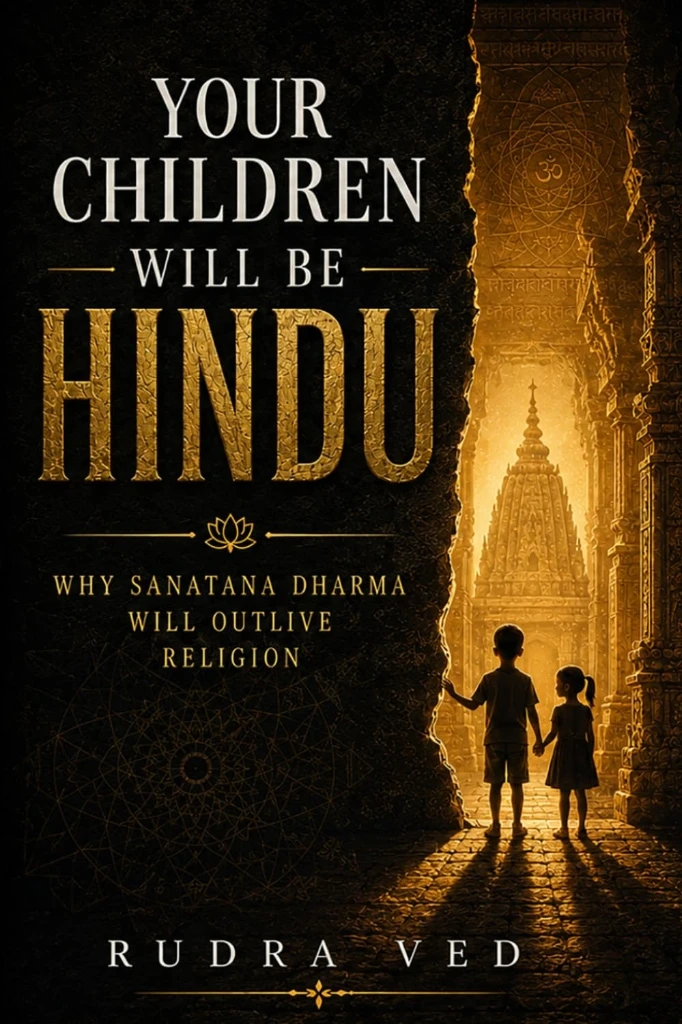
Your Children Will Be Hindu
Why Sanatana Dharma Will Outlive Religion — By Rudra Ved
How do you explain these ancient Vedic verses to your children, friends, or skeptical thinkers? Written by a former lifelong atheist and tested across 500+ unedited live debates, this book provides the rational, modern vocabulary that today's questioning generation needs.