
Shuka Rahasya Upanishad
(Chapter 30)
Verse 1
अथातो रहस्योपनिषदं व्याख्यास्यामः॥
athāto rahasyopaniṣadaṃ vyākhyāsyāmaḥ॥
Now, therefore, we shall expound the secret Upaniṣad.
Verse 2
देवर्षयो ब्रह्माणं संपूज्य प्रणिपत्य पप्रच्छुर्भगवन्नस्माकं रहस्योपनिषदं ब्रूहीति॥
devarṣayo brahmāṇaṃ saṃpūjya praṇipatya papracchurbhagavannasmākaṃ rahasyopaniṣadaṃ brūhīti॥
The divine sages, having worshipped and bowed down to Brahma, asked, "O Lord, please expound to us the secret Upanishad."
Verse 3
सोऽब्रवीत् पुरा व्यासो महातेजाः सर्ववेदः तपोनिधिः। प्रणिपत्य शिवं साम्वं कृताञ्जलिरुवाच ह॥
so'bravīt purā vyāso mahātejāḥ sarvavedaḥ taponidhiḥ। praṇipatya śivaṃ sāmvaṃ kṛtāñjaliruvāca ha॥
He (the narrator) said: Formerly, Vyasa, who was greatly glorious, knowing all the Vedas, and a treasure of austerity, having bowed down to Shiva along with Ambā (Pārvatī), spoke with folded hands.
Verse 4
श्रीवेदव्यास उवाच- देवदेव महाप्राज्ञ पाशच्छेददृढव्रत । शुकस्य मम पुत्रस्य वेदसंस्कारकर्मणि ॥
śrīvedavyāsa uvāca- devadeva mahāprājña pāśacchedadṛḍhavrata । śukasya mama putrasya vedasaṃskārakarmaṇi ॥
Śrī Vedavyāsa said: O God of gods, O most wise one, whose firm vow is to cut the bonds (of worldly existence)! For the Vedic sacred rite of my son, Śuka...
Verse 5
ब्रह्मोपदेशकालोऽयमिदानीं समुपस्थितः। ब्रह्मोपदेशः कर्त्तव्यो भवताद्य जगद्गुरो।।
brahmopadeśakālo'yamidānīṃ samupasthitaḥ। brahmopadeśaḥ karttavyo bhavatādya jagadguro।।
This is now the time for instruction on Brahman; it has arrived. Therefore, O Jagadguru (teacher of the world), the instruction on Brahman must be imparted by you today.
Verse 6
मयोपदिष्टे कैवल्ये साक्षाद्ब्रह्मणि शाश्वते। विहाय पुत्रो निर्वेदात्प्रकाशं यास्यति स्वयम्॥
mayopadiṣṭe kaivalye sākṣādbrahmaṇi śāśvate। vihāya putro nirvedātprakāśaṃ yāsyati svayam॥
In the absolute liberation (Kaivalya), which is the eternal Brahman directly taught by me, the son, from dispassion (with worldly life), will himself attain illumination.
Verse 7
श्री वेदव्यास उवाच - यथा तथा वा भवतु ह्युपनायनकर्मणि। उपदिष्टे मम सुते ब्रह्मणि त्वत्प्रसादतः॥
śrī vedavyāsa uvāca - yathā tathā vā bhavatu hyupanāyanakarmaṇi। upadiṣṭe mama sute brahmaṇi tvatprasādataḥ॥
Śrī Vedavyāsa said: "However it may be, by your grace, Brahman has been taught to my son during the Upanayana ceremony."
Verse 8
सर्वज्ञो भवतु क्षिप्रं मम पुत्रो महेश्वर। तव प्रसादसंपन्नो लभेन्मुक्तिं चतुर्विधाम्॥
sarvajño bhavatu kṣipraṃ mama putro maheśvara। tava prasādasaṃpanno labhenmuktiṃ caturvidhām॥
O Maheśvara, may my son quickly become omniscient. Endowed with your grace, may he obtain the four kinds of liberation.
Verse 9
तच्छ्रुत्वा व्यासवचनं सर्वदेवर्षिसंसदि। उपदेष्टुं स्थितः शम्भुः साम्बो दिव्यासने मुदा॥
tacchrutvā vyāsavacanaṃ sarvadevarṣisaṃsadi। upadeṣṭuṃ sthitaḥ śambhuḥ sāmbo divyāsane mudā॥
Having heard that speech of Vyasa in the assembly of all divine sages, Shiva, accompanied by Ambā, sat on a divine seat with joy, ready to impart instruction.
Verse 10
कृतकृत्यः शुकस्तत्र समागत्य सुभक्तिमान्। तस्मात् स प्रणवं लब्ध्वा पुनरित्यब्रवीच्छिवम्॥
kṛtakṛtyaḥ śukastatra samāgatya subhaktimān। tasmāt sa praṇavaṃ labdhvā punarityabravīcchivam॥
Having accomplished his task and being full of devotion, Śuka, upon arriving there, obtained the Praṇava (Om) from him, and then again spoke thus to Śiva.
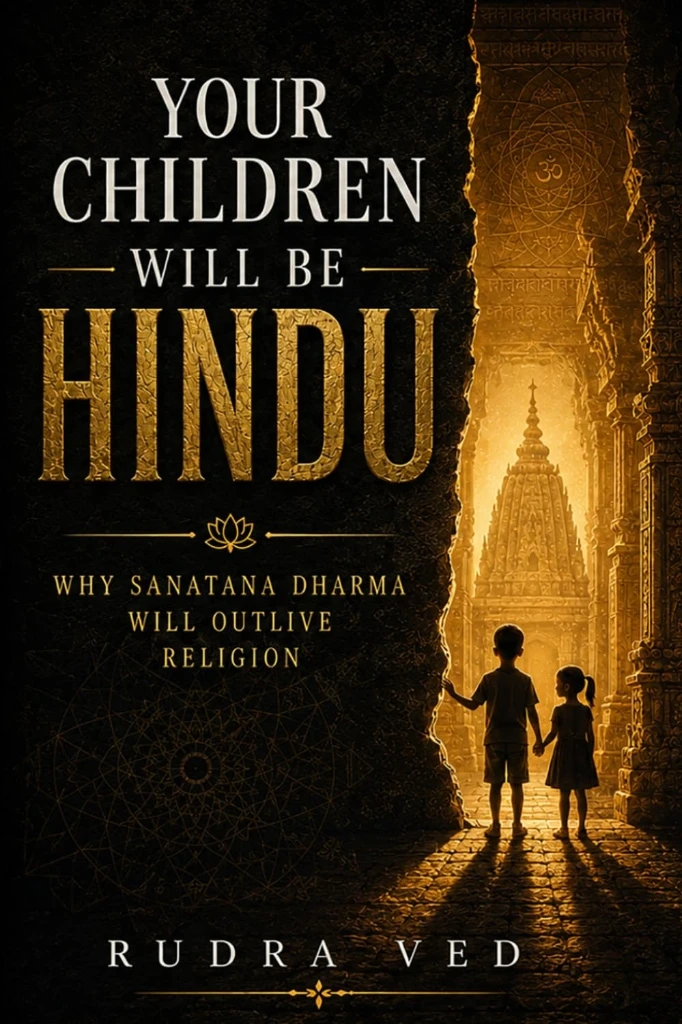
Your Children Will Be Hindu
Why Sanatana Dharma Will Outlive Religion — By Rudra Ved
How do you explain these ancient Vedic verses to your children, friends, or skeptical thinkers? Written by a former lifelong atheist and tested across 500+ unedited live debates, this book provides the rational, modern vocabulary that today's questioning generation needs.
Verse 11
श्रीशुक उवाच- देवादिदेव सर्वज्ञ सच्चिदानन्दलक्षण। उमारमण भूतेश प्रसीद करुणानिधे॥
śrīśuka uvāca- devādideva sarvajña saccidānandalakṣaṇa। umāramaṇa bhūteśa prasīda karuṇānidhe॥
Shri Shuka said: O God of gods, O Omniscient one, O You whose characteristic is Existence-Consciousness-Bliss, O Lover of Uma, O Lord of beings, be pleased, O Ocean of compassion.
Verse 12
उपदिष्टं परंब्रह्म प्रणवान्तर्गतं परम्। तत्त्वमस्यादिवाक्यानां प्रज्ञादीनां विशेषतः॥ श्रोतुमिच्छामि तत्त्वेन षडङ्गानि यथाक्रमम्। वक्तव्यानि रहस्यानि कृपयाद्य सदाशिव।
upadiṣṭaṃ paraṃbrahma praṇavāntargataṃ param। tattvamasyādivākyānāṃ prajñādīnāṃ viśeṣataḥ॥ śrotumicchāmi tattvena ṣaḍaṅgāni yathākramam। vaktavyāni rahasyāni kṛpayādya sadāśiva।
I wish to hear, truly and in proper order, the six limbs (components) of the supreme Brahman—the supreme Reality inherent in Om (Praṇava)—especially as revealed through great statements like 'Tat tvam asi' and those beginning with 'Prajñā'. O Sadashiva, by your grace, please reveal these secrets today.
Verse 13
श्रीसदाशिव उवाच- साधु साधु महाप्राज्ञ शुक ज्ञाननिधे मुने। प्रष्टव्यं तु त्वया पृष्टं रहस्यं वेदगर्भितम्॥
śrīsadāśiva uvāca- sādhu sādhu mahāprājña śuka jñānanidhe mune। praṣṭavyaṃ tu tvayā pṛṣṭaṃ rahasyaṃ vedagarbhitam॥
Śrī Sadaśiva said: "Excellent, excellent, O greatly wise Śuka, O sage, O treasure of knowledge! You have indeed asked that which ought to be asked, a secret hidden within the Vedas."
Verse 14
रहस्योपनिषन्नाम्ना सषडङ्गमिहोच्यते। यस्य विज्ञानमात्रेण मोक्षः साक्षान्न संशयः॥
rahasyopaniṣannāmnā saṣaḍaṅgamihocyate। yasya vijñānamātreṇa mokṣaḥ sākṣānna saṃśayaḥ॥
Here is declared this Rahasyopanishad, by its very name, along with its six ancillaries. By the mere knowledge of this, liberation is attained directly; there is no doubt.
Verse 15
अङ्गहीनानि वाक्यानि गुरुर्नोपदिशेत्पुनः। सषडङ्गान्युपदिशेन्महावाक्यानि कृत्स्नशः॥
aṅgahīnāni vākyāni gururnopadiśetpunaḥ। saṣaḍaṅgānyupadiśenmahāvākyāni kṛtsnaśaḥ॥
The guru should not teach statements that are deficient in the Vedangas (limbs of the Veda) again. Rather, he should teach the Mahavakyas (great sayings) completely, along with the six Vedangas.
Verse 16
चतुर्णामपि वेदानां यथोपनिषदः शिरः। इयं रहस्योपनिषत्तथोपनिषदां शिरः॥
caturṇāmapi vedānāṃ yathopaniṣadaḥ śiraḥ। iyaṃ rahasyopaniṣattathopaniṣadāṃ śiraḥ॥
Just as the Upaniṣads are the crown of all four Vedas, so also this Rahasyopaniṣad is the crown among the Upaniṣads.
Verse 17
रहस्योपनिषद्ब्रह्म ध्यातं येन विपश्चिता। तीर्थैर्मन्त्रैः श्रुतैर्जप्यैस्तस्य किं पुण्यहेतुभिः॥
rahasyopaniṣadbrahma dhyātaṃ yena vipaścitā। tīrthairmantraiḥ śrutairjapyaistasya kiṃ puṇyahetubhiḥ॥
For the wise person by whom the Brahman of the secret Upaniṣad has been meditated upon, what is the need for pilgrimages, mantras, scriptures, recitations, or any other causes of merit?
Verse 18
वाक्यार्थस्य विचारेण यदाप्नोति शरच्छतम्। एकवारजपेनैव ऋष्यादिध्यानतश्च यत्॥
vākyārthasya vicāreṇa yadāpnoti śaracchatam। ekavārajapenaiva ṛṣyādidhyānataśca yat॥
That which one obtains by a hundred years of reflection upon the meaning of the statement, and that which (is obtained) merely by chanting once, along with meditation on the Rishi and so forth.
Verse 19
ॐ अस्य श्रीमहावाक्यमहामन्त्रस्य हंस ऋषिः। अव्यक्तगायत्री छन्दः। परमहंसो देवता। हं बीजम्। सः शक्तिः। सोऽहं कीलकम्। मम परमहंसप्रीत्यर्थे महावाक्यजपे विनियोगः। सत्यं ज्ञानमनन्तं ब्रह्म अङ्गुष्ठाभ्यां नमः। नित्यानन्दो ब्रह्म तर्जनीभ्यां स्वाहा। नित्यानन्दमयं ब्रह्म मध्यमाभ्यां वषट्। यो वै भूमा अनामिकाभ्यां हुम्। यो वै भूमाधिपतिः कनिष्ठिकाभ्यां वौषट्। एकमेवाद्वितीयं ब्रह्म करतलकरपृष्ठाभ्यां फट्। सत्यं ज्ञानमनन्तं ब्रह्म हृदयाय नमः। नित्यानन्दो ब्रह्म शिरसे स्वाहा। नित्यानन्दमयं ब्रह्म शिखायै वषट्। यो वै भूमा कवचाय हुम्। यो वै भूमाधिपतिः नेत्रत्रयाय वौषट्। एकमेवाद्वितीयं ब्रह्म अस्राय फट्। भूर्भुवःसुवरोमिति दिग्बन्धः॥
oṃ asya śrīmahāvākyamahāmantrasya haṃsa ṛṣiḥ। avyaktagāyatrī chandaḥ। paramahaṃso devatā। haṃ bījam। saḥ śaktiḥ। so'haṃ kīlakam। mama paramahaṃsaprītyarthe mahāvākyajape viniyogaḥ। satyaṃ jñānamanantaṃ brahma aṅguṣṭhābhyāṃ namaḥ। nityānando brahma tarjanībhyāṃ svāhā। nityānandamayaṃ brahma madhyamābhyāṃ vaṣaṭ। yo vai bhūmā anāmikābhyāṃ hum। yo vai bhūmādhipatiḥ kaniṣṭhikābhyāṃ vauṣaṭ। ekamevādvitīyaṃ brahma karatalakarapṛṣṭhābhyāṃ phaṭ। satyaṃ jñānamanantaṃ brahma hṛdayāya namaḥ। nityānando brahma śirase svāhā। nityānandamayaṃ brahma śikhāyai vaṣaṭ। yo vai bhūmā kavacāya hum। yo vai bhūmādhipatiḥ netratrayāya vauṣaṭ। ekamevādvitīyaṃ brahma asrāya phaṭ। bhūrbhuvaḥsuvaromiti digbandhaḥ॥
Om. For this great sacred sentence, this great mantra, Hamsa is the seer; Avyakta Gayatri is the meter; Paramahamsa is the deity. 'Haṃ' is the seed-syllable; 'Saḥ' is the power; 'So'ham' is the pivot. Its application (viniyoga) in the recitation of the Mahavakyas is for my pleasure of Paramahamsa. To Brahman, which is Truth, Knowledge, Infinity – salutations with the thumbs. To Brahman, which is eternal bliss – oblations with the index fingers. To Brahman, which is full of eternal bliss – offering with the middle fingers. To that which is indeed the Greatness (Bhūmā) – with the ring fingers, 'hum'. To that which is indeed the Lord of Greatness – with the little fingers, 'vauṣaṭ'. To Brahman, which is one without a second – with the palms and backs of the hands, 'phaṭ'. To Brahman, which is Truth, Knowledge, Infinity – to the heart, salutations. To Brahman, which is eternal bliss – to the head, oblations. To Brahman, which is full of eternal bliss – to the tuft, offering. To that which is indeed the Greatness – to the armor, 'hum'. To that which is indeed the Lord of Greatness – to the three eyes, 'vauṣaṭ'. To Brahman, which is one without a second – to the weapon, 'phaṭ'. 'Om Bhūḥ Bhuvaḥ Suvaḥ' – thus, binding the directions.
Verse 20
ध्यानम् नित्यानन्दं परमसुखदं केवलं ज्ञानमूर्तिं द्वन्द्वातीतं गगनसदृशं तत्त्वमस्यादिलक्ष्यम्। एकं नित्यं विमलमचलं सर्वधीसाक्षिभूतं भावातीतं त्रिगुणरहितं सद्गुरुं तं नमामि।।
dhyānam nityānandaṃ paramasukhadaṃ kevalaṃ jñānamūrtiṃ dvandvātītaṃ gaganasadṛśaṃ tattvamasyādilakṣyam। ekaṃ nityaṃ vimalamacalaṃ sarvadhīsākṣibhūtaṃ bhāvātītaṃ triguṇarahitaṃ sadguruṃ taṃ namāmi।।
I bow down to that True Guru, who is eternal bliss, the bestower of supreme happiness, solely the embodiment of knowledge, beyond dualities, sky-like (all-pervading and unblemished), the ultimate goal indicated by 'Tat Tvam Asi' and other great sayings; who is one, eternal, pure, unmoving, the witness of all intellects, transcending all states of being, and free from the three Gunas.
Key Takeaways & AI Summary
This chapter explores the profound teachings of Shuka Rahasya Upanishad. It includes 52 verses detailing core themes like "athāto rahasyopaniṣadaṃ vyākhyāsyāmaḥ॥", "devarṣayo brahmāṇaṃ saṃpūjya praṇipatya papracchurbhagavannasmākaṃ rahasyopaniṣadaṃ brūhīti॥", "so'bravīt purā vyāso mahātejāḥ sarvavedaḥ taponidhiḥ। praṇipatya śivaṃ sāmvaṃ kṛtāñjaliruvāca ha॥".The crown jewels of Vedic philosophy — a collection of 108+ texts exploring the nature of Brahman, Atman, and ultimate reality.