
Taittiriya ( Shiksha) Upanishad
(Chapter 4)
Verse 1
ॐ शं नो मित्रः शं वरुणः॥ शं नो भवत्वर्यमा॥ शं न इन्द्रो बृहस्पतिः॥ शं नो विष्णुरुरुक्रमः। नमो ब्रह्मणे॥ नमस्ते वायो॥ त्वमेव प्रत्यक्षं ब्रह्मासि॥ त्वमेव प्रत्यक्षं ब्रह्म वदिष्यामि॥ ऋतं वदिष्यामि॥ सत्यं वदिष्यामि॥ तन्मामवतु। तद्वक्तारमवतु॥ अवतु माम्। अवतु वक्तारम्।ॐ शान्तिः शान्तिः शान्तिः॥
om śaṁ no mitraḥ śaṁ varuṇaḥ || śaṁ no bhavatvaryamā || śaṁ na indro bṛhaspatiḥ || śaṁ no viṣṇururukramaḥ | namo brahmaṇe || namaste vāyo || tvameva pratyakṣaṁ brahmāsi || tvameva pratyakṣaṁ brahma vadiṣyāmi || ṛtaṁ vadiṣyāmi || satyaṁ vadiṣyāmi || tanmāmavatu | tadvaktāramavatu || avatu mām | avatu vaktāram |om śāntiḥ śāntiḥ śāntiḥ||
Hari OM. Be peace to us Mitra. Be peace to us Varuna. Be peace to us Aryaman. Be peace to us Indra & Brihaspati. May far striding Vishnu be peace to us. Adoration to the Eternal. Adoration to thee, O Vayu. Thou, thou art the visible Eternal and as the visible Eternal I will declare thee. I will declare Righteousness! I will declare Truth! May that protect me! May that protect the Speaker! Yea, may it protect me! May it protect the Speaker. OM Peace! Peace! Peace!
Verse 2
ॐ शीक्षां व्याख्यास्यामः — वर्णः स्वरः मात्रा बलं समानः सन्तान इत्युक्तः शिक्षाध्यायः ॥
oṃ śīkṣāṃ vyākhyāsyāmaḥ — varṇaḥ svaraḥ, mātrā, balaṃ, samānaḥ, santāna iti uktaḥ śikṣādhyāyaḥ.
Om. We will now explain Shiksha (the science of phonetics): letter, accent, duration, effort, conjunction, and continuity. This is the chapter on Shiksha.
Verse 3
सह नौ यशः। सह नौ ब्रह्मवर्चसम्। अथातः संहिताया उपनिषदं व्याख्यास्यामः। पञ्चस्वधिकरणेषु। अधिलोकमधिज्यौतिषमधिविद्यमधिप्रजमध्यात्मम्। ता महासंहिता इत्याचक्षते। अथाधिलोकम्। पृथिवी पूर्वरूपम्। द्यौरुत्तररूपम्। आकाशः सन्धिः। वायुः सन्धानम्। इत्यधिलोकम्। अथाधिजौतिषम्। अग्निः पूर्वरूपम्। आदित्य उत्तररूपम्। आपः सन्धिः। वैद्युतः सन्धानम्। इत्यधिज्यौतिषम्। अथाधिविद्यम्। आचार्यः पूर्वरूपम्। अन्तेवास्युत्तररूपम्। विद्या सन्धिः। प्रवचनं सन्धानम्।इत्यधिविद्यम्। अथाधिप्रजम्। माता पूर्वरूपम्। पितोत्तररूपम्। प्रजा सन्धिः। प्रजननं सन्धानम्। इत्यधिप्रजम्। अथाध्यात्मम्। अधरा हनुः पूर्वरूपम्।उत्तरा हनुरुत्तररूपम्। वाक् सन्धिः। जिह्वा सन्धानम्। इत्यध्यात्मम्। इतीमा महासंहिताः।य एवमेता महासंहिता व्याख्याता वेद।सन्धीयते प्रजया पशुभिः।ब्रह्मवर्चसेनान्नाद्येन सुवर्ग्येण लोकेन॥
saha nau yaśaḥ | saha nau brahmavarcasam | athātaḥ saṁhitāyā upaniṣadaṁ vyākhyāsyāmaḥ |pañcasvadhikaraṇeṣu | adhilokamadhijyautiṣamadhividyamadhiprajamadhyātmam | tā mahāsaṁhitā ityācakṣate| athādhilokam | pṛthivī pūrvarūpam | dyauruttararūpam| ākāśaḥ sandhiḥ | vāyuḥ sandhānam | ityadhilokam| athādhijautiṣam| agniḥ pūrvarūpam | āditya uttararūpam | āpaḥ sandhiḥ | vaidyutaḥ sandhānam | ityadhijyautiṣam| athādhividyam| ācāryaḥ pūrvarūpam| antevāsyuttararūpam | vidyā sandhiḥ | pravacanaṁ sandhānam |ityadhividyam| athādhiprajam | mātā pūrvarūpam| pitottararūpam | prajā sandhiḥ | prajananaṁ sandhānam| ityadhiprajam| athādhyātmam | adharā hanuḥ pūrvarūpam |uttarā hanuruttararūpam | vāk sandhiḥ | jihvā sandhānam | ityadhyātmam| itīmā mahāsaṁhitāḥ |ya evametā mahāsaṁhitā vyākhyātā veda |sandhīyate prajayā paśubhiḥ |brahmavarcasenānnādyena suvargyeṇa lokena||
Together may we attain glory, together to the radiance of holiness. Hereupon we will expound next the secret meaning of Sanhita whereof there are five capitals; Concerning the Worlds: Concerning the Shining Fires: Concerning the Knowledge: Concerning Progeny: Concerning Self. These are called the great Sanhitas. Now concerning the worlds. Earth is the first form; the heavens are the second form; ether is the linking; air is the joint of the linking. Thus far concerning the worlds. Next concerning the shining fires. Fire is the first form; the Sun is the latter form; the waters are the linking; electricity is the joint of the linking. Thus far concerning the shining fires. Next concerning the Knowledge. The Master is the first form; the disciple is the latter form; Knowledge is the linking; exposition is the joint of the linking. Thus far concerning the Knowledge. Next concerning progeny. The mother is the first form; the father is the latter form; progeny is the linking; act of procreation is the joint of the linking. Thus far concerning progeny. Next concerning Self. The upper jaw is the first form; the lower jaw is the latter form; speech is the linking; the tongue is the joint of the linking. Thus far concerning Self. These are the great Sanhitas. He who knoweth thus the great Sanhitas as we have expounded them, to him are linked progeny and wealth of cattle and the radiance of holiness and food and all that is of food and the world of his high estate in heaven.
Verse 4
यश्छन्दसामृषभो विश्वरूपः। छन्दोभ्योऽध्यमृतात् संबभूव। स मेन्द्रो मेधया स्पृणोतु। अमृतस्य देव धारणो भूयासम्।शरीरं मे विचर्षणम्। जिह्वा मे मधुमत्तमा।कर्णाभ्यां भूरि विश्रुवम्।ब्रह्मणः कोशोऽसि मेधया पिहितः।श्रुतं मे गोपाय। आवहन्ती वितन्वाना। कुर्वाणा चीरमात्मनः। वासांसि मम गावश्च। अन्नपाने च सर्वदा। ततो मे श्रियमावह।लोमशां पशुभिः सह स्वाहा। आ मा यन्तु ब्रह्मचारिणः स्वाहा। वि मायन्तु ब्रह्मचारिणः स्वाहा। प्रमायन्तु ब्रह्मचारिणः स्वाहा। दमायन्तु ब्रह्मचारिणः स्वाहा। शमायन्तु ब्रह्मचारिणः स्वाहा। यशो जनेऽसानि स्वाहा। श्रेयान् वस्यसोऽसानि स्वाहा। तं त्वा भग प्रविशानि स्वाहा। स मा भग प्रविश स्वाहा। तस्मिन् त्सहस्रशाख। नि भगाहं त्वयि मृजे स्वाहा। यथापः प्रवता यन्ति। यथा मासा अहर्जरम्। एवं मां ब्रह्मचारिणः। धातरायन्तु सर्वतः स्वाहा। प्रतिवेशोऽसि। प्र मा भाहि। प्र मा पद्यस्व।
yaśchandasāmṛṣabho viśvarūpaḥ | chandobhyo'dhyamṛtāt saṁbabhūva | sa mendro medhayā spṛṇotu | amṛtasya deva dhāraṇo bhūyāsam |śarīraṁ me vicarṣaṇam | jihvā me madhumattamā karṇābhyāṁ bhūri viśruvam |brahmaṇaḥ kośo'si medhayā pihitaḥ |śrutaṁ me gopāya | āvahantī vitanvānā| kurvāṇā cīramātmanaḥ | vāsāṁsi mama gāvaśca| annapāne ca sarvadā | tato me śriyamāvaha |lomaśāṁ paśubhiḥ saha svāhā| ā mā yantu brahmacāriṇaḥ svāhā | vi māyantu brahmacāriṇaḥ svāhā | pramāyantu brahmacāriṇaḥ svāhā | damāyantu brahmacāriṇaḥ svāhā | śamāyantu brahmacāriṇaḥ svāhā | yaśo jane'sāni svāhā | śreyān vasyaso'sāni svāhā | taṁ tvā bhaga praviśāni svāhā | sa mā bhaga praviśa svāhā | tasmin tsahasraśākha| ni bhagāhaṁ tvayi mṛje svāhā | yathāpaḥ pravatā yanti| yathā māsā aharjaram | evaṁ māṁ brahmacāriṇaḥ | dhātarāyantu sarvataḥ svāhā | prativeśo'si| pra mā bhāhi| pra mā padyasva|
The bull of the hymns of Veda whose visible form is all this Universe, he above the Vedas who sprang from that which is deathless, may Indra increase intellect unto me for my strengthening. O God, may I become a vessel of immortality. May my body be swift to all works, may my tongue drop pure honey. May I hear vast and manifold lore with my ears. O Indra, thou art the sheath of the Eternal and the veil that the workings of brain have drawn over Him; preserve whole unto me the sacred lore that I have studied. She bringeth unto me wealth and extendeth it, yea, she maketh speedily my own raiment and cattle and drink and food now and always; therefore carry to me Fortune of much fleecy wealth and cattle with her. Swaha! May the Brahmacharins come unto me. Swaha! From here and there may the Brahmacharins come unto me. Swaha! May the Brahmacharins set forth unto me. Swaha! May the Brahmacharins attain selfmastery. Swaha! May the Brahmacharins attain to peace of soul. Swaha! May I be a name among the folk! Swaha! May I be the first of the wealthy! Swaha! O Glorious Lord, into That which is Thou may I enter. Swaha! Do thou also enter into me, O Shining One. Swaha! Thou art a river with a hundred branching streams, O Lord of Grace, in thee may I wash me clean. Swaha! As the waters of a river pour down the steep, as the months of the year hasten to the old age of days, O Lord that cherisheth, so may the Brahmacharins come to me from all the regions . Swaha! O Lord, thou art my neighbour, thou dwellest very near me. Come to me, be my light and sun.
Verse 5
भूर्भुवः सुवरिति वा एतास्तिस्रो व्याहृतयः। तासामु ह स्मैतां चतुर्थीम्। माहाचमस्यः प्रवेदयते। मह इति। तत् ब्रह्म। स आत्मा। अङ्गान्यन्या देवताः। भूरिति वा अयं लोकः। भुव इत्यन्तरिक्षम्। सुवरित्यसौ लोकः। मह इत्यादित्यः। आदित्येन वाव सर्वे लोका महीयन्ते। भूरिति वा अग्निः। भुव इति वायुः। सुवरित्यादित्यः ंअह इति चन्द्रमाः। चन्द्रमसा वाव सर्वाणि ज्योती षि महीयन्ते। भूरिति वा ऋचः।भुव इति सामानि।सुवरिति यजू षि। मह इति ब्रह्म। ब्रह्मणा वाव सर्वे वेदा महीयन्ते। भूरिति वै प्राणः। भुव इत्यपानः। सुवरिति व्यानः। मह इत्यन्नम्। अन्नेन वाव सर्वे प्राणा महीयन्ते। ता वा एताश्चतस्रश्चतुर्ध। चतस्रश्चतस्रो व्याहृतयः। ता यो वेद।स वेद ब्रह्म। सर्वेऽस्मै देवा बलिमावहन्ति।
bhūḥ bhuvaḥ suvaḥ iti etāḥ tisraḥ vai vyāhṛtayaḥ u ha tāsām etāṁ caturthīṁ mahaḥ iti māhācamasyaḥ pravedayate sma| tat brahma saḥ ātmā anyāḥ devatāḥ aṅgāni| bhūḥ iti vai ayaṁ lokaḥ| bhuvaḥ iti antarikṣam suvaḥ iti asau lokaḥ mahaḥ iti ādityaḥ ādityena vāva sarve lokāḥ mahīyante bhūḥ iti vai agniḥ bhuvaḥ iti vāyuḥ suvaḥ iti ādityaḥ mahaḥ iti candramāḥ candramasā vāva sarvāṇi jyotīṁṣi mahīyante| bhūḥ iti| vai ṛcaḥ bhuvaḥ iti sāmāni suvaḥ iti yajūṁṣi mahaḥ iti brahma brahmaṇā vāva sarve vedāḥ mahīyante | bhūḥ iti vai prāṇaḥ bhuvaḥ iti apānaḥ suvaḥ iti| vyānaḥ mahaḥ iti annam annena vāva sarve prāṇāḥ mahīyante| tāḥ vai etāḥ catasraḥ vyāhṛtayaḥ catasraḥ catasraḥ caturdhā ( bhavanti ) yaḥ tāḥ veda saḥ brahma veda | sarve devāāḥ asmai balim āvahanti|
Bhu, Bhuvah, Suvah - these are indeed the three Vyāhṛtis. Of these, Mahācamasya revealed the fourth, which is 'Mahah'. That is Brahman. That is the Self. Other deities are its limbs. 'Bhu' is this world, 'Bhuvah' is the interspace, 'Suvah' is yonder world. 'Mahah' is the sun; by the sun, verily, all worlds are made great. 'Bhu' is Agni (fire), 'Bhuvah' is Vayu (air), 'Suvah' is Aditya (sun). 'Mahah' is the moon; by the moon, verily, all lights are made great. 'Bhu' are the Riks (Rig Veda hymns), 'Bhuvah' are the Samans (Sama Veda chants), 'Suvah' are the Yajus (Yajur Veda formulas). 'Mahah' is Brahman; by Brahman, verily, all Vedas are made great. 'Bhu' is Prana (life-breath), 'Bhuvah' is Apana (downward breath), 'Suvah' is Vyana (diffused breath). 'Mahah' is Anna (food); by food, verily, all life-breaths are made great. These are indeed four, fourfold. Four and four are the Vyāhṛtis. He who knows them, he knows Brahman. All gods bring tribute to him.
Verse 6
स य एषोऽन्तरहृदय आकाशः। तस्मिन्नयं पुरुषो मनोमयः। अमृतो हिरण्मयः। अन्तरेण तालुके। य एष स्तन इवावलम्बते।सेन्द्रयोनिः। यत्रासौ केशान्तो विवर्तते। व्यपोह्य शीर्षकपाले। भूरित्यग्नौ प्रतितिष्ठति।भुव इति वायौ। सुवरित्यादित्ये। मह इति ब्रह्मणि। आप्नोति स्वाराज्यम्। आप्नोति मनसस्पतिम्। वाक्पतिश्चक्षुष्पतिः।श्रोत्रपतिर्विज्ञानपतिः। एतत्ततो भवति। आकाशशरीरं ब्रह्म। सत्यात्मप्राणारामं मनानन्दम्।शान्तिसमृद्धममृतम्। इति प्राचीनयोग्योपास्व॥
sa ya eṣo'ntarahṛdaya ākāśaḥ | tasminnayaṁ puruṣo manomayaḥ| amṛto hiraṇmayaḥ | antareṇa tāluke | ya eṣa stana ivāvalambate |sendrayoniḥ | yatrāsau keśānto vivartate | vyapohya śīrṣakapāle | bhūrityagnau pratitiṣṭhati |bhuva iti vāyau | suvarityāditye | maha iti brahmaṇi | āpnoti svārājyam| āpnoti manasaspatim | vākpatiścakṣuṣpatiḥ |śrotrapatirvijñānapatiḥ | etattato bhavati | ākāśaśarīraṁ brahma | satyātmaprāṇārāmaṁ manāanandam |śāntisamṛddhamamṛtam| iti prācīnayogyopāsva ||
That which is this space within the heart, in it is this Person, consisting of mind, immortal, golden. Between the palates, that which hangs down like a nipple, is the source of the subtle energies, where the root of the hair separates, by cleaving the two halves of the skull. 'Bhuh' he establishes in Agni; 'Bhuvah' in Vayu; 'Suvah' in Aditya; 'Mahah' in Brahman. He attains self-rule. He attains the lord of mind. He becomes the lord of speech, the lord of sight, the lord of hearing, the lord of knowledge. He becomes this then: Brahman, whose body is space, whose self is truth, whose delight is Prana, whose joy is mind, full of peace, immortal. Thus should you meditate, O Pracinayogya.
Verse 7
पृथिव्यन्तरिक्षं द्यौर्दिशोऽवान्तरदिशः अग्निर्वायुरादित्यश्चन्द्रमा नक्षत्राणि। आप ओषधयो वनस्पतय आकाश आत्मा। इत्यधिभूतम् ऽथाध्यात्मम्। प्राणो व्यानोऽपान उदानः समानः। चक्षुः श्रोत्रं मनो वाक्त्वक्। चर्मं मांसं स्नावास्थि मज्जा। एतदधिविधायर्षिरवोचत्। पाङ्क्तं वा इदं सर्वम्। पाङ्क्तेनैव पाङ्क्तं स्पृणोतीति॥
pṛthivyantarikṣaṁ dyaurdiśo'vāntaradiśaḥ agnirvāyurādityaścandramā nakṣatrāṇi| āpa oṣadhayo vanaspataya ākāśa ātmā | ityadhibhūtam 'thādhyātmam | prāṇo vyāno'pāna udānaḥ samānaḥ| cakṣuḥ śrotraṁ mano vāktvak| carmaṁ māṁsaṁ snāvāsthi majjā | etadadhividhāyarṣiravocat | pāṅktaṁ vā idaṁ sarvam | pāṅktenaiva pāṅktaṁ spṛṇotīti ||
Earth, sky, heaven, the quarters and the lesser quarters; Fire, Air, Sun, Moon and the Constellations; Waters, herbs of healing, trees of the forest, ether and the Self in all; these three concerning this outer creation. Then concerning the Self. The main breath, the middle breath, the nether breath, the upper breath and the breath pervasor; eye, ear, mind, speech and the skin; hide, flesh, muscle, bone and marrow. Thus the Rishi divided them and said, "In sets of five is this universe; five and five with five and five He relates."
Verse 8
ओमिति ब्रह्म। ओमितीदं सर्वम्।ओमित्येतदनुकृतिर्ह स्म वा अप्यो श्रावयेत्याश्रावयन्ति।ओमिति सामानि गायन्ति। ओं शोमिति शस्त्राणि शंसन्ति।ओमित्यध्वर्युः प्रतिगरं प्रतिगृणाति। ओमिति ब्रह्मा प्रसौति। ओमित्यग्निहोत्रमनुजानाति।ओमिति ब्राह्मणः प्रवक्ष्यन्नाह ब्रह्मोपाप्नवानीति।ब्रह्मैवोपाप्नोति॥
omiti brahma | omitīdaṁ sarvam |omityetadanukṛtirha sma vā apyo śrāvayetyāśrāvayanti |omiti sāmāni gāyanti | oṁ śomiti śastrāṇi śaṁsanti |omityadhvaryuḥ pratigaraṁ pratigṛṇāti | omiti brahmā prasauti | omityagnihotramanujānāti |omiti brāhmaṇaḥ pravakṣyannāha brahmopāpnavānīti |brahmaivopāpnoti ||
OM is the Eternal, OM is all this universe. OM is the syllable of assent: saying OM! let us hear, they begin the citation. With OM they sing the hymns of the Sama; with OM SHOM they pronounce the Shastra. With OM the priest officiating at the sacrifice sayeth the response. With OM Brahma beginneth creation (or With OM the chief priest giveth sanction). With OM one sanctioneth the burnt offering. With OM the Brahmin ere he expound the Knowledge, crieth "May I attain the Eternal." The Eternal verily he attaineth.
Verse 9
ऋतं च स्वाध्यायप्रवचने च।सत्यं च स्वाध्यायप्रवचने च।तपश्च स्वाध्यायप्रवचने च। दमश्च स्वाध्यायप्रवचने च।शमश्च स्वाध्यायप्रवचने च। अग्नयश्च स्वाध्यायप्रवचने च। अग्निहोत्रं च स्वाध्यायप्रवचने च। अतिथयश्च स्वाध्यायप्रवचने च मानुषं च स्वाध्यायप्रवचने च।प्रजा च स्वाध्यायप्रवचने च।प्रजनश्च स्वाध्यायप्रवचने च।प्रजातिश्च स्वाध्यायप्रवचने च।सत्यमिति सत्यवचा राथीतरः।तप इति तपोनित्यः पौरुशिष्टिः।स्वाध्यायप्रवचने एवेति नाको मौद्गल्यः।तद्धि तपस्तद्धि तपः।
ṛtaṁ ca svādhyāyapravacane ca |satyaṁ ca svādhyāyapravacane ca |tapaśca svādhyāyapravacane ca | damaśca svādhyāyapravacane ca |śamaśca svādhyāyapravacane ca| agnayaśca svādhyāyapravacane ca | agnihotraṁ ca svādhyāyapravacane ca| atithayaśca svādhyāyapravacane ca mānuṣaṁ ca svādhyāyapravacane ca prajā ca svādhyāyapravacane ca prajanaśca svādhyāyapravacane ca prajātiśca svādhyāyapravacane ca |satyamiti satyavacā rāthītaraḥ |tapa iti taponityaḥ pauruśiṣṭiḥ |svādhyāyapravacane eveti nāko maudgalyaḥ |taddhi tapastaddhi tapaḥ|
Righteousness with the study and teaching of Veda; Truth with the study and teaching of Veda; askesis with the study and teaching of Veda; self-mastery with the study and teaching of Veda. Peace of soul with the study and teaching of Veda. The household fires with the study and teaching of Veda. The burnt offering with the study and teaching of Veda. Progeny with the study and teaching of Veda. Joy of thy child's mother with the study and teaching of Veda. Children of thy children with the study and teaching of Veda—*these duties*. "Truth is first" said the truth-speaker, the Rishi, son of Rathitar. "Askesis is first" said the constant in austerity, the Rishi, son of Purushishta. "Study and teaching of Veda is first" said Naka, son of Mudgala. For this too is austerity and this too is askesis.
Verse 10
अहं वृक्षस्य रेरिवा। कीर्तिः पृष्ठं गिरेरिव।ऊर्ध्वपवित्रो वाजिनीव स्वमृतमस्मि। द्रविणं सवर्चसम्। सुमेधा अमृतोक्षितः। इति त्रिशङ्कोर्वेदानुवचनम्।
ahaṁ vṛkṣasya rerivā | kīrtiḥ pṛṣṭhaṁ gireriva |ūrdhvapavitro vājinīva svamṛtamasmi | draviṇaṁ savarcasam | sumedhā amṛtokṣitaḥ | iti triśaṅkorvedānuvacanam|
"I am He that moves the Tree of the Universe and my glory is like the shoulders of a high-mountain. I am lofty and pure like sweet nectar in the strong, I am the shining riches of the world, I am the deep thinker, the deathless One who decays not from the beginning." This is Trishanku's voicing of Veda and the hymn of his self-knowledge.
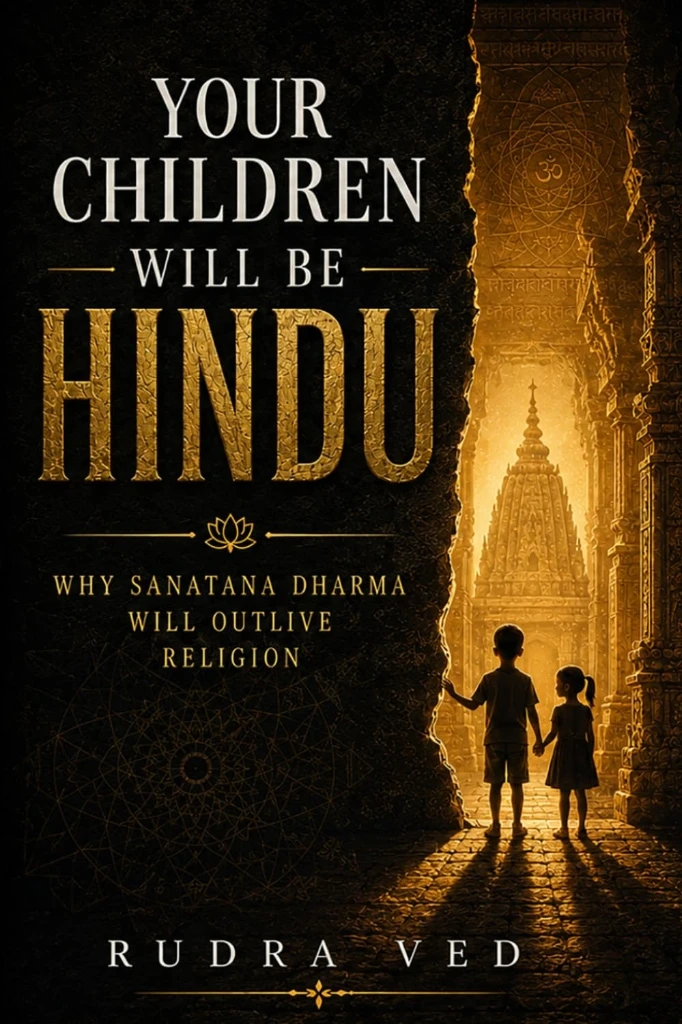
Your Children Will Be Hindu
Why Sanatana Dharma Will Outlive Religion — By Rudra Ved
How do you explain these ancient Vedic verses to your children, friends, or skeptical thinkers? Written by a former lifelong atheist and tested across 500+ unedited live debates, this book provides the rational, modern vocabulary that today's questioning generation needs.
Verse 11
वेदमनूच्याचार्योऽन्तेवासिनमनुशास्ति। सत्यं वद। धर्मं चर। स्वाध्यायान्मा प्रमदः। आचार्याय प्रियं धनमाहृत्य प्रजातन्तुं मा व्यवच्छेत्सीः।सत्यान्न प्रमदितव्यम्। धर्मान्न प्रमदितव्यम्।कुशलान्न प्रमदितव्यम्। भूत्यै न प्रमदितव्यम्।स्वाध्यायप्रवचनाभ्यां न प्रमदितव्यम्। देवपितृकार्याभ्यां न प्रमदितव्यम्। मातृदेवो भव।पितृदेवो भव। आचार्यदेवो भव। अतिथिदेवो भव। यान्यनवद्यानि कर्माणि। तानि सेवितव्यानि। नो इतराणि।यान्यस्माकं सुचरितानि।तानि त्वयोपास्यानि। नो इतराणि। ये के चास्मच्छ्रेयांसो ब्राह्मणाः। तेषां त्वयासनेन प्रश्वसितव्यम्। श्रद्धया देयम्। अश्रद्धयाऽदेयम्। श्रिया देयम्। ह्रिया देयम्। भिया देयम्। संविदा देयम्। अथ यदि ते कर्मविचिकित्सा वा वृत्तविचिकित्सा वा स्यात्। ये तत्र ब्राह्मणाः सम्मर्शिनः। युक्ता आयुक्ताः। अलूक्षा धर्मकामाः स्युः। यथा ते तत्र वर्तेरन्।तथा तत्र वर्तेथाः। अथाभ्याख्यातेषु।ये तत्र ब्राह्मणाः संमर्शिनः। युक्ता आयुक्ताः। अलूक्षा धर्मकामाः स्युः। यथा ते तेषु वर्तेरन्।तथा तेषु वर्तेथाः। एष आदेशः। एष उपदेशः।एषा वेदोपनिषत्। एतदनुशासनम्। एवमुपासितव्यम्। एवमु चैतदुपास्यम्।
vedamanūcyācāryo'ntevāsinamanuśāsti | satyaṁ vada | dharmaṁ cara | svādhyāyānmā pramadaḥ| ācāryāya priyaṁ dhanamāhṛtya prajātantuṁ mā vyavacchetsīḥ |satyānna pramaditavyam | dharmānna pramaditavyam kuśalānna pramaditavyam | bhūtyai na pramaditavyam |svādhyāyapravacanābhyāṁ na pramaditavyam| devapitṛkāryābhyāṁ na pramaditavyam | mātṛdevo bhava pitṛdevo bhava | ācāryadevo bhava | atithidevo bhava | yānyanavadyāni karmāṇi | tāni sevitavyāni | no itarāṇi |yānyasmākaṁ sucaritāni |tāni tvayopāsyāni| no itarāṇi| ye ke cāsmacchreyāṁso brāhmaṇāḥ | teṣāṁ tvayāsanena praśvasitavyam | śraddhayā deyam | aśraddhayā'deyam | śriyā deyam | hriyā deyam | bhiyā deyam | saṁvidā deyam | atha yadi te karmavicikitsā vā vṛttavicikitsā vā syāt| ye tatra brāhmaṇāḥ sammarśinaḥ | yuktā āyuktāḥ | alūkṣā dharmakāmāḥ syuḥ | yathā te tatra varteran |tathā tatra vartethāḥ | athābhyākhyāteṣu |ye tatra brāhmaṇāḥ saṁmarśinaḥ | yuktā āyuktāḥ| alūkṣā dharmakāmāḥ syuḥ | yathā te teṣu varteran |tathā teṣu vartethāḥ | eṣa ādeśaḥ | eṣa upadeśaḥ |eṣā vedopaniṣat | etadanuśāsanam | evamupāsitavyam | evamu caitadupāsyam|
When the Master has declared Veda, then he gives the commandments to his disciple. Speak truth, walk in the way of thy duty, neglect not the study of Veda. When thou hast brought to thy Master the wealth that he desires, thou shalt not cut short the long thread of thy race. Thou shalt not be negligent of truth; thou shalt not be negligent of thy duty, thou shalt not be negligent of welfare; thou shalt not be negligent towards thy increase and thy thriving; thou shalt not be negligent of the study and teaching of Veda. Thou shalt not be negligent of thy works unto the Gods or thy works unto the Fathers. Let thy father be unto thee as thy God and thy mother as thy Goddess whom thou adorest. Serve the Master as a God and as a God the stranger within thy dwelling. The works that are without blame before the people, thou shalt do these with diligence and no others. The deeds we have done that are good and righteous, thou shalt practise these as a religion and no others. Whosoever are better and nobler than we among the Brahmins, thou shalt refresh with a seat to honour them. Thou shalt give with faith and reverence; without faith thou shalt not give. Thou shalt give with shame, thou shalt give with fear; thou shalt give with fellow-feeling. Moreover if thou doubt of thy course or of thy action, then to whatsoever Brahmins be there who are careful thinkers, devout, not moved by others, lovers of virtue, not severe or cruel, even as they do in that thing, so do thou. Then as to men accused and arraigned by their fellows, whatsoever Brahmins be there who are careful thinkers, devout, not moved by others, lovers of virtue, not severe or cruel, even as they are towards these; so be thou. This is the law and the teaching. These are the Commandments. In such wise shalt thou practise religion yea, verily, in such wise do ever religiously.
Verse 12
शं नो मित्रः शं वरुणः। शं नो भवत्वर्यमा। शं न इन्द्रो बृहस्पतिः। शं नो विष्णुरुरुक्रमः। नमो ब्रह्मणे। नमस्ते वायो। त्वमेव प्रत्यक्षं ब्रह्मासि। त्वामेव प्रत्यक्षं ब्रह्मावादिषम्। ऋतमवादिषम्। सत्यमवादिषम्। तन्मामावीत्। तद्वक्तारमावीत्। आवीन्माम्। आवीद्वक्तारम्। ॐ शान्तिः शान्तिः शान्तिः।
śaṁ no mitraḥ śaṁ varuṇaḥ | śaṁ no bhavatvaryamā | śaṁ na indro bṛhaspatiḥ | śaṁ no viṣṇururukramaḥ | namo brahmaṇe | namaste vāyo | tvameva pratyakṣaṁ brahmāsi | tvāmeva pratyakṣaṁ brahmāvādiṣam | ṛtamavādiṣam | satyamavādiṣam | tanmāmāvīt | tadvaktāramāvīt | āvīnmām | āvīdvaktāram | om śāntiḥ śāntiḥ śāntiḥ|
May Mitra be propitious to us, may Varuna be propitious. May Aryaman be propitious to us. May Indra and Brihaspati be propitious to us. May Vishnu of wide strides be propitious to us. Salutations to Brahman. Salutations to you, Vayu. You are indeed the manifest Brahman. I have declared you to be the manifest Brahman. I have declared the truth. I have declared the reality. May that protect me. May that protect the speaker. May it protect me. May it protect the speaker. Om Peace, Peace, Peace.
Key Takeaways & AI Summary
This chapter explores the profound teachings of Taittiriya ( Shiksha) Upanishad. It includes 12 verses detailing core themes like "om śaṁ no mitraḥ śaṁ varuṇaḥ || śaṁ no bhavatvaryamā || śaṁ na indro bṛhaspatiḥ || śaṁ no viṣṇururukramaḥ | namo brahmaṇe || namaste vāyo || tvameva pratyakṣaṁ brahmāsi || tvameva pratyakṣaṁ brahma vadiṣyāmi || ṛtaṁ vadiṣyāmi || satyaṁ vadiṣyāmi || tanmāmavatu | tadvaktāramavatu || avatu mām | avatu vaktāram |om śāntiḥ śāntiḥ śāntiḥ||", "oṃ śīkṣāṃ vyākhyāsyāmaḥ — varṇaḥ svaraḥ", "saha nau yaśaḥ | saha nau brahmavarcasam | athātaḥ saṁhitāyā upaniṣadaṁ vyākhyāsyāmaḥ |pañcasvadhikaraṇeṣu | adhilokamadhijyautiṣamadhividyamadhiprajamadhyātmam | tā mahāsaṁhitā ityācakṣate| athādhilokam | pṛthivī pūrvarūpam | dyauruttararūpam| ākāśaḥ sandhiḥ | vāyuḥ sandhānam | ityadhilokam| athādhijautiṣam| agniḥ pūrvarūpam | āditya uttararūpam | āpaḥ sandhiḥ | vaidyutaḥ sandhānam | ityadhijyautiṣam| athādhividyam| ācāryaḥ pūrvarūpam| antevāsyuttararūpam | vidyā sandhiḥ | pravacanaṁ sandhānam |ityadhividyam| athādhiprajam | mātā pūrvarūpam| pitottararūpam | prajā sandhiḥ | prajananaṁ sandhānam| ityadhiprajam| athādhyātmam | adharā hanuḥ pūrvarūpam |uttarā hanuruttararūpam | vāk sandhiḥ | jihvā sandhānam | ityadhyātmam| itīmā mahāsaṁhitāḥ |ya evametā mahāsaṁhitā vyākhyātā veda |sandhīyate prajayā paśubhiḥ |brahmavarcasenānnādyena suvargyeṇa lokena||".The crown jewels of Vedic philosophy — a collection of 108+ texts exploring the nature of Brahman, Atman, and ultimate reality.