
Tripura Upanishad
(Chapter 17)
Verse 1
तिस्त्रः पुरस्त्रिपथा विश्वचर्षणा अत्राकथा अक्षराः संनिविष्टाः । अधिष्ठायैना अजरा पुराणी महत्तरा महिमा देवतानाम्॥
tistraḥ purastripathā viśvacarṣaṇā atrākathā akṣarāḥ saṃniviṣṭāḥ । adhiṣṭhāyainā ajarā purāṇī mahattarā mahimā devatānām॥
Three cities, with three paths, experienced by all; within them are well-established the unspoken and the imperishable. Having presided over them, the ageless, ancient [one] is the supreme glory of the deities.
Verse 2
नवयोनीर्नवचक्राणि दधिरे नवैव योगा नव योगिन्यश्च । नवानां चक्रा अधिनाथा स्योना नव भद्रा नव मुद्रा महीनाम्॥
navayonīrnavacakrāṇi dadhire navaiva yogā nava yoginyaśca । navānāṃ cakrā adhināthā syonā nava bhadrā nava mudrā mahīnām॥
Nine yonis and nine chakras are established; indeed, nine yogas and nine yoginis (are associated with them). The benevolent presiding deities of the nine chakras, nine auspicious ones, and nine mudras of the great goddesses (are present).
Verse 3
एका स आसीत्प्रथमा सा नवासीदा सोनविंशादा सोनत्रिंशात्। चत्वारिंशादथ तिस्त्रः समिधा उशतीरिव मातरो माऽऽविशन्तु ॥
ekā sa āsītprathamā sā navāsīdā sonaviṃśādā sonatriṃśāt। catvāriṃśādatha tistraḥ samidhā uśatīriva mātaro mā''viśantu ॥
She was the One, the First. Eighty-nine, nineteen, twenty-nine; furthermore, twenty-four. May the three fuel-sticks, like longing mothers, enter me.
Verse 4
ऊर्ध्वज्वलज्ज्वलनं ज्योतिरग्रे तमो वै तिरश्चीनमजरं तद्रजोऽभूत्। आनन्दनं मोदनं ज्योतिरिन्दोरेता उ वै मण्डला मण्डयन्ति ॥
ūrdhvajvalajjvalanaṃ jyotiragre tamo vai tiraścīnamajaraṃ tadrajo'bhūt। ānandanaṃ modanaṃ jyotirindoretā u vai maṇḍalā maṇḍayanti ॥
The light of the upward-blazing flame is supreme. Indeed, darkness is horizontal; that imperishable dust (or principle of activity/matter) came into being. The joyful and gladdening light of the moon—these circles truly adorn (creation).
Verse 5
यास्तिस्त्रो रेखाः सदनानि भूस्त्रीस्त्रिविष्टपास्त्रिगुणास्त्रिप्रकाराः। एतत्त्रयं पूरकं पूरकाणां मन्त्री प्रथते मदनो मदन्या ॥
yāstistro rekhāḥ sadanāni bhūstrīstriviṣṭapāstriguṇāstriprakārāḥ। etattrayaṃ pūrakaṃ pūrakāṇāṃ mantrī prathate madano madanyā ॥
The three lines, which are abodes, being the earth-goddesses, the three heavens, the three qualities (guṇas), and of three kinds. This triad is the fulfillment of all fulfillers. The lord of the mantra, Madana, manifests through Madani.
Verse 6
मदन्तिका मानिनी मंगला च सुभगा च सा सुन्दरी सिद्धिमत्ता। लज्जा पतिस्तुष्टिष्टिा च पुष्टा लक्ष्मीरुमा ललिता लालपन्ती ॥
madantikā māninī maṃgalā ca subhagā ca sā sundarī siddhimattā। lajjā patistuṣṭiṣṭiā ca puṣṭā lakṣmīrumā lalitā lālapantī ॥
She is Madantikā, dignified, auspicious, and fortunate; she is beautiful and accomplished. She is Modesty, one who causes her husband's satisfaction (or, abiding in husband's contentment), and is flourishing; she is Lakṣmī, Umā, Lalitā, who speaks charmingly.
Verse 7
इमां विज्ञाय सुधया मदन्ती परिसृता तर्पयन्तः स्वपीठम्। नाकस्य पृष्ठे महतो वसन्ति परं धाम त्रैपुरं चाविशन्ति ।।
imāṃ vijñāya sudhayā madantī parisṛtā tarpayantaḥ svapīṭham। nākasya pṛṣṭhe mahato vasanti paraṃ dhāma traipuraṃ cāviśanti ।।
Having understood this, and by the exhilarating and pervading nectar, those who satisfy their own spiritual seat, dwell greatly on the surface of heaven and enter the supreme abode of Tripurā.
Verse 8
कामो योनिः कामकला वज्रपाणिर्गुहा हसा मातरिश्वाभ्रमिन्द्रः । पुनर्गहा सकला मायया च पुरूच्येषा विश्वमातऽऽदिविद्या ॥
kāmo yoniḥ kāmakalā vajrapāṇirguhā hasā mātariśvābhramindraḥ । punargahā sakalā māyayā ca purūcyeṣā viśvamāta''dividyā ॥
Desire (Kāma) is the Source (Yoni); Kāmakalā is Vajrapāṇi (Indra). Guhā (the Secret Knowledge) is Hasā (manifested delight). Mātariśvan (the Wind-God), Abhra (the Sky/Cloud), and Indra (the Chief of Gods) are (aspects of it). This all-pervading One, complete with Māyā (the divine creative power), is again Guhā, the Mother of the Universe, the Primal Knowledge.
Verse 9
षष्ठं सप्तममथ वह्निसारथिमस्या मृलत्रिकमादेशयन्तः। कथ्यं कविं कल्पर्क काममीशं तुष्टुवांसो अमृतत्वं भजन्ते ॥
ṣaṣṭhaṃ saptamamatha vahnisārathimasyā mṛlatrikamādeśayantaḥ। kathyaṃ kaviṃ kalparka kāmamīśaṃ tuṣṭuvāṃso amṛtatvaṃ bhajante ॥
Those who reveal the sixth, the seventh, the charioteer of fire (Vayu), and the three-component Mṛlā (mantra) of her (the Goddess); and those who have praised the speakable (truth), the seer, the creator (Kalparka), Desire (Kāma), and the Lord—they attain immortality.
Verse 10
पुरं हन्त्रीमुखं विश्वमातू रवे रेखा स्वरमध्यं तदेषा। बृहत्तिथिर्दश पञ्चा च नित्या सषोडशिकं पुरमध्यं बिभर्ति ॥
puraṃ hantrīmukhaṃ viśvamātū rave rekhā svaramadhyaṃ tadeṣā। bṛhattithirdaśa pañcā ca nityā saṣoḍaśikaṃ puramadhyaṃ bibharti ॥
This city, with Hantrī at its forefront, which is the Mother of the Universe, is that line of the sound 'ra' within a vowel. The great Tithi (lunar day), the Ten and the Five, and the Eternal (Goddess Nityā) bears the center of the city, along with its sixteen constituents.
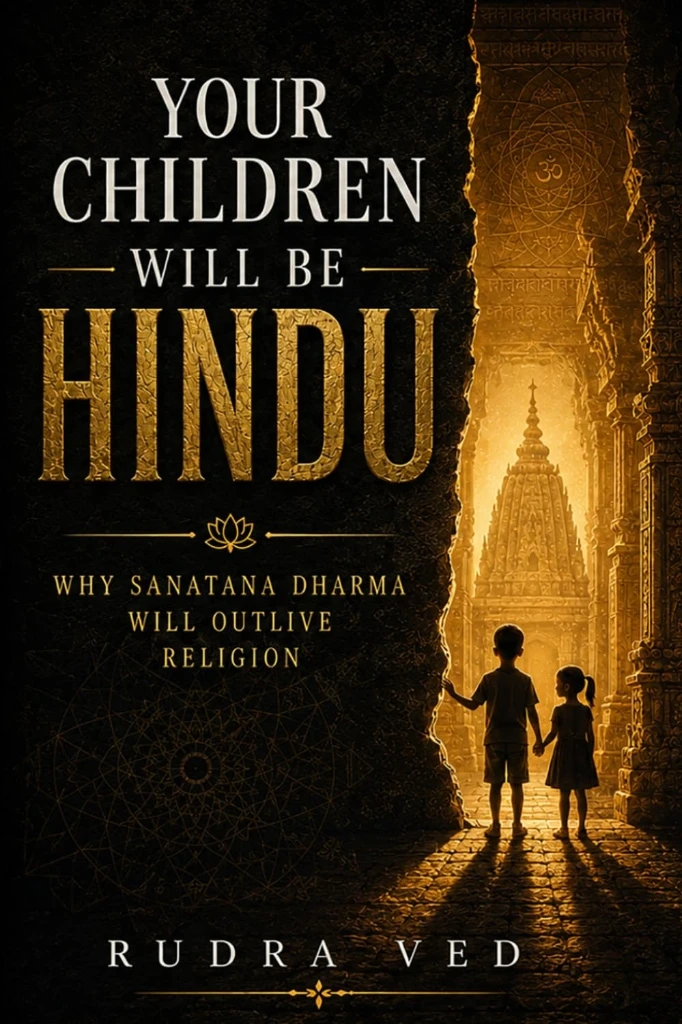
Your Children Will Be Hindu
Why Sanatana Dharma Will Outlive Religion — By Rudra Ved
How do you explain these ancient Vedic verses to your children, friends, or skeptical thinkers? Written by a former lifelong atheist and tested across 500+ unedited live debates, this book provides the rational, modern vocabulary that today's questioning generation needs.
Verse 11
यद्वा मण्डलाद्वा स्तनबिम्बमेकं मुखं चाधस्त्रीणि गुहासदनानि। कामीकलां कामरूपां चिकित्वा नरो जायते कामरूपश्च कामः ।।
yadvā maṇḍalādvā stanabimbamekaṃ mukhaṃ cādhastrīṇi guhāsadanāni। kāmīkalāṃ kāmarūpāṃ cikitvā naro jāyate kāmarūpaśca kāmaḥ ।।
Alternatively, from the maṇḍala, there is one breast-orb, a face, and below, three secret abodes. A man, having understood Kāmakalā, who is of the form of desire, becomes himself of the form of desire and becomes Kāma (the god of love).
Verse 12
परिसृतं झषमाजं पलं च भक्तानि योनी: सुपरिष्कृताश्च। निवेदयन्देवतायै महत्त्यै स्वात्मीकृते सुकृते सिद्धिमेति ॥
parisṛtaṃ jhaṣamājaṃ palaṃ ca bhaktāni yonī: supariṣkṛtāśca। nivedayandevatāyai mahattyai svātmīkṛte sukṛte siddhimeti ॥
One who offers to the great deity gathered fish, goat meat, (other) meat, cooked food, and well-prepared vulvas, attains siddhi by internalizing the meritorious act.
Verse 13
सृण्येव सितया विश्वचर्षणिः पाशेनैव प्रतिबध्नात्यभीकान्। इषुभिः पञ्चभिर्धनुषा च विध्यत्यादिशक्तिररुणा विश्वजन्या ।।
sṛṇyeva sitayā viśvacarṣaṇiḥ pāśenaiva pratibadhnātyabhīkān। iṣubhiḥ pañcabhirdhanuṣā ca vidhyatyādiśaktiraruṇā viśvajanyā ।।
The all-pervading (Goddess), with a goad and indeed with a white noose, binds the desirous ones. The primordial power Aruna, the generatrix of the universe, shoots with five arrows and a bow.
Verse 14
भगः शक्तिर्भगवान्काम व इंश उभा दाताराविह् सौभगानाम्। समप्रधानौ समसत्त्वौ समोजौ तयोः शक्तिरजरा विश्वयोनिः ।।
bhagaḥ śaktirbhagavānkāma va iṃśa ubhā dātārāvih saubhagānām। samapradhānau samasattvau samojau tayoḥ śaktirajarā viśvayoniḥ ।।
Bhaga (Prosperity) is the Power (Śakti). The glorious Kāma along with his divine share (aspect) – both here are givers of good fortune. They are equal in their fundamental principle, equal in their essence, equal in their vigor. Of the two, Śakti (the Power) is ageless, the womb of the universe.
Verse 15
परिसृता हविषा भावितेन प्रसंकोचे गलिते वैमनस्कः । शर्वः सर्वस्य जगतो विधाता धर्ता हर्ता विश्वरूपत्वमेति ॥
parisṛtā haviṣā bhāvitena prasaṃkoce galite vaimanaskaḥ । śarvaḥ sarvasya jagato vidhātā dhartā hartā viśvarūpatvameti ॥
When the (universe) that is pervaded and brought forth by the oblation contracts and dissolves, and the mental state (of beings) ceases, then Sharva, who is the creator, sustainer, and destroyer of the entire world, assumes the universal form.
Verse 16
इयं महोपनिषत्रैपुर्या यामक्षरं परमो गीर्भिरीट्टे। एषर्ग्यजुः परमेतच्च सामायमथर्वेयमन्या चविद्या।।
iyaṃ mahopaniṣatraipuryā yāmakṣaraṃ paramo gīrbhirīṭṭe। eṣargyajuḥ parametacca sāmāyamatharveyamanyā cavidyā।।
This is the great Tripura Upanishad, which the supreme Immutable One praises with hymns. This is the supreme Rig-Yajur Veda, and this is the Sama Veda, this is the Atharva Veda, and this is all other knowledge.
Verse 17
ॐ' ह्रीं ॐ ह्रीमित्युपनिषत् ॥
oṃ' hrīṃ oṃ hrīmityupaniṣat ॥
Om, Hrim, Om, Hrim – this is the Upaniṣad.
Key Takeaways & AI Summary
This chapter explores the profound teachings of Tripura Upanishad. It includes 17 verses detailing core themes like "tistraḥ purastripathā viśvacarṣaṇā atrākathā akṣarāḥ saṃniviṣṭāḥ । adhiṣṭhāyainā ajarā purāṇī mahattarā mahimā devatānām॥", "navayonīrnavacakrāṇi dadhire navaiva yogā nava yoginyaśca । navānāṃ cakrā adhināthā syonā nava bhadrā nava mudrā mahīnām॥", "ekā sa āsītprathamā sā navāsīdā sonaviṃśādā sonatriṃśāt। catvāriṃśādatha tistraḥ samidhā uśatīriva mātaro mā''viśantu ॥".The crown jewels of Vedic philosophy — a collection of 108+ texts exploring the nature of Brahman, Atman, and ultimate reality.