
Tulsi Upaniṣhad
(Chapter 32)
Verse 1
अथ तुलस्युपनिषदं व्याख्यास्यामः । नारद ऋषिः। अथर्वाङ्गिरश्छन्दः। अमृता तुलसी देवता । सुधा बीजम् । वसुधा शक्तिः । नारायणः कीलकम् । श्यामां श्यामवपुर्धरां ऋक्स्वरूपां यजुर्मनां ब्रह्माथर्वप्राणां कल्पहस्तां पुराणपठितां अमृतोद्भवां अमृतरसमञ्जरीं अनन्तां अनन्तरसभोगदां वैष्णवीं विष्णुवल्लभां मृत्युजन्मनिबर्हणी दर्शनात्पापनाशिनीं स्पर्शनात्पावनीं अभिवन्दनाद्रोगनाशिनीं सेवनान्मृत्युनाशिनीं वैकुण्ठार्चनाद्विपद्धन्त्रीं भक्षणात् वयुनप्रदां प्रदक्षिण्याद्दरिद्रयनाशिनीं मूलमृल्लेपनान्महापापभञ्जिनीं घ्राणतर्पणादन्तर्मलनाशिनीं य एवं वेद स वैष्णवो भवति । वृथा न छिन्द्यात्। दृष्ट्वा प्रदक्षिणं कुर्यात् । रात्र्यां न स्पृशेत् । पर्वणि न विचिन्वेत्। यदि विचिन्वति स विष्णुहा भवति। श्रीतुलस्यै स्वाहा । विष्णुप्रियायै स्वाहा। अमृतायै स्वाहा। श्रीतुलस्यै विद्महे विष्णुप्रियायै धीमहि। तन्नो अमृता प्रचोदयात् ॥
atha tulasyupaniṣadaṃ vyākhyāsyāmaḥ । nārada ṛṣiḥ। atharvāṅgiraśchandaḥ। amṛtā tulasī devatā । sudhā bījam । vasudhā śaktiḥ । nārāyaṇaḥ kīlakam । śyāmāṃ śyāmavapurdharāṃ ṛksvarūpāṃ yajurmanāṃ brahmātharvaprāṇāṃ kalpahastāṃ purāṇapaṭhitāṃ amṛtodbhavāṃ amṛtarasamañjarīṃ anantāṃ anantarasabhogadāṃ vaiṣṇavīṃ viṣṇuvallabhāṃ mṛtyujanmanibarhaṇī darśanātpāpanāśinīṃ sparśanātpāvanīṃ abhivandanādroganāśinīṃ sevanānmṛtyunāśinīṃ vaikuṇṭhārcanādvipaddhantrīṃ bhakṣaṇāt vayunapradāṃ pradakṣiṇyāddaridrayanāśinīṃ mūlamṛllepanānmahāpāpabhañjinīṃ ghrāṇatarpaṇādantarmalanāśinīṃ ya evaṃ veda sa vaiṣṇavo bhavati । vṛthā na chindyāt। dṛṣṭvā pradakṣiṇaṃ kuryāt । rātryāṃ na spṛśet । parvaṇi na vicinvet। yadi vicinvati sa viṣṇuhā bhavati। śrītulasyai svāhā । viṣṇupriyāyai svāhā। amṛtāyai svāhā। śrītulasyai vidmahe viṣṇupriyāyai dhīmahi। tanno amṛtā pracodayāt ॥
Now we shall explain the Tulasi Upanishad. Its seer (ṛṣi) is Narada; its meter (chanda) is Atharvāṅgiras; its deity (devatā) is Amṛtā Tulasī; its seed (bīja) is Sudhā; its power (śakti) is Vasudhā; its pivot (kīlaka) is Narayana. (Tulasi is) dark-hued, bearing a dark body, in the form of the Ṛg Veda, with the mind of the Yajur Veda, having the vital breaths of Brahmā and Atharva, with wish-fulfilling hands, celebrated in the Puranas, born of nectar, a cluster of nectarine essence, endless, bestowing endless enjoyment, a Vaishnava deity, beloved of Vishnu, destroying death and rebirth. By her sight, she is a destroyer of sins; by touch, a purifier; by salutation, a destroyer of diseases; by partaking (of her), a destroyer of death; by worship (leading to) Vaikuṇṭha, a destroyer of calamities; by consumption, a bestower of knowledge; by circumambulation, a destroyer of poverty; by anointing with earth from her roots, she shatters great sins; and by her fragrance, she dispels inner impurities. Whoever knows this thus becomes a Vaishnava. One should not pluck her needlessly. Upon seeing her, one should circumambulate her. One should not touch her at night. One should not gather (her leaves) on auspicious days or festivals. If one gathers them (on such days), one becomes a killer of Vishnu. Hail to Śrī Tulasī! Hail to the beloved of Vishnu! Hail to Amṛtā! We know Śrī Tulasī; we meditate on the beloved of Vishnu. May that Amṛtā enlighten us.
Verse 2
अमृतेऽमृतरूपासि अमृतत्वप्रदायिनि । त्वं मामुद्धर संसारात् क्षीरसागरकन्यके ॥
amṛte'mṛtarūpāsi amṛtatvapradāyini । tvaṃ māmuddhara saṃsārāt kṣīrasāgarakanyake ॥
O Immortal one, whose form is immortal, O bestower of immortality, please deliver me from the cycle of worldly existence, O daughter of the Milk Ocean.
Verse 3
श्रीसखि त्वं सदानन्दे मुकुन्दस्य सदा प्रिये। वरदाभयहस्ताभ्यां मां विलोकय दुर्लभे ॥
śrīsakhi tvaṃ sadānande mukundasya sadā priye। varadābhayahastābhyāṃ māṃ vilokaya durlabhe ॥
O friend of Śrī, O ever blissful one, O always beloved of Mukunda, O rare one, look upon me with your hands granting boons and dispelling fear.
Verse 4
अवृक्षवृक्षरूपासि वृक्षत्वं मे विनाशय । तुलस्यतुलरूपासि तुलाकोटिनिभेऽजरे ॥
avṛkṣavṛkṣarūpāsi vṛkṣatvaṃ me vināśaya । tulasyatularūpāsi tulākoṭinibhe'jare ॥
You are of the form of a tree, yet not a mere tree; destroy my worldly existence. O Tulasi, you are of incomparable form, O one resembling the ultimate standard of measure, O ageless one.
Verse 5
अतुले त्वतुलायां हि हरिरेकोऽस्ति नान्यथा । त्वमेव जगतां धात्री त्वमेव विष्णुवल्लभा ।।
atule tvatulāyāṃ hi harireko'sti nānyathā । tvameva jagatāṃ dhātrī tvameva viṣṇuvallabhā ।।
O incomparable one, truly, in you, the peerless one, Hari alone exists, not otherwise. You alone are the sustainer of the worlds, and you alone are the beloved of Vishnu.
Verse 6
त्वमेव सुरसंसेव्या त्वमेव मोक्षदायिनी। त्वच्छायायां वसेल्लक्ष्मीस्त्वन्मूले विष्णुरव्ययः ।।
tvameva surasaṃsevyā tvameva mokṣadāyinī। tvacchāyāyāṃ vasellakṣmīstvanmūle viṣṇuravyayaḥ ।।
You alone are served by the gods; you alone are the bestower of liberation. In your shade resides Lakshmi, and at your root is the imperishable Vishnu.
Verse 7
समन्ताद्देवताः सर्वाः सिद्धचारणपन्नगाः । यन्मूले सर्वतीर्थानि यन्मध्ये ब्रह्मदेवताः ।।
samantāddevatāḥ sarvāḥ siddhacāraṇapannagāḥ । yanmūle sarvatīrthāni yanmadhye brahmadevatāḥ ।।
All deities, Siddhas, Cāraṇas, and Pannagas are all around (her). At her root are all sacred places, and in her middle are Brahmā and the deities.
Verse 8
यदग्रे वेदशास्त्राणि तुलसीं तां नमाम्यहम्। तुलसि श्रीसखि शुभे पापहारिणि 'पुण्यदे ॥
yadagre vedaśāstrāṇi tulasīṃ tāṃ namāmyaham। tulasi śrīsakhi śubhe pāpahāriṇi 'puṇyade ॥
I bow to that Tulasi, in whose presence the Vedas and Shastras reside. O Tulasi, friend of Shri (Lakshmi), O auspicious one, O remover of sins, O bestower of merit.
Verse 9
नमस्ते नारदनुते नारायणमनः प्रिये । ब्रह्मानन्दाश्रुसंजाते वृन्दावननिवासिनि।।
namaste nāradanute nārāyaṇamanaḥ priye । brahmānandāśrusaṃjāte vṛndāvananivāsini।।
Salutations to you, O praised by Narada, O beloved of Narayana's mind, O arisen from the tears of supreme bliss, O dweller of Vrindavana.
Verse 10
सर्वावयवसंपूर्ण अमृतोपनिषद्रसे । त्वं मामुद्धर कल्याणि महापापाब्धिदुस्तरात् ॥
sarvāvayavasaṃpūrṇa amṛtopaniṣadrase । tvaṃ māmuddhara kalyāṇi mahāpāpābdhidustarāt ॥
O you who are perfect in all your parts, O essence of the nectar of the Upaniṣads! You, O auspicious one, deliver me from the ocean of great sins, which is difficult to cross.
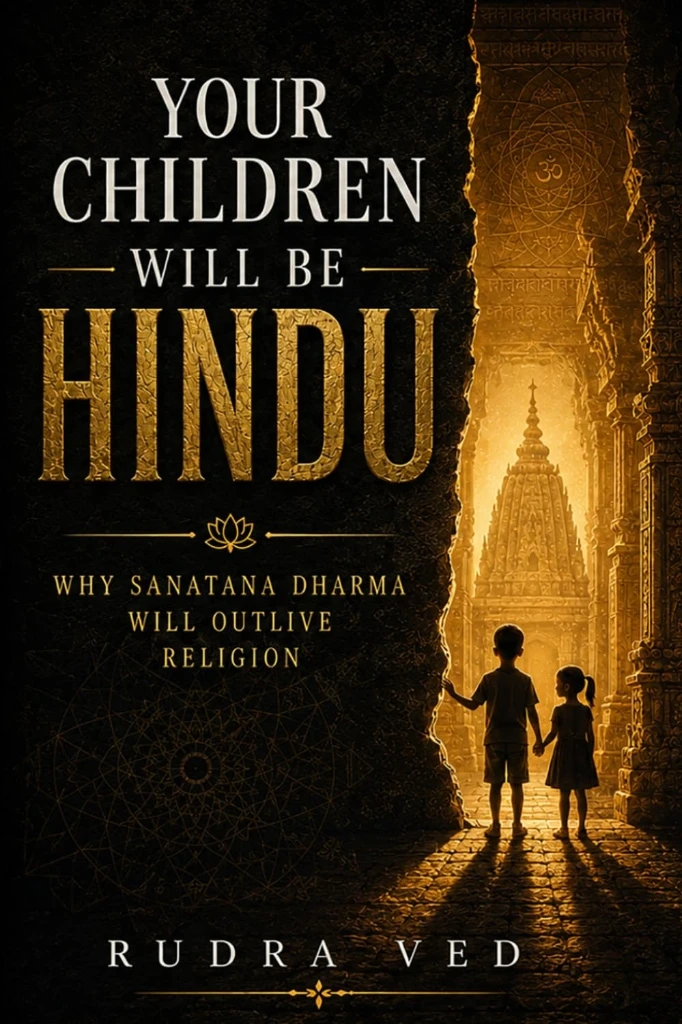
Your Children Will Be Hindu
Why Sanatana Dharma Will Outlive Religion — By Rudra Ved
How do you explain these ancient Vedic verses to your children, friends, or skeptical thinkers? Written by a former lifelong atheist and tested across 500+ unedited live debates, this book provides the rational, modern vocabulary that today's questioning generation needs.
Verse 11
सर्वेषामपि पापानां प्रायश्चित्तं त्वमेव हि। देवानां च ऋषीणां च पितृणां त्वं सदा प्रिये ॥
sarveṣāmapi pāpānāṃ prāyaścittaṃ tvameva hi। devānāṃ ca ṛṣīṇāṃ ca pitṛṇāṃ tvaṃ sadā priye ॥
Indeed, you alone are the expiation for all sins. You are always beloved of the gods, the sages, and the ancestors.
Verse 12
विना श्रीतुलसीं विप्रा येऽपि श्राद्धं प्रकुर्वते । वृथा भवति तच्छ्राद्धं पितृणां नोपगच्छति ॥
vinā śrītulasīṃ viprā ye'pi śrāddhaṃ prakurvate । vṛthā bhavati tacchrāddhaṃ pitṛṇāṃ nopagacchati ॥
O Brahmins, even those who perform the Shraddha ritual without Sri Tulasi — that Shraddha becomes futile and does not reach the ancestors.
Verse 13
तुलसीपत्रमुत्सृज्य यदि पूजां करोति वै। आसुरी सा भवेत् पूजा विष्णुप्रीतिकरी न च ॥
tulasīpatramutsṛjya yadi pūjāṃ karoti vai। āsurī sā bhavet pūjā viṣṇuprītikarī na ca ॥
If one performs worship omitting Tulasi leaves, that worship indeed becomes demonic and is not pleasing to Vishnu.
Verse 14
यज्ञं दानं जपं तीर्थ श्राद्धं वै देवतार्चनम्। तर्पणं मार्जनं चान्यन्न कुर्यात्तुलसीं विना ॥
yajñaṃ dānaṃ japaṃ tīrtha śrāddhaṃ vai devatārcanam। tarpaṇaṃ mārjanaṃ cānyanna kuryāttulasīṃ vinā ॥
Sacrifice, charity, chanting, pilgrimage, ancestral rites, verily, the worship of deities, water offerings, purification, and any other [ritual] should not be performed without Tulasi.
Verse 15
तुलसीदारुमणिभिः जपः सर्वार्थसाधकः । एवं न वेद यः कश्चित् स विप्रः श्वपचाधमः ।।
tulasīdārumaṇibhiḥ japaḥ sarvārthasādhakaḥ । evaṃ na veda yaḥ kaścit sa vipraḥ śvapacādhamaḥ ।।
Chanting with rosary beads made of Tulasi wood accomplishes all purposes. Any Brahmin who does not know this is worse than a dog-eater.
Verse 16
इत्याह भगवान् ब्रह्माणं नारायणः, ब्रह्मा नारदसनकादिभ्यः सनकादयो वेदव्यासाय, वेदव्यासः शुकाय, शुको वामदेवाय, वामदेवो मुनिभ्यः, मुनयो मनुभ्यः प्रोचुः । य एवं वेद स स्त्रीहत्यायाः प्रमुच्यते । स वीरहत्यायाः प्रमुच्यते । स ब्रह्महत्यायाः प्रमुच्यते । स महाभयात् प्रमुच्यते । स महादुःखात् प्रमुच्यते । देहान्ते वैकुण्ठमवाप्नोति वैकुण्ठमवाप्नोति । इत्युपनिषत् ॥
ityāha bhagavān brahmāṇaṃ nārāyaṇaḥ, brahmā nāradasanakādibhyaḥ sanakādayo vedavyāsāya, vedavyāsaḥ śukāya, śuko vāmadevāya, vāmadevo munibhyaḥ, munayo manubhyaḥ procuḥ । ya evaṃ veda sa strīhatyāyāḥ pramucyate । sa vīrahatyāyāḥ pramucyate । sa brahmahatyāyāḥ pramucyate । sa mahābhayāt pramucyate । sa mahāduḥkhāt pramucyate । dehānte vaikuṇṭhamavāpnoti vaikuṇṭhamavāpnoti । ityupaniṣat ॥
Thus Lord Nārāyaṇa spoke to Brahmā; Brahmā to Nārada, Sanaka, and others; Sanaka and others to Vedavyāsa; Vedavyāsa to Śuka; Śuka to Vāmadeva; Vāmadeva to the sages; and the sages to the Manus. He who knows this is freed from the sin of killing a woman. He is freed from the sin of killing a hero. He is freed from the sin of killing a Brahmin. He is freed from great fear. He is freed from great sorrow. At the end of his body (life), he attains Vaikuṇṭha, he attains Vaikuṇṭha. Thus ends the Upaniṣad.
Key Takeaways & AI Summary
This chapter explores the profound teachings of Tulsi Upaniṣhad. It includes 16 verses detailing core themes like "atha tulasyupaniṣadaṃ vyākhyāsyāmaḥ । nārada ṛṣiḥ। atharvāṅgiraśchandaḥ। amṛtā tulasī devatā । sudhā bījam । vasudhā śaktiḥ । nārāyaṇaḥ kīlakam । śyāmāṃ śyāmavapurdharāṃ ṛksvarūpāṃ yajurmanāṃ brahmātharvaprāṇāṃ kalpahastāṃ purāṇapaṭhitāṃ amṛtodbhavāṃ amṛtarasamañjarīṃ anantāṃ anantarasabhogadāṃ vaiṣṇavīṃ viṣṇuvallabhāṃ mṛtyujanmanibarhaṇī darśanātpāpanāśinīṃ sparśanātpāvanīṃ abhivandanādroganāśinīṃ sevanānmṛtyunāśinīṃ vaikuṇṭhārcanādvipaddhantrīṃ bhakṣaṇāt vayunapradāṃ pradakṣiṇyāddaridrayanāśinīṃ mūlamṛllepanānmahāpāpabhañjinīṃ ghrāṇatarpaṇādantarmalanāśinīṃ ya evaṃ veda sa vaiṣṇavo bhavati । vṛthā na chindyāt। dṛṣṭvā pradakṣiṇaṃ kuryāt । rātryāṃ na spṛśet । parvaṇi na vicinvet। yadi vicinvati sa viṣṇuhā bhavati। śrītulasyai svāhā । viṣṇupriyāyai svāhā। amṛtāyai svāhā। śrītulasyai vidmahe viṣṇupriyāyai dhīmahi। tanno amṛtā pracodayāt ॥", "amṛte'mṛtarūpāsi amṛtatvapradāyini । tvaṃ māmuddhara saṃsārāt kṣīrasāgarakanyake ॥", "śrīsakhi tvaṃ sadānande mukundasya sadā priye। varadābhayahastābhyāṃ māṃ vilokaya durlabhe ॥".The crown jewels of Vedic philosophy — a collection of 108+ texts exploring the nature of Brahman, Atman, and ultimate reality.