Turiyatita Upanishad
(Chapter 20)
Verse 1
अथ तुरीयातीतावधूतानां कोऽयं मार्गस्तेषां का स्थितिरिति सर्वलोक पितामहो भगवन्तं पितरमादिनारायणं परिसमेत्योवाच। तमाह भगवान्नारायणो योऽयमवधूतमार्गस्थो लोके दुर्लभतरो नतु बाहुल्यो यद्येको भवति स एव नित्यपूतःस एव वैराग्यमूर्तिः स एव ज्ञानाकारः स एव वेदपुरष इति ज्ञानिनो मन्यते । महापुरूषो यस्तच्चित्तं मय्येवावतिष्ठते।अहं च तस्मिन्नेवावस्थितः।सोऽयमादौ तावत्वक्रमेण कुटीचको बहूदकत्वं प्राप्य बहूदको हं सत्वमवलम्ब्य हं सः परमहंसो भूत्वा स्वरूपानुसंधानेन सर्वप्रपञ्चं विदित्वा दण्डकमण्डलुकटिसूत्रकौपीनाच्छादनं स्वविध्युक्तक्रियादिकं सर्वमप्सु संन्यास्य दिगम्बरो भूत्वा विवर्णजीर्णवल्कलाजिनपरिग्नहमपि संत्यज्य तदूर्ध्वममन्त्रवदाचरन्क्षौराभ्यङ्गस्न्नानोर्ध्व-पुण्ड्रादिकं विहाय लौकिकवैदिकमप्युपसंहृत्य सर्वत्र पुण्यापुण्यवर्जितो ज्ञानाज्ञानमपि विहाय शीतोष्णसुखदुः खमानावमानं निर्जित्य वासनात्रयपूर्वकं निन्दाऽनिन्दागर्वमत्सर-दम्भदर्पेच्छद्वेषकामक्रोधलोभमोहहर्षामर्षासूयात्मसंरक्षणादिकं दग्ध्वाः स्ववपुः कुणपाकारमिव पश्यन्नयत्नेन्नानियमेन लाभालाभौ समौ कृत्वा गोवृत्त्या प्राणसंधारणं कुर्वन्यत्प्राप्तं तेनैव निर्लोलुपः सर्वविद्यापाण्डित्यप्रपञ्चं भस्मीकृत्य स्वरूपं गोपयित्वा ज्येष्ठाऽज्येष्ठत्वानपलापकः सर्वोत्कृष्टत्वासर्वात्मकत्वाद्वैतं कल्पयित्वा मत्तो व्यतिरिक्तः कश्चिन्नान्योऽस्तीति देवगुह्यादिध- नमात्मन्युपसंहृत्य दुःखेन नोद्विग्नः सुखेन नानुमोदको रागे निःस्पृहःसर्वत्र शुभाशुभयोरनाभिस्न्नेहः सर्वेन्द्रियोपरपः स्वपूर्वापन्नाश्रमाचारविद्याधर्म-प्राभवमननुस्मरन्त्यक्तवर्णाश्रमाचारः सर्वदा दिवानक्तसमत्वेनास्वप्नः सर्वत्र सर्वदा संचारशीलो देहमात्रावशिष्टो जलस्थलकमण्डलुः सर्वदानुन्मुत्तो बालोन्मत्तपिशाचवदेकाकी संचरन्नसंभाषणपरः स्वरूपध्यानेन निरालम्बम-वलम्ब्य स्वात्मनिष्ठानुकूलेन सर्वं विस्मृत्य तुरीयातीतावधूतवेषेणाद्वैतनिष्ठापरः प्रणवात्मकत्वेन देहत्यागं करोति यः सोऽवधूतः कृतकृत्यो भवतीत्युपनिषत्।।
atha turīyātītāvadhūtānāṃ ko'yaṃ mārgasteṣāṃ kā sthitiriti sarvaloka pitāmaho bhagavantaṃ pitaramādinārāyaṇaṃ parisametyovāca। tamāha bhagavānnārāyaṇo yo'yamavadhūtamārgastho loke durlabhataro natu bāhulyo yadyeko bhavati sa eva nityapūtaḥsa eva vairāgyamūrtiḥ sa eva jñānākāraḥ sa eva vedapuraṣa iti jñānino manyate । mahāpurūṣo yastaccittaṃ mayyevāvatiṣṭhate।ahaṃ ca tasminnevāvasthitaḥ।so'yamādau tāvatvakrameṇa kuṭīcako bahūdakatvaṃ prāpya bahūdako haṃ satvamavalambya haṃ saḥ paramahaṃso bhūtvā svarūpānusaṃdhānena sarvaprapañcaṃ viditvā daṇḍakamaṇḍalukaṭisūtrakaupīnācchādanaṃ svavidhyuktakriyādikaṃ sarvamapsu saṃnyāsya digambaro bhūtvā vivarṇajīrṇavalkalājinaparignahamapi saṃtyajya tadūrdhvamamantravadācarankṣaurābhyaṅgasnnānordhva-puṇḍrādikaṃ vihāya laukikavaidikamapyupasaṃhṛtya sarvatra puṇyāpuṇyavarjito jñānājñānamapi vihāya śītoṣṇasukhaduḥ khamānāvamānaṃ nirjitya vāsanātrayapūrvakaṃ nindā'nindāgarvamatsara-dambhadarpecchadveṣakāmakrodhalobhamohaharṣāmarṣāsūyātmasaṃrakṣaṇādikaṃ dagdhvāḥ svavapuḥ kuṇapākāramiva paśyannayatnennāniyamena lābhālābhau samau kṛtvā govṛttyā prāṇasaṃdhāraṇaṃ kurvanyatprāptaṃ tenaiva nirlolupaḥ sarvavidyāpāṇḍityaprapañcaṃ bhasmīkṛtya svarūpaṃ gopayitvā jyeṣṭhā'jyeṣṭhatvānapalāpakaḥ sarvotkṛṣṭatvāsarvātmakatvādvaitaṃ kalpayitvā matto vyatiriktaḥ kaścinnānyo'stīti devaguhyādidha- namātmanyupasaṃhṛtya duḥkhena nodvignaḥ sukhena nānumodako rāge niḥspṛhaḥsarvatra śubhāśubhayoranābhisnnehaḥ sarvendriyoparapaḥ svapūrvāpannāśramācāravidyādharma-prābhavamananusmarantyaktavarṇāśramācāraḥ sarvadā divānaktasamatvenāsvapnaḥ sarvatra sarvadā saṃcāraśīlo dehamātrāvaśiṣṭo jalasthalakamaṇḍaluḥ sarvadānunmutto bālonmattapiśācavadekākī saṃcarannasaṃbhāṣaṇaparaḥ svarūpadhyānena nirālambama-valambya svātmaniṣṭhānukūlena sarvaṃ vismṛtya turīyātītāvadhūtaveṣeṇādvaitaniṣṭhāparaḥ praṇavātmakatvena dehatyāgaṃ karoti yaḥ so'vadhūtaḥ kṛtakṛtyo bhavatītyupaniṣat।।
Now, 'What is the path of these Turiyatita Avadhutas? What is their state?' So asked Brahma, the grandfather of all worlds, approaching the venerable father, Adinarayana. Lord Narayana replied to him: 'This path of the Avadhuta is extremely rare in the world, not common. If there is even one such person, he alone is eternally pure, he alone is the very embodiment of dispassion, he alone is the form of knowledge, he alone is the Purusha of the Vedas—so the knowers believe. He is the great being whose mind rests firmly in Me alone. And I too am established in him alone. Such a one, in the beginning, proceeding gradually, first becomes a Kuṭīcaka, then attains the state of Bahūdaka. Having become a Bahūdaka, he resorts to the state of Haṃsa, and having become a Haṃsa, he becomes a Paramahaṃsa. Having realized all of existence (Prapañca) through the contemplation of his true Self (Svarūpa), he then casts into water all his implements like the staff, water-pot, waist-thread, and loincloth, and all activities prescribed by his order. Becoming a Digambara (sky-clad, naked), he also renounces the adoption of faded, old bark garments and deerskins. Beyond that, he acts without mantras, abandons shaving, oil massage, bathing, applying the Urdhva-puṇḍra mark, and relinquishes both worldly and Vedic observances. Everywhere devoid of merit and demerit, abandoning even knowledge and ignorance, conquering cold and heat, pleasure and pain, honor and dishonor, burning away desires rooted in the three Vāsanās (for progeny, wealth, and world), censure and non-censure, pride, envy, hypocrisy, arrogance, desire, hatred, craving, anger, greed, delusion, joy, impatience, jealousy, self-preservation, and so forth. Seeing his own body as if it were a corpse, he sustains his life like a cow, without effort, without rules, treating gain and loss equally. He remains free from longing with whatever he obtains. He incinerates the entire edifice of all scholarship and learning, conceals his true Self, and is not one to deny superior or inferior status. Conceiving non-duality (Advaita) as supreme and as the Self of all, thinking, 'There is none other distinct from Me,' he withdraws into himself wealth like divine secrets. He is not distressed by sorrow, nor rejoices in pleasure. He is free from longing in attachment. Everywhere, he is free from affection for auspicious and inauspicious. He has ceased all sensory activity, not recalling the power of his former ashrama, conduct, knowledge, or dharma. He has abandoned varṇa and ashrama specific conduct. Always awake with equanimity day and night, he roams everywhere at all times, with only his body remaining, needing no water-pot for land or water (i.e., self-sufficient), always unagitated, wandering alone like a child, a madman, or a ghost, not indulging in conversation. Relying on the unsupported through self-contemplation, forgetting everything due to his devotion to the Self, steadfast in Advaita in the guise of a Turiyatita Avadhuta, he who abandons his body in the nature of Om, that Avadhuta becomes one who has achieved his purpose. Thus (declares) the Upanishad.
Key Takeaways & AI Summary
This chapter explores the profound teachings of Turiyatita Upanishad. It includes 1 verses detailing core themes like "atha turīyātītāvadhūtānāṃ ko'yaṃ mārgasteṣāṃ kā sthitiriti sarvaloka pitāmaho bhagavantaṃ pitaramādinārāyaṇaṃ parisametyovāca। tamāha bhagavānnārāyaṇo yo'yamavadhūtamārgastho loke durlabhataro natu bāhulyo yadyeko bhavati sa eva nityapūtaḥsa eva vairāgyamūrtiḥ sa eva jñānākāraḥ sa eva vedapuraṣa iti jñānino manyate । mahāpurūṣo yastaccittaṃ mayyevāvatiṣṭhate।ahaṃ ca tasminnevāvasthitaḥ।so'yamādau tāvatvakrameṇa kuṭīcako bahūdakatvaṃ prāpya bahūdako haṃ satvamavalambya haṃ saḥ paramahaṃso bhūtvā svarūpānusaṃdhānena sarvaprapañcaṃ viditvā daṇḍakamaṇḍalukaṭisūtrakaupīnācchādanaṃ svavidhyuktakriyādikaṃ sarvamapsu saṃnyāsya digambaro bhūtvā vivarṇajīrṇavalkalājinaparignahamapi saṃtyajya tadūrdhvamamantravadācarankṣaurābhyaṅgasnnānordhva-puṇḍrādikaṃ vihāya laukikavaidikamapyupasaṃhṛtya sarvatra puṇyāpuṇyavarjito jñānājñānamapi vihāya śītoṣṇasukhaduḥ khamānāvamānaṃ nirjitya vāsanātrayapūrvakaṃ nindā'nindāgarvamatsara-dambhadarpecchadveṣakāmakrodhalobhamohaharṣāmarṣāsūyātmasaṃrakṣaṇādikaṃ dagdhvāḥ svavapuḥ kuṇapākāramiva paśyannayatnennāniyamena lābhālābhau samau kṛtvā govṛttyā prāṇasaṃdhāraṇaṃ kurvanyatprāptaṃ tenaiva nirlolupaḥ sarvavidyāpāṇḍityaprapañcaṃ bhasmīkṛtya svarūpaṃ gopayitvā jyeṣṭhā'jyeṣṭhatvānapalāpakaḥ sarvotkṛṣṭatvāsarvātmakatvādvaitaṃ kalpayitvā matto vyatiriktaḥ kaścinnānyo'stīti devaguhyādidha- namātmanyupasaṃhṛtya duḥkhena nodvignaḥ sukhena nānumodako rāge niḥspṛhaḥsarvatra śubhāśubhayoranābhisnnehaḥ sarvendriyoparapaḥ svapūrvāpannāśramācāravidyādharma-prābhavamananusmarantyaktavarṇāśramācāraḥ sarvadā divānaktasamatvenāsvapnaḥ sarvatra sarvadā saṃcāraśīlo dehamātrāvaśiṣṭo jalasthalakamaṇḍaluḥ sarvadānunmutto bālonmattapiśācavadekākī saṃcarannasaṃbhāṣaṇaparaḥ svarūpadhyānena nirālambama-valambya svātmaniṣṭhānukūlena sarvaṃ vismṛtya turīyātītāvadhūtaveṣeṇādvaitaniṣṭhāparaḥ praṇavātmakatvena dehatyāgaṃ karoti yaḥ so'vadhūtaḥ kṛtakṛtyo bhavatītyupaniṣat।।".The crown jewels of Vedic philosophy — a collection of 108+ texts exploring the nature of Brahman, Atman, and ultimate reality.
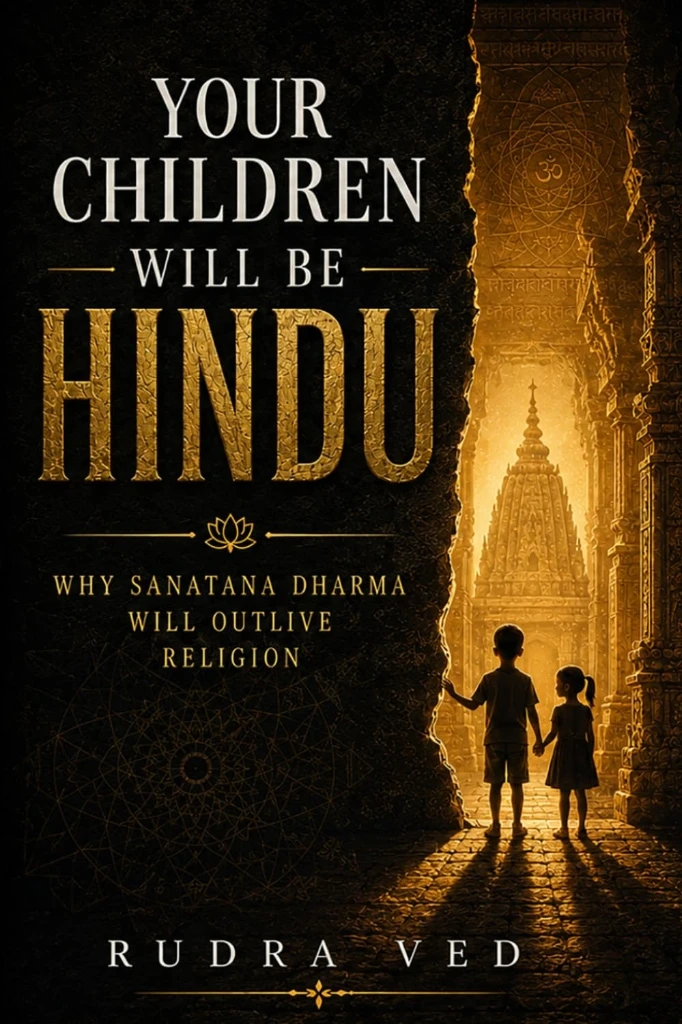
Your Children Will Be Hindu
Why Sanatana Dharma Will Outlive Religion — By Rudra Ved
How do you explain these ancient Vedic verses to your children, friends, or skeptical thinkers? Written by a former lifelong atheist and tested across 500+ unedited live debates, this book provides the rational, modern vocabulary that today's questioning generation needs.