
Vajrasuchi Upanishad
(Chapter 11)
Verse 1
वज्रसूचीं प्रवक्ष्यामि शास्त्रमज्ञानभेदनम्। दूषणं ज्ञानहीनानां भूषणं ज्ञानचक्षुषाम् ॥ ||१||
vajrasūcīṃ pravakṣyāmi śāstramajñānabhedanam। dūṣaṇaṃ jñānahīnānāṃ bhūṣaṇaṃ jñānacakṣuṣām ॥ ||1||
I shall explain the Vajrasūcī, the scripture that distinguishes between knowledge and ignorance. It is a blemish for those devoid of knowledge and an ornament for those with the eye of knowledge.
Verse 2
ब्रह्मक्षत्रियवैश्यशूद्रा इति चत्वारो वर्णास्तेषां वर्णानां ब्राह्मण एवं प्रधान इति वेदवचनानुरूपं स्मृतिभिरप्युक्तम्। तत्र चोद्यमस्ति को वा ब्राह्मणो नाम किं जीवः किं देहः। किं जातिः किं ज्ञानं किं कर्म किं धार्मिक इति॥ ||२||
brahmakṣatriyavaiśyaśūdrā iti cattvāro varṇāsteṣāṃ varṇānāṃ brāhmaṇa evaṃ pradhāna iti vedavacanānurūpaṃ smṛtibhirapyuptam. tatra codyamasti ko vā brāhmaṇo nāma kiṃ jīvaḥ kiṃ dehaḥ. kiṃ jātiḥ kiṃ jñānaṃ kiṃ karma kiṃ dhārmika iti ||2||
The four varnas are Brahmana, Kshatriya, Vaishya, and Shudra; among these varnas, the Brahmana is indeed the principal one, as stated in the Vedas and also affirmed by the Smritis. Therein arises the question: Who is called a Brahmana? What is the self? What is the body? What is caste? What is knowledge? What is action? What is righteousness?
Verse 3
तत्र प्रथमो जीवो ब्राह्मण इति चेत्तन्न । अतीतानागतानेकदेहानां जीवस्यैकरूपत्वात् एकस्यापि कर्मवशादनेकदेहसंभवात् सर्वशरीराणां जीवस्यैकरूपत्वाच्च। तस्मान्न जीवो ब्राह्मण इति ॥ ||३||
tatra prathamo jīvo brāhmaṇa iti cettann | atītānāgatānekadehānāṃ jīvasyaikarūpatvāt ekasyāpi karmavaśādanekadehasaṃbhavāt sarvaśarīrāṇāṃ jīvasyaikarūpatvācca | tasmānna jīvo brāhmaṇa iti ||3||
There, if one says that the first being is a Brahman, it is not so. Because the essence of the individual soul is one, despite the many bodies it has had in the past and will have in the future, and due to the influence of actions, it can take on many forms. Therefore, it cannot be said that the individual soul is a Brahman.
Verse 4
तर्हि देहो ब्राह्मण इति चेत्तन्न। आचाण्डालादिपर्यन्तानां मनुष्याणां पाञ्चभौतिकत्वेन देहस्यैकरूपत्वाज्जरामरणधर्माधर्मादिसाम्यदर्शनाद् ब्राह्मणः श्वेतवर्णः क्षत्रियो रक्तवर्णो वैश्यः पीतवर्णः शूद्रः कृष्णवर्ण इति नियमाभावात्। पित्रादिशरीरदहने पुत्रादीनां ब्रह्महत्यादिदोष-संभवाच्च। तस्मान्न देहो ब्राह्मण इति ॥ ||४||
tarhi deho brāhmaṇa iti cettanna | ācāṇḍālādiparyantānāṃ manuṣyāṇāṃ pāñcabhautikatvena dehasyaikarūpatvājjarāmaṇa-dharma-adharmādi-sāmyadarśanād brāhmaṇaḥ śvetavarṇaḥ kṣatriyo raktavarṇo vaiśyaḥ pītavarṇaḥ śūdraḥ kṛṣṇavarṇa iti niyamābhāvāt | pitrādiśarīradahane putrādīnāṃ brahmahatyādi-doṣa-saṃbhavāc ca | tasmānna deho brāhmaṇa iti || 4 ||
Therefore, if one says that the body is a Brahmin, it is not so. From the perspective of the five elements, the bodies of all humans, from the outcast to the highest caste, are of one form. The Brahmin is of white color, the Kshatriya is red, the Vaishya is yellow, and the Shudra is black; thus, there is no distinction based on color. Due to the burning of the body of the ancestors and the potential for sins like Brahmahatya (the killing of a Brahmin) arising from the offspring, one cannot say that the body is a Brahmin.
Verse 5
तर्हि जातिर्ब्राह्मण इति चेत्ततन्न । तत्र जात्यन्तरजन्तुष्वनेकजातिसंभवा महर्षयो बहवः सन्ति । ऋष्यशृङ्गो मृग्याः कौशिकः कुशात् जाम्बूको जम्बूकात्। वाल्मीको वल्मीकात् व्यासः कैवर्तकन्यकायाम् शंशपृष्ठात् गौतमः वसिष्ठ उर्वश्याम् अगस्त्यः कलशे जात इति श्नुतत्वात्। एतेषां जात्या विनाप्यग्ने ज्ञानप्रतिपादिता ऋषयो बहवः सन्ति । तस्मान्न जातिर्बाह्मण इति ॥ ||५||
tarhi jātirbrāhmaṇa iti cettatanna | tatra jātyantarajantuṣvanekajātisaṃbhavā maharṣayo bahavaḥ santi | ṛṣyaśṛṅgo mṛgyāḥ kauśikaḥ kuśāt jāmabūko jambūkāt | vālmīko valmīkāt vyāsaḥ kaivartakanyakāyām śaṃśapṛṣṭhāt gautamaḥ vasiṣṭha urvaśyām agastyaḥ kalaśe jāta iti śnutatvāt | eteṣāṃ jātyā vināpyagne jñānapratipāditā ṛṣayo bahavaḥ santi | tasmānna jātirbāhmaṇa iti || 5 ||
If one says that the birth is Brahmin, then that is not so. There are many great sages born from different castes among various beings. There are Ṛṣyaśṛṅga from the deer, Kauśika from the grass, Jāmbūka from the Jāmbū tree, Vālmīka from the ant hill, Vyāsa from the Kaivarta maiden, Gautama from the Shānśa tree, Vasiṣṭha from Urvaśī, and Agastya born from the pot. Therefore, many sages exist who have attained knowledge without being born into a specific caste. Hence, it is not true that one is a Brahmin by birth.
Verse 6
तर्हि ज्ञानं ब्राह्मण इति चेत्तन्न। क्षत्रियादयोऽपि परमार्थदर्शिनोऽभिज्ञा बहवः सन्ति। तस्मान्न ज्ञानं ब्राह्मण इति ॥ ||६||
tarhi jñānaṃ brāhmaṇa iti cettanna | kṣatriyādayo'pi paramārthadarśino'bhijñā bahavaḥ santi | tasmānna jñānaṃ brāhmaṇa iti || 6 ||
Then, if one says that knowledge is Brahmin, it is not so. There are many who are knowledgeable among Kshatriyas and others who perceive the ultimate truth. Therefore, knowledge is not limited to Brahmins.
Verse 7
तर्हि कर्म ब्राह्मण इति चेत्तन्न। सर्वेषां प्राणिनां प्रारब्धसंचितागामिकर्मसा-धर्म्यदर्शनात्कर्माभिप्रेरिताः सन्तो जनाः क्रियाः कुर्वन्तीति । तस्मान्न कर्म ब्राह्मण इति ॥ ||७||
tarhi karma brāhmaṇa iti cettanna | sarveṣāṃ prāṇināṃ prārabdha-saṃcitāgāmi-karma-sādharmyadarśanāt karmābhipreritāḥ santo janāḥ kriyāḥ kurvantīti | tasmānna karma brāhmaṇa iti ||7||
Then, if one says that action is Brahmin, it is not so. From the perspective of the dharma of actions prompted by the nature of all living beings, who are inspired by their accumulated, past, and future actions, the wise ones perform actions. Therefore, action is not Brahmin.
Verse 8
तर्हि धार्मिको ब्राह्मण इति चेत्तन्न । क्षत्रियादयो हिरण्यदातारो बहवः सन्ति । तस्मान्न धार्मिको ब्राह्मण इति ॥ ||८||
tarhi dhārmiko brāhmaṇa iti cettanna | kṣatriyādayo hiraṇyadātāro bahavaḥ santi | tasmānna dhārmiko brāhmaṇa iti || 8 ||
Then, if one says that a righteous person is a Brahmin, there are many like Kshatriyas and others who are givers of gold. Therefore, one cannot say that a righteous person is only a Brahmin.
Verse 9
तर्हि को वा ब्राह्मणो नाम। यः कश्चिदात्मानमद्वितीयं जातिगुणक्रियाहीनं षडूर्मिषड्भावे-त्यादिसर्वदोषरहितं सत्यज्ञानानन्दानन्तस्वरूपं स्वयं निर्विकल्पमशेषकल्पाधारमशेषभूतान्तर्यामित्वेन वर्तमानमन्तर्बहिश्चाकाशवदनुस्यूतमखण्डानन्द स्वभावमप्रमेयमनुभवैकवेद्यमापरोक्षतया भासमानं करतलामलक वत्साक्षादपरो क्षीकृ त्य कृ तार्थतया कामरागादिदोषरहितः शमदमादिसंपन्नो भावमात्सर्यतृष्णाशामोहादिरहितो दम्भाहंकारादिभिरसंस्पृष्टचेता वर्तत एवमुक्तलक्षणो यः स एव ब्राह्मण इति श्रुतिस्मृतिपुराणेतिहासानामभिप्रायः। अन्यथा हि ब्राह्मणत्वसिद्धिर्नास्त्येव । सच्चिदानन्दमात्मान- मद्वितीयं ब्रह्म भावयेदात्मानं सच्चिदानन्दं ब्रह्म भावयेदित्युपनिषत् ॥ ||९||
{ "en": "tarhi ko vā brāhmaṇo nāma | yaḥ kaścidātmānamadvitīyaṃ jāti-guṇa-kriyā-hīnaṃ ṣaḍūrmīṣaḍbhāve-tyādi-sarva-doṣa-rahitaṃ satyajñānānandānantasvarūpaṃ svayaṃ nirvikalpamaśeṣakalpādharamaśeṣabhūtāntaryāmitvena vartamānamantarbahiścākāśavadanusyūtamakhaṇḍānanda svabhāvamaprameyamanubhavaikavedyamāparokṣatayā bhāsamānaṃ karatalāmalaka vat sākṣādaparokṣaṭya kṛtārthatayā kāmarāgādidoṣarahitaḥ śamadama-ādisaṃpannaḥ bhāvamātsaryatṛṣṇāśāmohādirahitodambhāhaṃkārādibhirasaṃspṛṣṭacetā vartata evamuktalakṣaṇo yaḥ sa eva brāhmaṇa iti śrutismṛtipurāṇetihāsānāmabhiprāyaḥ | anyathā hi brāhmaṇatvasiddhirnāsty eva | sacchidānandamātmānamadvitīyaṃ brahma bhāvayedātmanam sacchidānandaṃ brahma bhāvayedityupaniṣat || 9 ||", "desc": "Then who is a Brahmana? He who, being without a second, is free from the qualities and actions of caste, who is devoid of all defects, who is the essence of truth, knowledge, and bliss, who is self
Key Takeaways & AI Summary
This chapter explores the profound teachings of Vajrasuchi Upanishad. It includes 9 verses detailing core themes like "vajrasūcīṃ pravakṣyāmi śāstramajñānabhedanam। dūṣaṇaṃ jñānahīnānāṃ bhūṣaṇaṃ jñānacakṣuṣām ॥ ||1||", "brahmakṣatriyavaiśyaśūdrā iti cattvāro varṇāsteṣāṃ varṇānāṃ brāhmaṇa evaṃ pradhāna iti vedavacanānurūpaṃ smṛtibhirapyuptam", "tatra prathamo jīvo brāhmaṇa iti cettann | atītānāgatānekadehānāṃ jīvasyaikarūpatvāt ekasyāpi karmavaśādanekadehasaṃbhavāt sarvaśarīrāṇāṃ jīvasyaikarūpatvācca | tasmānna jīvo brāhmaṇa iti ||3||".The crown jewels of Vedic philosophy — a collection of 108+ texts exploring the nature of Brahman, Atman, and ultimate reality.
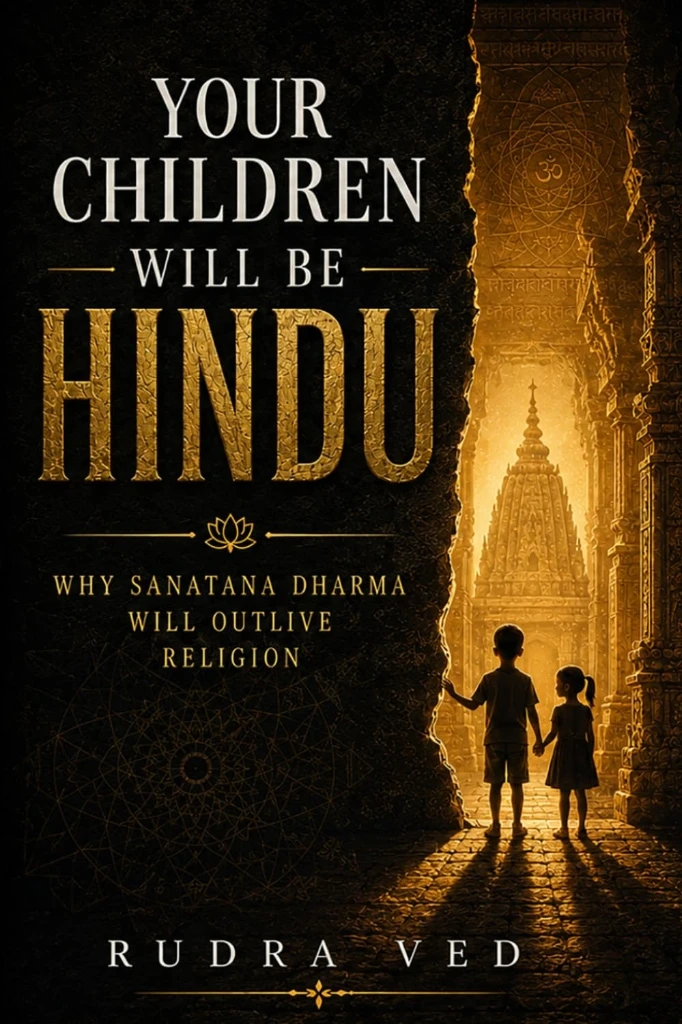
Your Children Will Be Hindu
Why Sanatana Dharma Will Outlive Religion — By Rudra Ved
How do you explain these ancient Vedic verses to your children, friends, or skeptical thinkers? Written by a former lifelong atheist and tested across 500+ unedited live debates, this book provides the rational, modern vocabulary that today's questioning generation needs.