
Yajnavalkya's Grand Discourse on Brahman and the Inner Controller
(Chapter 3)
तृतीयोऽध्यायः — Adhyāya 3: Khila Kāṇḍa ( Yājñavalkya at Janaka's Court)
Verse 1
जनको ह वैदेहो बहुदक्षिणेन यज्ञेनेजे । तत्र ह कुरुपञ्चालानां ब्राह्मणा अभिसमेता बभूवुः । तस्य ह जनकस्य वैदेहस्य विजिज्ञासा बभूव कः स्विदेषां ब्राह्मणानामनूचानतम इति । स ह गवां सहस्रमवरुरोध । दशदश पादा एकैकस्याः शृङ्गयोराबद्धा बभूवुः ॥ ३,१.१ ॥
janako ha vaideho bahudakṣiṇena yajñeneje | tatra ha kurupañcālānāṁ brāhmaṇā abhisametā babhūvuḥ | tasya ha janakasya vaidehasya vijijñāsā babhūva kaḥ svideṣāṁ brāhmaṇānām anūcānatama iti | sa ha gavāṁ sahasram avarurodha | daśadaśa pādā ekaikasyāḥ śṛṅgayor ābaddhā babhūvuḥ
Janaka, King of Videha, performed a sacrifice in which lavish gifts were distributed. Brahmins from the countries of Kuru and Pañcāla had gathered there. A desire arose in King Janaka of Videha to know who among these Brahmins was the most erudite in Vedic lore. So, he enclosed a thousand cows, and to the horns of each cow ten gold coins were fastened.
Verse 2
तान् होवाच ब्राह्मणा भगवन्तो यो वो ब्रह्मिष्ठः स एता गा उदजतामिति । ते ह ब्राह्मणा न दधृषुः । अथ ह याज्ञवल्क्यः स्वमेव ब्रह्मचारिणमुवाच एताः सौम्योदज सामश्रवा३ इति । ता होदाचकार । ते ह ब्राह्मणाश्चुक्रुधुः कथं नु नो ब्रह्मिष्ठो ब्रुवीतेति । अथ ह जनकस्य वैदेहस्य होताश्वलो बभूव । स हैनं पप्रच्छ त्वं नु खलु नो याज्ञवल्क्य ब्रह्मिष्ठोऽसी३ इति । स होवाच नमो वयं ब्रह्मिष्ठाय कुर्मो गोकामा एव वयं स्म इति । तं ह तत एव प्रष्टुं दध्रे होताश्वलः ॥ ३,१.२ ॥
tān hovāca brāhmaṇā bhagavanto yo vo brahmiṣṭhaḥ sa etā gā udajatām iti | te ha brāhmaṇā na dadhṛṣuḥ | atha ha yājñavalkyaḥ svam eva brahmacāriṇam uvāca etāḥ saomyodaja sāmaśravā3 iti | tā hodācakāra | te ha brāhmaṇāścukrudhuḥ kathaṁ nu no brahmiṣṭho bruvīteti | atha ha janakasya vaidehasya hotāśvalo babhūva | sa hainaṁ papraccha tvaṁ nu khalu no yājñavalkya brahmiṣṭho'sī3 iti | sa hovāca namo vayaṁ brahmiṣṭhāya kurmo gokāmā eva vayaṁ sma iti | taṁ ha tata eva praṣṭuṁ dadhre hotāśvalaḥ
He said to them, "Venerable Brahmins, let him who is the wisest among you drive away these cows." But those Brahmins dared not. Then Yājñavalkya said to his own pupil, "Dear Sāmaśrava, drive these cows home." He drove them away. The Brahmins grew angry, saying, "How dare he call himself the wisest among us?" Now, Aśvala was the Hotṛ priest of Janaka, King of Videha. He questioned him, "Are you indeed the wisest among us, Yājñavalkya?" Yājñavalkya replied, "We bow to the wisest, but we are just desirous of cows." Thereupon, the Hotṛ Aśvala resolved to question him.
Verse 3
याज्ञवल्क्येति होवाच यदिदं सर्वं मृत्युनाप्तं सर्वं मृत्युनाभिपन्नं केन यजमानो मृत्योराप्तिमतिमुच्यत इति । होत्रर्त्विजाग्निना वाचा । वाग्वै यज्ञस्य होता । तद्येयं वाक्सोऽयमग्निः स होता सा मुक्तिः सातिमुक्तिः ॥ ३,१.३ ॥
yājñavalkyeti hovāca yad idaṁ sarvaṁ mṛtyunāptaṁ sarvaṁ mṛtyunābhipannaṁ kena yajamāno mṛtyor āptim atimucyata iti | hotrartvijāgninā vācā | vāg vai yajñasya hotā | tad yeyaṁ vāk so'yam agniḥ sa hotā sā muktiḥ sātimuktiḥ
"Yājñavalkya," said he, "since everything here is overtaken by death and overcome by death, by what means does the sacrificer escape the reach of death?" "By the Hotṛ priest, by fire, by speech. Speech, indeed, is the Hotṛ of the sacrifice. That which is speech is this fire, which is the Hotṛ. This is liberation, this is complete liberation."
Verse 4
याज्ञवल्क्येति होवाच यदिदं सर्वमहोरात्राभ्यामाप्तं सर्वमहोरात्राभ्यामभिपन्नं केन यजमानोऽहोरात्रयोराप्तिमतिमुच्यत इति । अध्वर्युणर्त्विजा चक्षुषादित्येन । चक्षुर्वै यज्ञस्याध्वर्युः । तद्यदिदं चक्षुः सोऽसावादित्यः । सोऽध्वर्युः सा मुक्तिः सातिमुक्तिः ॥ ३,१.४ ॥
yājñavalkyeti hovāca yad idaṁ sarvam ahorātrābhyām āptaṁ sarvam ahorātrābhyām abhipannaṁ kena yajamāno'horātrayor āptim atimucyata iti | adhvaryuṇartvijā cakṣuṣādityena | cakṣur vai yajñasyādhvaryuḥ | tad yad idaṁ cakṣuḥ so'sāv ādityaḥ | so'dhvaryuḥ sā muktiḥ sātimuktiḥ
"Yājñavalkya," said he, "since everything here is overtaken by day and night and overcome by day and night, by what means does the sacrificer escape the reach of day and night?" "By the Adhvaryu priest, by the eye, by the sun. The eye, indeed, is the Adhvaryu of the sacrifice. That which is the eye is yonder sun, which is the Adhvaryu. This is liberation, this is complete liberation."
Verse 5
याज्ञवल्क्येति होवाच यदिदं सर्वं पूर्वपक्षापरपक्षाभ्यामाप्तं सर्वं पूर्वपक्षापरपक्षाभ्यामभिपन्नं केन यजमानः पूर्वपक्षापरपक्षयोराप्तिमतिमुच्यत इति । उद्गात्रर्त्विजा वयुना प्राणेन । प्राणो वै यज्ञस्योद्गाता । तद्योऽयं प्राणः स वायुः स उद्गाता । स मुक्तिः सातिमुक्तिः ॥ ३,१.५ ॥
yājñavalkyeti hovāca yad idaṁ sarvaṁ pūrvapakṣāparapakṣābhyām āptaṁ sarvaṁ pūrvapakṣāparapakṣābhyām abhipannaṁ kena yajamānaḥ pūrvapakṣāparapakṣayor āptim atimucyata iti | udgātrartvijā vayunā prāṇena | prāṇo vai yajñasyodgātā | tad yo'yaṁ prāṇaḥ sa vāyuḥ sa udgātā | sa muktiḥ sātimuktiḥ
"Yājñavalkya," said he, "since everything here is overtaken by the bright and dark fortnights and overcome by the bright and dark fortnights, by what means does the sacrificer escape the reach of the bright and dark fortnights?" "By the Udgātṛ priest, by air, by breath. Breath, indeed, is the Udgātṛ of the sacrifice. That which is breath is air, which is the Udgātṛ. This is liberation, this is complete liberation."
Verse 6
याज्ञवल्क्येति होवाच यदिदमन्तरिक्षमनारम्बणमिव केनाक्रमेण यजमानः स्वर्गं लोकमाक्रमत इति । ब्रह्मणर्त्विजा मनसा चन्द्रेण । मनो वै यज्ञस्य ब्रह्मा । तद्यदिदं मनः सोऽसौ चन्द्रः स ब्रह्मा स मुक्तिः सातिमुक्तिरित्यतिमोक्षा । अथ संपदः ॥ ३,१.६ ॥
yājñavalkyeti hovāca yad idam antarikṣam anārambaṇam iva kenākrameṇa yajamānaḥ svargaṁ lokam ākramata iti | brahmaṇartvijā manasā candreṇa | mano vai yajñasya brahmā | tad yad idaṁ manaḥ so'sau candraḥ sa brahmā sā muktiḥ sātimuktir ity atimokṣāḥ | atha saṁpadaḥ
"Yājñavalkya," said he, "since this sky is without support, as it were, by what means of ascent does the sacrificer reach the heavenly world?" "By the Brahmān priest, by the mind, by the moon. The mind, indeed, is the Brahmān of the sacrifice. That which is the mind is yonder moon, which is the Brahmān. This is liberation, this is complete liberation." Thus far the ways of release. Now the meditations based on resemblance.
Verse 7
याज्ञवल्क्येति होवाच कतिभिरयमद्यर्ग्भिर्होतास्मिन् यज्ञे करिष्यतीति । तिसृभिरिति । कतमास्तास्तिस्र इति । पुरोनुवाक्या च याज्या च शस्यैव तृतीया । किं ताभिर्जयतीति । यत्किञ्चेदं प्राणभृदिति ॥ ३,१.७ ॥
yājñavalkyeti hovāca katibhir ayam adyargbhir hotāsmin yajñe kariṣyatīti | tisṛbhir iti | katamās tās tisra iti | puronuvākyā ca yājyā ca śasyaiva tṛtīyā | kiṁ tābhir jayatīti | yat kiṁ cedaṁ prāṇabhṛd iti
"Yājñavalkya," said he, "with how many types of Rig-Vedic verses will the Hotṛ priest perform his function today in this sacrifice?" "With three types." "Which are those three?" "The introductory verse (Puronuvākyā), the sacrificial verse (Yājyā), and the verse of praise (Śasyā) as the third." "What does he win by them?" "All this that possesses life."
Verse 8
याज्ञवल्क्येति होवाच कत्ययमद्याध्वर्युरस्मिन् यज्ञ आहुतीर्होष्यतीति । तिस्र इति । कतमास्तास्तिस्र इति । या हुता उज्ज्वलन्ति या हुता अतिनेदन्ति या हुता अधिशेरते । किं ताभिर्जयतीति । या हुता उज्ज्वलन्ति देवलोकमेव ताभिर्जयति । दीप्यत इव हि देवलोको । या हुता अतिनेदन्ते पितृलोकमेव ताभिर्जयति । अतीव हि पितृलोकः । या हुता अधिशेरते मनुष्यलोकमेव ताभिर्जयत्यि । अध इव हि मनुष्यलोकः ॥ ३,१.८ ॥
yājñavalkyeti hovāca katyayām adyādhvaryur asmin yajña āhutīr hoṣyatīti | tisra iti | katamās tās tisra iti | yā hutā ujjvalanti yā hutā atinedanti yā hutā adhiśerate | kiṁ tābhir jayatīti | yā hutā ujjvalanti devalokam eva tābhir jayati | dīpyata iva hi devaloko | yā hutā atinedante pitṛlokam eva tābhir jayati | atīva hi pitṛlokaḥ | yā hutā adhiśerate manuṣyalokam eva tābhir jayati | adha iva hi manuṣyalokaḥ
"Yājñavalkya," said he, "how many kinds of oblations will the Adhvaryu priest offer today in this sacrifice?" "Three." "Which are those three?" "Those that flare up when offered, those that make a loud noise when offered, and those that sink down when offered." "What does he win by them?" "By those that flare up, he wins the world of the gods, for the world of the gods shines, as it were. By those that make a loud noise, he wins the world of the ancestors, for the world of the ancestors is exceedingly noisy, as it were. By those that sink down, he wins the world of human beings, for the world of human beings is down below, as it were."
Verse 9
याज्ञवल्क्येति होवाच कतिभिरयमद्य ब्रह्मा यज्ञं दक्षिणतो देवताभिर्गोपायतीति । एकयेति । कतमा सैकेति । मन एवेति । अनन्तं वै मनोऽनन्ता विश्वे देवाः । अनन्तमेव स तेन लोकं जयति ॥ ३,१.९ ॥
yājñavalkyeti hovāca katibhirayamadya brahmā yajñaṃ dakṣiṇato devatābhirgopāyatīti | ekayeti | katamā saiketi | mana eveti | anantaṃ vai mano'nantā viśve devāḥ | anantameva sa tena lokaṃ jayati
"Yajnavalkya," said he, "with how many deities does the Brahma priest protect the sacrifice on the right today?" "With one." "Which is that one?" "The mind alone. Infinite indeed is the mind, infinite are the Visvedevas; and an infinite world he wins thereby."
Verse 10
याज्ञवल्क्येति होवाच कत्ययमद्योद्गातास्मिन् यज्ञे स्तोत्रियाः स्तोष्यतीति । तिस्र इति । कतमास्तास्तिस्र इति । पुरोनुवाक्या च याज्या च शस्यैव तृतीया । कतमास्ताः । या अध्यात्ममिति । प्राण एव पुरोनुवाक्यापानो याज्या व्यानः शस्या । किं ताभिर्जयतीति । पृथिवीलोकमेव पुरोनुवाक्यया जयत्यन्तरिक्षलोकं याज्यया द्युलोकं शस्यया । ततो ह होताश्वल उपरराम ॥ ३,१.१० ॥
yājñavalkyeti hovāca katyayamadyodgātāsmin yajñe stotriyāḥ stoṣyatīti | tisra iti | katamāstāstisra iti | puronuvākyā ca yājyā ca śasyaiva tṛtīyā | katamāstāḥ | yā adhyātmamiti | prāṇa eva puronuvākyāpāno yājyā vyānaḥ śasyā | kiṃ tābhirjayatīti | pṛthivīlokameva puronuvākyayā jayatyantarikṣalokaṃ yājyayā dyulokaṃ śasyayā | tato ha hotāśvala upararāma
"Yajnavalkya," said he, "how many classes of stotriya hymns will the Udgatri chant in this sacrifice today?" "Three." "Which are those three?" "The introductory hymn, the sacrificial hymn, and the laudatory hymn as the third." "Which are those with reference to the body?" "The in-breath is the introductory hymn, the out-breath is the sacrificial hymn, and the diffused breath is the laudatory hymn." "What does he win by them?" "He wins the earth-world through the introductory hymn, the intermediate atmosphere-world through the sacrificial hymn, and the heaven-world through the laudatory hymn." Thereupon Asvala, the Hotri priest, held his peace.
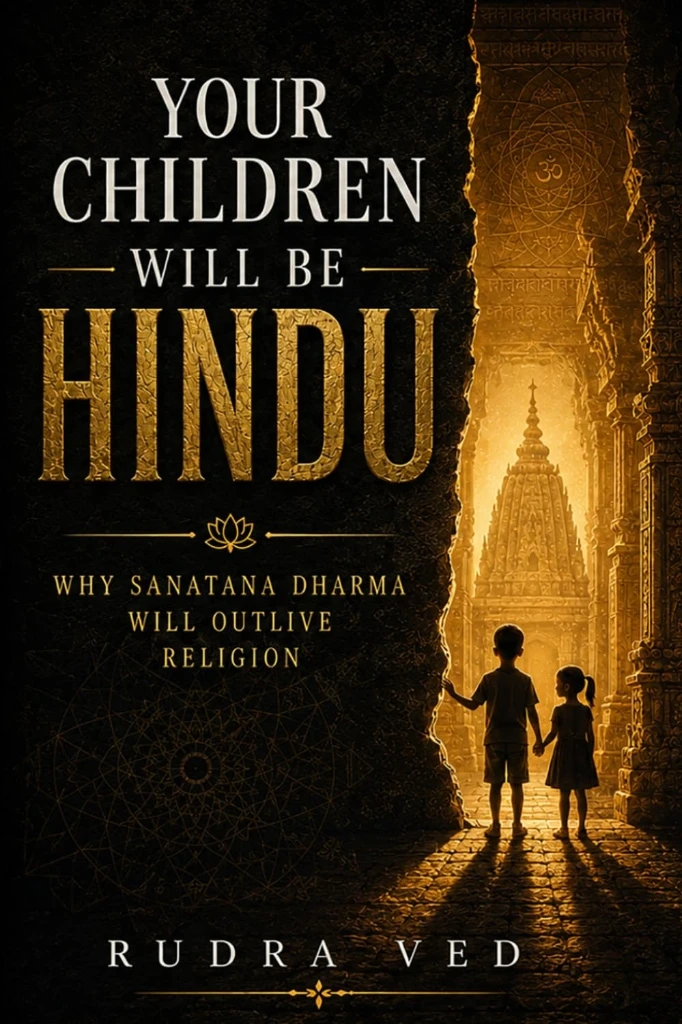
Your Children Will Be Hindu
Why Sanatana Dharma Will Outlive Religion — By Rudra Ved
How do you explain these ancient Vedic verses to your children, friends, or skeptical thinkers? Written by a former lifelong atheist and tested across 500+ unedited live debates, this book provides the rational, modern vocabulary that today's questioning generation needs.
Verse 11
अथ हैनं जारत्कारव आर्तभागः पप्रच्छ । याज्ञवल्क्येति होवाच कति ग्रहाः कत्यतिग्रहा इति । अष्टौ ग्रहा अष्टावतिग्रहा इति । ये तेऽष्टौ ग्रहा अष्टावतिग्रहाः कतमे त इति ॥ ३,२.१ ॥
atha hainaṃ jāratkārava ārtabhāgaḥ papraccha | yājñavalkyeti hovāca kati grahāḥ katyatigrahā iti | aṣṭau grahā aṣṭāvātigrahā iti | ye te'ṣṭau grahā aṣṭāvātigrahāḥ katame ta iti
Then Artabhaga, the descendant of Jaratkaru, questioned him. "Yajnavalkya," said he, "how many organs of perception (grahas) are there, and how many objects of perception (atigrahas)?" "Eight organs of perception and eight objects of perception." "Which are those eight organs of perception and eight objects of perception?"
Verse 12
प्राणो वै ग्रहः । सोऽपानेनातिग्रहेण गृहीतः । प्राणेन हि गन्धाञ्जिघ्रति ॥ ३,२.२ ॥
prāṇo vai grahaḥ | so'pānenātigraheṇa gṛhītaḥ | prāṇena hi gandhāñjighrati
"Prana (the organ of smell) indeed is the organ of perception; it is controlled by apana (odour) as the object of perception, for through prana one smells odours."
Verse 13
वाग्वै ग्रहः । स नाम्नातिग्रहेण गृहीतः । वाचा हि नामान्यभिवदति ॥ ३,२.३ ॥
vāgvai grahaḥ | sa nāmnātigraheṇa gṛhītaḥ | vācā hi nāmānyabhivadati
"Speech indeed is the organ of perception; it is controlled by name as the object of perception, for through speech one utters names."
Verse 14
जिह्वा वै ग्रहः । स रसेनातिग्रहेण गृहीतः । जिह्वया हि रसान् विजानाति ॥ ३,२.४ ॥
jihvā vai grahaḥ | sa rasenātigraheṇa gṛhītaḥ | jihvayā hi rasān vijānāti
"The tongue indeed is the organ of perception; it is controlled by taste as the object of perception, for through the tongue one discerns tastes."
Verse 15
चक्षुर्वै ग्रहः । स रूपेणातिग्रहेण गृहीतः । चक्षुषा हि रूपाणि पश्यति ॥ ३,२.५ ॥
cakṣurvai grahaḥ | sa rūpeṇātigraheṇa gṛhītaḥ | cakṣuṣā hi rūpāṇi paśyati
"The eye indeed is the organ of perception; it is controlled by form as the object of perception, for through the eye one sees forms."
Verse 16
श्रोत्रं वै ग्रहः । स शब्देनातिग्रहेण गृहीतः । श्रोत्रेण हि शब्दाञ्शृणोति ॥ ३,२.६ ॥
śrotraṃ vai grahaḥ | sa śabdenātigraheṇa gṛhītaḥ | śrotreṇa hi śabdāñśṛṇoti
"The ear indeed is the organ of perception; it is controlled by sound as the object of perception, for through the ear one hears sounds."
Verse 17
मनो वै ग्रहः । स कामेनातिग्रहेण गृहीतः । मनसा हि कामान् कामयते ॥ ३,२.७ ॥
mano vai grahaḥ | sa kāmenātigraheṇa gṛhītaḥ | manasā hi kāmān kāmayate
The mind indeed is the seizer; it is seized by desire, the over-seizer, for through the mind one desires desires.
Verse 18
हस्तौ वै ग्रहः । स कर्मणातिग्रहेण गृहीतः । हस्ताभ्यां हि कर्म करोति ॥ ३,२.८ ॥
hastau vai grahaḥ | sa karmaṇātigraheṇa gṛhītaḥ | hastābhyāṁ hi karma karoti
The hands indeed are the seizer; they are seized by action, the over-seizer, for with the hands one performs actions.
Verse 19
त्वग्वै ग्रहः । स स्पर्शेनातिग्रहेण गृहीतः । त्वचा हि स्पर्शान् वेदयत । इत्यष्टौ ग्रहा अष्टावतिग्रहाः ॥ ३,२.९ ॥
tvagvai grahaḥ | sa sparśenātigraheṇa gṛhītaḥ | tvacā hi sparśān vedayate | ityaṣṭau grahā aṣṭāvatigrahāḥ
The skin indeed is the seizer; it is seized by touch, the over-seizer, for through the skin one perceives touches. These are the eight seizers and the eight over-seizers.
Verse 20
याज्ञवल्क्येति होवाच यदिदं सर्वं मृत्योरन्नं का स्वित्सा देवता यस्या मृत्युरन्नमिति । अग्निर्वै मृत्युः सोऽपामन्नम् । अप पुनर्मृत्युं जयति ॥ ३,२.१० ॥
yājñavalkyeti hovāca yadidaṁ sarvaṁ mṛtyorannaṁ kā svitsā devatā yasyā mṛtyurannamiti | agnirvai mṛtyuḥ so'pāmannam | apa punarmṛtyuṁ jayati
"Yājñavalkya," he said, "since everything here is the food of death, who is that deity whose food is death itself?" "Fire indeed is death, and it is the food of water. He who knows this conquers repeated death."
Key Takeaways & AI Summary
This chapter explores the profound teachings of Yajnavalkya's Grand Discourse on Brahman and the Inner Controller. It includes 99 verses detailing core themes like "janako ha vaideho bahudakṣiṇena yajñeneje | tatra ha kurupañcālānāṁ brāhmaṇā abhisametā babhūvuḥ | tasya ha janakasya vaidehasya vijijñāsā babhūva kaḥ svideṣāṁ brāhmaṇānām anūcānatama iti | sa ha gavāṁ sahasram avarurodha | daśadaśa pādā ekaikasyāḥ śṛṅgayor ābaddhā babhūvuḥ", "tān hovāca brāhmaṇā bhagavanto yo vo brahmiṣṭhaḥ sa etā gā udajatām iti | te ha brāhmaṇā na dadhṛṣuḥ | atha ha yājñavalkyaḥ svam eva brahmacāriṇam uvāca etāḥ saomyodaja sāmaśravā3 iti | tā hodācakāra | te ha brāhmaṇāścukrudhuḥ kathaṁ nu no brahmiṣṭho bruvīteti | atha ha janakasya vaidehasya hotāśvalo babhūva | sa hainaṁ papraccha tvaṁ nu khalu no yājñavalkya brahmiṣṭho'sī3 iti | sa hovāca namo vayaṁ brahmiṣṭhāya kurmo gokāmā eva vayaṁ sma iti | taṁ ha tata eva praṣṭuṁ dadhre hotāśvalaḥ", "yājñavalkyeti hovāca yad idaṁ sarvaṁ mṛtyunāptaṁ sarvaṁ mṛtyunābhipannaṁ kena yajamāno mṛtyor āptim atimucyata iti | hotrartvijāgninā vācā | vāg vai yajñasya hotā | tad yeyaṁ vāk so'yam agniḥ sa hotā sā muktiḥ sātimuktiḥ".The largest and one of the most ancient Principal Upanishads from the Shukla Yajur Veda — containing the Mahāvākya "Aham Brahmāsmi" (I am Brahman) and the profound dialogues of Sage Yajnavalkya on the nature of the Self, consciousness, and liberation.