
Upanishads vs Vedas: The Definitive Comparison of Vedic Scripture
1. The Core Definition: What Are They?
Interactive Scriptural Structure
Click any block below to learn the evolution of Vedic layers
Samhitas
The original layer of chanted Sanskrit mantras and hymns dedicated to the cosmic deities and nature.
- The Vedas are the oldest and most authoritative body of scriptures in Hinduism. They are considered Shruti (that which is heard) and are believed to be divinely revealed to ancient seers (Rishis).
- The Upanishads are the philosophical sub-sections of the Vedas. They are referred to as Vedanta (which literally means Veda-anta or "the end/culmination of the Vedas").
2. Structural Breakdown: The Four Vedas and Their Parts
- Rig Veda (Veda of Hymns)
- Sama Veda (Veda of Melodies & Chants)
- Yajur Veda (Veda of Ritual Formulas)
- Atharva Veda (Veda of Daily Procedures and Spells)
- Samhitas: Collections of mantras, prayers, and hymns dedicated to cosmic deities (such as Agni, Indra, Varuna).
- Brahmanas: Prose commentaries detailing how to perform sacrificial rituals (Yajnas) and the meaning of these rituals.
- Aranyakas: "Forest treatises" that explain the meditative and symbolic meaning of rituals, intended for those who have retired to live quiet lives in nature.
- Upanishads: Dialogues and discourses exploring the nature of ultimate reality (Brahman), the individual soul (Atman), and the path to liberation (Moksha).
The Veda-to-Layer Matrix
| Veda Name | Samhita (Mantras) | Brahmana (Rituals) | Aranyaka (Meditations) | Upanishad (Philosophy) |
|---|---|---|---|---|
| Rig Veda | Rig Hymns | Aitareya | Aitareya | Aitareya |
| Sama Veda | Sama Chants | Panchavimsha | Talavakara | Chandogya / Kena |
| Yajur Veda | Yajur Formulae | Shatapatha | Brihadaranyaka | Isha / Katha / Taittiriya |
| Atharva Veda | Atharva Spells | Gopatha | — (Absorbed) | Mundaka / Mandukya |
3. Key Differences: Vedas vs. Upanishads
| Feature | The Vedas (Samhitas & Brahmanas) | The Upanishads (Vedanta) |
|---|---|---|
| Primary Theme | Action, rituals, and prayers (Karma Kanda) | Wisdom and self-knowledge (Jnana Kanda) |
| Primary Goal | Material prosperity, cosmic order, heaven (Svarga) | Spiritual liberation (Moksha) from birth and death |
| Outlook | Focuses on external rituals, nature deities, and society | Focuses on internal meditation, consciousness, and the Self |
| Key Question | How do we perform the sacrifice to please the cosmic forces? | Who am I? What is the ultimate reality behind the universe? |
| Nature of Deity | Pluralistic/Henotheistic (many deities representing aspects of One) | Monistic/Non-dual (all is Brahman, the absolute Self) |
Karma Kanda vs. Jnana Kanda
| Aspect | Karma Kanda (Vedas) | Jnana Kanda (Upanishads) |
|---|---|---|
| Scripture Layer | Samhitas & Brahmanas | Upanishads (Vedanta) |
| Primary Focus | Outward Ritual Action | Inward Self-Knowledge |
| Central Goal | Cosmic Order & Heaven (Svarga) | Spiritual Liberation (Moksha) |
| Action Type | Sacrificial Fire Rituals | Meditation & Self-Inquiry |
| Philosophical View | Duality (Priest / Deity / Offering) | Non-Duality (Atman = Brahman) |
From Action to Wisdom: Karma Kanda vs. Jnana Kanda
4. Philosophical Shift: From External to Internal
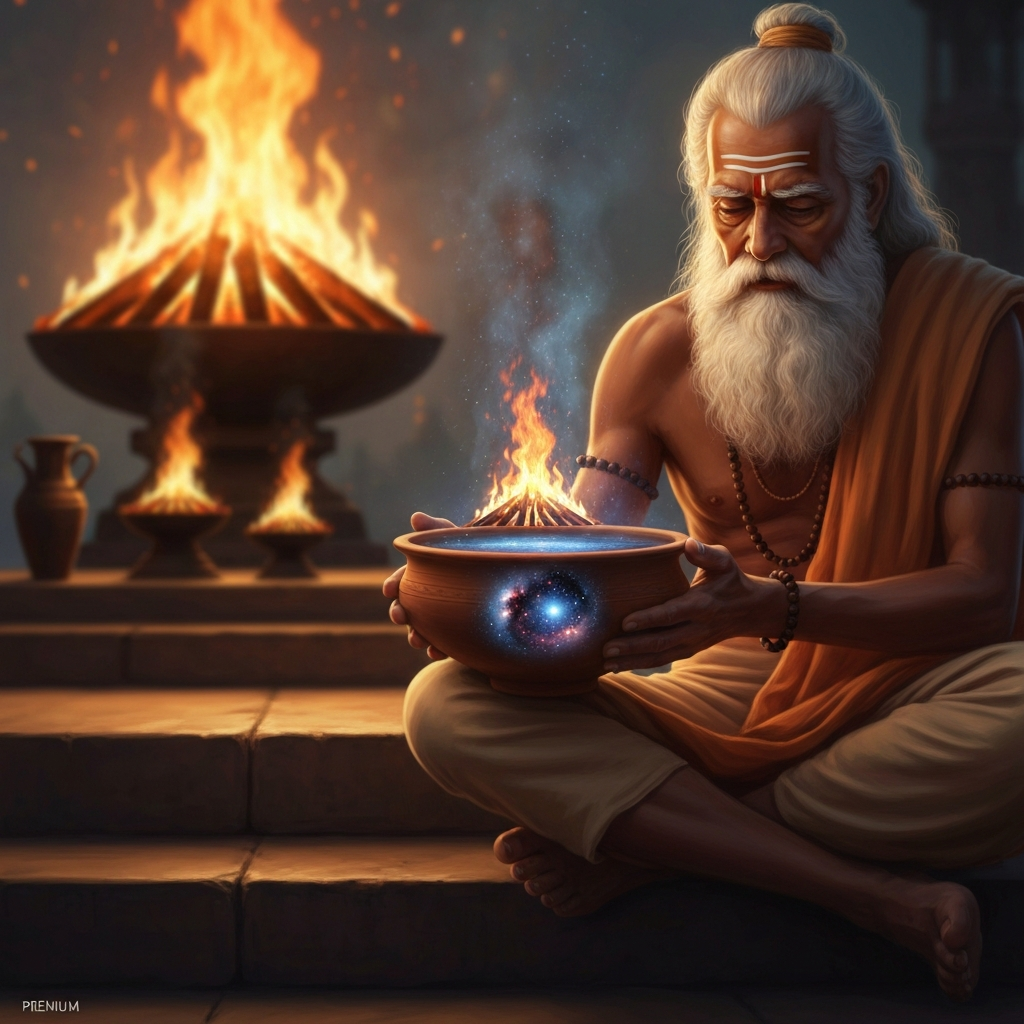
- The fire is the fire of awareness (Prana or Brahman).
- The offering is the limited ego (Ahankara).
- The goal is realizing that the individual consciousness (Atman) and the universal consciousness (Brahman) are identical.
The Spiritual Shift: Outward to Inward
Karma Kanda (Vedic Rituals)
Offering material elements to external fires to harmonize with cosmic powers and reach heavenly states.
Jnana Kanda (Self-Knowledge)
Offering personal ego and attachments to the inner fire of awareness to realize Atman as one with Brahman.
The Internalization of Sacrifice
Physical Yajna
Outer fire rituals propitiating cosmic deities.
Symbolic Prana
Treating the vital breath as the inner sacrificial fire.
Inner Realization
Sacrificing the limited ego to pure absolute consciousness.
5. Scriptural Anchors: Famous Mantras
- Vedic Hymn (Rig Veda 1.89.1):"Aano bhadra krtavo yantu vishwatah"(Let noble thoughts come to us from every direction.)This is an outward-facing prayer for positive alignment with the universe.
- Upanishadic Statement (Chandogya Upanishad 6.8.7):"Tat Tvam Asi"(Thou Art That.)This is an inward-facing declaration of your absolute identity with the cosmic ground of reality.
6. How Many Upanishads Are There?
- Isha, Kena, Katha, Prashna, Mundaka, Mandukya, Taittiriya, Aitareya, Chandogya, and Brihadaranyaka.
- Rig Veda: Aitareya, Kaushitaki
- Sama Veda: Kena, Chandogya
- Shukla Yajur Veda: Isha, Brihadaranyaka
- Krishna Yajur Veda: Katha, Taittiriya, Shvetashvatara
- Atharva Veda: Prasna, Mundaka, Mandukya
Conclusion: The Ultimate Synthesis
Discover Wisdom
Explore answers to life's biggest questions from the Vedas.
Your Mind Is Hijacking Your Life—Here’s How to Take It Back
Chapter 6 reveals Krishna’s step-by-step method to calm the restless mind and build unshakable inner peace.
The Kind of Love That Doesn’t Break You
Chapter 12 shows Bhakti as the highest love—steady, freeing, and deeper than romance or attachment.
Why Lust & Desire Feel Uncontrollable (And How to Stop)
It’s not just willpower. Krishna explains the root of this powerful force in Chapter 3 and how to master it.