
Diverse Meditations and Ethical Precepts for Attainment
(Chapter 5)
पञ्चमोऽध्यायः — Adhyāya 5: Khila Kāṇḍa ( Supplementary Teachings)
Verse 1
पूर्णमदः पूर्णमिदं पूर्णात्पूर्णमुदच्यते । पूर्णस्य पूर्णमादाय पूर्णमेवावशिष्यते । खं ब्रह्म । खं पुराणम् । वायुरं खम् । इति ह स्माह कौरव्यायणीपुत्रः । वेदोऽयं ब्राह्मणा विदुः । वेदैनेन यद्वेदितव्यम् ॥ ५,१.१ ॥
pūrṇamadaḥ pūrṇamidaṁ pūrṇātpūrṇamudacyate | pūrṇasya pūrṇamādāya pūrṇamevāvaśiṣyate | khaṁ brahma | khaṁ purāṇam | vāyuraṁ kham | iti ha smāha kauravyāyaṇīputraḥ | vedo'yaṁ brāhmaṇā viduḥ | vedainena yadveditavyam
That is infinite, this is infinite. From the infinite proceeds the infinite. Taking the infinity of the infinite, the infinite alone remains. Brahman is space, the ancient space. 'The space containing air,' so said the son of Kauravyayani. This is the Veda which the knowers of Brahman know; through it one knows all that is to be known.
Verse 2
त्रयाः प्राजापत्याः प्रजापतौ पितरि ब्रह्मचर्यमूषुः । देवा मनुष्या असुराः । उषित्वा ब्रह्मचर्यं देवा ऊचुर्ब्रवीतु नो भवानिति । तेभ्यो हैतदक्षरमुवाच द इति । व्यज्ञासिष्टा३ इति । व्यज्ञासिष्मेति होचुः । दाम्यतेति न आत्थेति । ओमिति होवाच व्यज्ञासिष्टेति ॥ ५,२.१ ॥
trayāḥ prājāpatyāḥ prajāpatai pitari brahmacaryamūṣuḥ | devā manuṣyā asurāḥ | uṣitvā brahmacaryam devā ūcurbravītu no bhavāniti | tebhyo haitadakṣaramuvāca da iti | vyajñāsiṣṭā3 iti | vyajñāsiṣmeti hocuḥ | dāmyateti na āttheti | omiti hovāca vyajñāsiṣṭeti
Three classes of sons of Prajapati—gods, humans, and demons—dwelt with their father Prajapati as students of sacred knowledge. Having completed their studentship, the gods said, 'Please instruct us, sir.' He spoke to them the single syllable: 'Da.' Then he asked, 'Have you understood?' They replied, 'We have understood; you tell us to control ourselves (damyata).' He said, 'Yes, you have understood.'
Verse 3
अथ हैनं मनुष्या ऊचुर्ब्रवीतु नो भवानिति । तेभ्यो हैतदेवाक्षरमुवाच द इति । व्यज्ञासिष्टा३ इति । व्यज्ञासिष्मेति होचुः । दत्तेति न आत्थेति । ओमिति होवाच व्यज्ञासिष्टेति ॥ ५,२.२ ॥
atha hainaṁ manuṣyā ūcurbravītu no bhavāniti | tebhyo haitadevākṣaramuvāca da iti | vyajñāsiṣṭā3 iti | vyajñāsiṣmeti hocuḥ | datteti na āttheti | omiti hovāca vyajñāsiṣṭeti
Then the humans said to him, 'Please instruct us, sir.' He spoke to them the very same syllable: 'Da.' He asked, 'Have you understood?' They replied, 'We have understood; you tell us to give (datta).' He said, 'Yes, you have understood.'
Verse 4
अथ हैनमसुरा ऊचुर्ब्रवीतु नो भवानिति । तेभ्यो हैतदेवाक्षरमुवाच द इति । व्यज्ञासिष्टा३ इति । व्यज्ञासिष्मेति होचुः । दयध्वमिति न आत्थेति । ओमिति होवाच व्यज्ञासिष्टेति । तदेतदेवैषा दैवी वागनुवदति स्तनयित्नुर्द द द इति । दम्यत दत्त दयध्वमिति । तदेतत्त्रयं शिक्षेद्दमं दानं दयामिति ॥ ५,२.३ ॥
atha hainamasurā ūcurbravītu no bhavāniti | tebhyo haitadevākṣaramuvāca da iti | vyajñāsiṣṭā3 iti | vyajñāsiṣmeti hocuḥ | dayadhvamiti na āttheti | omiti hovāca vyajñāsiṣṭeti | tadetadevaiṣā daivī vāganuvadati stanayitnurda da da iti | damyata datta dayadhvamiti | tadetattrayaṁ śikṣeddamaṁ dānaṁ dayāmiti
Then the demons said to him, 'Please instruct us, sir.' He spoke to them the very same syllable: 'Da.' He asked, 'Have you understood?' They replied, 'We have understood; you tell us to be compassionate (dayadhvam).' He said, 'Yes, you have understood.' That very instruction is repeated by the divine voice of thunder as 'Da, Da, Da'—that is, self-control, giving, and compassion. Therefore, one should learn these three: self-control, charity, and compassion.
Verse 5
एष प्रजापतिर्यद्धृदयम् । एतद्ब्रह्म । एतत्सर्वम् । तदेतत्त्र्यक्षरं हृदयमिति । हृ इत्येकमक्षरम् । अभिहरन्त्यस्मै स्वाश्चान्ये च य एवं वेद । द इत्येकमक्षरम् । ददत्यस्मै स्वाश्चान्ये च य एवं वेद । यमित्येकमक्षरम् । एति स्वर्गं लोकं य एवं वेद ॥ ५,३.१ ॥
eṣa prajāpatiryaddhṛdayam | etadbrahma | etatsarvam | tadetattryakṣaraṁ hṛdayamiti | hṛ ityekamakṣaram | abhiharantyasmai svāścānye ca ya evaṁ veda | da ityekamakṣaram | dadatyasmai svāścānye ca ya evaṁ veda | yamityekamakṣaram | eti svargaṁ lokaṁ ya evaṁ veda
This heart is Prajapati; it is Brahman; it is all. This word 'hṛdayam' consists of three syllables. 'Hṛ' is one syllable; his own people and others bring offerings to one who knows this. 'Da' is one syllable; his own people and others give to one who knows this. 'Yam' is one syllable; one who knows this goes to the heavenly world.
Verse 6
तद्वै तदेतदेव तदास । सत्यमेव । स यो हैतं महद्यक्षं प्रथमजं वेद सत्यं ब्रह्मेति जयतीमांल्लोकान् जित इन्न्वसावसत् य एवमेतन्महद्यक्षं प्रथमजं वेद सत्यं ब्रह्मेति । सत्यं ह्येव ब्रह्म ॥ ५,४.१ ॥
tadvai tadetadeva tadāsa | satyameva | sa yo haitaṁ mahadyakṣaṁ prathamajaṁ veda satyaṁ brahmeti jayatīmāṁllokān jita innvasāvasat ya evametanmahadyakṣaṁ prathamajaṁ veda satyaṁ brahmeti | satyaṁ hyeva brahma
That indeed was this—Truth (Satya) alone. He who knows this great, adorable, first-born Being as Truth-Brahman wins these worlds. Can he be conquered who knows this great, adorable, first-born Being as Truth-Brahman? For Truth indeed is Brahman.
Verse 7
आप एवेदमग्र आसुः । ता आपः सत्यमसृजन्त । सत्यं ब्रह्म । ब्रह्म प्रजापतिम् । प्रजापतिर्देवान् । ते देवाः सत्यमेवोपासते । तदेतत्त्र्यक्षरं सतियमिति स इत्येकमक्षरम् । तीत्येकमक्षरम् । यमित्येकमक्षरम् । प्रथमोत्तमे अक्षरे सत्यं मध्यतोऽनृतम् । तदेतदनृतमुभयतः सत्येन परिगृहीतम् । सत्यभूयमेव भवति । नैवंविद्वांसमनृतं हिनस्ति ॥ ५,५.१ ॥
āpa evedamagra āsuḥ | tā āpaḥ satyamasṛjanta | satyaṁ brahma | brahma prajāpatim | prajāpatirdevān | te devāḥ satyamevopāsate | tadetattryakṣaraṁ satiyamiti sa ityekamakṣaram | tītyekamakṣaram | yamityekamakṣaram | prathamottame akṣare satyaṁ madhyato'nṛtam | tadetadanṛtamubhayataḥ satyena parigṛhītam | satyabhūyameva bhavati | naivaṁvidvāṁsamanṛtaṁ hinasti
In the beginning this universe was just water. That water produced Truth (Satya); Truth produced Brahman; Brahman produced Prajapati; Prajapati produced the gods. Those gods meditate on Truth alone. This name 'Satyam' consists of three syllables: 'Sa', 'Ti', and 'Yam'. The first and last syllables are truth, while the middle is untruth. Thus untruth is enclosed on both sides by truth, and truth predominates. Untruth does not hurt one who knows this.
Verse 8
तद्यत्तत्सत्यमसौ स आदित्यः । य एष एतस्मिन्मण्डले पुरुषो यश्चायं दक्षिणेऽक्षन् पुरुषस्तावेतावन्योऽन्यस्मिन् प्रतिष्ठितौ । रश्मिभिरेषोऽस्मिन् प्रतिष्ठितः प्राणैरयममुष्मिन् । स यदोत्क्रमिष्यन् भवति शुद्धमेवैतन्मण्डलं पश्यति । नैनमेते रश्मयः प्रत्यायन्ति ॥ ५,५.२ ॥
tadyattatsatyamasau sa ādityaḥ | ya eṣa etasminmaṇḍale puruṣo yaścāyaṁ dakṣiṇe'kṣan puruṣastāvetāvanyo'nyasmin pratiṣṭhitau | raśmibhireṣo'smin pratiṣṭhitaḥ prāṇairayamamuṣmin | sa yadotkramiṣyan bhavati śuddhamevaitanmaṇḍalaṁ paśyati | nainamete raśmayaḥ pratyāyanti
That which is Truth is the Sun up there. The Person who is in that orb and the Person who is in the right eye—these two are established in each other. Through his rays, the sun is established in the eye; through his vital breaths, the eye is established in the sun. When a person is about to depart from the body, he sees that orb as pure without rays; these rays no longer reach him.
Verse 9
य एष एतस्मिन्मण्डले पुरुषस्तस्य भूरिति शिरः । एकं शिर एकमेतदक्षरम् । भुव इति बाहू । द्वौ बाहू द्वे एते अक्षरे । स्वरिति प्रतिष्ठा । द्वे प्रतिष्ठे द्वे एते अक्षरे । तस्योपनिषदहरिति । हन्ति पाप्मानं जहाति च य एवं वेद ॥ ५,५.३ ॥
ya eṣa etasminmaṇḍale puruṣastasya bhūriti śiraḥ | ekaṃ śira ekametadakṣaram | bhuva iti bāhū | dvau bāhū dve ete akṣare | svariti pratiṣṭhā | dve pratiṣṭhe dve ete akṣare | tasyopaniṣadahariti | hanti pāpmānaṃ jahāti ca ya evaṃ veda
Of the person who is in that solar orb, 'Bhūḥ' is the head; there is one head and one syllable. 'Bhuvaḥ' is the arms; there are two arms and two syllables. 'Svaḥ' is the feet (foundation); there are two feet and two syllables. His secret name (Upanishad) is 'Ahar' (Day). He who knows this destroys and casts off evil.
Verse 10
योऽयं दक्षिणेऽक्षन् पुरुषस्तस्य भूरिति शिरः । एकं शिर एकमेतदक्षरम् । भुव इति बाहू । द्वौ बाहू द्वे एते अक्षरे । स्वरिति प्रतिष्ठा । द्वे प्रतिष्ठे द्वे एते अक्षरे । तस्योपनिषदहमिति । हन्ति पाप्मानं जहाति च य एवं वेद ॥ ५,५.४ ॥
yo'yaṃ dakṣiṇe'kṣan puruṣastasya bhūriti śiraḥ | ekaṃ śira ekametadakṣaram | bhuva iti bāhū | dvau bāhū dve ete akṣare | svariti pratiṣṭhā | dve pratiṣṭhe dve ete akṣare | tasyopaniṣadahamiti | hanti pāpmānaṃ jahāti ca ya evaṃ veda
Of the person who is in the right eye, 'Bhūḥ' is the head; there is one head and one syllable. 'Bhuvaḥ' is the arms; there are two arms and two syllables. 'Svaḥ' is the feet (foundation); there are two feet and two syllables. His secret name (Upanishad) is 'Aham' (I). He who knows this destroys and casts off evil.
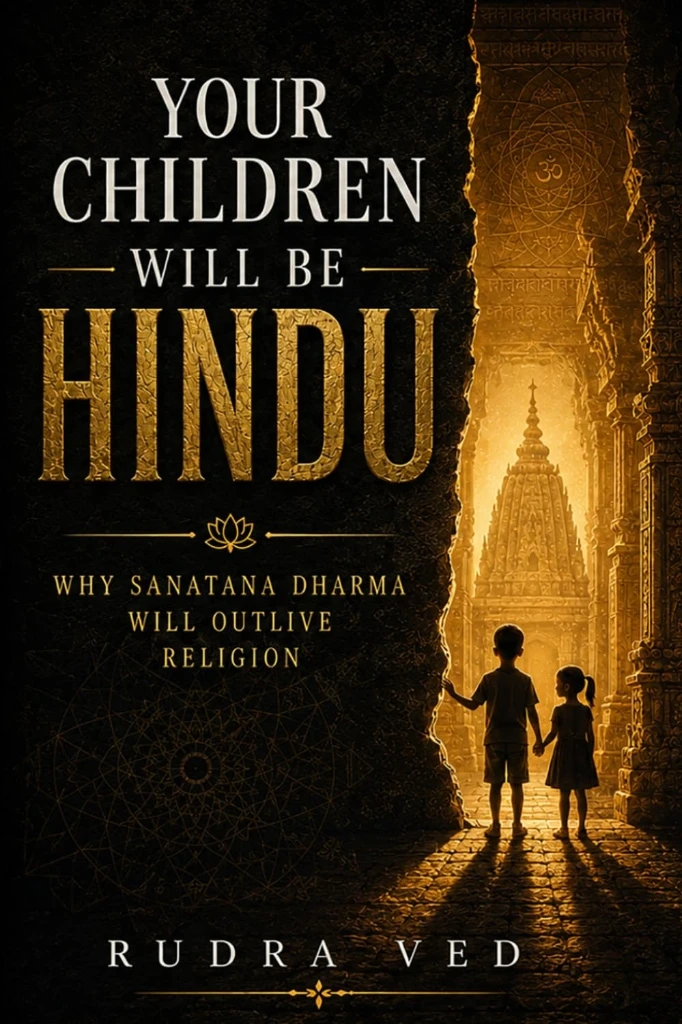
Your Children Will Be Hindu
Why Sanatana Dharma Will Outlive Religion — By Rudra Ved
How do you explain these ancient Vedic verses to your children, friends, or skeptical thinkers? Written by a former lifelong atheist and tested across 500+ unedited live debates, this book provides the rational, modern vocabulary that today's questioning generation needs.
Verse 11
मनोमयोऽयं पुरुषो भाःसत्यः । तस्मिन्नन्तर्हृदये यथा व्रीहिर्वा यवो वा । स एष सर्वस्येशानः सर्वस्याधिपतिः सर्वमिदं प्रशास्ति यदिदं किञ्च ॥ ५,६.१ ॥
manomayo'yaṃ puruṣo bhāḥsatyaḥ | tasminnantarhṛdaye yathā vrīhirvā yavo vā | sa eṣa sarvasyeśānaḥ sarvasyādhipatiḥ sarvamidaṃ praśāsti yadidaṃ kiñca
This person consists of mind, and his light is truth. Within the inner heart he resides like a grain of rice or barley. He is the ruler of all, the lord of all, and governs all this, whatever exists.
Verse 12
विद्युद्ब्रह्मेत्याहुः । विदानाद्विद्युत् । विद्यत्येनं पाप्मनो य एवं वेद विद्युद्ब्रह्मेति । विद्युद्ध्येव ब्रह्म ॥ ५,७.१ ॥
vidyudbrahmetyāhuḥ | vidānādvidyut | vidyatyenaṃ pāpmano ya evaṃ veda vidyudbrahmeti | vidyuddhyeva brahma
They say that lightning is Brahman. It is called lightning because it dispels darkness. It dispels evil from him who knows that lightning is Brahman; for lightning indeed is Brahman.
Verse 13
वाचं धेनुमुपासीत । तस्याश्चत्वारः स्तनाः । स्वाहाकारो वषट्कारो हन्तकारः स्वधाकारः । तस्यै द्वौ स्तनौ देवा उपजीवन्ति । स्वाहाकारं च वषट्कारं च । हन्तकारं मनुष्याः । स्वधाकारं पितरः । तस्याः प्राण ऋषभो मनो वत्सः ॥ ५,८.१ ॥
vācaṃ dhenumupāsīta | tasyāścatvāraḥ stanāḥ | svāhākāro vaṣaṭkāro hantakāraḥ svadhākāraḥ | tasyai dvau stanau devā upajīvanti | svāhākāraṃ ca vaṣaṭkāraṃ ca | hantakāraṃ manuṣyāḥ | svadhākāraṃ pitaraḥ | tasyāḥ prāṇa ṛṣabho mano vatsaḥ
One should meditate upon Speech as a cow. She has four teats: the utterances 'Svāhā', 'Vaṣaṭ', 'Hanta', and 'Svadhā'. The gods subsist on two of her teats, 'Svāhā' and 'Vaṣaṭ'; human beings on 'Hanta'; and the ancestors on 'Svadhā'. Vital breath (Prāṇa) is her bull, and the mind is her calf.
Verse 14
अयमग्निर्वैश्वानरो योऽयमन्तः पुरुषे । येनेदमन्नं पच्यते । यदिदमद्यते । तस्यैष घोषो भवति । यमेतत्कर्णावपिधाय शृणोति । स यदोत्क्रमिष्यन् भवति नैनं घोषं शृणोति ॥ ५,९.१ ॥
ayamagnirvaiśvānaro yo'yamantaḥ puruṣe | yenedamannaṃ pacyate | yadidamadyate | tasyaiṣa ghoṣo bhavati | yametatkarṇāvapidhāya śṛṇoti | sa yadotkramiṣyan bhavati nainaṃ ghoṣaṃ śṛṇoti
This internal fire is Vaiśvānara, which exists inside a person and digests the food that is eaten. Its sound is that which one hears upon covering one's ears. When a person is about to depart from the body, he no longer hears this sound.
Verse 15
यदा वै पुरुषोऽस्माल्लोकात्प्रैति स वायुमागच्छति । तस्मै स तत्र विजिहीते यथा रथचक्रस्य खम् । तेन स ऊर्ध्व आक्रमते । स आदित्यमागच्छति । तस्मै स तत्र विजिहीते । यथा लम्बरस्य खम् । तेन स ऊर्ध्व आक्रमते । स चन्द्रमसमागच्छति । तस्मै स तत्र विजिहीते । यथा दुन्दुभेः खम् । तेन स ऊर्ध्व आक्रमते । स लोकमागच्छत्यशोकमहिमम् । तस्मिन् वसति शाश्वतीः समाः ॥ ५,१०.१ ॥
yadā vai puruṣo'smāllokātpraiti sa vāyumāgacchati | tasmai sa tatra vijihīte yathā rathacakrasya kham | tena sa ūrdhva ākramate | sa ādityamāgacchati | tasmai sa tatra vijihīte | yathā lambarasya kham | tena sa ūrdhva ākramate | sa candramasamāgacchati | tasmai sa tatra vijihīte | yathā dundubheḥ kham | tena sa ūrdhva ākramate | sa lokamāgacchatyaśokamahimam | tasmin vasati śāśvatīḥ samāḥ
When a person departs from this world, he comes to the wind. The wind opens up an aperture for him as large as the hole of a chariot wheel. Through that he ascends and reaches the sun. The sun opens up an aperture for him as large as the hole of a drum. Through that he ascends and reaches the moon. The moon opens up an aperture for him as large as the hole of a kettle-drum. Through that he ascends and reaches a world free from sorrow and cold, wherein he dwells for eternal years.
Verse 16
एतद्वै परमं तपो यद्व्याहितस्तप्यते । परमं हैव लोकं जयति य एवं वेद । एतद्वै परमं तपो यं प्रेतमरण्यं हरन्ति । परमं हैव लोकं जयति य एवं वेद । एतद्वै परमं तपो यं प्रेतमग्नावभ्यादधति । परमं हैव लोकं जयति य एवं वेद ॥ ५,११.१ ॥
etadvai paramaṃ tapo yadvyāhitastapyate | paramaṃ haiva lokaṃ jayati ya evaṃ veda | etadvai paramaṃ tapo yaṃ pretamaraṇyaṃ haranti | paramaṃ haiva lokaṃ jayati ya evaṃ veda | etadvai paramaṃ tapo yaṃ pretamagnāvabhyādadhati | paramaṃ haiva lokaṃ jayati ya evaṃ veda
This is indeed the supreme austerity when a sick person suffers pain. He who knows this wins the highest world. This is indeed the supreme austerity when they carry a deceased person to the forest. He who knows this wins the highest world. This is indeed the supreme austerity when they place a deceased person on the fire. He who knows this wins the highest world.
Verse 17
अन्नं ब्रह्मेत्येक आहुः । तन्न तथा । पूयति वा अन्नमृते प्राणात् । प्राणो ब्रह्मेत्येक आहुः । तन्न तथा । शुष्यति वै प्रण ऋतेऽन्नात् । एते ह त्वेव देवते एकधाभूयं भूत्वा परमतां गच्छतः । तद्ध स्माह प्रातृदः पितरम् । किं स्विदेवैवं विदुषे साधु कुर्यां किमेवास्मा असाधु कुर्यामिति । स ह स्माह पाणिना मा प्रातृद । कस्त्वेनयोरेकधाभूयं भूत्वा परमतां गच्छतीति । तस्मा उ हैतदुवाच वीति । अन्नं वै वि । अन्ने हीमानि सर्वाणि भूतानि विष्टानि । रमिति । प्राणो वै रम् । प्राणे हीमानि सर्वाणि भूतानि रमन्ते । सर्वाणि ह वा अस्मिन् भूतानि विशन्ति । सर्वाणि भूतानि रमन्ते य एवं वेद ॥ ५,१२.१ ॥
annaṁ brahmietyeka āhuḥ | tanna tathā | pūyati vā annamṛte prāṇāt | prāṇo brahmietyeka āhuḥ | tanna tathā | śuṣyati vai praṇa ṛte'nnāt | ete ha tveva devate ekadhābhūyaṁ bhūtvā paramatāṁ gacchataḥ | taddha smāha prātṛdaḥ pitaram | kiṁ svidevaivaṁ viduṣe sādhu kuryāṁ kimevāsmā asādhu kuryāmiti | sa ha smāha pāṇinā mā prātṛda | kastvenayorekadhābhūyaṁ bhūtvā paramatāṁ gacchatīti | tasmā u haitaduvāca vīti | annaṁ vai vi | anne hīmāni sarvāṇi bhūtāni viṣṭāni | ramiti | prāṇo vai ram | prāṇe hīmāni sarvāṇi bhūtāni ramante | sarvāṇi ha vā asmin bhūtāni viśanti | sarvāṇi bhūtāni ramante ya evaṁ veda
Some say that food is Brahman. That is not so, for food decays without vital breath (Prana). Others say that Prana is Brahman. That is not so, for Prana dries up without food. But these two deities, becoming unified, attain supreme perfection. Thus Pratrida said to his father: 'What good or what evil can I do to one who knows this?' The father warned him with his hand, saying, 'O Pratrida, who indeed attains supreme perfection merely by their becoming unified?' He then said to him: 'Vi.' Food is indeed 'Vi', for all these beings are seated (vishtani) in food. 'Ram.' Prana is indeed 'Ram', for all these beings rejoice (ramante) in Prana. All beings enter into him, all beings rejoice in him, who knows this.
Verse 18
उक्थम् । प्राणो वा उक्थम् । प्राणो हीदं सर्वमुत्थापयति । उद्धस्मादुक्थविद्वीरस्तिष्ठति । उक्थस्य सायुज्यं सलोकतां जयति य एवं वेद ॥ ५,१३.१ ॥
uktham | prāṇo vā uktham | prāṇo hīdaṁ sarvamutthāpayati | uddhasmādukthavidvīrastīṣṭhati | ukthasya sāyujyaṁ salokatāṁ jayati ya evaṁ veda
Uktha (hymn of praise). Prana is indeed Uktha, for Prana causes all this to rise up. From him who knows Uktha, a heroic son rises up. He attains union with and residence in the same world as Uktha, who knows this.
Verse 19
यजुः । प्राणो वै यजुः । प्राणे हीमानि सर्वाणि भूतानि युज्यन्ते । युज्यन्ते हास्मै सर्वाणि भूतानि श्रैष्ठ्याय । यजुषः सायुज्यं सलोकतां जयति य एवं वेद ॥ ५,१३.२ ॥
yajuḥ | prāṇo vai yajuḥ | prāṇe hīmāni sarvāṇi bhūtāni yujyante | yujyante hāsmai sarvāṇi bhūtāni śraiṣṭhyāya | yajuṣaḥ sāyujyaṁ salokatāṁ jayati ya evaṁ veda
Yajus (sacrificial formula). Prana is indeed Yajus, for in Prana all these beings are joined. All beings are joined to him for his supremacy. He attains union with and residence in the same world as Yajus, who knows this.
Verse 20
साम । प्राणो वै साम । प्राणे हीमानि सर्वाणि भूतानि सम्यञ्चि । सम्यञ्चि हास्मै सर्वाणि भूतानि श्रैष्ठ्याय कल्पन्ते । साम्नः सायुज्यं सलोकतां जयति य एवं वेद ॥ ५,१३.३ ॥
sāma | prāṇo vai sāma | prāṇe hīmāni sarvāṇi bhūtāni samyañci | samyañci hāsmai sarvāṇi bhūtāni śraiṣṭhyāya kalpante | sāmnaḥ sāyujyaṁ salokatāṁ jayati ya evaṁ veda
Saman (sacred chant). Prana is indeed Saman, for in Prana all these beings meet together. All beings unite to bring about his supremacy. He attains union with and residence in the same world as Saman, who knows this.
Key Takeaways & AI Summary
This chapter explores the profound teachings of Diverse Meditations and Ethical Precepts for Attainment. It includes 30 verses detailing core themes like "pūrṇamadaḥ pūrṇamidaṁ pūrṇātpūrṇamudacyate | pūrṇasya pūrṇamādāya pūrṇamevāvaśiṣyate | khaṁ brahma | khaṁ purāṇam | vāyuraṁ kham | iti ha smāha kauravyāyaṇīputraḥ | vedo'yaṁ brāhmaṇā viduḥ | vedainena yadveditavyam", "trayāḥ prājāpatyāḥ prajāpatai pitari brahmacaryamūṣuḥ | devā manuṣyā asurāḥ | uṣitvā brahmacaryam devā ūcurbravītu no bhavāniti | tebhyo haitadakṣaramuvāca da iti | vyajñāsiṣṭā3 iti | vyajñāsiṣmeti hocuḥ | dāmyateti na āttheti | omiti hovāca vyajñāsiṣṭeti", "atha hainaṁ manuṣyā ūcurbravītu no bhavāniti | tebhyo haitadevākṣaramuvāca da iti | vyajñāsiṣṭā3 iti | vyajñāsiṣmeti hocuḥ | datteti na āttheti | omiti hovāca vyajñāsiṣṭeti".The largest and one of the most ancient Principal Upanishads from the Shukla Yajur Veda — containing the Mahāvākya "Aham Brahmāsmi" (I am Brahman) and the profound dialogues of Sage Yajnavalkya on the nature of the Self, consciousness, and liberation.